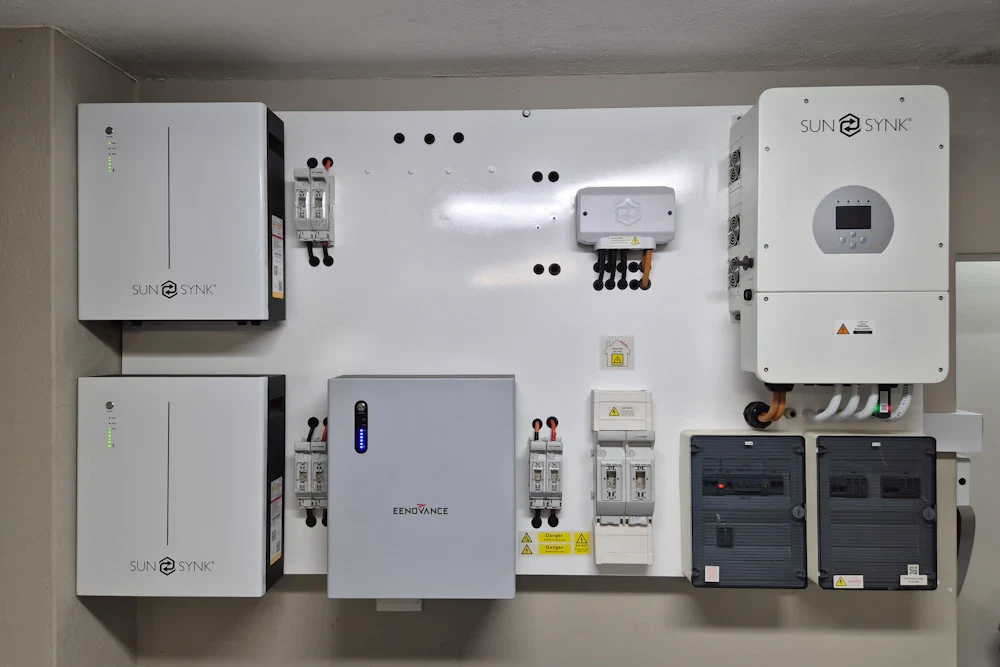
At a battery energy storage facility, a technical warning may also appear at the security post. Seeing the message does not mean an officer can diagnose the battery’s condition or decide that the plant is safe. The service-design question is which defined responsibility that message should initiate.
The operator should supply approved notification arrangements. Clear boundaries between technical assessment, site coordination and emergency management allow personnel to perform their assigned task with the correct counterpart. This article addresses that connection rather than alarm thresholds or intervention techniques.
Research explains the need for technical assessment
Feng and colleagues’ 2018 review examines thermal-runaway mechanisms and protection approaches in lithium-ion batteries for electric vehicles. It illustrates technical complexity; it is not a field trial determining how a security officer should interpret an alarm at a stationary storage facility. [1]
The procurement implication is straightforward. If a provider is asked to assess technical alarms, specify the expertise, assignment and responsibility involved. An engineering decision should not be silently incorporated into a general guarding role.
Separate the alarm, notification and decision
An alarm is information generated by a system. A notification passes information to its responsible recipient. A decision follows assessment by an authorised person and initiation of the appropriate process. Sending the notification does not establish that the technical matter has been resolved.
The record can distinguish the system message from later explanations. An officer can record the notification received and its recipient, then link a technical assessment to the person who supplied it. Observation, someone else’s explanation and an authorised decision should remain identifiable.
Prepare an operator-approved task card
This should be a controlled document for authorised personnel. Preparation can address:
- Which notifications reach security, and for what assigned purpose?
- Which authorised role performs technical assessment?
- How does the approved notification chain continue if the first contact is unavailable?
- Which separate instruction defines duties under the emergency plan?
- Who communicates the technical assessment and closure decision?
- How is receipt of an updated task card confirmed?
The UK government’s 2024 storage guidance addresses stakeholder responsibilities across the facility lifecycle. [2] Relevant local owners must confirm the technical and legal requirements applicable in Turkey.
Include site communication in change control
Changes to the alarm system, operating arrangements or service provider may alter the messages reaching security and their intended recipients. The relevant operator should review whether the existing task card remains valid. Personnel should not have to reconcile old message names with new instructions unaided.
The US Department of Energy’s 2024 safety strategy includes incident preparedness and coordination among its improvement priorities. [3] Our proposed application is a small acceptance step checking how a technical change affects site communication.
Walk through the notification chain during procurement
Use an example message without affecting the actual system. Ask what the receiving person would record and to whom it would be passed. Assess identification of the correct contact, acknowledgement and ownership of any outstanding task.
This gives the operator a concrete way to define the security service’s contribution: carrying out approved notification and coordination duties while technical responsibility remains with its competent owners.