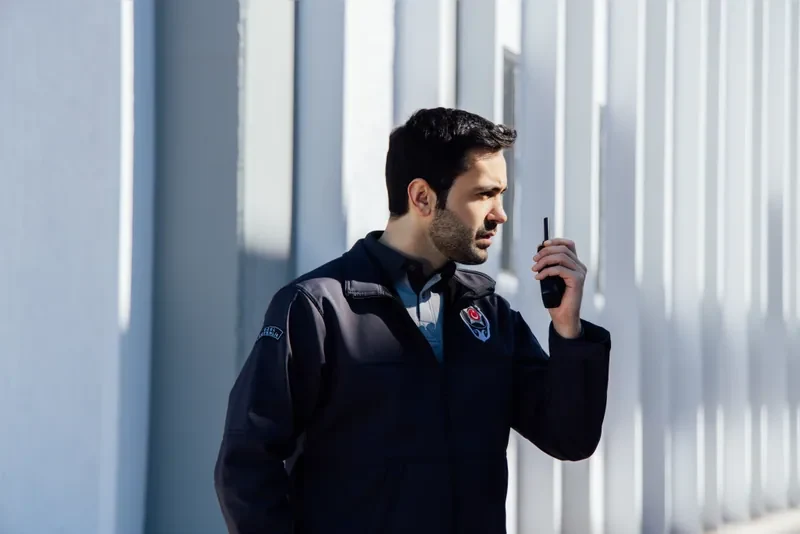
Every camera may appear online while the business still cannot obtain the answer it needs. Footage exists, but the relevant time cannot be found; an alert is noticed, but nobody knows who should receive it. Evaluating a CCTV investment therefore means examining equipment status, operational usability and follow-up separately.
Start procurement with the decision the system should support. Observing activity at an entrance, reviewing a previous event and assessing an incoming alarm can require different workflows. A camera count alone does not describe those requirements.
Research highlights how implementation matters
Piza and colleagues' 2019 systematic review and meta-analysis found an overall modest association between CCTV and reduced crime, with results varying by setting and implementation. Active monitoring and schemes incorporating additional measures were associated with stronger results. This does not justify transferring a success percentage to an individual site. [1]
NPSA's CCTV guidance connects system purpose with operational requirements. [2] The questions below build on that general approach to help businesses define their own acceptance and follow-up arrangements.
Write a decision statement for each use
For example, the business may need an authorised team to assess the cause of an alarm. Access to the image matters, but so do the responsibilities and instructions of the person reviewing it. The technical supplier provides the relevant system functions; the monitoring or notification tasks assigned to the security provider should be visible in the service agreement.
A decision statement can contain three elements: which event is being considered, what information is needed and who receives it. Answer these questions for the relevant group of uses. Detailed layouts and coverage information can remain with authorised personnel.
The statement should also identify the person who can resolve an unclear instruction. Otherwise a technically complete installation may leave officers making inconsistent choices about what to report.
Bring acceptance testing closer to the actual task
An approved trial should go beyond checking whether an image appears on a screen. Can the person performing the task reach the relevant view, interpret its timing and distinguish the information required by their instructions? Ask the technical team whether a daytime handover check adequately represents nighttime use.
When a difficulty appears, do not decide its cause in advance. Technical settings, instructions, the interface or allocation of work may be involved. The officer's observations provide input for the appropriate specialist to examine; officers should not be expected to make equipment-engineering decisions.
Record the task that could not be completed and the conditions of the trial. This gives the responsible team a concrete issue to investigate and a basis for checking the result after correction.
Use three separate lines in performance reporting
- System status: components available for use or under fault investigation, according to authorised technical records.
- Task outcome: access to information and completion of the required assessment during defined trials.
- Follow-up outcome: whether notification reached the responsible person and what remains open.
This structure keeps a repaired device separate from a resolved incident. Repeatedly outstanding notifications may call for examining ownership and feedback arrangements before buying more equipment. A new camera may add little if the associated task still has no owner.
Revisit purpose and ownership when use changes
A change in how an area is used can change the camera's intended task. A space converted from storage to offices or a different visitor arrangement may require review of the original acceptance note. Turkey's KVKK announcement on workplace cameras highlights purpose and proportionality. [3] The business's responsible functions should assess the implications for its data-processing arrangements.
When comparing proposals, ask suppliers to explain one worked task: who monitors, who provides technical support, whose decision may be required and how completion is recognised. Useful evaluation makes that workflow visible alongside the equipment schedule.