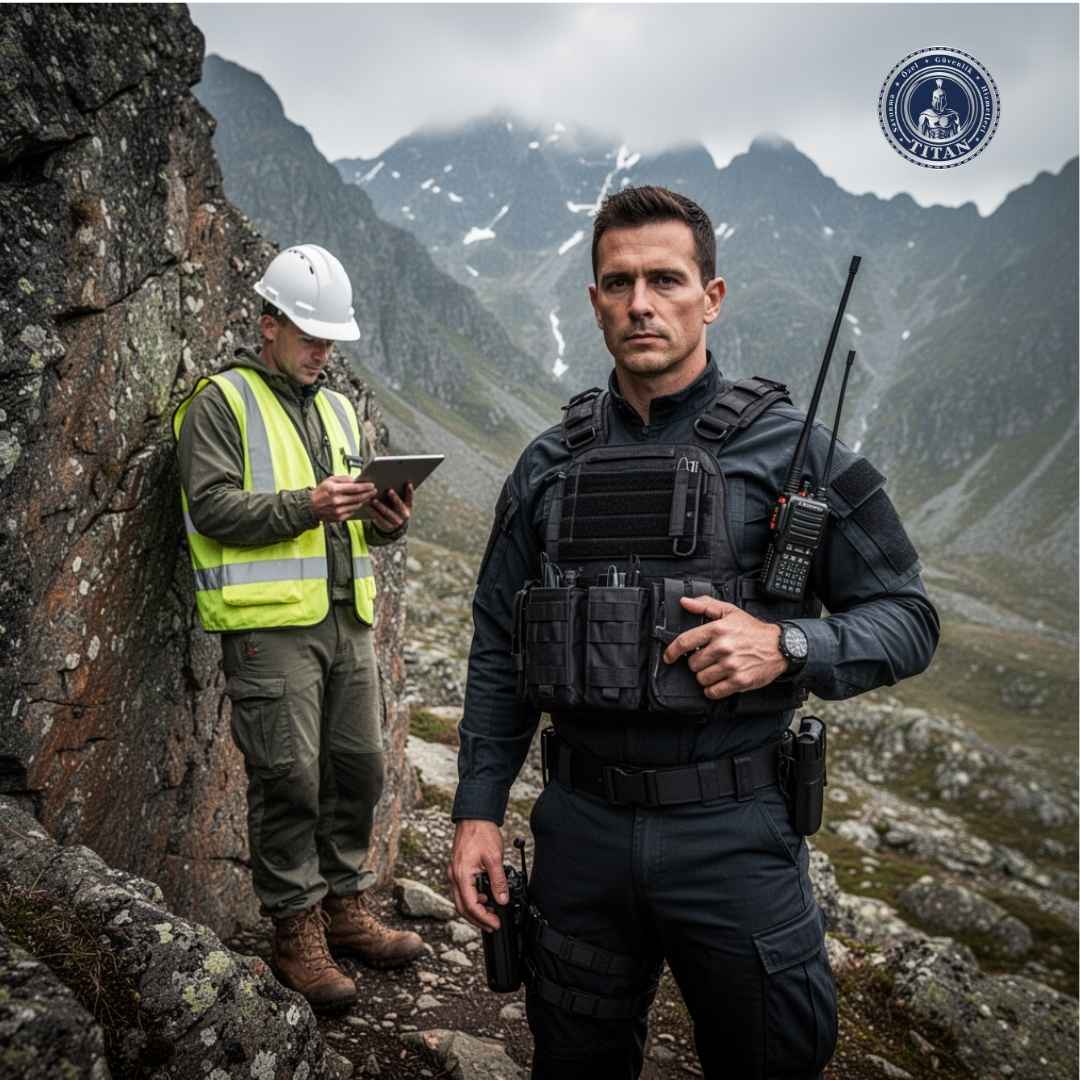
Exploration and field research require a different security plan from a fixed facility entrance. Teams may move between several work locations in a week, while access, weather, transport and sample handovers change. A well-prepared opening file can quickly become outdated if those changes are not followed. The essential requirement is knowing who authorises the day's work and who receives a report when something goes wrong.
1. Check the daily task against access permissions
The employer's field lead should confirm planned locations and access conditions with the relevant teams. Land access permission, an operating licence and a private security agreement are different matters. Purchasing security does not grant permission to enter someone else's land or exercise special powers on a public road.
A daily briefing can include the team lead, expected return, changes to the work area and necessary contacts. Sensitive project details do not need to be shared with everyone. However, an officer cannot be expected to know an unreported route change or a task assigned to another team. Identify who can authorise departures from the agreed plan.
2. Separate sample custody from scientific validity
The technical team is responsible for sample identification, collection methods and laboratory conditions. A guard witnessing the handover of a core, soil sample or other container does not verify its scientific representativeness or an analysis result.
Useful security records may include the authorised handing-over and receiving parties, container identifier, handover time and visible packaging condition. Refer inconsistent labels to the technical owner rather than assigning a replacement code informally. Clarify when transport responsibility transfers between parties. Assess the actual sensitivity, value and transport conditions instead of assuming every sample requires an armoured vehicle or armed escort.
3. Make communications a working process
Having a radio or satellite device does not demonstrate usable coverage at every location. Before deployment, the team can check the relevant communication arrangement, confirm that the receiving contact is on duty and establish what follows an unanswered call. The employer's risk assessment and field plan should identify who decides whether work continues when communications fail.
HSE's lone-working guidance highlights risk assessment where immediate assistance may be unavailable. It is used here as an international planning reference. The presence of a security officer does not replace medical, rescue or transport expertise. Helicopter or medical evacuation services should only be described within arrangements that actually exist.
4. Distinguish community engagement from threat assessment
Local people asking about land use, water, access or environmental effects should not automatically be treated as threats. An authorised field or community-relations representative can provide a channel for concerns. Security personnel should assess concrete incidents and make necessary reports, rather than independently resolving commercial or community disputes.
IFC Performance Standard 4 also considers how security arrangements affect local communities. Its application to a particular project may depend on financing and contractual conditions; it should not be presented as an automatic legal obligation for every project in Türkiye.
5. Ask bidders how changes will be managed
Ask how a new field location changes the duty plan, who handles a sample handover discrepancy and how communication checks are recorded. A sample duty file and responsibility chart are more informative than an unsupported promise of continuous protection in every condition. The plan should provide workable boundaries that support decisions by the relevant technical teams.