
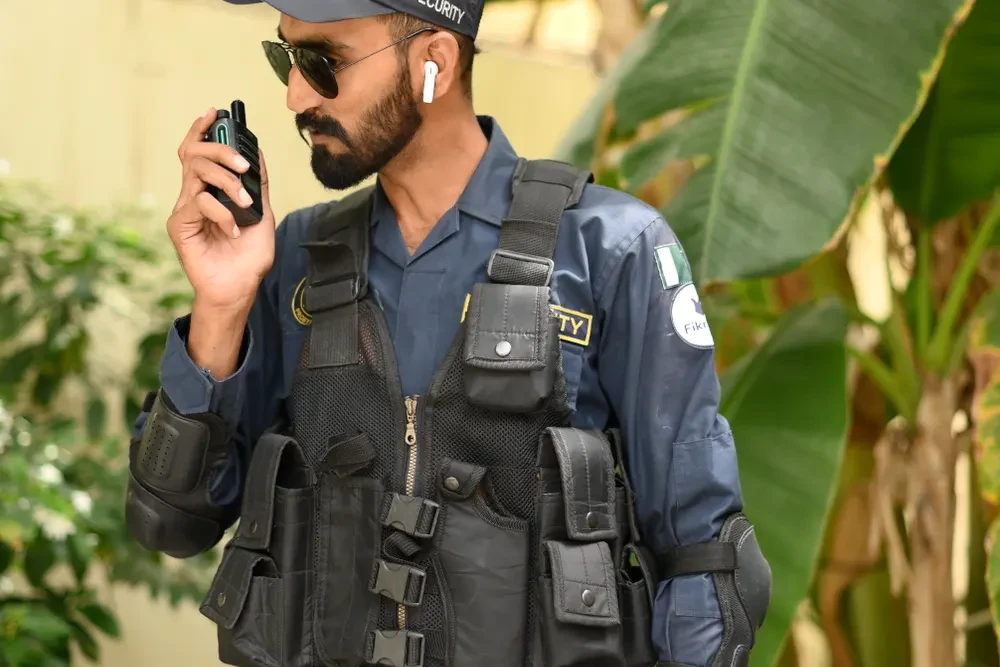
When a security officer works without a colleague nearby, someone must be available to receive and act on a request for help. Issuing a telephone does not establish that a capable contact will answer it. Once the suitability of lone working has been assessed, the client and provider should design both ends of the communication arrangement.
What the evidence supports
In Florez-Acevedo and colleagues' 2026 US study, lone workers reported poorer stress and injury outcomes; a stronger psychosocial safety climate was associated with better outcomes. This cross-sectional research does not prove that a particular calling interval prevents injuries. [1] Our recommendations provide a management framework for keeping the worker's support needs visible.
Assess the assignment before choosing a device
Consider the task, environment, individual requirements and availability of assistance together. The relevant occupational health and safety decision-makers should establish which activities are suitable under which conditions. A communication device cannot by itself make an unsuitable working arrangement acceptable.
HSE's guidance treats training, supervision, monitoring and support as connected elements of lone working. [2] This UK guidance does not replace employer obligations in Türkiye. The communication card below is our proposed management tool; it does not prescribe a universal check-in interval.
Give the communication card two owners
The person receiving contact must accept the arrangement too. The officer needs to know what to do, while the receiving contact needs to know what they are responsible for following up.
The card can answer these questions:
- Who initiates planned contact, and through which channel?
- Who receives that contact during the relevant working period?
- Who covers for the first contact when unavailable?
- Which authorised person assesses a failure to establish contact?
- How is completion of the assignment confirmed?
- Who may access the record, and for how long is it needed?
The contact arrangement follows the task assessment. Sensitive assignment details should be available only to authorised people who need them.
Assessing a missed contact is itself a responsibility
Suppose a planned call does not take place. Initially, the cause could be a technical problem, a changed assignment or a situation requiring assistance. The record should not automatically be closed as employee misconduct. The responsible person follows the approved missed-contact procedure and, when necessary, contacts the appropriate support services.
This must not become a task that everyone waiting for the officer's call assumes someone else owns. When the receiving contact's shift ends, transfer of any open follow-up should also be confirmed. A message shown as sent does not by itself establish that another person has taken responsibility.
Run a small, announced check
Before work begins, arrange an announced communication test. Without generating a real emergency call, check that the channel works and the recipient understands the assignment. Separately ask who would make the next decision if contact failed. That answer matters as much as a functioning device.
A brief test record can identify whether contact succeeded, what was missing and who will resolve the gap. Keep proportionate information demonstrating that support is available.
Close the working period clearly
Completion of the officer's assignment and closure of communication monitoring should align. If a matter remains open, identify its continuing owner. For the client's procurement team, the central question is: while this person works alone, has someone elsewhere explicitly accepted responsibility for support?