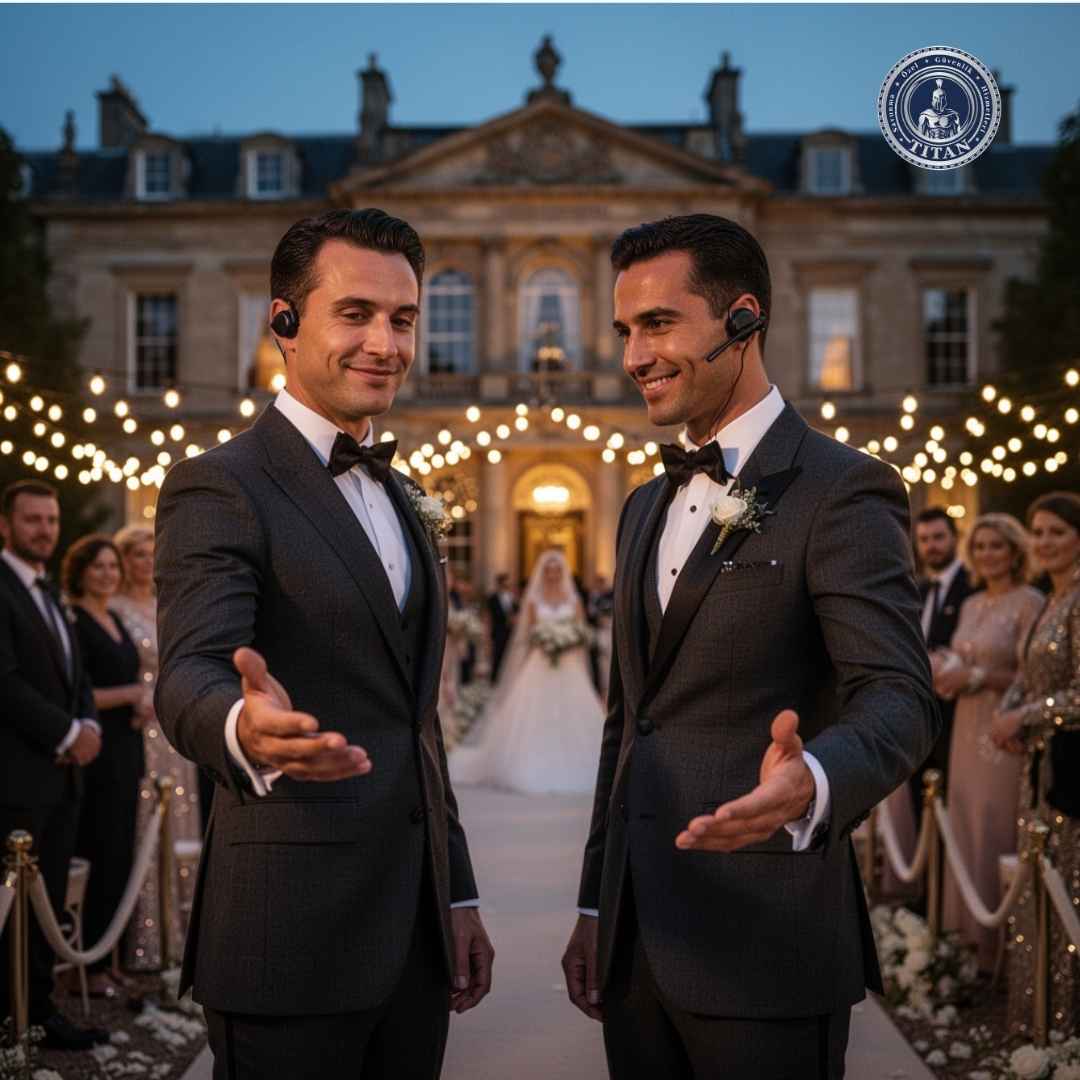
Wedding security can begin with clear responsibilities rather than conspicuous measures that unsettle guests. If the organiser, venue, family representative, reception team and security provider make conflicting decisions, uncertainty appears at both arrival and closeout. Guest-list changes and the handover of jewellery or valuable gifts are two separate processes that deserve agreement before the event begins.
1. Use one approval contact for guest-list changes
Give the reception team an up-to-date list and a designated person who can authorise changes. Explain who should be called for an unlisted guest, how staff should communicate while approval is pending and who makes the final decision. Having an available contact throughout the wedding can reduce the number of entrance queries that reach the couple.
Confirming attendance and providing licensed security are different roles. A family disagreement or invitation dispute should not automatically be treated as grounds for physical intervention. Staff need a clear reporting process that stays within their authority. Consider a limited-access backup list or another alternative if the chosen application fails.
2. Define jewellery custody as a separate service
Having security at the entrance does not automatically include storing, transporting or insuring jewellery. If such services are required, document who accepts custody, the acceptance conditions, when responsibility begins and ends, and the relevant insurance coverage.
A handover record can describe the contents or container as agreed by the authorised parties, together with the handover time. Do not assume a guard establishes the monetary value, purity or legal ownership of jewellery. Refer discrepancies to the authorised representatives. Avoid distributing value information, storage arrangements or transport plans beyond those who need them. Calling an event “VIP” does not make armed escort or armoured transport an assumed service.
3. Plan movement beyond the entrance
HSE's event guidance considers arrival, circulation within the venue and departure as separate planning stages. A wedding in Türkiye must be planned around the venue's conditions and applicable local requirements.
For example, the organiser may need to adjust arrangements if a gift presentation, photography queue and catering movement converge in one corridor. Keep exits and emergency access routes available. Discuss how security and other teams' duty periods will be extended if the programme runs late, rather than assuming everyone leaves at the advertised finish time.
4. Translate privacy wishes into workable arrangements
Photography and media rules can be communicated from the invitation stage. However, a request for no photography does not give staff unrestricted authority to confiscate phones or delete recordings. The organiser's designated contact should handle disagreements through an appropriate process.
Keep guest-list information limited to what is necessary, restrict access by role and determine how it will be used after the event. The Turkish Data Protection Authority's explanation of the duty to inform addresses transparency about who processes personal data and for what purposes. Receiving a list for security does not provide unlimited permission to reuse it for marketing.
5. Plan valet and closeout handovers separately
Vehicle keys, driving and related responsibilities should be assessed within the valet service's own scope. The presence of a security provider does not mean it automatically assumes those duties. At closeout, record who remains on site, who received any entrusted items and whether a report remains unresolved. Asking bidders for these concrete arrangements supports a more useful comparison than promises of a flawless evening or zero risk.