This article is general information, not legal advice.
Air cargo leaving Turkey, whether from Istanbul Airport's cargo hub or a regional airport, moves through a secure supply chain supervised by the Directorate General of Civil Aviation (Sivil Havacılık Genel Müdürlüğü, SHGM). Two approved roles carry that chain. The entity international texts call a regulated agent is called a yetkili acente (literally "authorised agent") in Turkish law; it applies security controls and, in its A-group form, screens cargo. The bilinen gönderici (known consignor) is the shipper that produces or packs the goods and protects them from interference until handover. Cargo that does not come from one of them must be screened before loading.
Since 22 May 2026 the core rules sit in the Civil Aviation Security Regulation (SHY-GÜVENLİK), and SHGM's Air Cargo and Mail Security Instruction (SHT-17.6) sets out how approvals work. For cargo flown into the European Union, EU Regulation 2015/1998 adds its own layer. This explainer is for foreign forwarders, shippers and their Turkish subsidiaries: what the roles mean, what premises are expected to provide, how training and records work, and where private security fits and where it does not.
The international concept and its Turkish legal basis
The secure supply chain idea comes from Annex 17 to the Chicago Convention, the international aviation security standard. Rather than screening every consignment at the airport, security controls can be applied earlier by an approved entity, and the cargo is then protected from unauthorised interference until it is loaded. Turkey's new Civil Aviation Security Regulation, published in the Official Gazette of 22 May 2026 (No. 33261) by the Ministry of Interior and the Ministry of Transport and Infrastructure, cites among its legal bases the law approving the Chicago Convention and its annexes, and entered into force on the day it was published.
Its cargo provisions follow the international model:
- Article 36: all cargo and mail is subject to security controls before being loaded on an aircraft.
- Article 37: the Directorate General establishes a secure supply chain system including authorised agents and known consignors, and the agent issues a security declaration that accompanies each consignment.
- Article 38: cargo is screened by methods suited to its nature; airlines and A-group authorised agents are responsible, and a consignment whose safety cannot be assured is not accepted.
- Article 39: screened cargo is protected from unauthorised interference until departure, with responsibility on the authorised agent, the known consignor and the airline.
- Article 40: high-risk cargo receives additional controls and screening.
- Article 47: training, certification and security culture.
Academic work in Turkey describes the same toolkit. A 2017 review by Korkmaz in a Kilis 7 Aralık University journal lists the known consignor system, more cargo inspection, stronger physical security of air cargo facilities, tighter control of cargo operations and security training for cargo staff among the measures adopted to reduce threats to air cargo.
Terminology: getting the Turkish right
Foreign teams often translate "regulated agent" literally. The Turkish regulation does not use that phrase; it uses yetkili acente. Using the official terms in contracts and applications avoids confusion with the authorities and with Turkish counterparts.
| International term | Turkish legal term | What it means in practice |
|---|---|---|
| Regulated agent | Yetkili acente (A grubu) | Applies security controls, screens cargo and/or provides integrated storage and transport within the secure chain |
| Known consignor | Bilinen gönderici | Shipper that produces or assembles cargo on its own account, approved by SHGM |
| Security declaration | Gönderi güvenlik beyanı | Statement of the consignment's security status that travels with it |
| Secure supply chain database | Güvenli tedarik zinciri veri tabanı | Register of approved agents and known consignors, checked on acceptance |
| Accountable security manager | GSYY (Güvenlikten Sorumlu Yetkili Yönetici) | Manager approved by SHGM who leads the organisation's aviation security structure |
How approval works
SHGM's 2018 Air Cargo and Mail Security Instruction (SHT-17.6) sets out the procedures. Check with SHGM which version applies today, since instructions may be revised under the 2026 regulation. Under the 2018 text:
- Known consignor approval is site-specific (Article 25). The application includes a security programme covering procedures, staff training, quality control and an emergency plan (Article 26).
- National inspectors carry out an on-site inspection; if satisfied, SHGM grants approval for five years and publishes it in the secure supply chain database (Article 26). An applicant audited under the customs Authorised Economic Operator (yetkilendirilmiş yükümlü) scheme in the previous three years may have that audit taken into account.
- Each approved site needs a person responsible for applying and supervising security controls, and the organisation needs an approved accountable security manager (Article 27). The security programme is reviewed and submitted for approval every year.
- Approval can be suspended for up to 90 days if conditions are not met, and suspensions are published in the database (Article 29).
- For agents, the instruction distinguished an A group, which performs controls and screening and is approved per site, and a B group, which hands cargo only to A-group agents and is not itself part of the secure supply chain; B-group approval covers all of the organisation's premises (Article 12). Agent approvals also ran for five years.
What premises are expected to provide
Neither the Turkish nor the EU text prescribes a fence height. They set outcomes. EU Regulation 2015/1998 requires a known consignor's site to have a level of security sufficient to protect identifiable air cargo, and that cargo to be protected from unauthorised interference during production, packing, storage, despatch and transport, as applicable. SHT-17.6 (Article 22) asks an agent, once controls are applied, to limit unescorted access to secured consignments to authorised people, protect them until handover, and keep them in parts of the premises with entry control; where that is impossible, they must be physically protected or kept under constant supervision.
At planning level that means:
- a clearly defined area where cargo becomes "identifiable air cargo", separated from general warehouse space;
- entry to that area limited to named, trained staff, with a record of who enters;
- controlled vehicle access to loading points, and tamper-evident sealing for vehicles carrying secured cargo;
- a handover procedure in which the receiving agent checks the database and the identity of the person delivering (SHT-17.6, Article 21);
- written procedures for what happens when a seal is broken or cargo is left unattended.
Detailed protective measures belong in the approved security programme and should be shared only with those who need them.
Staff training and records
Training is where many applications stall. SHT-17.6 (Article 17) requires authorised agents to ensure that all staff applying security controls, or having access to secured cargo, are trained and recruited in line with SHGM's aviation security training instruction, SHT-17.2, which includes background checks for relevant roles. The 2026 regulation adds a whole article on training, certification and security culture.
Keep records that an inspector can sample: training certificates per person, background check status where required, the access list for the secured area, acceptance forms, security declarations and the annual programme review. Under SHT-17.6 (Article 23) the document carrying the security declaration is kept for at least 24 hours after loading, or for the duration of longer flights; internal retention is often longer for commercial reasons. Personal data in these records falls under Turkey's Personal Data Protection Law (KVKK), so define retention per record type.
Private security versus approved screening
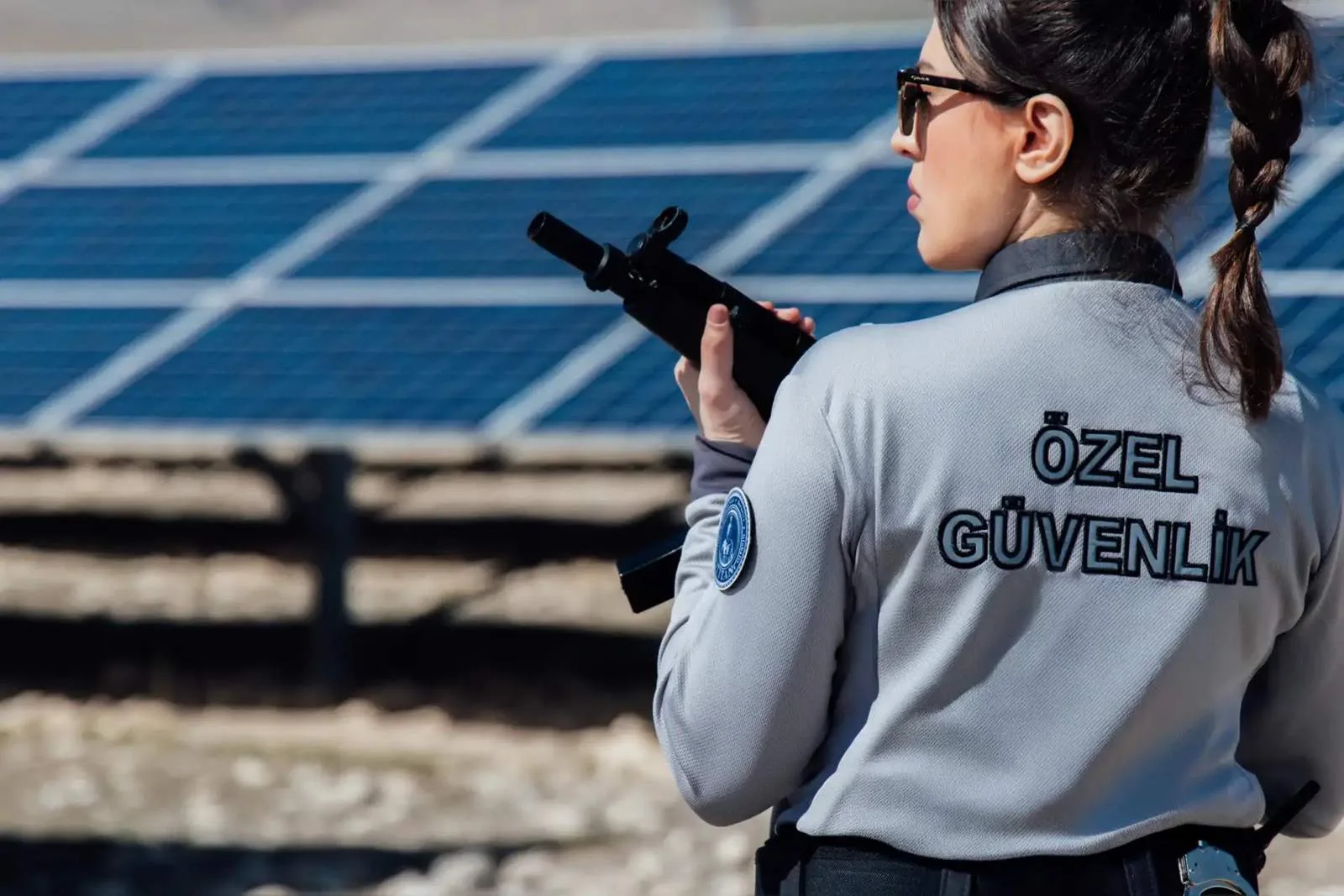
This boundary is often misunderstood. Screening and acceptance of cargo are duties of airlines and A-group authorised agents under the regulation. A private security company does not become part of the secure supply chain simply by guarding a warehouse. The 2018 instruction makes the point from the other side: private security companies that carry valuable cargo under Law No. 5188 had to obtain authorised-agent approval themselves (Article 12). What a guarding provider can do is support the approved entity's programme: control the vehicle gate and the entrance to the secured area, keep access and visitor records, monitor cameras and alarms, patrol, escort visitors and report incidents.
Where an approved agent subcontracts security controls, SHT-17.6 (Article 24) allows this within defined conditions, for example by another approved entity or under the agent's own security programme at its premises. Any staff performing those controls then need the training and checks the programme requires. Separately, Turkish private security officers work under Law No. 5188: employing them requires the governor's permission (Article 3), and Article 7 lists their powers: at the areas they protect, these include walk-through detector checks and X-ray screening of belongings, and at transport facilities such as airports, ports and terminals, identity checks as well. Airside areas of airports follow the airport's own security programme.
The EU layer for cargo flown into the Union
Turkey is outside the EU, so cargo flown from Turkish airports into the Union meets the third-country rules in Chapter 6.8 of Regulation 2015/1998. Air carriers flying cargo into the EU from third-country airports that are not on the regulation's exempted list must be designated as ACC3 (Air Cargo or Mail Carrier operating into the Union from a Third Country Airport), based on an EU aviation security validation, for up to five years. Third-country agents and known consignors can be validated as RA3 and KC3, with validation repeated at least every five years. In practice your airline may ask whether your forwarder is RA3-validated or your site KC3-validated; if not, the cargo is screened under the carrier's programme.
Checklist for shippers and forwarders
- Confirm which role you need: known consignor, A-group or B-group agent, or none (using an approved agent).
- Check your partners in the secure supply chain database before contracting.
- Appoint a security manager and a responsible person per site.
- Draft the security programme: procedures, training, quality control, emergency plan.
- Define and physically separate the identifiable air cargo area.
- Train and check staff with access before they start, and keep certificates on file.
- Agree vehicle sealing and handover documentation with your agent.
- For EU-bound flows, ask your carrier about ACC3, RA3 and KC3 requirements.
- Write the guard service scope so it supports, but does not replace, approved controls.
Working with Titan Savunma
Titan Savunma is an Ankara-based private security company licensed by the Ministry of Interior under Law No. 5188, with ISO 9001, 14001, 45001, 22301 and 28000 certificates; ISO 28000 is the supply chain security management standard. We work with international companies in English and Turkish and plan services across provinces with a single point of contact, a written scope and regular reporting. See our logistics and warehouse security page and how we act as a security partner for international companies in Turkey.
Sources and Further Reading
- European Union — Commission Implementing Regulation (EU) 2015/1998 on aviation security, EUR-Lex (2015)
- Korkmaz, C. A. — Hava Kargo Taşımacılığı Güvenliğine Yönelik Tehditlerin Asgari Düzeye İndirgenmesi İçin Alınması Gereken Önlemler, Kilis 7 Aralık Üniversitesi Fen ve Mühendislik Dergisi 1(2), DergiPark (2017)
- Resmî Gazete — Sivil Havacılık Güvenliği Yönetmeliği (SHY-GÜVENLİK), No. 33261 (2026)
- SHGM — Hava Kargo ve Posta Güvenliği Talimatı (SHT-17.6) (2018)
- Mevzuat Bilgi Sistemi — Law No. 5188 on Private Security Services (2004)