
Multi-Site Projects
For sites in different provinces we work with one contract, a duty plan for each site and project management responsible for all locations.
For Organisations and International Companies in Turkey
Titan Savunma is an Ankara-based private security company operating under Law 5188 with an operating licence from the Ministry of Interior. We plan security services for factories, energy sites, office buildings, healthcare and education institutions and diplomatic premises in different provinces of Turkey, with a single point of contact, a written scope and regular reporting. We work with international companies in English and Turkish.
Service Scope
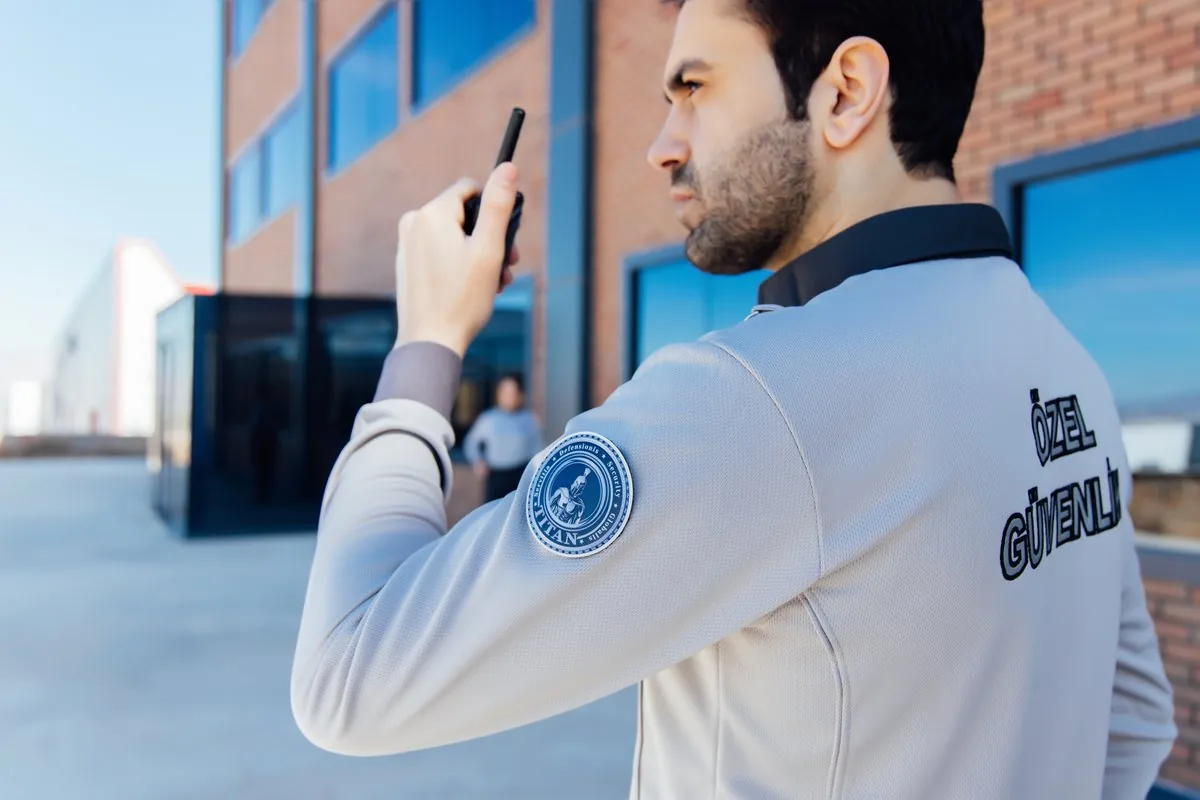
We shape the service around the type of site, the number of locations and your company’s security policies.
For sites in different provinces we work with one contract, a duty plan for each site and project management responsible for all locations.
At factories, industrial zones, solar power plants and warehouses we plan gates, perimeters, patrols and shifts around site conditions.
At offices, headquarters, embassies and consulates we set duties around visitor reception, access and confidentiality expectations.
We address your global security policies together with Turkish law and can run reporting and correspondence in English.
A Planned Start
Before the service starts, we set out the legal process, cost items and responsibilities clearly.
We discuss your sites, operating hours and security policies.
The private security permit is issued by the governorship to your organisation; we help prepare the application documents.
Wages, social security, overtime, severance provisions and other costs are shown separately in the proposal.
We run the service with staff training, handover and regular site supervision.
Your Sector’s Priorities
In Turkey, private security services are governed by Law 5188. An organisation obtains a permit from the governorship to buy the service from a company; the company must hold an operating licence from the Ministry of Interior and its officers a valid private security ID card. Our licence and our ISO 9001, 14001, 45001, 22301 and 28000 certificates can be viewed on our credentials page.
The professional experience and security training of retired law enforcement personnel within our team contribute to our approach.
Permits, staffing and the limits of duties are planned in line with the law.
Cost items and price update terms are written clearly in the proposal.
One responsible project manager coordinates all locations.
For international brands in Turkey, we offer a single point of contact, a written scope and regular reporting. Work with us as your security partner
Our Offices
Our general directorates in Ankara and İstanbul coordinate our regional directorates. Each regional directorate is responsible for planning and following up the service in the provinces of its region.
One contact address for all our directorates: [email protected]
Request a ProposalExpert View and Recommendations
For an organisation with sites in several provinces in Turkey, or one entering the Turkish market, choosing a private security company means considering legislation, procurement method and on-site supervision together. The six sections below offer corporate buyers a practical checklist based on Law No. 5188 and peer-reviewed research.
Private security in Turkey rests on a two-tier permit system. On the company side, the operating licence is granted by the Ministry of Interior; the company’s sole business must be protection and security, and branches must be notified to the Ministry and the relevant governorship within one month (Law No. 5188, Article 5). On the client side, having security provided by a company requires the governor’s permission following a decision by the provincial private security commission (Articles 3 and 4). Because commissions sit at provincial level, we recommend planning permit processes site by site for facilities in different provinces.
Documents to verify:
Foreign nationals setting up a private security company, and foreign companies providing private security services in Turkey, are subject to reciprocity (Article 5). Organisations using a global supplier should reflect this locally.
In multi-site tenders, choosing on lowest price alone is tempting. Yet Hart, Shleifer and Vishny’s peer-reviewed work shows that when a contract cannot fully define quality, a contractor’s drive to cut costs is typically excessive, because it ignores the damage to quality that cannot be specified. In security, an officer’s alertness, the quality of training and whether supervision actually happens are exactly these kinds of elements.
Bajari, McMillan and Tadelis’s study of private-sector building contracts likewise concluded that competitive bidding may perform poorly for complex work, when contract design is incomplete and when there are few bidders, and that it may reduce the communication that lets buyers draw on a contractor’s expertise.
We recommend scoring price together with a technical assessment: an itemised cost breakdown, a duty plan for each province, a supervision and training schedule, a sample report, and face-to-face meetings with shortlisted companies.
If you buy corporate security services across several sites, we recommend a two-tier contract: a common security policy and reporting standard for all locations, and a separate post order annex for each site. Post orders should cover posts, hours, patrols, entry control, incident reporting and emergency roles.
Two legal limits apply when writing the scope: private security staff may not be employed in any work other than protection and security (Article 16), and decisions on firearms rest with the commission, with armed officers not permitted in education and healthcare facilities (Article 8).
The indicators we recommend measuring in the same way at every location:
Indicators measured with the same definition make it possible to compare provinces.
Taking over a multi-site service all at once creates unnecessary risk. We recommend a phased transition that starts with a pilot site and carries the lessons to other provinces. Statutory notifications should be built into the timetable at every location: the company notifies the relevant governorship in writing of the service start by the end of working hours on the same day (Article 5), and officers who start or leave are notified to the governorship within fifteen days (Articles 11 and 12).
A transition checklist for each location:
The Ministry of Interior and governorships are authorised to inspect private security companies and units; failing to provide information and documents or to remedy deficiencies leads to administrative fines (Articles 20 and 22). For an organisation with sites in several provinces, this means keeping records in the same format at every site. The law sets basic training at no fewer than one hundred and twenty class hours and refresher training at no fewer than sixty (Article 14); training records should be part of the report.
In Nalla, Paek and Lim’s peer-reviewed study of 251 security officers and supervisors, job autonomy, pay and benefits, and perceived support from other employees were strong predictors of job satisfaction. Officers at remote sites therefore need regular visits and feedback.
We recommend a single project lead, a monthly consolidated report and English-language reporting where needed.
When choosing a private security company in Turkey and setting up the service, we recommend the following:
At Titan Savunma we plan to work from our Ankara headquarters with organisations across Turkey on this basis, with a written scope and measurable targets.
Before We Speak
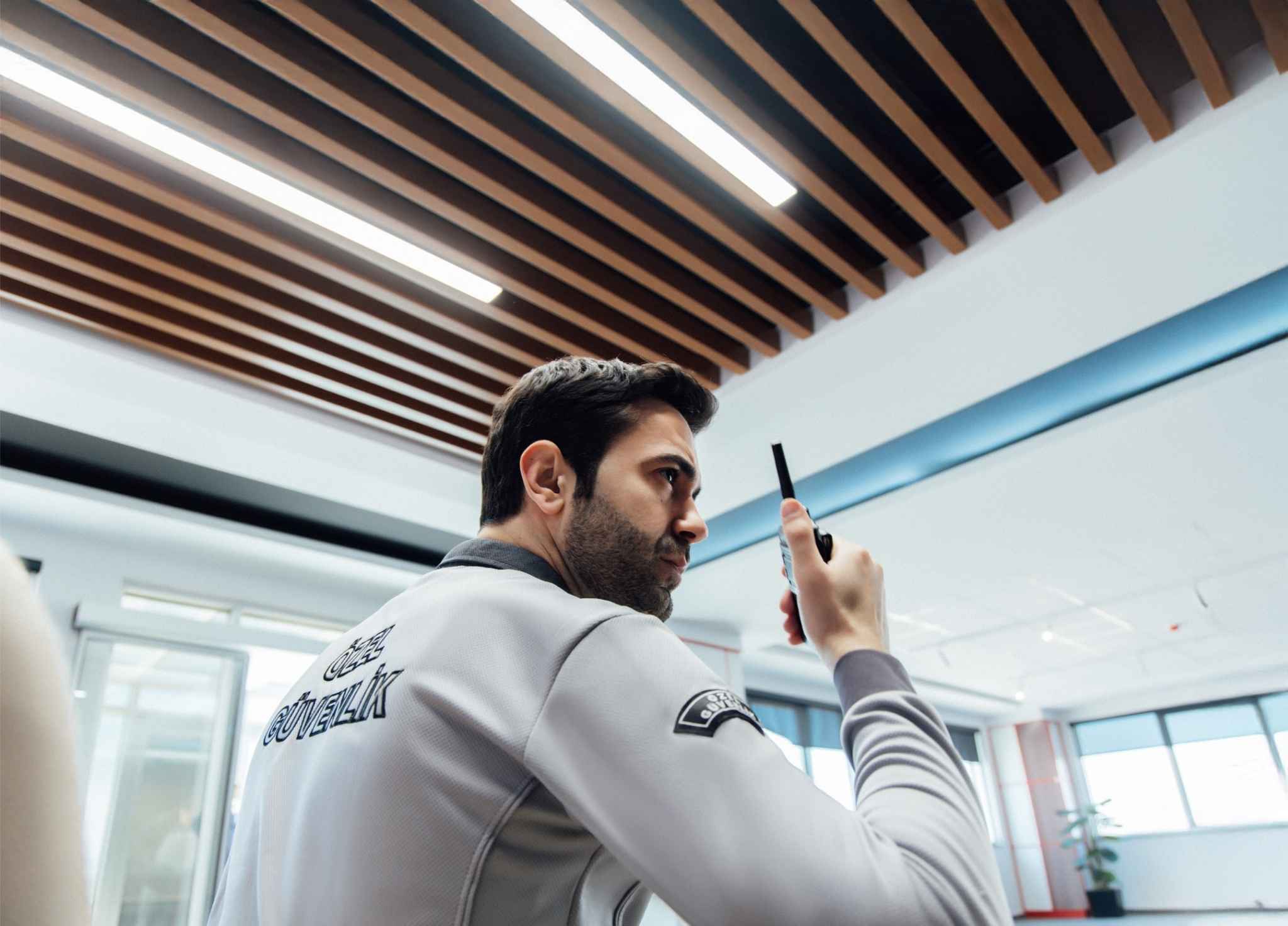
When you share your site locations, we review staffing, transport and supervision together and work under a single contract for multi-site projects.
Yes. Proposals, correspondence and periodic reports can be prepared in English.
For your supplier onboarding we share our Ministry of Interior operating licence, ISO 9001, 14001, 45001, 22301 and 28000 certificates, trademark registration, trade registry and tax registration details, and our compulsory private security financial liability insurance policy. We also share our written ethics and anti-bribery policy on request and complete your supplier questionnaires and registration forms.
The permit is obtained from the relevant governorship in the name of the organisation receiving the service. We help prepare the application documents.
The number of officers, shift pattern, wages and statutory costs, overtime, transport, meals and supervision are calculated together.
Yes, working under one contract with a single project lead is possible. However, because the private security permit is granted by the governor following the provincial commission’s decision, each site’s permit process is handled separately in the relevant province.
Under Article 5 of Law No. 5188, foreign companies providing private security services in Turkey are subject to reciprocity, and operating requires Ministry of Interior permission. Global security policies can be applied through a licensed local private security company, adapted to Turkish legislation.
No. Article 16 of the Law states that private security staff may not be employed in any work other than protection and security, and Article 20 sets an administrative fine for each breach found. Duty boundaries should therefore be clearly defined when writing the scope.
Timely shift handovers, response time to incidents and alarms, patrol completion rate, adherence to the training schedule, time to close audit findings and staff turnover rate are a good starting point. For multi-site services we recommend measuring indicators with the same definition at every site.
Tell us about your sites and expectations so we can review a suitable scope together, in English or Turkish.
Contact
Tell us your facility type, location and general requirements. Together, we can define a service scope that suits your organisation.
Fields marked * are required.
Looking for a role? Visit our careers page