Short answer: A greenhouse business or a cut-flower and vegetable packing house in Antalya is at its most exposed during harvest. In those weeks crates, pallets, hand tools and fuel are spread across the site; the pesticide and fertiliser store is opened and closed many times a day; seasonal crews bring many new faces onto the site; and night loading runs late. Rural crime research shows that losses of this kind concentrate on small equipment, fuel and chemicals, and that which protection works depends on the type of crime. Harvest security therefore has three parts: a chemical and fertiliser store with one key-holder and a log, a worker entry routine tied to the employer's list, and a packing dock where produce changes hands only after it has been counted.
This article is general information, not legal advice.
Why this matters in Antalya
The 2026 briefing of the Antalya Provincial Directorate of Agriculture and Forestry, drawing on TurkStat 2025 data, puts the province's covered growing area at 322,993 decares, or 41% of Turkey's total. Some 80% of Turkey's glasshouse area is in Antalya, and 85% of the province's vegetable output is grown under cover. Antalya produces 51% of Turkey's cut flowers, and 84% of the province's ornamental plant output goes to export markets. According to the same briefing, agricultural and forestry products made up 57% of the province's USD 2.12 billion of exports in 2025.
Employment data point the same way. Table 1.11 of the Social Security Institution (SGK) Statistical Yearbook 2025 shows Antalya ranking first in Turkey for crop and livestock production, with 1,293 workplaces and 13,504 compulsorily insured employees. The journey of produce after it leaves the greenhouse is a large sector in its own right: wholesale trade accounts for 6,519 workplaces and 30,794 insured employees, warehousing and transport support activities for 722 workplaces and 10,456 employees, and food manufacturing for 12,052 employees. Registered waged farm workers are only part of the picture; the number of people on site in harvest weeks moves far more than these annual figures suggest.
The result is a dispersed chain of greenhouse clusters, packing houses, cold stores and dispatch points. Something valuable sits at every link: ripe produce, export-labelled boxes, costly irrigation and spraying equipment, fuel and hazardous chemicals.
What the research says
Rural theft follows opportunity
Mears, Scott and Bhati's 2007 study in Rural Sociology examined theft of farm equipment, crops, livestock and chemicals through the lens of opportunity theory. The authors conclude that the theory partly explains differences in victimisation, depending on the type of crime, which means the right protection has to be worked out crime by crime. The same team's evaluation report for the US Department of Justice draws on farmer surveys in nine California counties. In the 2005 survey, 50% of farmers reported victimisation, and the most common type was small equipment theft at 47%. Chemical or fuel theft rose from 13% in 2004 to 29% in 2005, which the authors attribute largely to rising fuel prices. Burglary of farm buildings stood at 20%. The report also found that only 12% of agricultural crime was reported to the police.
Among the measures it compiles from the rural crime literature, the report lists three specific steps for agrichemicals: buy only what is needed, keep it in a secure building, and employ security personnel where appropriate. These findings come from a different farming system in the United States and cannot be transferred directly to Antalya, but the mechanism, losses gathering around small, portable and easily sold items, holds for greenhouse operations too.
Stored pesticides are a security and a health issue
Dağ and Yılmaz's 2025 study in the Journal of Agricultural Sciences surveyed 115 greenhouse tomato growers face to face in Kumluca, Antalya. The growers used 57 different active ingredients, and 55.88% of the pesticides used fell into hazardous classes under the World Health Organization classification. The authors also stress that residue notifications from EU countries are a warning for growers. For security, the meaning is plain: a greenhouse store holding many different products is both stock worth stealing and, if used without control, a health and export risk.
Damalas and Eleftherohorinos's 2011 review notes that occupational exposure is common among farm workers in open fields and greenhouses, and counts inadequate storage and the reuse of old pesticide containers among the causes of exposure. Discarded containers also appear in the review as an exposure route. Who opens the store door and where the empty can ends up are two sides of the same record-keeping question.
Cameras alone are not enough
Piza and colleagues' 2019 systematic review and meta-analysis covering 40 years of studies found that CCTV is associated with a significant but modest fall in crime, that the most consistent effects appear in car parks, that actively monitored systems outperform passive recording, and that cameras work better alongside other measures. For a greenhouse or packing house, a camera on the dock or the store door helps only when someone watches it and checks it against the log.
What the official guidance says
Turkey's Ministry of Labour and Social Security publishes an occupational health and safety guide for covered growing. It lists uncontrolled access by unauthorised people to chemical stores, unlabelled chemicals kept loosely in boxes, and missing safety data sheets among the causes of chemical hazards in greenhouses. Its recommendations are clear: chemicals should be kept in a dedicated, ventilated area with warning signs; unauthorised people and children should be kept out; and open, unlabelled containers lying around the greenhouse should be removed. The guide also asks for electrical panels to be kept in locked cabinets and for fire precautions and emergency lighting in stores. These duties belong to the employer under Law No. 6331 on Occupational Health and Safety; the security officer's role is to observe that the employer's rules are applied on site every day and to record it.
Harvest-season checklist
| Area | Risk | Practical measure |
|---|---|---|
| Pesticide and fertiliser store | Unauthorised entry, missing stock, unlabelled containers | One named key-holder, a log entry at every opening, weekly stock count, warning signs, empty containers returned against a count |
| Equipment and fuel | Loss of hand tools, pumps, batteries and fuel | End-of-shift return point, locked cabinet, meter reading on the fuel tank, marked equipment |
| Worker entry | Not knowing who is on site when there are many new faces | Employer's daily list and badge, a single entry point, sprayed sections closed for the period the employer sets |
| Packing dock | Count discrepancies, distraction during night loading | Boxes and pallets counted by two people, vehicle plate written in the gate log, a monitored camera on the dock |
| Cold store | Doors left open at night, losses in a power cut | Door sensor and alarm linked to the night patrol, emergency lighting checks |
| Greenhouse perimeter | Entry through plastic sheeting or side doors | Night patrol route run against a log, unused doors locked, perimeter lighting |
Managing seasonal worker entry
Most workers arriving in harvest weeks see the site for the first time. The problem is not the workers but the absence of a list showing who works in which section on which day. In a sound routine, the employer or the labour intermediary prepares the daily list each morning, the business issues badges, and everyone enters through one gate. The security officer checks badges against that list, records the arrival and departure of the crew bus in the gate log, and notes at the end of the day that badges have been returned. The list contains personal data; why it is kept, for how long and how workers are informed is decided by the employer as data controller under Law No. 6698 on the Protection of Personal Data, and the security team follows that decision.
Sections that have just been sprayed are closed for the period the employer sets according to the product label and the occupational health and safety plan. The officer's job is to put the sign on that door, refer anyone who wants to enter to the section supervisor, and log it; the spraying decision and its timing are not the officer's call.
Common mistakes
- Several foremen holding keys to the chemical store, so nobody knows who opened it when stock goes missing.
- Keeping fertiliser and pesticides in the same room as tools, without any count.
- Letting empty pesticide containers pile up beside the greenhouse or be reused for other purposes.
- Leaving the harvest worker list with the intermediary alone, with no record kept by the business itself.
- Installing cameras that feed a recorder nobody watches.
- Counting at the dock with a single person during night loading.
- Not reporting losses; research shows reporting rates are low, which makes prevention harder.
Applying this in Antalya
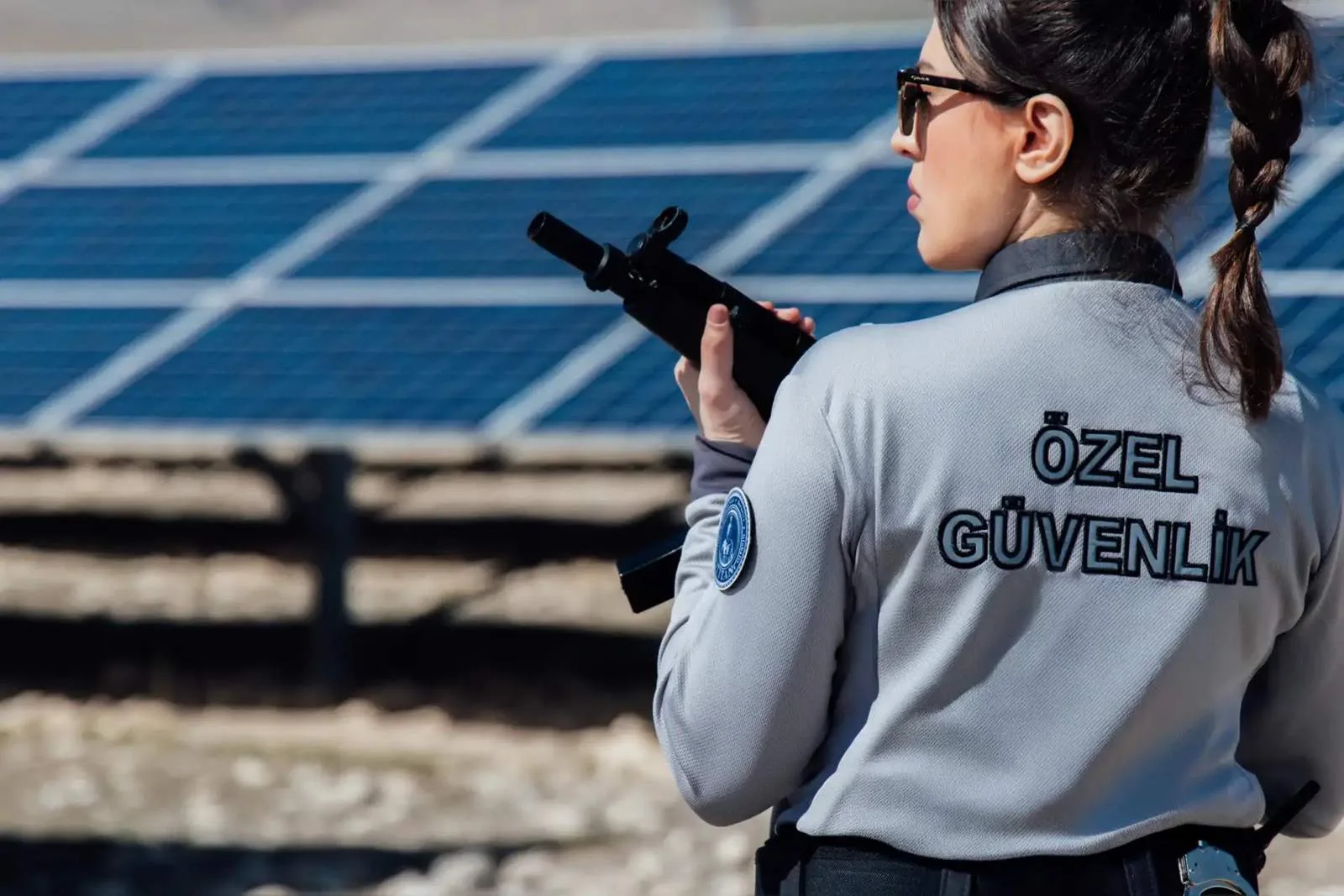
Some of Antalya's greenhouses border forest land, so the store routine should sit in the same document as the emergency and evacuation plan, the assembly point and the chain of contact with the fire service. The region also carries earthquake risk; fixing chemical and fertiliser shelving in place belongs in the business continuity plan. A private security officer applies the entry rules the employer sets, keeps the store and dock log, and reports anything unusual to the person in charge and, where needed, to the police; the officer does not take over stock counts, spraying or worker selection.
While adapting the table above to your own greenhouse cluster, our security risk assessment tool takes you through the store and dock questions one by one. Our duty descriptions for packing houses, cold stores and export dispatch sit under logistics and warehouse security, and the way we organise service by facility type across the province is on the private security company in Antalya page. A logging routine beds in with the least friction when it is set up a few weeks before picking begins.
Titan Savunma is an Ankara-based private security company licensed by the Ministry of Interior under Law No. 5188 and certified to ISO 9001, 14001, 45001, 22301 and 28000. We work with international companies in English and Turkish; ahead of each season our Antalya City Manager, backed by our Mediterranean Regional Directorate based in Antalya and our Ankara General Directorate, walks your greenhouse and packing house and writes the store key routine, worker entry log and night patrol around your operation. To book a pre-harvest walk-round, write to us here.
Sources and Further Reading
- Mears, D. P., Scott, M. L. & Bhati, A. S. — Opportunity Theory and Agricultural Crime Victimization, Rural Sociology 72(2), 151–184 (2007)
- Mears, D. P., Scott, M. L., Bhati, A. S. ve diğ. — Policy, Theory, and Research Lessons from an Evaluation of an Agricultural Crime Prevention Program, Urban Institute / Florida State University, NIJ raporu 217908 (2007)
- Dağ, M. M. & Yılmaz, H. — Evaluation of Pesticide Use in Greenhouse Tomato Production in the Context of Sustainability, Food Safety and Export Residue Notifications, Journal of Agricultural Sciences (Tarım Bilimleri Dergisi) 31(1), 46–58 (2025)
- Damalas, C. A. & Eleftherohorinos, I. G. — Pesticide Exposure, Safety Issues, and Risk Assessment Indicators, International Journal of Environmental Research and Public Health 8(5), 1402–1419 (2011)
- Piza, E. L., Welsh, B. C., Farrington, D. P. & Thomas, A. L. — CCTV surveillance for crime prevention: A 40-year systematic review with meta-analysis, Criminology & Public Policy 18(1), 135–159 (2019)
- Çalışma ve Sosyal Güvenlik Bakanlığı, İş Sağlığı ve Güvenliği Enstitüsü Müdürlüğü — Örtü Altı Yetiştiriciliğinde İş Sağlığı ve Güvenliği Rehberi
- Antalya İl Tarım ve Orman Müdürlüğü — Antalya tarım ve orman sunumu, 2026 (TÜİK 2025 verileri)
- SGK — İstatistik Yıllığı 2025, Bölüm 1 (Tablo 1.11)