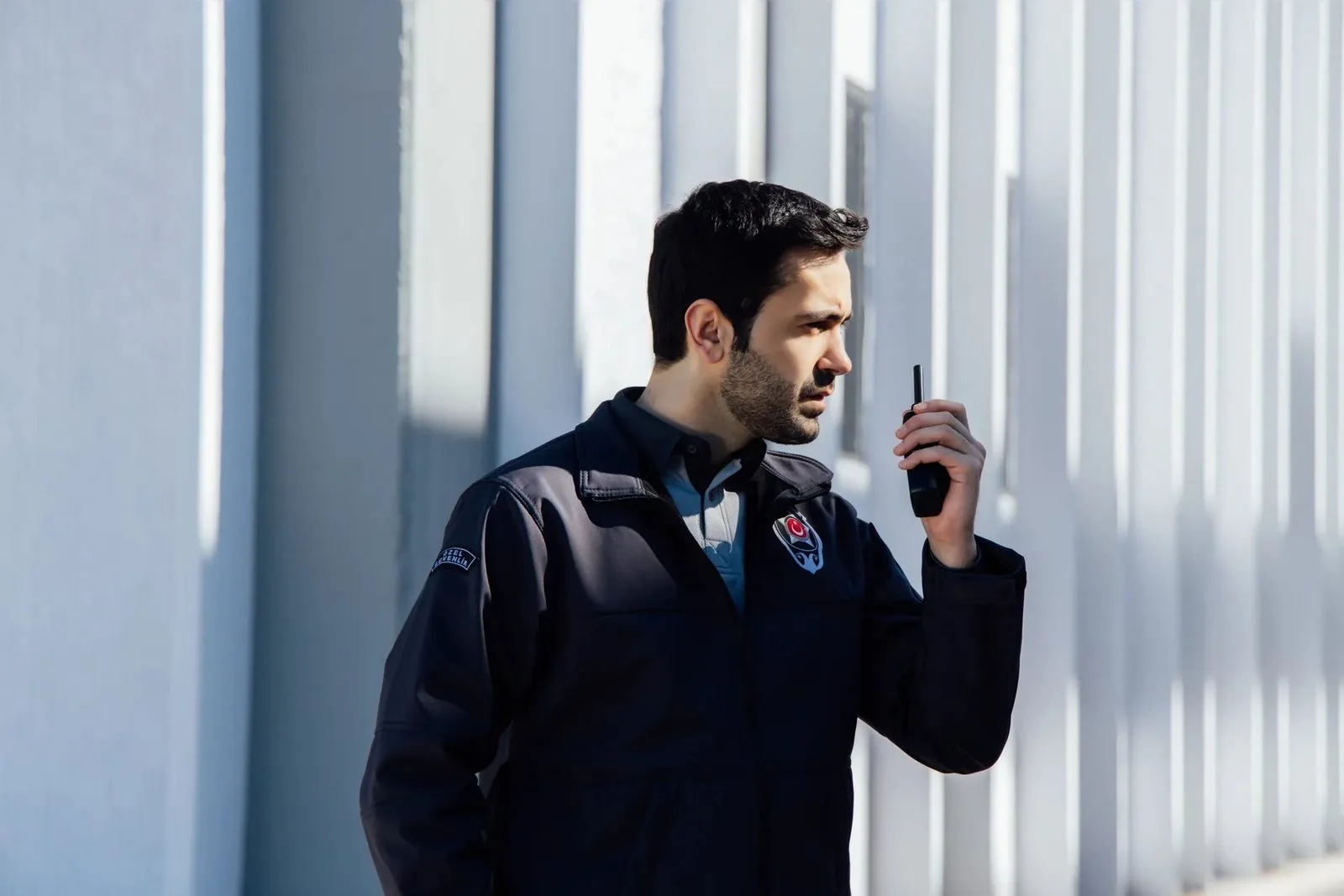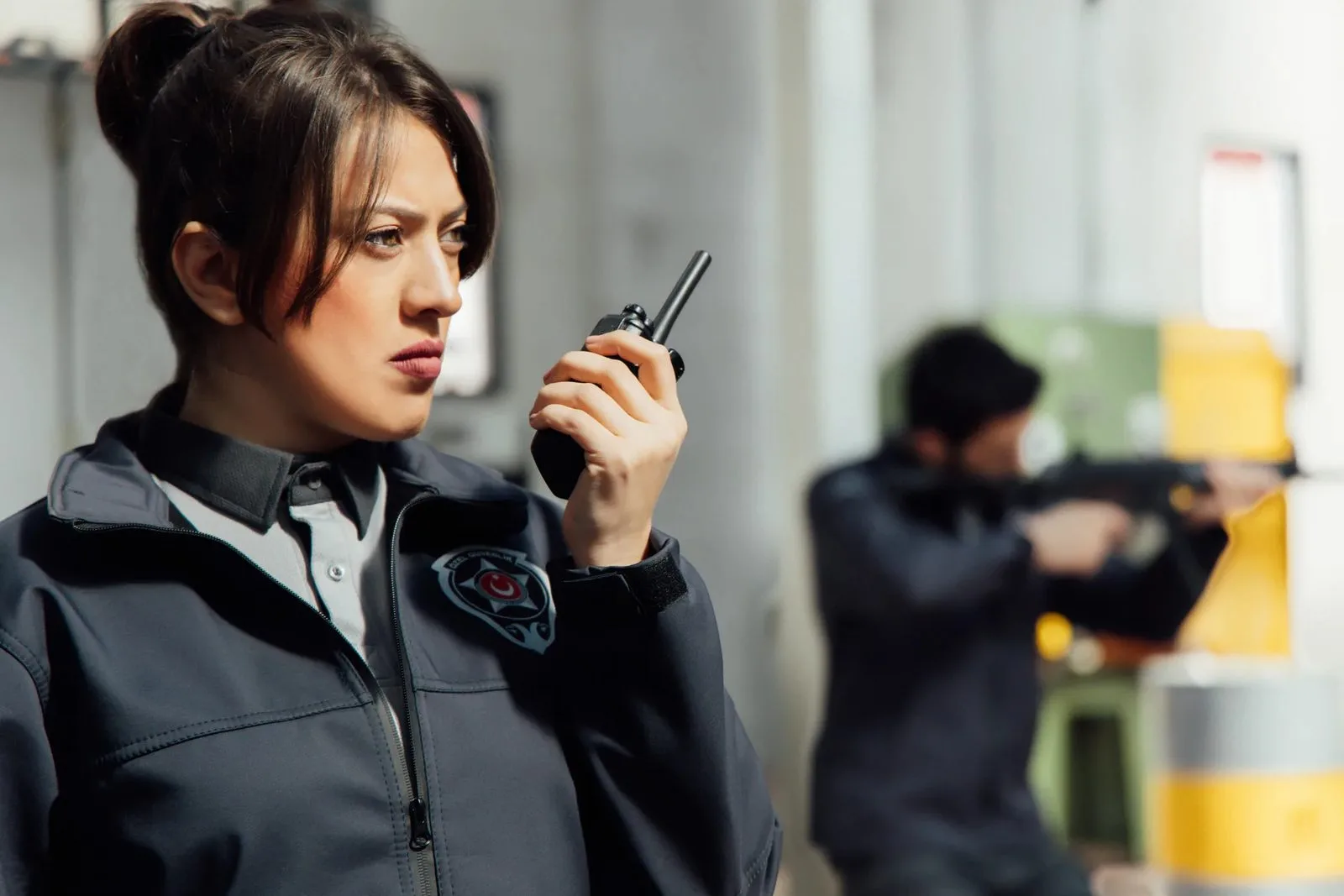
Short answer: On the holiday sites of Balıkesir's Edremit Gulf and Marmara coast, winter is a harder season for security than summer: most homes empty out, and there are no neighbours in the lanes, no lights on the balconies and no cars at the doors. What works in this period stands on three legs. The first is a patrol that runs at varying times through logged checkpoints and looks at the doors, windows and rear elevations of empty homes. The second is a key-holding arrangement that makes clear who holds which keys, and under what written authority and in whose presence anyone enters a flat. The third is a camera layout that covers the perimeter and entrances, keeps recording through a power cut, and stays off private spaces. The site management sets the rules for all three and security applies them; the split of duties should be put in writing before the season closes.
This article is general information, not legal advice.
Why winter is a separate security season on the Balıkesir coast
Balıkesir is one of the few Turkish provinces with coastlines on both the Aegean and the Sea of Marmara. Along the strip from the Edremit Gulf and Ayvalık to Erdek, the Bandırma coast and Marmara Island the coastline is long, and across the province more than half of the ministry-licensed beds are in simple-accommodation establishments. Provisional Ministry of Culture and Tourism figures for August 2026 show 18,516 beds in 369 fully licensed establishments, against 34,710 beds in 882 simple-accommodation establishments (secondary publication). Our own arithmetic on the SGK (Social Security Institution) 2025 yearbook puts the share of compulsory insured employees in the province's food and beverage service at about 1.2 times the Turkish average, and accommodation at about 1.1 times. None of this measures holiday homes directly, but it shows a coastal economy that breathes with the summer season. Holiday sites often follow the same rhythm: a site that is full in July may, from October onwards, be down to a handful of year-round households and the gatehouse.
Weather matters as well. The Balıkesir records of the Turkish State Meteorological Service give a mean January temperature in the provincial centre of 4.9 °C and a greatest measured snow depth of 41 cm (February 2021). These readings are for the provincial centre and the coastal districts may differ; even so, storms, downpours and power cuts can also be expected on coastal sites in winter. In an empty home, a broken pane, a door left open or a leak visible from outside can go unnoticed for weeks. Winter security is therefore as much about spotting damage early as it is about preventing burglary.
What does the research say?
1. Homes that look empty become targets, and someone simply being there can deter
A short briefing written for the police by the UCL Jill Dando Institute summarises that burglars generally prefer to avoid confrontation and therefore target dwellings that are, or are believed to be, unoccupied. According to the same briefing, they favour homes that are less visible from the street and neighbours, poorly lit, and offering several routes in and out. It notes that homes less likely to be occupied, such as second homes, are at increased risk, and for such groups of dwellings it suggests more patrols, encouraging permanent residents to increase guardianship and advising owners to improve security (Frith, UCL, 2020). The briefing belongs to a series written to support the police during COVID-19 and described by the Institute as speculative; it summarises existing knowledge rather than presenting new data.
In a virtual reality experiment in the Netherlands, 181 incarcerated burglars and 172 university students searched a virtual neighbourhood for a target while facing different levels of guardianship, from a person simply being present to one who intervened. The presence of a guardian deterred burglars and students alike, while higher levels of guardianship added only negligible further effect (van Sintemaartensdijk et al., Journal of Experimental Criminology, 2020). The burglars were recruited in four male-only prisons in the Netherlands and the students at two Dutch universities; all participants were men. It is an experimental setting and may not mirror behaviour on a real street. The lesson we draw for a holiday site is that what disappears in winter is the impression that someone is around. A visible patrol at irregular hours, and regular contact with the households that stay all year, partly restore it.
2. After one incident, nearby homes face higher risk for a short time
A study of residential burglary in ten areas across five countries, using methods developed to test the spread of infectious disease, found that while the precise patterns varied, in every area homes within 200 metres of a burgled home were at elevated risk for at least two weeks (Johnson et al., Journal of Quantitative Criminology, 2007). We could not access the full text and limit the finding to the wording of the abstract. How far the finding transfers to holiday sites is unknown, but on a holiday site 200 metres can cover a large part of the site. The practical consequence we draw: when a break-in is discovered in winter, not just that flat but the empty homes around it should be checked from outside the same day, patrols in that section stepped up for the following two weeks, and the owners concerned informed.
3. Locks and lights work better together, and an alarm alone is not enough
A study measuring the effect of security devices with Crime Survey for England and Wales data for 2008–2012 ranked outdoor lighting and double locks or deadlocks highest among single devices. A house relying on an alarm and nothing else fared worse than a house with no protection whatsoever. Certain pairings and triplets outperformed the simple sum of their parts; window and door locks combined with outdoor lights or a door chain were associated with protection at least twenty-fold against completed burglary, compared with having nothing (Tseloni et al., Security Journal, 2017). The devices studied include internal and external lights on a timer or sensor, and the UCL briefing likewise names the combination of window locks, internal lights, double locks and external lights as the most effective package. These findings come from homes in England and Wales and cannot be transferred directly to holiday sites in Balıkesir, but the direction is plain: when the season closes, locks, windows and timer lights should be considered together in every home, and the others should not be neglected just because "there is an alarm".
What to do when the season closes
Most of the winter arrangement is set up in October, as the last residents leave. A careful walk-round at closing becomes the yardstick for every patrol that follows.
- Have the site management record which homes will stand empty all winter, which are lived in all year, and which are visited only at weekends; security should hold only the part of that list it needs.
- Inspect each empty home's outer door, windows and shutters at closing together with the owner or a management representative, and log the condition in a short report. Every change found over the winter is judged against this starting point.
- Put the owner's contact details, and who is to be called if something unusual happens, in writing; decide in advance who decides on the management's behalf if the owner cannot be reached.
- Check common-area lighting, the perimeter fence, gates and cameras before winter, and clear away anything that could blow over in a storm or block a camera's view.
Winter patrols: route, timing and records
In winter a patrol's job is not to manage crowds, as in summer, but to observe empty buildings regularly. The route should take in the perimeter fence, crossing points on the beach or land side, car park and storage areas and the rear elevations of empty homes, with checkpoints logged. Timings should not be fixed; a patrol that passes from the same direction at the same hour every night is easy to read. What to look for is well defined: forced doors or windows, broken glass, displaced shutters, post and leaflets piling up at a door, a leak visible from outside, unexpected light or noise. Findings are photographed, logged with the time and reported to the management the same day. The officer does not enter a flat on his or her own initiative.
In bad weather a patrol should change shape, not shrink. The round after a storm comes before the routine one, because a fallen fence, a gate blown open or a torn cable is most likely to be spotted then. It should also be known in advance which cameras and gates keep working during a power cut.
Key holding: who holds the keys, and under what rule?
On holiday sites some owners leave their keys with the site management or security over the winter. Well meant as it is, the habit can become a serious gap unless it is tied to a rule. The arrangement we recommend:
- Keys are accepted against a handover form signed by the owner, stating when the key may be used (for example a leak, signs of fire or a broken window) and who is to be called first.
- Keys are kept in a locked cabinet; tags do not show the flat number but a code, and the code list is stored separately.
- Every removal and return is entered in a log with the time and a signature.
- If a flat must be entered in an emergency, the owner is informed by phone beforehand where possible; at least two people go in, and everything seen and done is written up and photographed.
- When the season opens, keys are returned against a signature; if a key may have been lost or copied, the owner is advised to change the lock.
Holding a key does not make security responsible for the inside of the flat; the officer protects the outside of the site and its common areas. This distinction should be written plainly on the handover form.
Camera layout
In winter, cameras are the eyes of the site when no patrol is passing. They should cover the site entrances, the perimeter fence, crossing points on the beach or land side, the car park and common areas, and should not be turned towards windows, balconies or the private areas of neighbouring plots. Recordings in which people can be identified are personal data under the Personal Data Protection Law No. 6698: the presence of cameras should be announced at the entrances and the duty to inform under Article 10 (the identity of the data controller, the purpose and legal basis of processing, among others) met, and the management should decide who may access recordings and how long they are kept. Three technical points come to the fore in winter: an uninterruptible power supply against power cuts, night vision planned together with common-area lighting, and checking lenses and angles after a storm. Cameras do not protect on their own; they work as part of a chain of recording, patrol and reporting.
Splitting the duties with the site management
Under the Condominium Law No. 634, every unit owner is bound by the management plan as if by a contract (Article 28), and it is among the manager's duties to implement what the owners' assembly resolves (Article 35). The winter rules (which gates close, how keys are handed over, who may see camera recordings, how people arriving out of season are admitted) should therefore rest on the management plan or an assembly decision. If an outside security company is engaged, Law No. 5188 applies: the arrangement requires the governor's permission, given on a decision of the private security commission.
| Topic | Site management | Security |
|---|---|---|
| Winter rules | Sets them by assembly decision or management plan and informs owners | Applies them under written orders |
| List of empty homes | Prepares and updates it | Builds the patrol route around it |
| Key holding | Sets the handover form and where the cabinet stands | Keeps the log and follows the two-person entry rule |
| Cameras | Sets retention and access rights | Monitors, records incidents, gives recordings to no one unauthorised |
| Damage and repairs | Calls the tradesperson and speaks to the owner | Spots, photographs and reports the same day |
| Emergencies | Sets who is called and the assembly point | Follows the first-notification sequence |
Since the Marmara region lies in an earthquake zone, it also makes sense to add a short emergency section to the winter orders: where the main electricity, water and gas shut-offs are on an empty site, who is told and in what order, and a list of the households living there all year.
Common mistakes
- Simply shrinking the summer team for winter and keeping the same orders, without a separate winter route and logging routine.
- Patrolling at the same hour and from the same direction every night.
- Keeping keys on an open board with flat numbers on the tags.
- Entering a flat alone and without a written report.
- Pointing cameras at balconies and windows, and leaving retention and access undecided.
- Fitting only an alarm and neglecting locks, windows and lighting.
- Dealing only with the flat where an incident happened and not checking the empty homes around it.
A note on practice in Balıkesir
A gulf-side site on the Aegean and a site on the Marmara shore do not have the same winter: the prevailing wind, the number of year-round households and the site's boundary with the sea or open land all change the plan. We therefore recommend setting the winter arrangement not at a desk but through an on-site survey as the season closes. If you would like to map your site's needs yourself first, you can use our security coverage planner.
How we work across the province is described on our Balıkesir private security page, while the residential security page sets out how we approach housing estates in general.
Titan Savunma is an Ankara-based private security company licensed by the Ministry of Interior under Law No. 5188 and certified to ISO 9001, 14001, 45001, 22301 and 28000. We work with international companies in English and Turkish, and our Balıkesir City Manager, supported by our Marmara Regional Directorate and our Istanbul General Directorate, reviews your site on the ground before the season closes and agrees patrol, key and camera rules with the site management as written winter orders. For a site visit, reach us through our contact page.
Sources and Further Reading
- Tseloni, A., Thompson, R., Grove, L., Tilley, N. & Farrell, G. — The effectiveness of burglary security devices, Security Journal 30(2):646–664 (2017; çevrim içi 2014)
- Johnson, S. D., Bernasco, W., Bowers, K. J., Elffers, H., Ratcliffe, J., Rengert, G. & Townsley, M. — Space–Time Patterns of Risk: A Cross National Assessment of Residential Burglary Victimization, Journal of Quantitative Criminology 23(3):201–219 (2007)
- van Sintemaartensdijk, I., van Gelder, J.-L., van Prooijen, J.-W., Nee, C., Otte, M. & van Lange, P. — Mere presence of informal guardians deters burglars: a virtual reality study, Journal of Experimental Criminology 17(4):657–676 (2021; çevrim içi 2020)
- Frith, M. — Residential burglary during a pandemic, UCL Jill Dando Institute, COVID-19 Special Papers, Brief 12 (2020)
- 634 sayılı Kat Mülkiyeti Kanunu (md. 28, 35), Mevzuat Bilgi Sistemi (erişim 27.11.2026)
- 5188 sayılı Özel Güvenlik Hizmetlerine Dair Kanun, Mevzuat Bilgi Sistemi (erişim 27.11.2026)
- 6698 sayılı Kişisel Verilerin Korunması Kanunu (md. 10), Mevzuat Bilgi Sistemi (erişim 27.11.2026)
- SGK — İstatistik Yıllığı 2025 (Tablo 1.11)
- Kültür ve Turizm Bakanlığı — Ağustos 2026 belgeli konaklama tesisi istatistikleri (geçici veri; alomaliye.com ikincil yayını)
- Meteoroloji Genel Müdürlüğü — Balıkesir il ve ilçeler istatistikleri (1999–2025)