
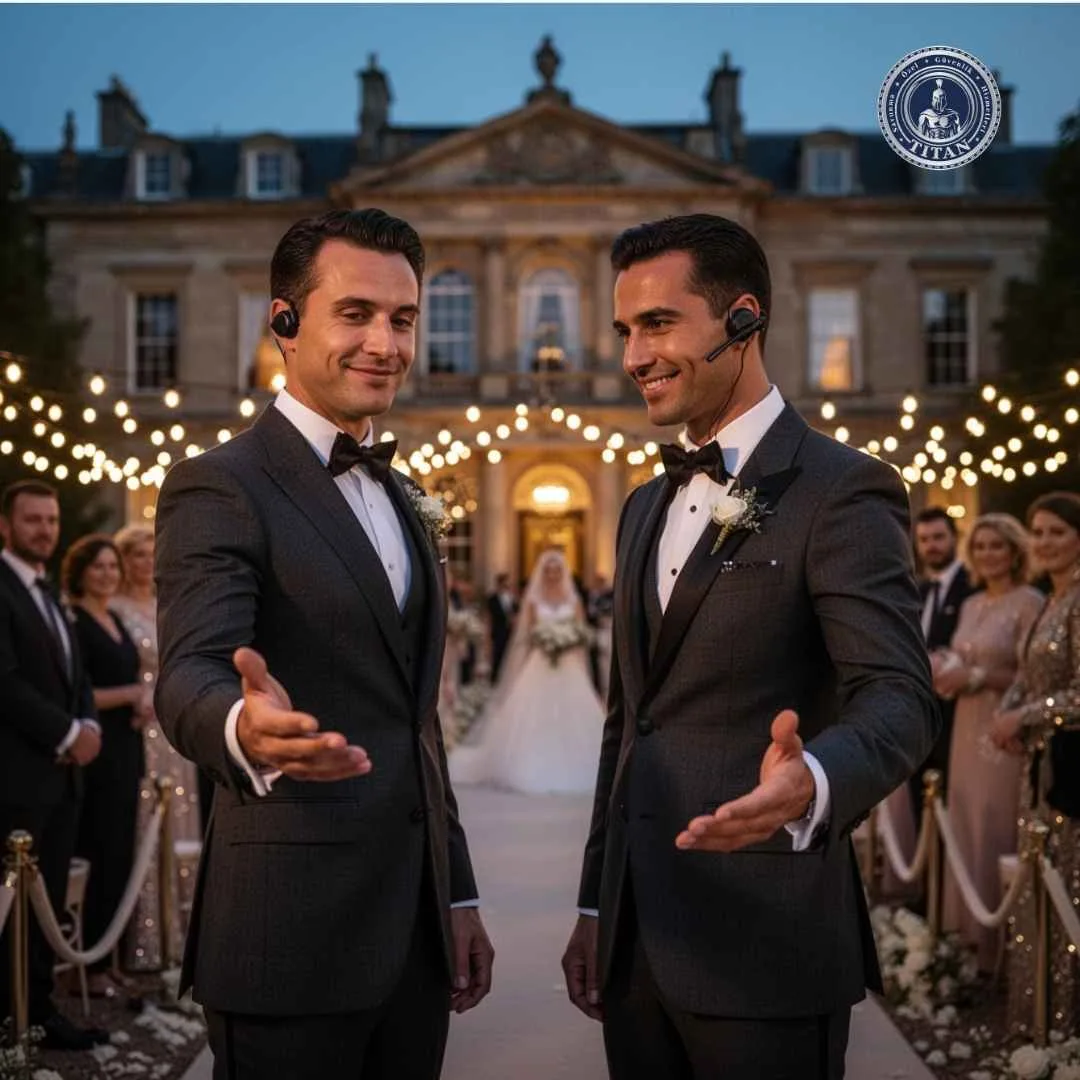
To make a company Christmas or year-end party safe, plan four things in advance: a venue sized for the crowd with clear exits; if alcohol is served, a way for everyone to get home safely; short conduct rules everyone knows, plus a confidential way to raise concerns; and an office that stays locked and watched while everyone is out. None of this dampens the celebration. It simply lets the organisers enjoy the evening too.
The four risks of a party night
A year-end celebration is one of the best days of the working year, and also an evening when routines relax. People are in an unfamiliar venue, there may be alcohol, it is late and the office is empty. The International Labour Organization's Violence and Harassment Convention No. 190 does not limit itself to the workplace: it expressly covers work-related trips, training, events and social activities, and commuting to and from work. Seen this way, a company party is part of the world of work.
In Turkey, Article 4 of the Occupational Health and Safety Law No. 6331 makes employers responsible for employees' work-related health and safety. How that applies to a particular event can depend on the facts, but good practice is clear: plan a company-organised event with the same care.
The UK Health and Safety Executive's event safety guidance says planning should be proportionate to the scale of the event and the degree of risk, and calls risk assessment the key tool for a safety plan. A dinner for sixty and a gala for five hundred do not need the same plan, but both should answer the questions below.
Choosing the venue: capacity, exits, cloakroom
When you visit, look beyond the menu and the décor:
- Capacity: get the venue's permitted capacity in writing and keep your guest list well below it. A dance floor and a stage shrink the usable space.
- Emergency exits: are they signed, unlocked and clear? Decorations, sound equipment and extra tables must not block them.
- Stairs and floors: dim stairways, wet floors and cables become riskier as the night goes on.
- Cloakroom: coats and bags should go to a staffed cloakroom with numbered tickets; think about a locked space for anyone arriving with a laptop.
- Entry: check guests against the list at the door; gatecrashers are a familiar problem in hotels and shared venues.
- First aid: ask whether there is a first-aid kit and trained staff. In an emergency in Turkey, call 112.
HSE advises talking to the venue management, and the emergency services where appropriate, about how risks will be controlled, and making sure the organising team clearly understands who is responsible for safety matters. That is why a designated "duty lead" helps: someone who is not drinking, keeps their phone on and can speak directly to the venue manager. For a larger crowd you can sketch entry, flow and roles with the free event security planner, and the basics are in our event security entry.
Alcohol policy and getting home safely
Whether to serve alcohol is the company's call. If it does, a few rules make the night easier:
- Serve food before the drinks start, and keep non-alcoholic options just as visible all evening.
- No pressure to drink; not drinking is not a choice anyone should have to explain.
- Limit the open-bar period and set last orders in advance.
- For people who drove, offer a way to leave keys and collect the car the next day.
Getting home is the most overlooked part of the party, which is why it matters that the ILO Convention covers commuting. Practical options:
- Shuttles: buses at set times to the main routes, with the last departure printed on the invitation.
- Company taxi code: rides charged to a company taxi or ride-hailing account using a code.
- Buddying: pair people who would otherwise travel home alone late with colleagues going the same way.
- "Home safe" message: the duty lead asks those travelling alone to send a quick text when they arrive.
Conduct rules and a channel for complaints
Parties blur the usual hierarchy. ILO Convention No. 190 defines violence and harassment as unacceptable behaviours and practices, single or repeated, that aim at, result in or are likely to result in physical, psychological, sexual or economic harm, including gender-based violence and harassment. Its Article 9 provides for employers to take steps commensurate with their degree of control: adopt a workplace policy in consultation with workers, assess the risks and provide information and training. That structure is also a sound frame for an in-house policy.
For the party, in practice:
- Send a short reminder with the invitation: this is a company event and the company's code of conduct applies.
- Name two people who can be approached during the evening, ideally of different genders and from different departments.
- Remind everyone of the confidential channel (HR, ethics line, email) that also works after the party.
- Never dismiss a complaint because "it was a party"; handle it through the same confidential process as any other.
- Include the behaviour of venue staff and other guests; harassment is not only between colleagues.
Photos, sharing and data protection
Party photos show faces, sometimes people who have had a drink, and who was with whom. They are personal data. Article 4 of Turkey's Personal Data Protection Law No. 6698 (KVKK) requires personal data to be processed for specified, explicit and legitimate purposes, in a limited and proportionate way. Practical rules:
- If there is a company photographer, say on the invitation what the photos are for (internal newsletter, company accounts) and offer an easy signal for those who prefer not to be photographed, such as a different coloured lanyard.
- Post only selected shots that embarrass nobody on company accounts, and take down any photo someone objects to straight away.
- Remind staff to ask colleagues before tagging them on personal accounts.
- Keep client names, badges and screens out of the background.
The empty office during the party
While the team is at the venue, the office often empties early, which is a convenient window for theft and information loss:
- Do a clean-desk check at close of business; laptops go into locked lockers or stay with their owners.
- Have a named last person out check doors, windows and the alarm.
- Tell building security or reception from what time the office will be empty, and accept no unexpected deliveries or "technician" visits that evening.
- If the venue has no locked storage, it is better for laptops to stay locked in the office.
- Avoid public posts such as "the whole team is out tonight".
Quick checklist
- Venue capacity in writing and exits walked?
- Duty lead and two contact people named?
- Shuttle times and taxi code on the invitation?
- Conduct rules and complaint channel communicated?
- Photo and sharing rules agreed?
- Someone responsible for locking up and setting the alarm?
Common mistakes
- An organising team that is all drinking: without a duty lead, small problems grow.
- Leaving the journey home to individuals: the riskiest moment is often when the party ends.
- Forgetting a complaint the next morning: an incident at the party deserves the same seriousness as one at work.
- Forgetting the office: while everyone celebrates, the empty office is the place nobody is watching.
Larger events may need a professional plan for entry control, cloakroom and crowd flow. Titan Savunma is an Ankara-based private security company operating under a Ministry of Interior licence granted under Law 5188, certified to ISO 9001, 14001, 45001, 22301 and 28000, and working with international companies in English and Turkish; it plans venues in different provinces with a single point of contact, written scope and regular reporting. See our concert and event security page for how we plan venues and entry.


