Concert and festival security is far more than bag checks at the gate. Crowd density, entry and exit flows squeezed into a single route, and decisions taken too late are recurring factors in large-event disasters. A sound plan monitors density zone by zone, treats the stage front as a distinct risk area, connects the medical team to the security control room, and makes sure even the most junior steward can pass a concern to control within seconds.
This guide brings together peer-reviewed research on crowd safety and event medicine with official inquiry findings, then sets out practical expert recommendations, the indicators worth measuring and the framework in Türkiye. Protecting crowded places against vehicle attacks is covered in a separate article, so the focus here is on what is specific to concerts and festivals: density, ingress and egress, the stage front and medical integration.
The risk profile of concerts and festivals: what the research shows
Are crowd accidents becoming more common?
Feliciani and colleagues built a database of crowd accidents from press reports covering 1900–2019. Recorded accident frequency has risen markedly over those 120 years, although the authors stress that part of the rise reflects easier access to reports through the internet and social media. The share of sporting events has fallen, religious gatherings have become more prominent, and no causal link between crowd size and per-person injury risk could be established (Safety Science, 2023). Our reading: attendance alone does not explain risk, so the shape of the site and the way flows are managed need assessing in their own right.
Love Parade 2010: one ramp, opposing flows
One of the most studied cases in crowd safety is the Love Parade in Duisburg, Germany, on 24 July 2010, where 21 people died and more than 500 were injured. Working from publicly available videos and documents, Helbing and Mukerji attribute the disaster not to a single error but to a cascade of interacting problems: the delayed start, the unexpected obstruction of inflow from the ramp into the festival area, and returning visitors meeting arriving ones without any separation of flow directions. In their reading the footage shows no evidence of a stampede or "mass panic"; what is clearly visible is "crowd turbulence", a dynamic that emerges at high density as forces are transmitted through bodies and add up (EPJ Data Science, 2012).
The paper quotes John Fruin's observation that at around 7 persons per square metre a crowd becomes almost a fluid mass, and that intense pressure makes it difficult to breathe and may eventually cause compressive asphyxia. Helbing and Mukerji's conclusion is blunt: once crowd turbulence sets in, the forces involved cannot be controlled even by large numbers of police, so pressure relief and evacuation must begin before an area becomes overcrowded.
Itaewon 2022: a crowd with no organiser
During Halloween festivities in Seoul's Itaewon district on 29 October 2022, a crowd crush killed 158 people (132 Koreans and 26 foreign nationals) and injured 196. Ha's qualitative content analysis of the stakeholders notes that senior officials admitted the country had no emergency plan for events without official organisers, and argues that stakeholders must supplement emergency planning for ordinary events with contingency planning for special events (F1000Research, 2023). The lesson for concert organisers: the streets around a venue, transit exits and post-show dispersal areas are risky spaces that nobody "owns", and they belong in the plan.
Manchester Arena 2017: the perimeter, a blind spot and a warning that went nowhere
Volume 1 of the public inquiry into the attack at Manchester Arena on 22 May 2017 found that the security arrangements for a concert attended by over 14,000 people, many of them teenagers and children, should have prevented or minimised the impact of the attack, and failed to do so. The attacker waited in a CCTV blind spot on a mezzanine overlooking an exit area. A member of the public reported his concern to a steward before the concert ended, and the concern was not effectively escalated. The inquiry concluded that the security perimeter should have been moved away from the arena, with searching before entry into that space, and examined six measures: risk assessment, training, hostile reconnaissance response, the security perimeter, CCTV monitoring and patrols (Manchester Arena Inquiry, Volume 1, 2021).
The medical picture: mostly minor, but predictable
Event medicine research is an integral part of security planning. Bennett and Cottrell reviewed electronic patient records from the 2022 Glastonbury Festival, attended by around 210,000 people. On-site medical care was given to 2,828 patients; the patient presentation rate was 13.47 and the transport-to-hospital rate 0.30 per 1,000 attendees. The most common diagnoses were joint injuries, gastrointestinal conditions and blisters, and only 5.48% of patients were diagnosed as intoxicated. The service combined a primary medical centre, two smaller units, teams at the two largest stages and responders on foot and on bicycles (Prehospital and Disaster Medicine, 2024).
Event profile can change the picture. Bullock, Ranse and Hutton's integrative review of 12 studies found that substance use and intoxication can strain in-event medical services, with music festivals appearing the most affected (Prehospital and Disaster Medicine, 2018). Wing and colleagues, reviewing cases seen by an advanced resuscitation team at 15 Australian music events between June 2018 and March 2019, report that 33.0% of patients disclosed MDMA use on the day, 29.8% required sedation, and traumatic injuries were less common than in other reports (Prehospital and Disaster Medicine, 2020). An all-night electronic music event and a family open-air concert cannot run on the same medical and security plan.
The crowd is a resource, not just a hazard
Drury, Novelli and Stott studied an outdoor music event described as a near disaster. In a survey of 48 attendees, identification with the crowd predicted feeling safe, both directly and through expectations of help and trust in others; in 20 interviews, attendees and some professionals said that self-organisation within the crowd had prevented disaster (European Journal of Social Psychology, 2015). The practical implication: treat the audience not as a mass about to panic but as a community that can organise itself and help its members, and design announcements to support that.
Layered concert security recommendations
The "Swiss Cheese Model of Crowd Safety" proposed by Haghani and 19 co-authors argues for multiple layers, such as regulation, planning, risk assessment, operational control, community preparedness and incident response, so that when one layer fails another can stop the accident. The authors stress there is no single solution and call for a "Vision Zero" target of no deaths or serious injuries in crowded spaces (Safety Science, 2023). The layers below follow that logic:
- Perimeter and outer areas: Draw the security perimeter to include the outside spaces where people gather, not just the doors; the Manchester inquiry explicitly favoured searching before entry into the area where crowds collect. Include transit exits and post-show dispersal routes.
- Ingress: Plan for the expected number of attendees rather than for venue capacity, avoid arrangements that hold people outside for hours, and provide water and toilets in waiting areas (Helbing and Mukerji's recommendations). Our event security planner can help with queue and screening layout.
- Egress and flow separation: Physically separate entry and exit directions; opposing flows were a core mechanism at the Love Parade. Map bottlenecks, merging, turning and crossing points in advance, and treat vehicle and ambulance movements as moving bottlenecks.
- Stage front: Where crowd pressure is expected, install a load-bearing front-of-stage barrier. The UK Health and Safety Executive describes A-frame barriers, a "pit" in which stewards, first-aiders and paramedics can work, and a step on the stage side for extracting people over the barrier (HSE, Stage barriers).
- People and communications: Every steward must be able to pass a concern to control immediately. At Manchester the steward who received the warning had no radio. Test radio coverage before doors open and teach staff without radios how to reach the nearest supervisor who has one.
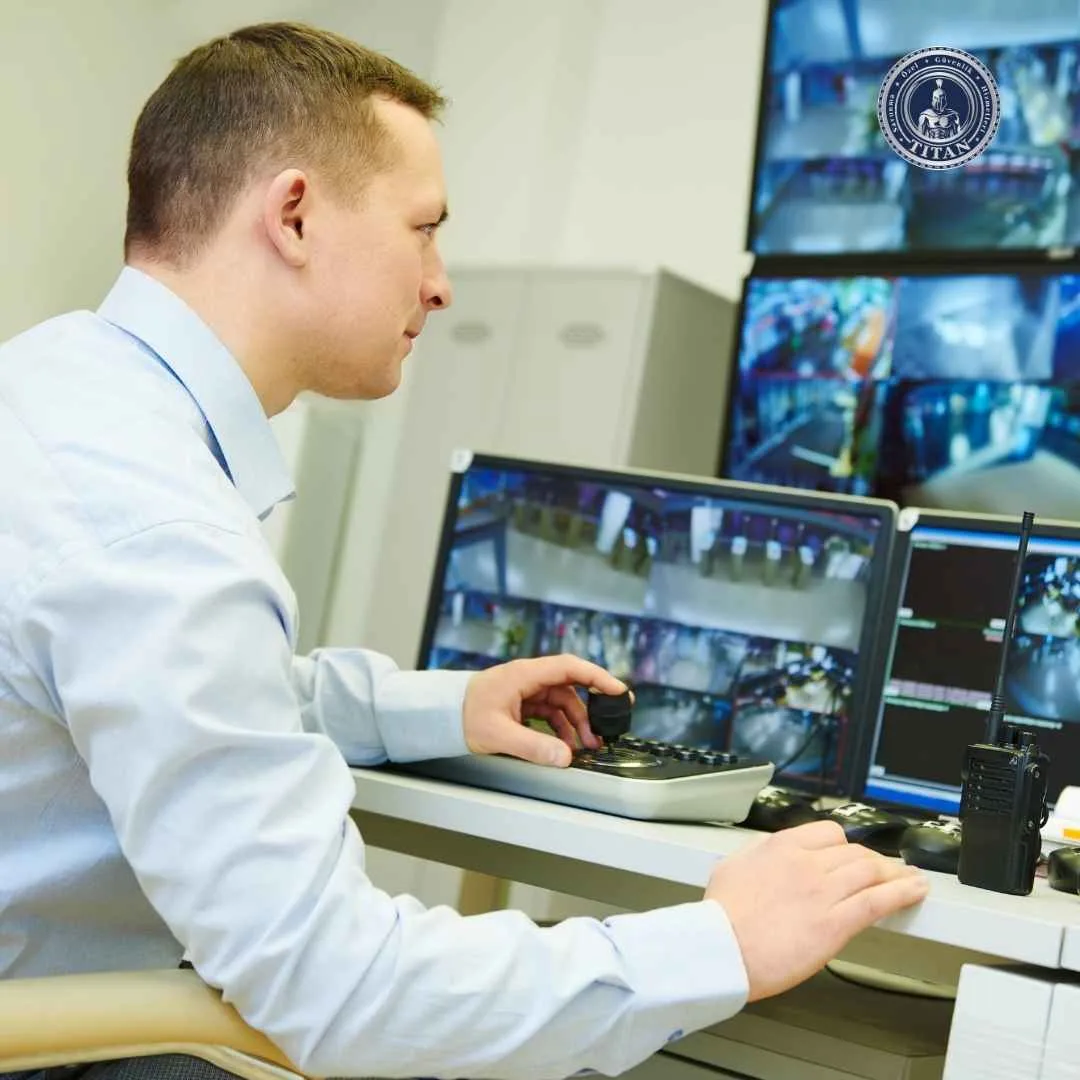
- Technology: Monitor critical zones continuously with cameras and density measurement, and eliminate blind spots or cover them with patrols. Pedestrian simulation helps identify crowded areas but will not reveal every organisational problem.
- Medical integration: Position medical teams at the stage front, main gathering points and the busiest areas, and put the medical lead in the security control room so that a stage-front crush or a rise in intoxication cases shows up on the same screen.
- Process and records: Finish, circulate and exercise the security concept by a fixed date before the event, and record and answer minority concerns. Pressure relief and evacuation scenarios should be ready for every critical area.
Expert view: Titan Savunma's field recommendations
The points below are our corporate view, combining the research above with our own event security experience:
- Write density triggers down in advance. Decide before the day which observations in which zone will trigger holding, rerouting or clearing, and give that authority to one named role.
- Treat the outside as seriously as the inside. Show end and dispersal are a critical period (the Manchester attack happened as the audience was leaving); staff the dispersal routes and pick-up points.
- Run the stage front as its own operation. Agree in advance between the pit team, medical staff and stage manager who can stop the show, and with what signal.
- Test the "see it, say it" chain. In exercises, time how long a report takes to travel from the newest steward to control.
- One table with medical. Seat the medical lead in control; a sudden rise in patient presentations can be an early sign of a density problem.
- Inform the audience. Prepare clear, calm, directive announcements; research shows crowds can self-organise and help one another.
- Plan to the event profile. An all-night electronic music event and a family concert generate different medical and security needs; use data from previous editions.
For a structured start, try our security risk assessment tool, or review your needs with us through our concert and event security service.
What to measure (KPIs)
| Indicator | What it tells you |
|---|---|
| Density by zone and number of trigger breaches | Which areas have design or management problems |
| Throughput per gate and queue waiting time | Whether ingress matches expected attendance |
| Egress clearance time | Whether the dispersal plan is realistic |
| Number of stage-front extractions | Stage-front pressure and barrier performance |
| Patient presentation and transport-to-hospital rates (per 1,000 attendees) | Medical workload; comparison between events |
| Time from report to control acknowledgement | Speed of the communication chain |
| Exercise and radio-coverage test findings | Whether the plan works on the ground, not just on paper |
Set target values by event type and your own historical data, and feed each event's results into the next plan.
Common mistakes
- Planning to venue capacity while ignoring expected attendance and flow variations.
- Routing entry and exit flows through the same corridor or ramp.
- Starting the security perimeter at the door and leaving outer gathering areas unowned.
- Trying to intervene after density has become critical, relying on cordons instead of early action.
- Running the medical team on a separate radio channel and a separate plan.
- Not issuing radios to stewards, or never testing the reporting chain.
- Seeing the crowd as a mass about to panic and withholding information.
Applying this in Türkiye
This article is general information, not legal advice.
Under Article 3 of Law No. 5188 on Private Security Services, the governorship may grant private security permission for meetings, concerts, stage shows and similar events without a commission decision. Article 7 gives private security officers at such events the powers to check identity, pass people through walk-through detectors, search them with hand-held detectors and screen belongings by X-ray, while Article 8 states that officers may not be armed at stage shows and similar events. Procedural matters such as notifying the governorship, and employee safety duties under Occupational Health and Safety Law No. 6331, should also be built into the plan. Primary responsibility for public order rests with the police and gendarmerie, so the private security plan should be prepared in coordination with them and with health services.
For comparison, the UK's Terrorism (Protection of Premises) Act 2025, which received Royal Assent on 3 April 2025, covers publicly accessible events with entry checks where 800 or more people are reasonably expected to be present at the same time; according to the official factsheet these requirements have not yet been commenced (UK Home Office). International organisers working in Türkiye may find it a useful benchmark.
Frequently asked questions
What is the biggest risk at a concert?
Research shows major losses often come from excessive density, bottlenecks and opposing flows. In the Love Parade analysis, the footage showed not mass panic but crowd turbulence arising at high density.
Are crowd crushes caused by panic?
Research suggests usually not. Pushing at high density is less a deliberate act than forces transmitted through bodies adding up. The answer is to control density early, not to blame the crowd.
How should festival medical teams work with security?
Medical teams should be positioned at the stage front and in dense areas, with the medical lead in the security control room. Glastonbury 2022 combined a primary medical centre, smaller units, stage teams and responders on foot and bicycles.
Do concerts in Türkiye need private security permission?
Under Article 3 of Law No. 5188, the governorship may grant private security permission for concerts and similar events without a commission decision. Plan early with the governorship and a licensed private security company.
Titan Savunma is an Ankara-based private security company licensed by the Ministry of Interior under Law No. 5188 and certified to ISO 9001, 14001, 45001, 22301 and 28000. We work with international companies in English and Turkish. To build your density, ingress-egress and stage-front plan together, see our concert and festival security service or contact us.
Sources and Further Reading
- Helbing, D., Mukerji, P. — Crowd disasters as systemic failures: analysis of the Love Parade disaster, EPJ Data Science 1, 7 (2012)
- Feliciani, C., Corbetta, A., Haghani, M., Nishinari, K. — Trends in crowd accidents based on an analysis of press reports, Safety Science 164, 106174 (2023)
- Haghani, M., Coughlan, M., Crabb, B., et al. — A roadmap for the future of crowd safety research and practice: Introducing the Swiss Cheese Model of Crowd Safety and the imperative of a Vision Zero target, Safety Science 168, 106292 (2023)
- Drury, J., Novelli, D., Stott, C. — Managing to avert disaster: Explaining collective resilience at an outdoor music event, European Journal of Social Psychology 45(4), 533–547 (2015)
- Bennett, J. F., Cottrell, D. J. — Glastonbury Festival: Medical Care at the World's Largest Greenfield Music Festival, Prehospital and Disaster Medicine 39(2), 170–177 (2024)
- Bullock, M., Ranse, J., Hutton, A. — Impact of Patients Presenting with Alcohol and/or Drug Intoxication on In-Event Health Care Services at Mass-Gathering Events: An Integrative Literature Review, Prehospital and Disaster Medicine 33(5), 539–542 (2018)
- Wing, S., Johnson, R., Fowler, L. — Moshpit Medicine: The Experience of an Australian Event Resuscitation Team, Prehospital and Disaster Medicine 35(3), 293–297 (2020)
- Ha, K.-M. — Reviewing stakeholders during the Itaewon Halloween crowd crush, Korea 2022: Qualitative content analysis, F1000Research 12, 829 (2023)
- Manchester Arena Inquiry (Chair: Sir John Saunders) — Volume 1: Security for the Arena, HC 279, UK Home Office (2021)
- UK Health and Safety Executive (HSE) — Stage barriers, Event safety guidance (page updated 2024)
- UK Home Office — Terrorism (Protection of Premises) Act 2025: Scope (events) factsheet (2025)