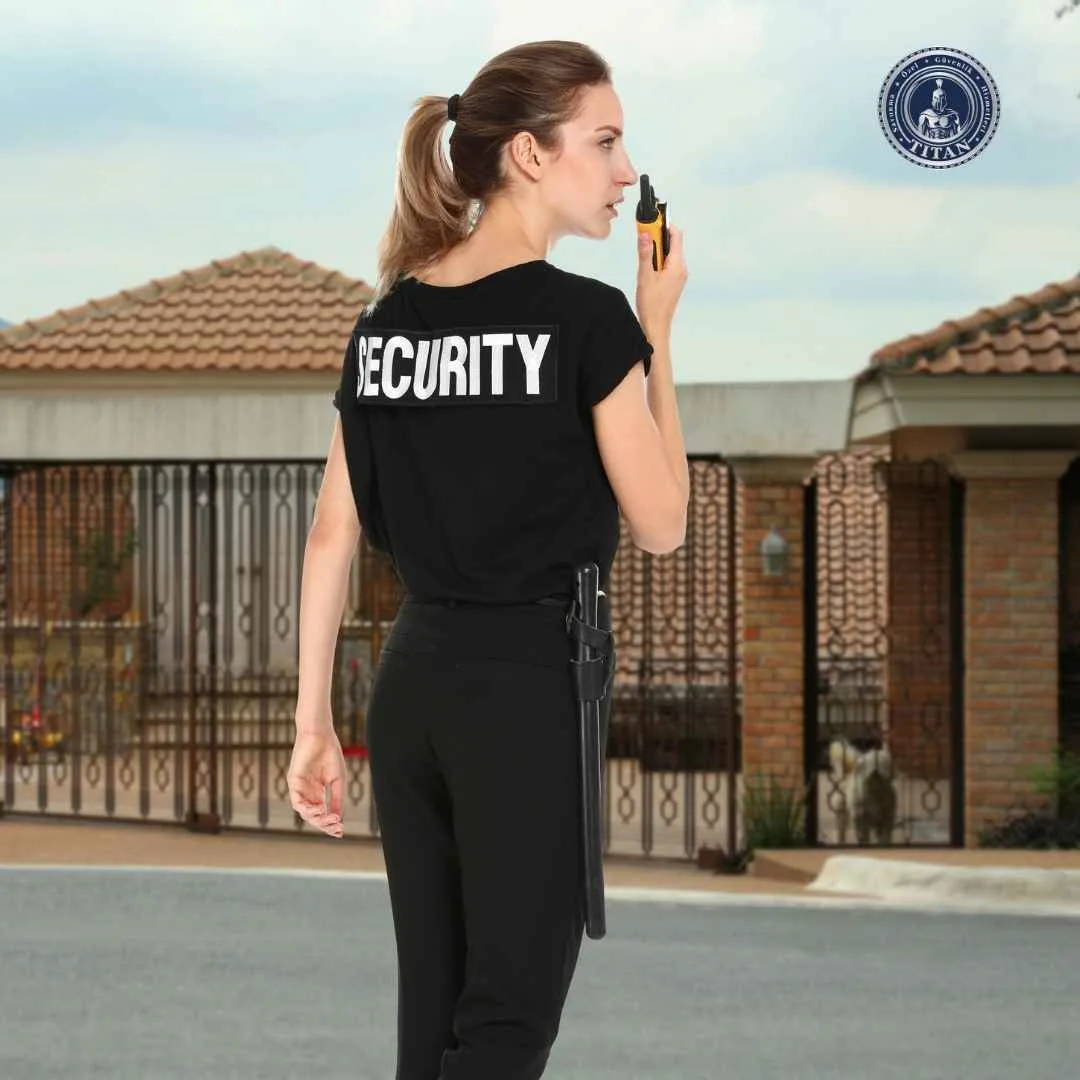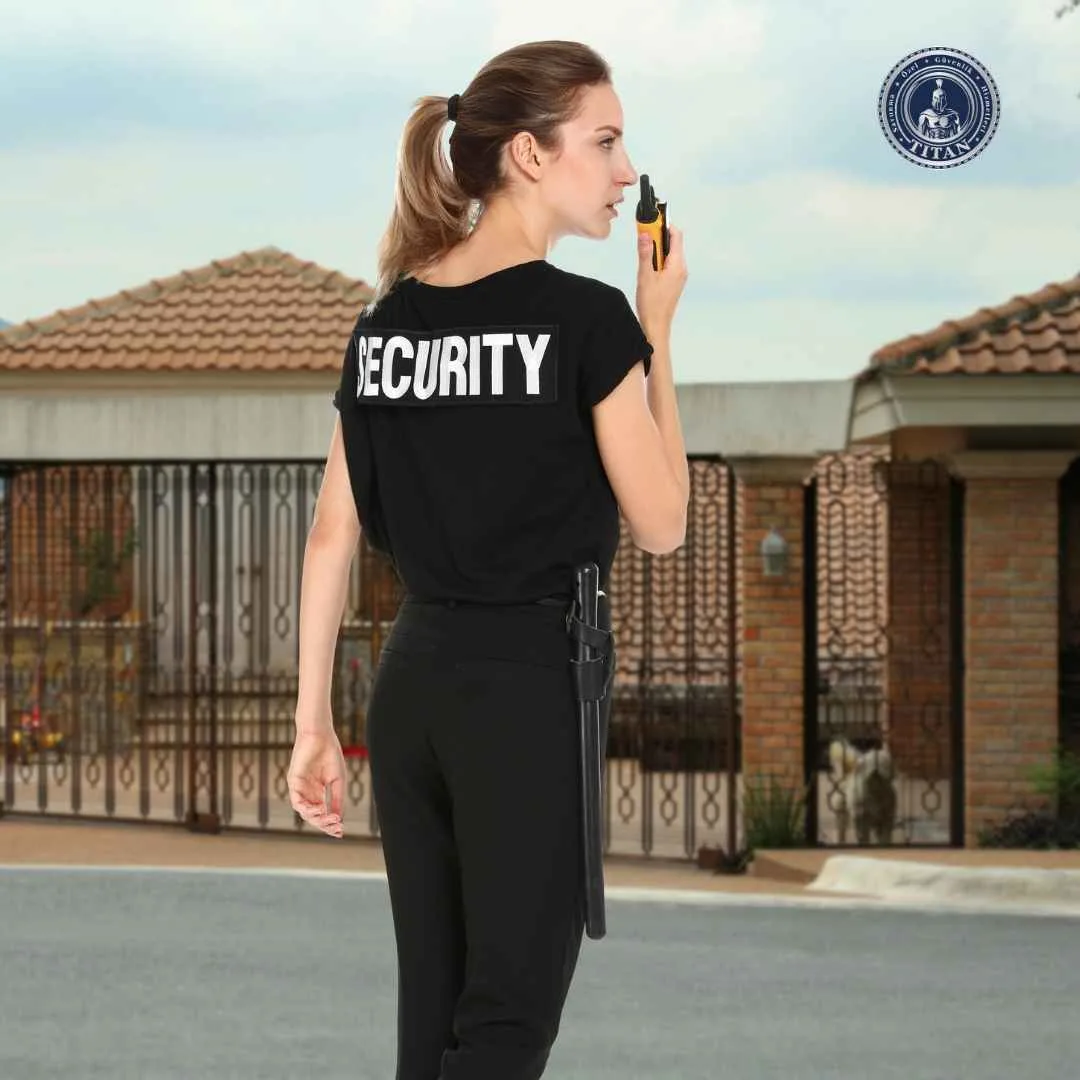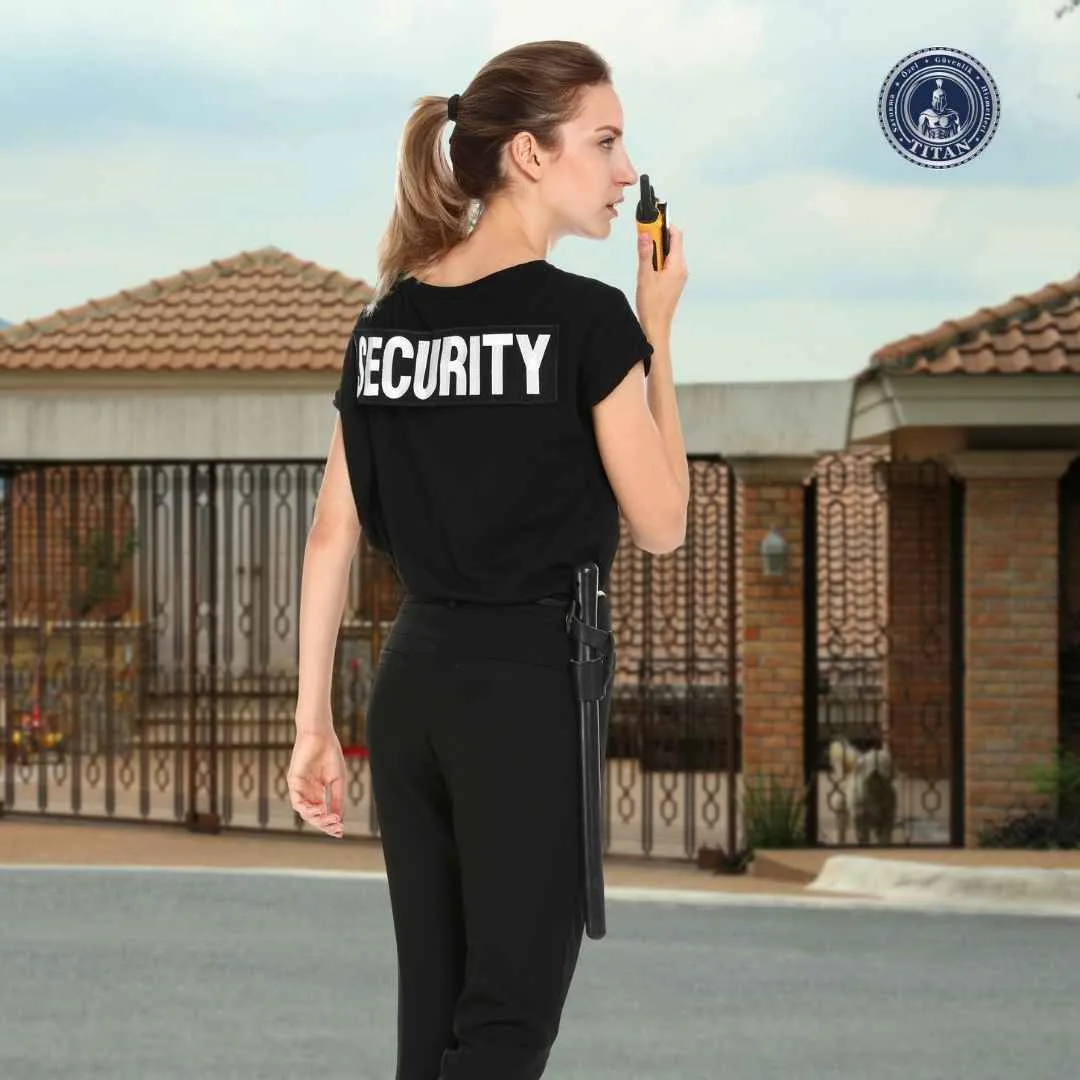
When a new residential estate or mixed-use scheme is handed over in Turkey, security usually passes on the assumption that it "already works": the cameras record, the turnstiles turn, an officer stands at the gate. In fact the handover is the most fragile moment in a building's security life. Master keys and system passwords are still held by the developer's people, nobody has decided who controls the camera footage, the guarding contract is in the developer's name, and the snagging items sit on a list of things that will "get done anyway".
The short answer: when a developer hands a building to the owners' management, take over security under four headings: documentation and systems, keys and credentials, contracts and permits, and defects that affect security. Then run a written plan for the first 90 days. The checklist below is meant to help boards and newly appointed managers record that handover properly. It applies equally to international investors who have bought into a Turkish residential or mixed-use project and need to know what their management company should be asking for.
This article is general information, not legal advice.
First question: who takes over, and when?
Article 34 of the Condominium Law No. 634 requires a manager wherever a building has eight or more independent units, and where all units belong to one person, that owner is the manager by law. As units are sold, management therefore passes step by step from the developer to the owners. For multi-building estates ("collective buildings", toplu yapı), Article 73 allows the management plan to provide for a temporary management, which may last at most until one year after completion of the estate and in any case ends ten years after the first building permit.
In practice the security handover does not fit into a single day. During the temporary management period the developer's team and the new management's team work side by side. At the start of that period, write down who decides what, who keeps the incident log, and who has administrator access to which system.
1. Documentation and systems: no handover without as-built records
Information is the most neglected part of any handover. In her University of Cambridge doctoral study of handover information in commercial buildings (2024), Janet Chang examined 92 asset management professionals across nine organisations and found that handover information supports statutory inspections, compliance, asset valuation and operating decisions, with accuracy, completeness and timeliness the most important quality dimensions. Security systems are no different: a management team that does not know where the cameras are cannot know where the blind spots are.
Ask for the following in the handover file:
- As-built drawings and device schedules for CCTV, access control, intercom, barriers, intruder alarm and fire detection.
- For each system: software version, licence status, warranty period and authorised service company.
- The retention setting and storage capacity of each recorder.
- Acceptance and periodic test records for fire detection, emergency lighting and wayfinding systems.
- The current fire evacuation drawings and emergency plan.
Fire systems deserve special attention. Article 84 of Turkey's Regulation on Fire Protection of Buildings requires emergency lighting, wayfinding and fire detection and alarm systems to be periodically checked, tested and maintained under the responsibility of the building owner and manager, or of a building official to whom they have delegated that responsibility in writing. From handover day that responsibility sits with the new management, and without the records you cannot tell what was tested when.
2. Resetting keys and credentials
During construction and sales, master keys, card enrolment rights and system administrator passwords pass through many hands: subcontractors, sales staff and technicians. At handover, record these steps:
- Count the master keys and key system; if any master key is missing, replace the affected cylinders.
- Cancel every developer, subcontractor and sales-team card in the access control system and re-enrol residents.
- Change administrator passwords on video recorders, intercom servers and barrier controllers, and review remote-access accounts.
- Re-issue lift, car park and plant-room access according to a new permissions matrix.
There is a data protection angle. Camera images and access logs are personal data. Article 12 of Turkey's Personal Data Protection Law No. 6698 (KVKK) requires the data controller to take the technical and administrative measures needed to prevent unlawful access, makes the controller jointly responsible with anyone processing data on its behalf, and requires the controller to notify the data subject and the Personal Data Protection Board as soon as possible if data is obtained unlawfully. If the outgoing team keeps access to recordings after handover, the consequences may land on the new management. Update privacy notices and camera signs so that they name the new controller.
3. Contracts and permits: continue or re-tender?
During the developer period the guarding contract is usually signed in the developer's name. Article 10 of the Implementing Regulation of the Private Security Law requires a written contract stating the client's name and address, scope, staffing and duration, and a copy filed with the governorship (valilik) on the day service starts. When the client changes from developer to management, so does the contracting party; decide explicitly whether the contract will be assigned or a new one signed.
The permit needs care too. Article 3 of Law No. 5188 makes the use of a security company subject to the governor's permission on a decision of the provincial private security commission, and under Regulation Article 8 the permit certificate is issued to the applying person or organisation. In the text of the Law and the Regulation we reviewed, we found no separate procedure for transferring a private security permit from one holder to another. If a permit was obtained in the developer's name, ask the provincial governorship in writing whether management needs to file a new application. The last paragraph of Article 3 also provides that non-temporary private security arrangements may be ended by commission decision and governor's approval on application at least one month in advance, so build the timetable to avoid a gap between ending the old arrangement and starting the new one.
If a new security company is appointed, Regulation Article 12 requires it to prepare a protection and security plan within thirty days of starting. Even if the existing company stays, update the plan to the new management's rules. Record in the same handover note whether maintenance contracts for cameras and access control are being transferred.
4. Defects that affect security
Some snagging items are security gaps in their own right. Article 6 of the Fire Regulation allocates responsibility for inadequate active fire safety systems: to the designers where the design is deficient, to the contractor where construction is deficient, and to the operator where malfunction stems from operation. That split makes it critical to record the condition in which systems were received on handover day. Typical defects to check:
- Fire and escape doors that do not self-close; hold-open devices that do not release.
- Gaps in the perimeter fence; unfinished walls and barrier installations.
- Camera angles that leave blind spots; cameras with no usable night image.
- Perimeter and car park lighting that does not work.
- Dead intercom panels; lift floor permissions never configured.
- Openings used as sales-office or site gates that were never closed off.
List each defect with photographs, an owner and a closing date, and set an interim measure for anything still open, such as an extra patrol point or a temporary lock.
The first 90 days
- Week one: reset passwords and cards, count master keys, open the incident log in the new management's name, update the emergency contact list.
- Month one: sign or assign the guarding contract in management's name, confirm the governorship filings, update the protection and security plan, present security rules to the owners' assembly.
- Month two: first follow-up of the defect list, day and night camera coverage test, share visitor and courier procedures with residents.
- Month three: first evacuation drill, review of three months of incidents, re-plan shifts and patrols if needed.
Staffing should not follow a fixed number; it depends on shift pattern, hours and legal limits, and on how the estate is actually used. In a newly delivered estate occupancy changes over months, so revisiting the first plan in month three is normal. Our approach for estates is on the residential security page, and for risks left over from the build phase see construction site security.
Common mistakes
- Treating handover as key delivery and skipping password and card resets.
- Not noticing that the guarding contract is still in the developer's name.
- Not asking for fire system test records.
- Not updating the data controller and access list for camera footage.
- Mixing security defects into the general snagging list without priority.
Titan Savunma is an Ankara-based private security company licensed by the Ministry of Interior under Law No. 5188. For estates in transition we plan services with a written scope, a single point of contact and regular reporting, in English and Turkish, and apply the same approach to projects in different provinces. For office-led mixed schemes see our office and business centre security page.
Sources and Further Reading
- Chang, J. — The Effects of Handover Information Quality on Commercial Building Asset Management, University of Cambridge PhD thesis (2024)
- Mevzuat Bilgi Sistemi — 634 sayılı Kat Mülkiyeti Kanunu
- Mevzuat Bilgi Sistemi — 5188 sayılı Özel Güvenlik Hizmetlerine Dair Kanun
- Mevzuat Bilgi Sistemi — Özel Güvenlik Hizmetlerine Dair Kanunun Uygulanmasına İlişkin Yönetmelik
- Mevzuat Bilgi Sistemi — Binaların Yangından Korunması Hakkında Yönetmelik
- Mevzuat Bilgi Sistemi — 6698 sayılı Kişisel Verilerin Korunması Kanunu