Turkey is an earthquake country, and every facility here needs a plan for the minutes and days after strong shaking. Foreign-owned sites face a few extra challenges: a crisis team at headquarters in another time zone, expatriate staff and visitors who may not know local procedures, and group standards that were written for a different legal system. The security team sits at the centre of the response, because it controls the gates, holds the visitor records and is often the only team on site at night.
This article explains what Turkish rules require from a workplace emergency plan, how AFAD guidance translates into security duties, and how a business continuity view in the sense of ISO 22301 fits around it. It is general information, not legal advice or engineering guidance. Structural safety decisions belong to qualified engineers and the competent authorities.
The legal frame: the workplace emergency regulation
The Regulation on Emergency Situations in Workplaces, first published in 2013 and substantially amended on 1 October 2021, sets the baseline for every employer. Its main requirements are:
- Identify emergencies from the risk assessment. Natural disasters are listed alongside fire and explosion, hazardous substance release and sabotage (Art. 8).
- Prepare a written plan. It must include an evacuation plan showing exits, assembly points, first aid points and alarm systems, the assigned staff and their contact details, national and local emergency numbers, areas with special hazards and the electricity and gas shut-off points (Art. 12). The evacuation plan is posted at entrances, exits and on floors.
- Assign trained support staff. For each of the firefighting, rescue and protection topics, at least one trained support person is needed for up to every 30 employees in very hazardous workplaces, 40 in hazardous and 50 in less hazardous workplaces; workplaces with fewer than ten employees may assign one trained person for all three (Art. 11). First aid follows the First Aid Regulation. Rosters must account for shifts.
- Drill and renew. Workplaces other than mines hold drills at least once a year and record them on a drill form (Art. 13). The plan is renewed at least every two, four or six years depending on hazard class, and sooner when circumstances change (Art. 14).
- Include everyone on site. Visitors, contractors and event participants must be informed about emergencies, evacuation plans, exits and assembly points (Art. 5). After evacuation, a headcount checks whether anyone remains inside, and elderly, disabled and pregnant employees and children in nursery facilities are accompanied (Art. 10).
- Coordinate outward. The employer arranges liaison with outside bodies for first aid, emergency medical care, rescue and firefighting, and staff follow the instructions of external teams arriving on scene (Arts. 5 and 6).
In business centres, office buildings and industrial sites, drills and plans are coordinated by the site management (Arts. 13 and 17). A foreign company renting floors in a tower in Istanbul or Ankara therefore needs to fit its own plan into the building's plan, not run a separate one.
Assigning staff does not remove the employer's responsibility (Art. 5). This matters when the security service is outsourced: the contractor's officers can carry out protection and evacuation duties, but the plan remains the employer's.
What AFAD advises, and what it means for security
AFAD, Turkey's Disaster and Emergency Management Authority under the Ministry of Interior, publishes guidance on measures before, during and after an earthquake. Several points translate directly into security duties.
| AFAD guidance | Security duty it implies |
|---|---|
| During shaking, drop, cover and hold on; do not run to stairs or exits; never use lifts | Officers protect themselves first; gate posts and control rooms have a safe spot; no one is sent outside while shaking continues |
| Emergency exits must be marked, lit, unobstructed and not locked | Daily patrol checks of exit routes; locked or blocked exits reported and fixed the same day |
| After shaking, shut off electricity, gas and water and leave by the predetermined route to the assembly area | Officers know the shut-off points listed in the plan and guide people to the assembly point |
| Aftershocks follow large earthquakes; damaged buildings should not be entered until the shaking has fully stopped | Cordon and re-entry control at damaged buildings; nobody returns for laptops or vehicles without authorisation |
| Keep streets clear for emergency vehicles; use phones only to report emergencies and fires | Site roads and gates kept open for fire and ambulance access; radio discipline |
| Preparedness plans should be reviewed every six months and practised | Security instructions reviewed together with the emergency plan |
The security team's role, minute by minute
First minutes
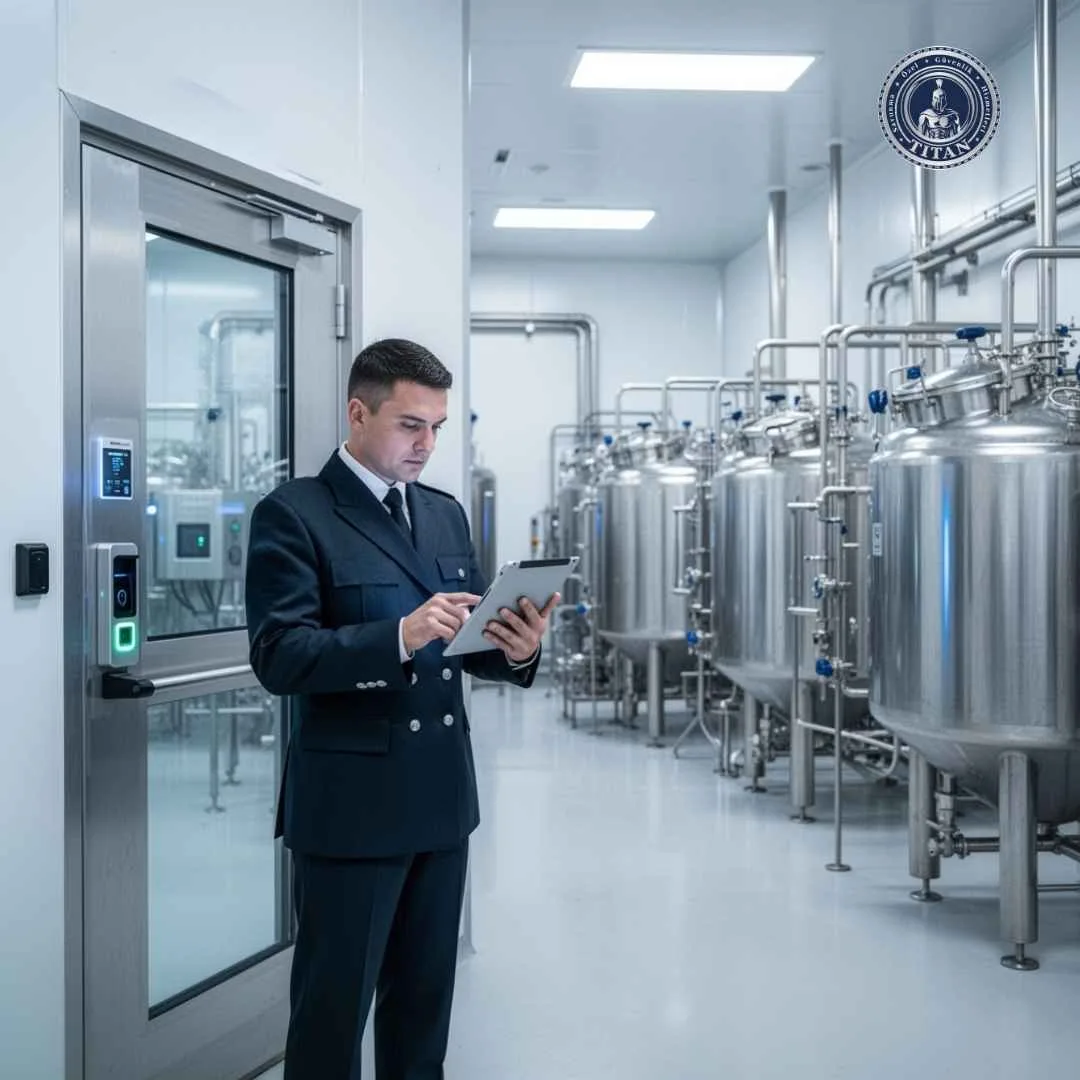
Officers are people too, and may be injured or worried about their families. The plan should say what happens if a post is unmanned. Once shaking stops, the priorities are to open the routes out of the site, guide people to the assembly point and avoid crowding at a single gate. Electronic turnstiles and access control doors should be checked in advance to confirm how they behave on power loss or fire alarm signal, because an exit that stays locked is a serious risk.
Assembly and headcount
The headcount required by Article 10 depends on knowing who was inside. Security usually holds the best data: visitor registers, contractor permits and badge records. Decide in advance who brings the visitor list to the assembly point, how a printed or offline copy is kept if systems fail, and who reports missing persons to rescue teams. For foreign-owned sites, include expatriate staff, visiting engineers and auditors, who may not know where the assembly point is.
After the evacuation
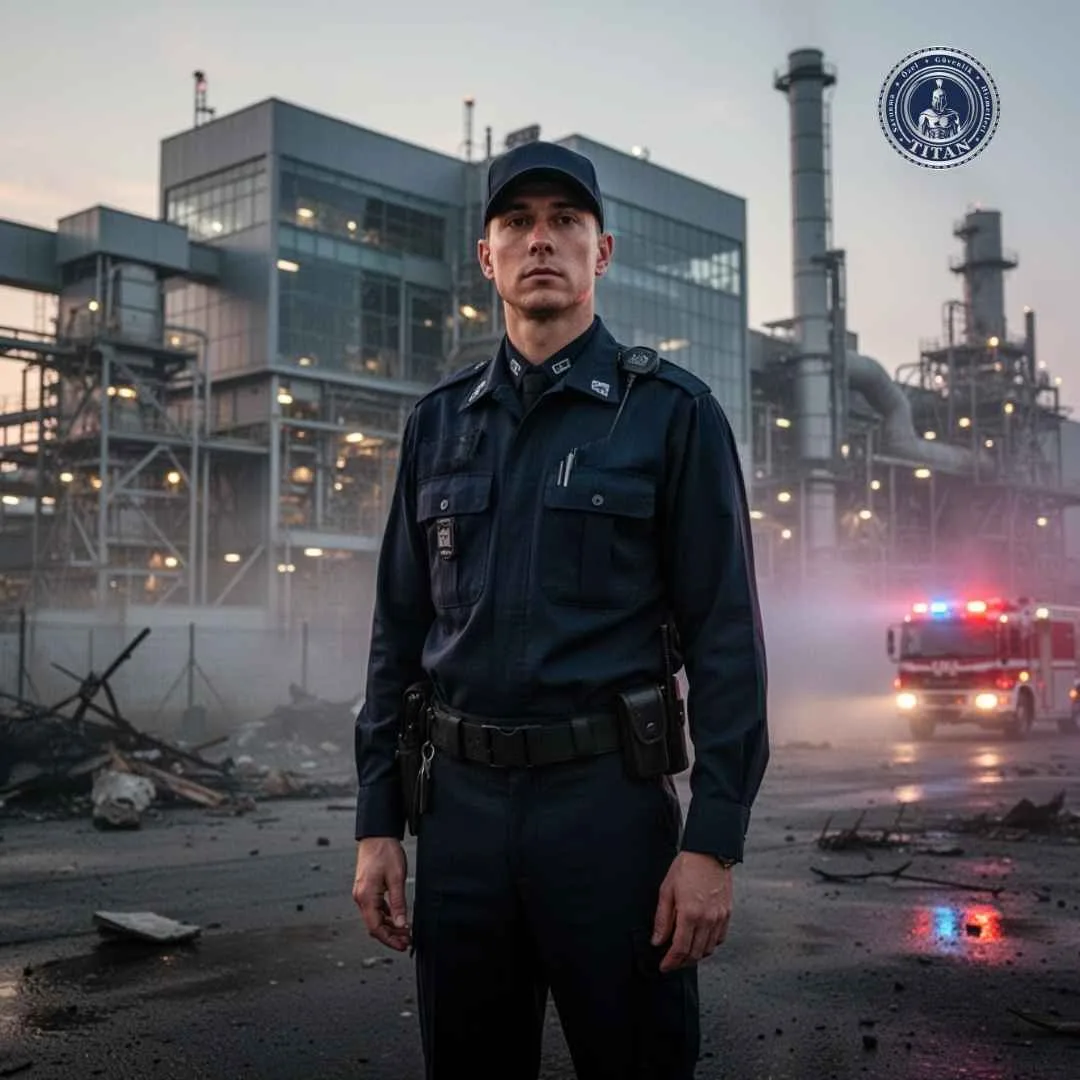
Access control becomes a safety function. Officers keep people out of damaged buildings, prevent unauthorised removal of goods and protect the site from opportunistic theft while normal controls are down. Law No. 5188 allows private security officers to enter workplaces in their duty area in natural disasters such as fire and earthquake and when help is called for (Art. 7), but their powers apply only on duty and within the duty area (Art. 9). When the governor or district governor uses public security powers, private security units must follow the orders of the local administrative chief and general law enforcement (Art. 6). After a major earthquake, the site's plan sits inside the public response, not above it.
Working with AFAD and responders
The plan's contact list should include 112, Turkey's single emergency number, and the relevant provincial authorities. Knowing the AFAD-designated assembly areas near the site helps when staff cannot return home. In practice, a named officer meets fire, ambulance and rescue teams at the gate, provides the site plan and the headcount, and passes on the location of hazardous materials and shut-off points.
Business continuity: the ISO 22301 view
ISO 22301 describes a management system for business continuity. Its core ideas are useful even without certification: identify the activities that matter most, decide how quickly each must be restored, understand what they depend on, and test the arrangements.
For security, this raises practical questions:
- If roads are closed and the next shift cannot arrive, who stays on post and for how long, and how are they relieved and supplied?
- If the video system or access control loses power, what manual procedure replaces it?
- If mobile networks are overloaded, how does the site talk to headquarters and to its own officers?
- Who reports the situation to headquarters, how often, and in what format, so that the crisis team abroad receives one consistent picture?
- Which records are needed to restart operations: keys, alarm codes, contractor lists, insurance contacts?
A short, agreed reporting format helps foreign-owned sites in particular. It should separate confirmed information, such as the headcount and visible damage, from what is not yet known.
Drills that test the real weak points
An annual drill satisfies the regulation's minimum. A more useful programme varies the scenario: a night shift with only security on site, a drill while a foreign delegation is visiting, turnstiles without power, or the main gate blocked. Contractor officers should take part in the same drills as employees. After each drill, record what went wrong on the drill form and update both the emergency plan and the security instructions.
A short checklist
- Do the security instructions and emergency plan assign the same duties to the same roles?
- Are exits checked on patrol, and do access control systems release on power loss?
- Can security produce an offline visitor and contractor list at the assembly point?
- Are briefings available in the languages of visiting staff?
- Is there a cordon and re-entry procedure for damaged buildings?
- Is there a single reporting line to headquarters?
- Has the plan been coordinated with the building or zone management?
Titan Savunma is a private security company licensed by the Ministry of Interior under Law No. 5188, based in Ankara and certified to ISO 9001, 14001, 45001, 22301 and 28000. We can align our officers' duties with your emergency and continuity plans.
Sources and Further Reading
- AFAD: Deprem Öncesi, Anı ve Sonrası Alabileceğiniz Önlemleri Biliyor Musunuz?
- İşyerlerinde Acil Durumlar Hakkında Yönetmelik, güncel metin (Lexpera)
- İşyerlerinde Acil Durumlar Hakkında Yönetmelikte Değişiklik, RG 1 Ekim 2021, 31615 (Alomaliye)
- 5188 sayılı Özel Güvenlik Hizmetlerine Dair Kanun (Mevzuat Bilgi Sistemi)