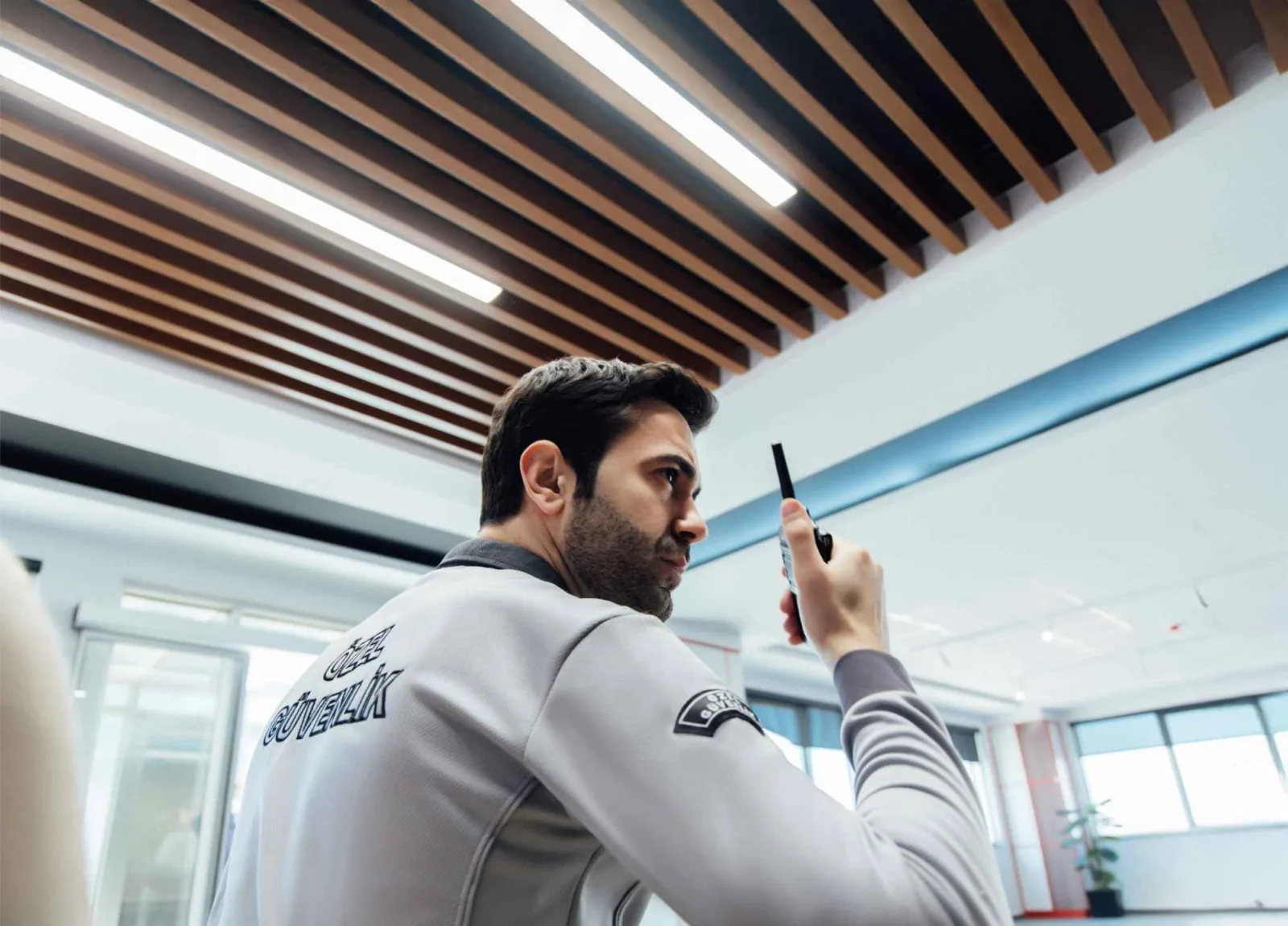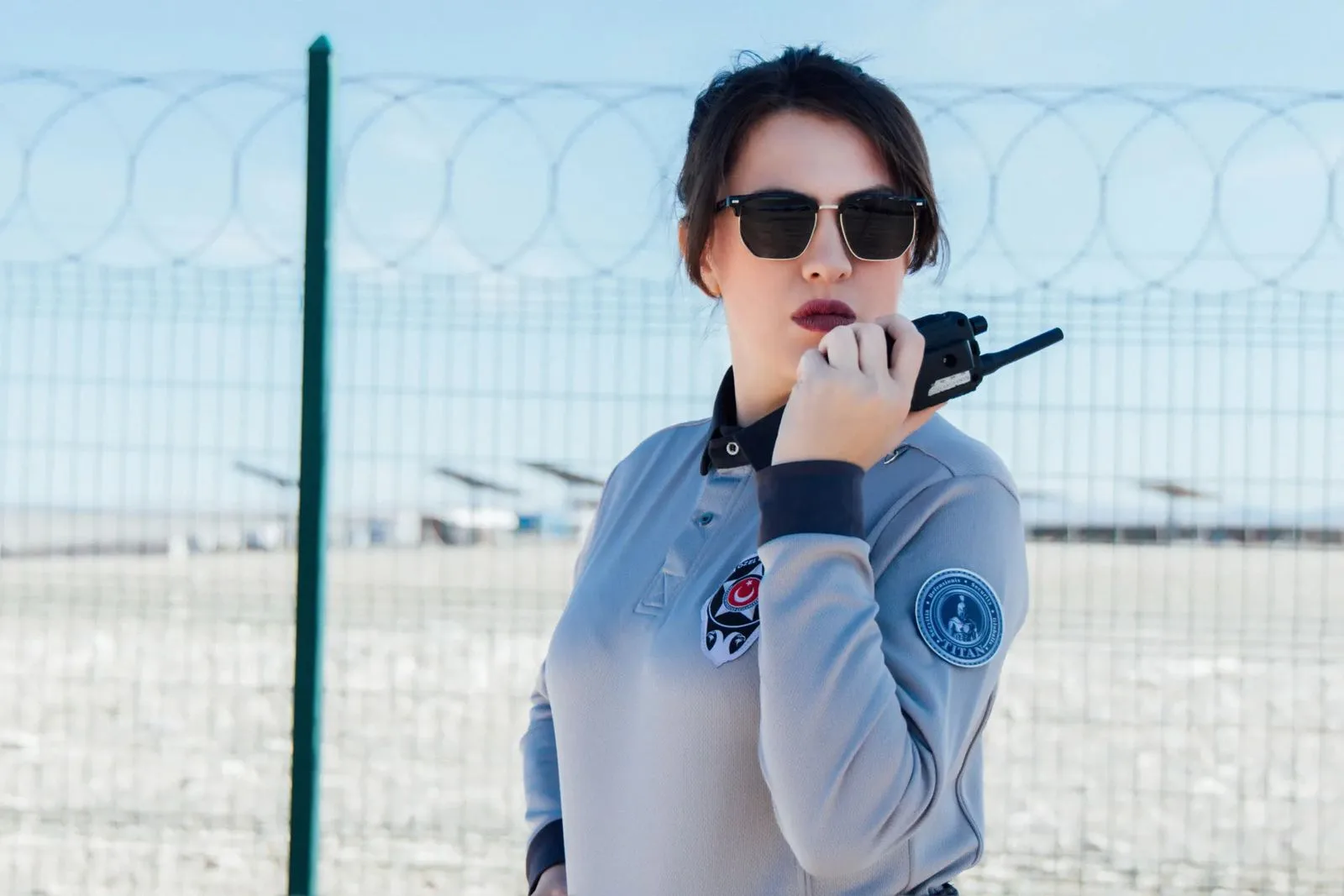
Short answer: In Elazığ, the security of a shopping centre is tested hardest on Saturday and Sunday afternoons and on weekday evenings: the queue at the car park entrance grows, the central atrium and food court fill up, cinema sessions empty crowds into the corridors all at once, and at exactly that moment a parent loses sight of a child. A sound plan knows these hours in advance and moves officers to follow the crowd; it sets out a short lost-child procedure that every member of staff knows by heart; it runs a written closing sweep that clears the building floor by floor; and it does all of this in a common language with the tenant stores. Research supports each of these points: CCTV shows its strongest results in car parks, children usually go missing through a mix of guardian attention, the child's own behaviour and how legible the space is, and the safety of a place depends heavily on the everyday decisions of the people who run it.
This article is general information, not legal advice.
Why shopping centres are a distinct security question in Elazığ
According to the Social Security Institution (SGK) Statistical Yearbook 2025, Elazığ has 7,988 people insured under category 4/1-a working in retail at 2,161 workplaces, and 4,176 in food and beverage services at 707 workplaces. Together the two sectors account for roughly one in seven of the province's 86,641 compulsorily insured employees (our own calculation). Shopping centres are among the places where this large group of shop, café and restaurant workers comes together most densely.
On the visitor side, the city has its own rhythm. According to the Fırat University 2025 Administrative Activity Report, the university has 41,268 students. Students, families and workers use shopping centres at weekends and in the evening not only to shop but as places to meet and spend time, which changes how footfall spreads across the day. This is a planning assumption, not a measurement; the first step in any building is to test it against turnstile or car park counts.
The third factor is climate. Turkish State Meteorological Service statistics for Elazığ show a January mean temperature of −0.7 °C, a lowest recorded temperature of −22.6 °C and a greatest recorded snow depth of 68 cm, while the average July maximum is 34.4 °C. On cold, snowy days indoor spaces become more attractive, and ice on ramps, car park entrances and pedestrian doors enters the picture. In summer, visitors escaping the heat shift towards the evening. A shopping centre security routine in Elazığ therefore needs a winter version and a summer version.
What does the research say?
1. CCTV shows its strongest effect in car parks
An updated systematic review and meta-analysis of CCTV in public places brought together 44 evaluations of high methodological quality. Compared with control areas, the areas where cameras were installed saw a modest (16%) but significant decrease in crime. The overall result was driven largely by car park schemes, where CCTV was associated with a 51% decrease in crime (Welsh and Farrington, Justice Quarterly, 2009). We report this from the study's abstract, and the review does not look at shopping centre car parks separately. Even so, it is a strong pointer to where camera budgets and monitoring attention should go first in a multi-storey or open shopping centre car park.
2. How a child goes missing: guardian, child and space together
A study from South Korea re-analysed 202 previously compiled lost-child cases using sequential association rules and found that causes rarely act alone. A guardian-related cause was present in 87.6% of cases, a child-related cause in 81.7% and an environmental cause in 61.4%; in 91.5% of cases more than one cause was involved. The study identifies three types: the child who suddenly breaks away from a guardian, the child who leaves with permission but cannot find the way back, and the child separated from a guardian by the operation of transport such as a lift or a bus. Environmental causes include complex layouts, a lack of architectural distinctiveness, visual obstacles taller than a child, and open structures without doors or fences that a child can easily leave; the paper notes that a child's eye level is about one metre and that three-year-olds are the most likely to get lost (Choi, Behavioral Sciences, 2023). The data are Korean and not limited to shopping centres, but a centre with escalators, lifts, a play area and look-alike corridors is a place where all three types can occur.
3. A sense of security grows with upkeep and light
An internet survey of grocery store retailers carried out in 2009 (161 responses, a 17% response rate), compared formal surveillance investments with investments that support informal surveillance. Informal surveillance investments were more likely to create a high sense of security among customers and employees, and stores where people felt secure had invested more in comfortable, clean and well-lit premises (Kajalo and Lindblom, Facilities, 2010). The findings rest on retailers' own assessments in grocery stores. The lesson for a shopping centre is that a visible officer, shop staff who keep an eye on the corridor, working lights and a clean car park matter as much as any new item on the equipment list.
4. The safety of a place is shaped by the people who manage it
A study combining data from bars in Cincinnati, USA, with earlier research argues that the concentration of violence in some venues is largely the result of decisions made by their owners and managers. The authors contend that explanations based on the type of patrons or the behaviour setting are themselves a function of place management, and they call for further research on which management choices matter most (Madensen and Eck, Crime Prevention and Community Safety, 2008). A bar is not a shopping centre, but centre management and every tenant store are place managers too. When the doors close, how many entrances stay open and how a crowded event is prepared for are all management decisions, and the security outcome is written together with them.
Weekends and evenings: officers follow the crowd
The most common mistake we see is meeting a weekday morning and a Saturday evening with the same duty roster. It works better to think of the building in three levels of activity:
- Quiet hours: opening time and weekday mornings. Officers are at the doors and in the control room; patrols focus on plant areas, emergency exits and the lower car park levels.
- Busy hours: weekday evenings and weekend afternoons. One officer moves to the atrium and the heads of the escalators, another to the food court and cinema exit; traffic direction starts at the car park entrance.
- Peak days: the eves of religious holidays, New Year, the weeks when schools open and close, sales campaigns and events inside the centre. These days go into the calendar in advance, and campaign information from tenants feeds into the security plan.
Cinema finishing times and the events programme show in advance which corridor will carry the crowd to which door. During these hours the control room should follow the points where the crowd is moving rather than staying fixed on the same camera.
The car park entrance: queues, winter and sneaky parking
The car park is the visitor's first contact with the building and creates both traffic and security problems. A long entry queue can spill onto the main road; drivers hunting for a space on a full level drift into pedestrian routes; cars left in disabled, family and emergency vehicle bays are the biggest source of complaints on busy days. In winter, ice on ramps and in front of the entry barrier is a well-known spot for skidding cars and falling pedestrians. So:
- Write down which level closes and where drivers are sent when occupancy nears a set threshold.
- Grit, clear snow and check ramps before opening, and repeat during the day while snow is falling.
- Report a failed light or a blind camera the same day; the most remote corner of the car park should never fall outside the patrol route.
- Physically separate pedestrian exits and lift lobbies from vehicle flows.
Lost children: a written procedure runs the first ten minutes
A lost-child report is a common and alarming incident in a shopping centre. The procedure should fit on a single page, and every member of staff, tenant store employees included, should know their part:
- Whoever takes the report stays with the family. The child's age, height, clothing and last known place and time go out by radio to the control room and all officers at once.
- Exits are watched immediately. Officers at the main doors, car park pedestrian exits and lift lobbies look out for a child matching the description. This step means watching the exits closely, not locking the doors.
- The control room works back from the last sighting. Escalators, the play area and toilet corridors come first.
- Stores are told. A short radio or message alert goes to tenant stores; staff check their own sales floor, fitting rooms and stockroom doors.
- Any announcement is worded so as not to frighten the child. Only the child's first name and clothing are given; the family's details are not read out.
- A found child is handed back in a controlled way. Staff see that the child recognises the guardian, settle the child and log the incident with times. If the child is not found within a reasonable time, the police are called without delay under the centre's written procedure.
The reverse case belongs in the procedure too: a child found looking for a guardian is taken to a known meeting point rather than kept waiting in a busy corridor. Because a child's eye level is about one metre, as Choi notes, meeting points and "come here if you get lost" signs should be visible at a child's height.
The closing sweep: no door closes before the building is clear
Closing time is the least discussed and most exposed moment in a shopping centre's day. Footfall drops, tenants pull down their shutters, cleaning and maintenance teams stay on, and someone left in a toilet, the car park or a fire stair can easily be missed. A good closing sweep:
- starts in stages with announcements and works from the top floor down, section by section, checking toilets, prayer rooms, baby-care rooms, cinema auditoriums and fire stairs one by one;
- records the shutter and door status of every tenant store on a single list, and reports any store left unlocked or unalarmed to management the same night;
- takes the list of cleaning, maintenance and fit-out crews staying overnight in advance, so that nobody who is not on it remains in the building;
- walks every level of the car park and logs the reason for any vehicle staying overnight;
- ends with a written handover to the night officer: doors left open, faulty cameras, expected deliveries.
Working with tenant stores: one building, one language
Centre security and store security may run under separate contracts, but to a visitor they are one building. The most useful coordination tools are simple: a named contact in each store who can reach the security team; a shared radio channel or message group; a short agreement setting out where the store team's role ends and centre security's begins when a shoplifter is caught; and a brief monthly review meeting. Shop staff keeping an eye on the corridor is the most natural form of the informal surveillance Kajalo and Lindblom describe, and supporting it with regular information sharing costs nothing yet works. Tenant staff taking part in evacuation and fire drills is part of the same coordination.
Checklist
| Area | What to do | Why |
|---|---|---|
| Footfall calendar | Weekends, evenings, holidays, campaigns and events are marked in advance; officer positions change with the hour. | Layout and rostering choices are management decisions. |
| Car park cameras | Entrance, ramps and pedestrian exits monitored live; blind spots marked on a map. | CCTV's strongest effect has been reported in car parks. |
| Winter routine | Gritting, snow clearing and repeat checks on ramps and entrances during the day. | The January mean is below freezing and snow depth can be considerable. |
| Lost children | One-page procedure: exit watch, cameras, store alert, controlled handover, log. | Causes are usually multiple and intertwined. |
| Signs | Meeting points and directions visible at a child's eye level too. | A child's eye height and field of view differ from an adult's. |
| Closing | Top-down sweep, shutter list, overnight crew list, written handover. | Closing time carries the risk of missed people and open doors. |
| Tenant coordination | Contact list, shared channel, role agreement, monthly meeting. | Shop staff attention supports a sense of security. |
| Emergencies | Evacuation and assembly plans for fire, prolonged power cuts and heavy snow; the places of officers and tenants in drills. | Decision time shrinks at busy hours. |
Common mistakes
- Running the whole week on one roster and leaving an officer at the morning post on a Saturday evening.
- Making an announcement first in a lost-child case and thinking about the exits later; reading out the family's details.
- Keeping a found child waiting for a long time in a busy corridor with a single officer.
- Limiting the closing sweep to main corridors and skipping toilets, prayer rooms and fire stairs.
- Making first contact with a tenant store only when an incident happens.
- Waiting for the first snowfall before checking ramps and the car park entrance at the start of winter.
- Running cameras without deciding who keeps the footage and for how long, and leaving obligations under Türkiye's Personal Data Protection Law No. 6698 for later.
A note on practice in Türkiye
Article 7(a) of Law No. 5188 gives private security officers the power to pass people entering the area they protect through a walk-through metal detector, search them with a hand-held detector and put their belongings through an X-ray machine or similar system. This power is used only within the licensed protected area, meaning the shopping centre's own entrances, and not on the pavement, the access road or another business's premises. Detector and X-ray lines tend to turn into queues at busy hours, so the number of screening points and the deployment of officers should be planned around peak times, and the waiting area in front of the door should be sheltered from rain and snow. In incidents such as a lost child, a fight or a theft, the officer's role is to observe, guide, record and, when needed, call the police or gendarmerie. Emergency plans and drills should be drawn up under Occupational Health and Safety Law No. 6331 and aligned with the other businesses sharing the building.
The duties we cover in retail settings are listed under shopping centre security, and the way we work with the city's mining, energy, campus and service sites is described under private security company in Elazığ.
Titan Savunma is an Ankara-based private security company licensed by the Ministry of Interior under Law No. 5188 and certified to ISO 9001, 14001, 45001, 22301 and 28000. We work with international companies in English and Turkish, and our Elazığ City Manager, supported by our Eastern Anatolia Regional Directorate in Erzurum and our Ankara General Directorate, visits your centre on a weekend evening and at closing time and writes the lost-child procedure and closing sweep together with your tenants. To arrange that visit, write to us via our contact page.
Sources and Further Reading
- Welsh, B. C. & Farrington, D. P. — Public Area CCTV and Crime Prevention: An Updated Systematic Review and Meta-Analysis, Justice Quarterly 26(4):716–745 (2009)
- Choi, S. — Deriving the Types and Characteristics of Lost Children in South Korea Using the Sequential Association Rule, Behavioral Sciences 13(5):393 (2023)
- Kajalo, S. & Lindblom, A. — Surveillance investments in store environment and sense of security, Facilities 28(9/10):465–474 (2010)
- Madensen, T. D. & Eck, J. E. — Violence in Bars: Exploring the Impact of Place Manager Decision-Making, Crime Prevention and Community Safety 10(2):111–125 (2008)
- SGK — İstatistik Yıllığı 2025 (Sigortalı ve İşyeri İstatistikleri, Tablo 1.11)
- Meteoroloji Genel Müdürlüğü — Resmî İstatistikler: Elazığ (1938–2025)
- Fırat Üniversitesi — 2025 Yılı İdare Faaliyet Raporu
- 5188 sayılı Özel Güvenlik Hizmetlerine Dair Kanun (md. 7), Mevzuat Bilgi Sistemi