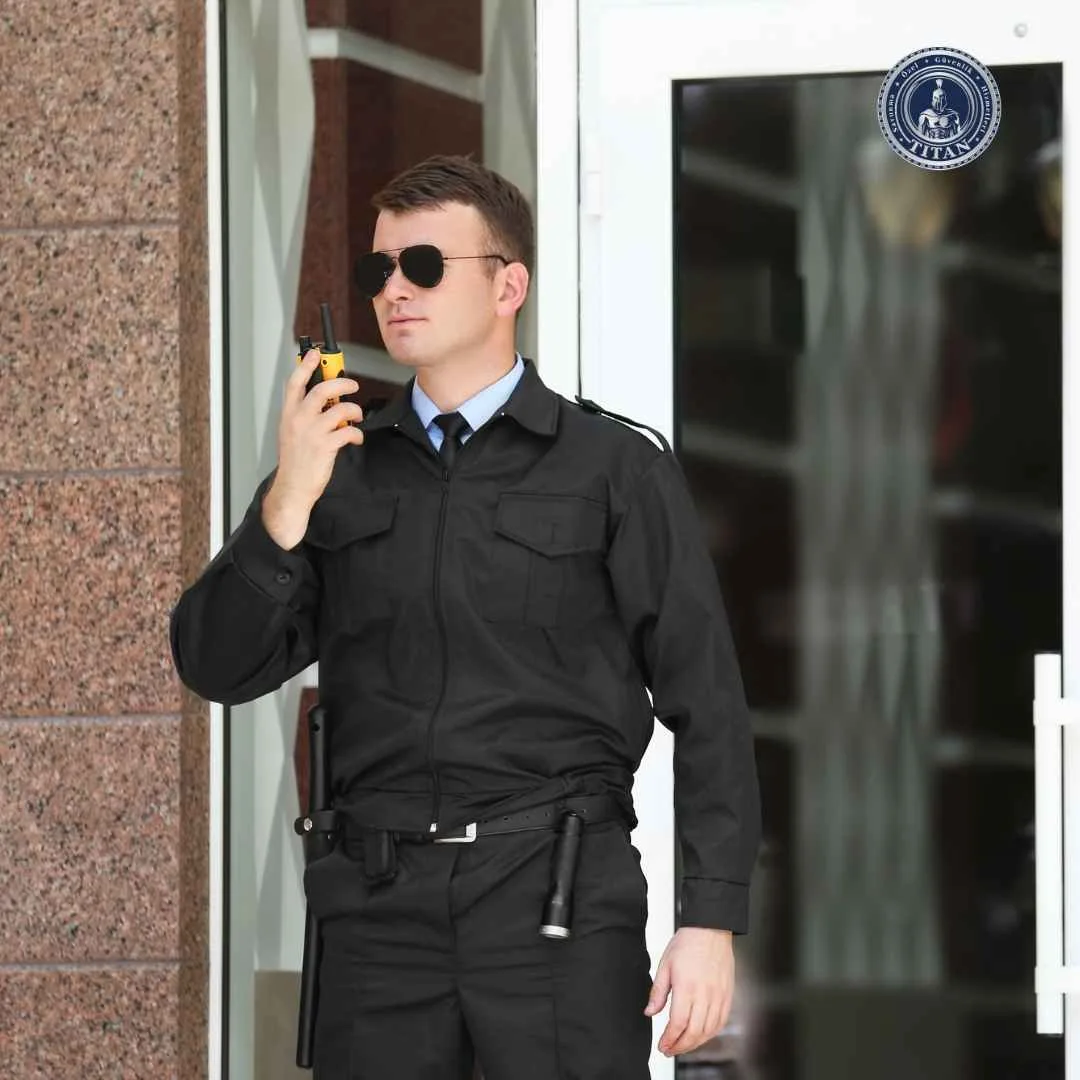
When an embassy in Ankara sets up a local guard force, the first practical question is usually: what does the Turkish police protect, and what may our contracted guards actually do? The short answer is that protecting the outside of the mission and its surroundings is a special duty of the receiving state, Turkey, under the Vienna Convention on Diplomatic Relations. Security inside the building is the mission's own responsibility, and inside that space the mission can use a private security company licensed under Turkey's Private Security Services Law No. 5188.
This article explains the legal basis for that split, the permit route the Turkish Ministry of Foreign Affairs has communicated to foreign missions, the limits on what a Turkish private security officer may do, and the items your guard contract should spell out. It stays at planning level.
This article is general information, not legal advice. Always confirm the current permit and notification practice with the Ministry of Foreign Affairs and the relevant provincial governorship.
The Vienna Convention: Turkey's duty to protect
Article 22 of the 1961 Vienna Convention sets two rules. First, mission premises are inviolable: agents of the receiving state may not enter without the consent of the head of mission. Second, the receiving state is under a special duty to take all appropriate steps to protect the premises against intrusion or damage and to prevent any disturbance of the peace of the mission or impairment of its dignity (Vienna Convention on Diplomatic Relations, UN).
Article 1(i) defines mission premises as the buildings, parts of buildings and ancillary land used for the purposes of the mission, irrespective of ownership, including the residence of the head of mission. Article 30 gives a diplomatic agent's private residence the same inviolability and protection. For consular posts, the equivalent protection duty sits in Article 31 of the 1963 Vienna Convention on Consular Relations, and Article 59 covers posts headed by honorary consuls (Vienna Convention on Consular Relations, UN).
In practice, the street, the pavement and the outer perimeter are the domain of Turkey's general law enforcement, meaning the police. A contracted security company does not replace that protection; it complements the mission's internal arrangements.
The permit route set out by the Ministry of Foreign Affairs
In a note dated 28 September 2016 and addressed to all foreign missions in Turkey, the Ministry of Foreign Affairs relayed the following framework, based on a letter from the General Directorate of Security (Emniyet Genel Müdürlüğü, the national police) and on consolidated private security circular No. 2012/42 of 17 July 2012, which applied at the time (Turkish MFA note to foreign missions, 28.09.2016):
- Requests by embassies, consulates and offices of international organisations to set up an in-house security unit or to buy services from a private security company go to the Ministry of Foreign Affairs. Applications made directly to a governorship are redirected to the Ministry.
- Internal security of mission buildings and residences is the mission's responsibility, so no private security permit under Law 5188 is considered necessary for it. However, the guards do not work outside the building, and the security company's notifications to the governorship are sufficient.
- Missions that apply to the Ministry for external security must obtain a private security permit from the governorship, limited to the outer perimeter and issued on a decision of the provincial private security commission.
- Private security staff and companies working outside mission buildings without a permit face judicial and administrative action under the Law.
- Missions that had already bought private security services without the Ministry's permission were asked to send the contractor's details to the Ministry on the "private security information form" attached to the note, so that a commission decision could be issued.
The National Police's current private security circular, No. 2023/10 dated 25 April 2023, still contains a separate section titled "granting private security permits to embassies, consulates and international organisations" (Circular 2023/10 summary, Lexpera). The full circular is not publicly available. Read the 2016 note as the Ministry's guidance at that date rather than as today's rule: it rests on circular No. 2012/42, a newer circular has been issued since, and current practice may differ. Confirm the details with the Ministry of Foreign Affairs and the relevant governorship before you finalise a tender.
How roles are commonly divided in Ankara
Each mission's arrangement depends on its own threat assessment and on its capital's security rules, but a common pattern looks like this:
| Area | Usually handled by | Note |
|---|---|---|
| Street, pavement, outer perimeter | Turkish police | Receiving state duty under VCDR art. 22(2) |
| Building entrance, visitor and bag screening | Contracted local guards | On mission instructions, within Law 5188 powers |
| Sensitive internal areas, security policy | The mission's own security staff | Access and decisions stay with the mission |
| Private guards on the outer perimeter | With a governorship permit (per the 2016 note) | Applied for through the MFA |
Treat this as a starting point, not a template. A chancery, an ambassador's residence and a cultural centre may belong to the same mission yet face different visitors and risks, so each needs its own post orders.
What a Turkish private security officer may and may not do
Article 7 of Law 5188 lists the officer's powers. The ones most relevant to a mission are: passing people who want to enter through a walk-through detector, searching them with a hand-held detector and passing their belongings through an X-ray machine; taking abandoned or found items into safekeeping; apprehending a suspect under Article 90 of the Code of Criminal Procedure; and protecting an incident scene and evidence (Law No. 5188, mevzuat.gov.tr). Several limits shape the planning:
- Place and time: powers apply only while on duty and within the assigned area (art. 9).
- ID card: the officer must wear the governorship-issued ID card visibly; without it, the Article 7 powers cannot be used (art. 12).
- Nationality: private security officers must be Turkish citizens (art. 10). Your own security staff from the sending state fall under diplomatic law, not this Law.
- Firearms: the provincial commission decides the number and type of weapons for any service, and security companies generally may not buy or hold firearms (art. 8). If you are considering armed guards, raise it with the Ministry at the very start.
- No other duties: officers may not be used for work other than protection and security (art. 16). Switchboard, reception administration, driving and mail distribution need separate staff.
- Police hand-over: incidents involving force or apprehension are reported to the police by the fastest means, and any person or item seized is handed over to them (art. 9).
What to ask the security company for
Even when the mission's permit question runs through the Ministry, the contractor's own obligations remain. At tender stage, ask for:
- The company's operating licence (faaliyet izni) from the Ministry of Interior (art. 5).
- Its written notice of the new service to the governorship by the end of business hours on the start date (art. 5), and a written contract stating the client's name and address, scope, number of staff and duration, as the Implementing Regulation requires in Article 10 (Implementing Regulation, mevzuat.gov.tr).
- Officers' work permits and valid ID cards, the staff list, and the mandatory private security liability insurance policies (Law art. 21; Regulation arts. 8 and 10).
- A protection and security plan for the site, which the Regulation (art. 12) requires within thirty days of the service start and keeps up to date.
For a broader overview of buying guarding services in the country, see our page on working with a private security company in Turkey.
Contract scope checklist
- Buildings covered and the boundary of the duty area, with the internal versus perimeter split stated explicitly.
- Posts, shift pattern and hours. Headcount is planned per building from the hours to be covered, Turkish working-time limits and the mission's needs.
- Chain of instruction: which mission official gives daily orders, who the contractor's site supervisor is, and who decides in an emergency.
- Screening method for visitors, bags and vehicles; who owns the X-ray and detectors, who maintains them and what happens when they fail.
- Incident notification chain between the mission's security officer, the contractor and the police, in a fixed order.
- Language: which posts need English or another language.
- Records and reporting: duty log, incident reports, shift handover, and compliance with Turkey's personal data law (KVKK, Law No. 6698) for visitor logs and CCTV.
- Staff changes, training, any additional vetting the mission requires, and the mission's right to refuse a specific officer.
- Audit rights, performance indicators and an exit and handover plan.
Common mistakes
- Posting private guards on the pavement, street or car park outside the building without a permit.
- Loading guards with non-security tasks such as reception admin, courier handling or driving.
- Leaving all notifications to the governorship and the Ministry to the contractor without checking them.
- Not agreeing in advance who calls the police during an incident.
- Using one set of post orders for the chancery, the residence and event venues.
About Titan Savunma
Titan Savunma is an Ankara-based private security company operating under a Ministry of Interior licence issued under Law No. 5188. We hold ISO 9001, 14001, 45001, 22301 and 28000 certificates, work with international clients in English and Turkish, and plan services with a written scope, a single point of contact and regular reporting. Read more about our approach to embassy and consulate security.
Sources and Further Reading
- Vienna Convention on Diplomatic Relations (1961), United Nations
- Vienna Convention on Consular Relations (1963), United Nations
- Dışişleri Bakanlığı, yabancı misyonlara özel güvenlik hizmeti notası (28.09.2016)
- 5188 sayılı Özel Güvenlik Hizmetlerine Dair Kanun, mevzuat.gov.tr
- Özel Güvenlik Hizmetlerine Dair Kanunun Uygulanmasına İlişkin Yönetmelik, mevzuat.gov.tr
- Özel Güvenlik Hizmetleri Genelgesi 2023/10, Lexpera