This article is general information, not legal advice.
A retailer with hundreds of stores in several countries controls loss best by treating it as a measured, concentrated risk rather than a problem spread evenly across the estate. In practice that means four things: define and count loss the same way in every store, find the minority of stores, products and offenders that produce most of it, put proportionate controls where the risk sits, and test each control on a small scale before rolling it out. Field experiments show that targeted measures such as protective display fixtures, special handling procedures and electronic tagging can cut losses of high-risk items substantially. In one small, early controlled experiment, a uniformed guard on its own did not reduce shoplifting. Governance, staff safety and privacy law then decide whether the programme still works once it reaches real stores.
Why loss prevention at enterprise scale is a different problem
Recent industry data show the size of the problem. The British Retail Consortium's Crime Survey 2025 covers September 2023 to August 2024 and draws on retailers employing more than 1.1 million people. It estimated 20.4 million customer theft incidents across UK retail, up from 16.7 million the year before, and just over 2,000 incidents of violence or abuse against staff every day. Only 32% of those violence and abuse incidents were reported to the police. The BRC's Crime Report 2026 (September 2024 to August 2025) found that violence and abuse had fallen to about 1,600 incidents a day. The survey method was also updated that year, so the two years are not strictly comparable. In the United States, the National Retail Federation's 2023 security survey reported an average shrink rate of 1.6% for fiscal 2022, up from 1.4%. Internal and external theft together made up nearly two-thirds (65%) of shrink. That survey covered 177 retail brands, was sponsored by a technology vendor, and stresses that shrink rates vary widely by sector.
Averages like these hide what matters most to a large chain: loss is unevenly spread, and a central loss prevention (LP) function should manage that spread, not the average.
Measuring loss consistently across hundreds of stores
You cannot benchmark stores or countries until they measure the same thing. Adrian Beck of the University of Leicester argues in Security Journal (2018) that "shrinkage" has been in use for over a century, yet there is still little agreement on what it means or how to measure it. He proposes a broader framework called Total Retail Loss. The related industry report Beck wrote for RILA and the ECR group (2016) sets out a typology of 33 loss categories. It notes that most published shrinkage estimates rest mainly on unknown loss, and that the supply chain is rarely included. It also points out that retailers differ in whether they value losses at cost or at retail price. Its warning against splitting unknown loss into "theft" and "error" by guesswork is worth taking seriously: unknown losses, the report says, are unknown for a reason.
For a multi-country chain, this leads to a few non-negotiable rules:
- One definition and one valuation basis (cost or retail) for every country, written into the group LP standard.
- Known and unknown loss reported separately. Recorded thefts, damage, waste and process errors are known loss. The stock-count variance left after these are recorded is unknown loss.
- Comparable count cycles, so a store counted last week is not ranked against one counted eleven months ago.
- Supply chain and e-commerce losses in scope, or clearly marked as out of scope, so that country results are not flattered by what they leave out.
Where loss concentrates: stores, products and people
Risky stores
Crime research has found again and again that, within any group of similar facilities, a small share accounts for most of the crime. Clarke and Eck's guide Understanding Risky Facilities (US Department of Justice COPS Office, 2007) sets out this "risky facilities" principle and covers convenience stores among other facility types. For a chain, the practical result is risk tiering. Rank stores on loss rate, incident and violence rates and local context, then give each tier a different control package, instead of sending identical kit to every site.
CRAVED products
Theft also concentrates on particular products. Ronald Clarke's Hot Products work (Home Office, 1999), summarised in the Center for Problem-Oriented Policing's crime analysis guide, describes stolen goods as CRAVED: concealable, removable, available, valuable, enjoyable and disposable (easy to sell). Scoring the range against these six attributes gives a defensible "hot list", and that list decides where fixtures, tags and handling rules go.
Repeat and organised offenders
Offending is concentrated among people as well. A systematic review and meta-analysis by Martinez, Lee, Eck and O in Crime Science (2017) found 73 studies and concluded that offending is highly concentrated across populations and offender types. The BRC report quotes one retailer that has seen, on CCTV, the same people turning up in different parts of the country. In the NRF survey, 67% of respondents said they were seeing more violence and aggression from organised retail crime offenders. For an enterprise, this argues for cross-store and cross-country intelligence: a lawful, central way to link incidents and to share information with police and other retailers where local law allows.
What the research says about loss prevention controls
Most of the trials below ran in a single chain, on a few products, in the US or UK, so treat them as strong hypotheses to test in your own estate rather than as guaranteed results.
| Control | Study | Finding | Main limitation |
|---|---|---|---|
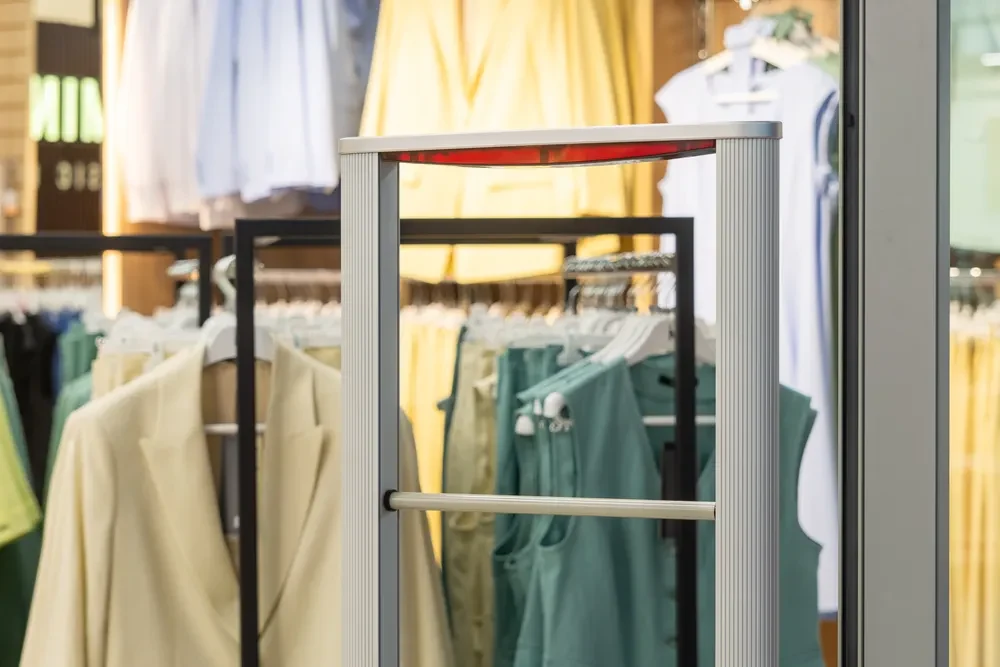
| Protective display fixtures; special handling procedures | Hayes, Downs and Blackwood, Journal of Experimental Criminology (2012) | In a randomised trial of a US drugstore chain, losses of premium razor-blade packs were 56% lower with fixtures and 58% lower with handling procedures than in control stores | One chain and one product group; CrimeSolutions notes that 47 stores were analysed and some were dropped |
| In-aisle CCTV domes, public view monitors, protective containers | Hayes and Downs, Security Journal (2011) | A 47-store randomised trial found positive evidence for all three treatments | The abstract does not report effect sizes for each treatment |
| Electronic tagging, store redesign, uniformed guard | Farrington et al., Crime Prevention Studies, vol. 1 (1993) | Tagging produced a decrease that lasted through the follow-up period (up to about six weeks); the effect of redesign was wearing off by six weeks; the guard had no effect | Nine stores, two per treatment, short follow-up, early 1990s |
| Item-level RFID | Hardgrave, Aloysius and Goyal, Production and Operations Management (2013) | Inventory record inaccuracy fell by about 26% (13 stores, 23 weeks); in a 62-store study, gains ranged from none to 81% depending on category | Measures record accuracy, not theft directly |
| Self-checkout | Taylor, Criminology & Criminal Justice (2016) | A review noting conflicting evidence on shrinkage; it cites market-research surveys suggesting that up to a third of customers regularly steal at self-checkouts | Relies on self-reported survey data |
Three lessons follow. First, the best-evidenced measures are targeted at specific hot products and make theft harder or more visible at the shelf. Second, some effects fade, so a rollout needs follow-up measurement. Third, RFID is a visibility and inventory-accuracy tool: the trial evidence above concerns accurate records, not stopping thieves.
Guards, visible deterrence and staff safety
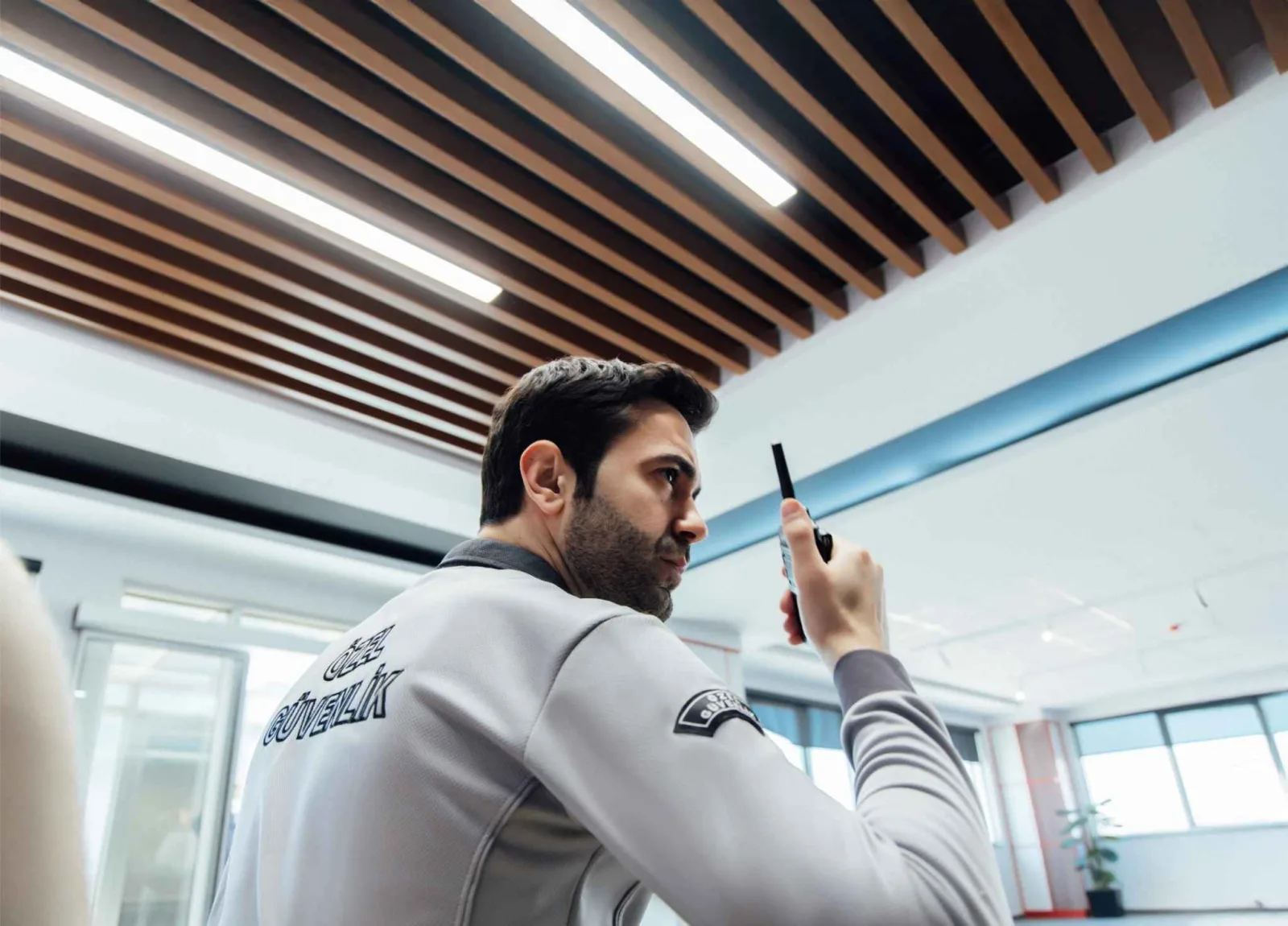
In Farrington's experiment, a uniformed guard alone did not reduce shoplifting. That is one small, old study, and it does not show that guards are useless. It does suggest that a guard's value lies less in simply standing at the door and more in what they do: responding to alarms and incidents, supporting staff, preserving evidence, and calming situations before they escalate.
Staff safety deserves equal weight. In research commissioned by the Co-op, Emmeline Taylor of City, University of London found that challenging or stopping someone for theft was the most common trigger for violence and abuse, accounting for 25% of incidents (The Conversation, 2019). The BRC survey likewise names asking for ID and stopping a suspected thief as two common triggers. A multi-method study by Fennell and colleagues in the Journal of Service Research (2023) developed a typology of service firms' policies on how far frontline staff should police customer misbehaviour ("guardianship"), and tested it on shoplifting, looking at perceived fairness and intention to quit. A sensible group standard is that store employees are not expected to physically intervene. It should set clear escalation routes to trained security staff or police, include de-escalation training, and provide structured support after any incident.
Internal theft and employee engagement
Insider loss is a real share of the total, and it responds to management climate. In a large US study, Clark and Hollinger surveyed 9,175 employees in 16 retail department store chains, 21 hospitals and 10 electronics manufacturers (NIJ executive summary, 1983). About one-third of employees in each sector reported taking company property in the previous year. The strongest predictor was how likely employees thought they were to be caught. The authors concluded that theft can be minimised through a conspicuous and consistent climate of management control. Their peer-reviewed analysis in Social Forces (1983) found that both the perceived certainty and the perceived severity of company sanctions were related to employee theft.
This is the logic behind POS exception reporting, which flags unusual refunds, voids, no-sales, discounts and price overrides by employee, till and store. If the analytics are visible, consistent and followed up fairly, they raise the perceived certainty of detection for everyone, not only the few employees investigated. Treat exceptions as leads, not proof: many have innocent explanations, and a culture of accusation erodes the engagement that keeps honest staff honest.
A governance model for a multi-country estate
A workable structure has a central LP function that owns the standard, the data definitions and the evidence base. Regional or country LP managers adapt the standard to local law and run audits. Store managers are accountable for daily compliance. Standard operating procedures should cover hot-product handling, alarm response, incident recording, refunds, cash handling, key control and evidence preservation.
| KPI | Why it matters |
|---|---|
| Known and unknown loss as % of sales, on one valuation basis | Comparable benchmarking across stores and countries |
| Loss on the hot-product list | Shows whether targeted controls are working |
| Violence and abuse incidents per store and per 1,000 staff hours | Puts staff safety on the same dashboard as stock |
| Incident reporting rate (to the company and to police) | Under-reporting hides risk; BRC found only 32% of violence and abuse incidents reached police |
| SOP audit scores and time to close actions | Tests whether the standard is actually applied |
| POS exceptions reviewed and closed | Measures whether analytics lead to action |
Privacy limits on CCTV and facial recognition
In the EU, the European Data Protection Board's Guidelines 3/2019 on video devices (paragraph 77) state that video surveillance with biometric recognition, installed by private entities for their own purposes including security, will in most cases require explicit consent from all data subjects, although another exception under Article 9 GDPR may apply. That is a very high bar on a shop floor. Under the EU AI Act, Article 5, certain practices are prohibited. These include building or expanding facial recognition databases through untargeted scraping of images from the internet or CCTV footage, and inferring emotions in the workplace except for medical or safety reasons. The ban on real-time remote biometric identification in publicly accessible spaces applies to use for law enforcement purposes. That does not leave private use unregulated: where lawful, remote biometric identification is high-risk under Annex III of the Act, and data protection law still applies in full. The Article 5 prohibitions have applied since 2 February 2025 (IAPP). A group standard should therefore make biometric tools opt-in by country, subject to local legal review and a data protection impact assessment, never a default.
Checklist: rolling out a standard across countries
- Publish one loss definition, valuation basis and known/unknown split, and restate the last year's figures on that basis.
- Build a store risk-tiering model (loss, incidents, violence, local context) and review it at least every quarter.
- Score the range with CRAVED and agree a group hot-product list, with room for local additions.
- Define a control package for each tier, and pilot new controls in matched test and control stores before scaling.
- Set a no-confrontation default for store staff, with escalation routes, de-escalation training and post-incident support.
- Switch on POS exception reporting with a fair, documented review process.
- Have a local lawyer review CCTV, data sharing and any biometric use in each country before go-live.
- Run SOP audits on a fixed cycle and report the KPIs above to one group dashboard.
- Re-measure after launch, because some effects fade within weeks.
Our free retail loss prevention self-check and security risk assessment tool can help store teams produce consistent inputs for tiering.
Common mistakes
- Ranking stores on shrink figures that use different definitions, valuation bases or count dates.
- Splitting unknown loss into "theft" and "error" by fixed percentages and then treating the split as fact.
- Giving every store the same kit regardless of risk, which overspends on safe stores and under-protects risky ones.
- Rolling out a technology group-wide without a controlled pilot, then being unable to tell whether it worked.
- Assuming a visible guard deters on presence alone, without defining response and de-escalation duties.
- Expecting store staff to stop thieves, which research links to violence.
- Copying a facial recognition set-up from one country into another without legal review.
Applying this in Turkey
For international retailers operating in Turkey, the same evidence-based model applies. Private security services fall under Law No. 5188, and CCTV and personal data under the Personal Data Protection Law No. 6698 (KVKK). We cover the Turkish legal limits on recording, search and data in a separate article. The loss prevention and retail store security pages explain how a local provider can fit into a group standard.
Titan Savunma is an Ankara-based private security company licensed by the Ministry of Interior under Law No. 5188 and certified to ISO 9001, 14001, 45001, 22301 and 28000. We work with international companies in English and Turkish. To discuss applying your group loss prevention standard in Turkey, see our loss prevention services or contact us.
Sources and Further Reading
- Hayes, R., Downs, D. M. & Blackwood, R. — Anti-theft procedures and fixtures: a randomized controlled trial of two situational crime prevention measures, Journal of Experimental Criminology 8(1):1–15 (2012)
- CrimeSolutions (US National Institute of Justice) — Display Fixtures for High-Loss Products in Retail Stores (programme profile of Hayes, Downs & Blackwood 2012)
- Hayes, R. & Downs, D. M. — Controlling retail theft with CCTV domes, CCTV public view monitors, and protective containers: a randomized controlled trial, Security Journal 24(3):237–250 (2011)
- Farrington, D. P., Bowen, S., Buckle, A., Burns-Howell, T., Burrows, J. & Speed, M. — An experiment on the prevention of shoplifting, Crime Prevention Studies vol. 1 (1993)
- Beck, A. — Moving beyond shrinkage: developing a definition and typology of total retail loss, Security Journal 31(1):93–110 (2018; online 2017)
- Beck, A. — Beyond Shrinkage: Introducing Total Retail Loss, RILA / ECR Retail Loss (2016)
- Hardgrave, B., Aloysius, J. A. & Goyal, S. — RFID-enabled visibility and retail inventory record inaccuracy: experiments in the field, Production and Operations Management 22(4):843–856 (2013)
- Taylor, E. — Supermarket self-checkouts and retail theft: the curious case of the SWIPERS, Criminology & Criminal Justice 16(5):552–567 (2016)
- Martinez, N. N., Lee, Y., Eck, J. E. & O, S. — Ravenous wolves revisited: a systematic review of offending concentration, Crime Science 6:10 (2017)
- Hollinger, R. C. & Clark, J. P. — Deterrence in the workplace: perceived certainty, perceived severity, and employee theft, Social Forces 62(2):398–418 (1983)
- Clark, J. P. & Hollinger, R. C. — Theft by Employees in Work Organizations: Executive Summary, University of Minnesota / NIJ (1983)
- Fennell, P. B., Lorenz, M. P., Lindsey Hall, K. K. & Andzulis, J. M. — Not my circus, not my monkeys? Frontline employee perceptions of customer deviant behaviors and service firms' guardianship policies, Journal of Service Research 26(3):422–440 (2023)
- Clarke, R. V. & Eck, J. E. — Understanding Risky Facilities, US DOJ COPS Office, Problem-Solving Tools Series No. 6 (2007)
- Center for Problem-Oriented Policing — Crime Analysis for Problem Solvers in 60 Small Steps, Step 31: Know the products that are CRAVED by thieves (after Clarke, Hot Products, Home Office PRS 112, 1999)
- British Retail Consortium — Crime Survey 2025 (2025)
- British Retail Consortium — BRC Crime Report 2026 (2026)
- National Retail Federation — Shrink accounted for over $112 billion in industry losses in 2022 (National Retail Security Survey 2023)
- European Data Protection Board — Guidelines 3/2019 on processing of personal data through video devices, v2.0 (2020)
- European Commission AI Act Service Desk — Regulation (EU) 2024/1689 (AI Act), Article 5: Prohibited AI practices
- European Commission AI Act Service Desk — Regulation (EU) 2024/1689 (AI Act), Annex III: High-risk AI systems referred to in Article 6(2)