
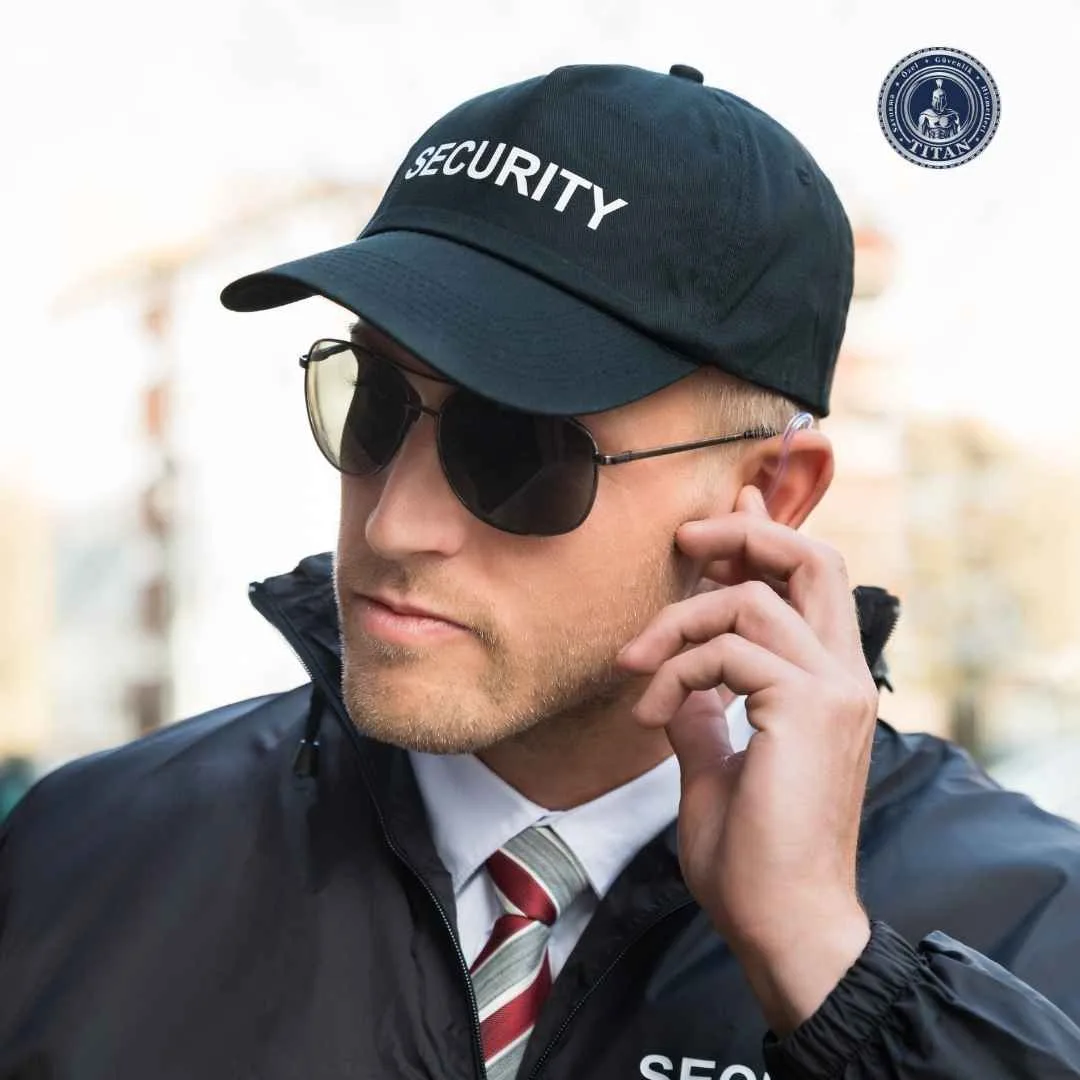
A foreign production shooting on location in Turkey needs two things in place before security can be planned properly: the general shooting permit from the Ministry of Culture and Tourism, and the local permissions for each location. Security then works inside those permissions. In practice it covers three areas: the unit base and equipment, especially overnight; the edge of the set, where the public gathers; and the privacy of cast and crew. A licensed Turkish private security provider handles the controlled areas, while streets and public spaces remain the responsibility of the police or gendarmerie.
This guide is for line producers, location managers and production security leads of international film, series, documentary and commercial productions. It sets out the permit context as published by the Ministry, how different location types change the security picture, and how to protect people, kit and reputation without overstepping what private security may do in Turkey. Studio stage work has different rhythms and is not the subject here.
This article is general information, not legal advice.
The permit context for foreign productions
According to the Ministry of Culture and Tourism's published FAQ for foreign productions, the general shooting permit is issued by the Ministry's Directorate General of Cinema, on the basis of Law No. 5224 on cinema films and the regulation on filming permits. The FAQ states that:
- foreign producers who want to film for commercial purposes in Turkey may apply, as an individual or a company, for documentaries, feature films, TV films and series, TV programmes, short films, music videos and commercials;
- applications are made online through the Ministry's filming permit system, at least 10 days before the shooting start date;
- at least one Turkish citizen must be employed as a liaison (mihmandar) on foreign shoots in Turkey;
- a production holding the general permit must also obtain permission from the highest civil administrative authority of the place where filming happens, and, for locations requiring special permission, from the public body or private entity responsible for that place;
- drone filming applications go to the Directorate General of Civil Aviation through diplomatic channels;
- filming at cultural heritage sites needs an additional permit from the Directorate General of Cultural Heritage and Museums.
For security planning, the important point is that every location has its own permission holder and its own conditions. The liaison (mihmandar) is a permit requirement, not a security role; keep the two functions separate in your crew list.
Location types and who controls them
The same night shoot looks very different on a city street, in a museum and on a remote plateau. A simple classification helps the location and security teams speak the same language:
- Public streets and squares. Controlled by the civil administration and the municipality, policed by the police in cities. Private security can protect your equipment and your designated base, but it cannot close a public road or move the public. Any traffic or pedestrian management is arranged with the authorities named in your local permission.
- Historic and heritage sites. The site authority sets conditions on access, lighting, rigging and load-in. Its own staff and rules come first; your security plan supports them.
- Private property. Villas, factories, hotels and offices. The owner's consent and house rules apply, and private security can control access within the agreed area.
- Remote landscapes. Coastlines, forests and mountain areas, usually under the gendarmerie. Distances, weather, wildfire risk and phone coverage shape the plan more than crowds do.
Under Article 9 of Law No. 5188 on Private Security Services, private security officers may use their powers only during their duty hours and in their duty area. That is why each location needs a clearly described duty area, such as the unit base, the equipment compound or a private set, and why anything outside it is coordinated with the police or gendarmerie rather than handled by guards.
Unit base and equipment overnight
Camera packages, lenses, lighting, generators, costume and props are the production's most exposed assets, and the risk peaks when the unit has wrapped and the crew has gone to the hotel. Planning points for the unit base:
- Choose base sites with the location manager for securability: a single vehicle entrance, lighting, a hard boundary where possible, and space to park trucks nose-out.
- Agree a written handover each evening between the department heads and the night security team, listing which vehicles and containers are locked and where high-value kit is stored.
- Keep the most valuable items in locked vehicles or a hotel storage room rather than in open tents.
- Log every entry and exit of vehicles during the night, and make the log available to the production office each morning.
- Agree how the night team calls the duty producer and the police or gendarmerie, and in which language.
Private security for a temporary location of this kind is provided by a company licensed by the Ministry of Interior, and every private security service rests on a governorship permit. Article 3 of the Law lets the governorship grant permits without a commission decision for events and for temporary or urgent situations, and Article 9 of the Implementing Regulation says that in such cases the security company obtains the permit. Which route applies to a particular shoot is for the governorship to decide, so your provider should confirm it with the governorship for each province on the schedule, well before the first shooting day. Staffing depends on the call sheet, hours and legal working-time limits, so it is planned per location rather than fixed in advance.
Public interest and respectful crowd management
Film crews draw onlookers, and well-known faces draw more. Research on film-induced tourism, including a 2021 study by Çelebi Karakök and Çakmak that surveyed Turkish and foreign participants about places seen in films and series, describes how screen locations attract strong and lasting public interest. The same curiosity starts on the shooting day. A calm, friendly approach keeps the shoot moving and protects the production's welcome in the neighbourhood:
- Inform residents and shopkeepers in advance, in Turkish, about dates, hours and any parking changes that your local permission allows.
- Use a viewing spot outside the working area so people can watch without walking into shot or into cables.
- Brief guards and production assistants to ask, not order. On a public street, people have every right to be there.
- Agree with the police in advance what happens if a crowd grows beyond what the crew can manage politely.
- Keep children, cables, lighting stands and vehicles apart, and look after onlookers' safety as well as the shot.
Cast privacy and photography
Leaks of costume, plot points or cast images can cost a production more than stolen equipment. The tools differ by location:
- On private property you can set house rules: no personal photography by crew, extras or visitors, screened walkways, and closed rehearsals. Make these rules part of contracts and call sheets.
- On public streets you cannot stop the public from taking pictures. Private security officers in Turkey have no general power to confiscate phones or delete images; their powers are listed in Article 7 of Law No. 5188. Use distance, screens, timing and closed vehicles instead.
- Personal data. The production itself records people: extras, crew, sometimes passers-by. Law No. 6698 on the Protection of Personal Data requires processing to be lawful and fair, for specified purposes and limited to what is necessary (Article 4), and requires people to be informed (Article 10). Releases for extras and clear signage on set help. Crew lists, passport copies and hotel rooming lists also count as personal data and should be shared only with those who need them.
For principal cast who need close protection while travelling between hotel, set and events, that is a separate service. Article 9 of Law No. 5188 sets the duty area of close-protection officers as the whole country when they are with the protected person.
Coordination with location owners and local officials
The best security on location is invisible because everybody knows the plan. Bring the following parties into one schedule:
- The location owner or site authority: house rules, keys, alarm arrangements and emergency contacts.
- The civil administration and municipality named in your local permission: conditions, times and any public-space arrangements.
- The police or gendarmerie station responsible for the area: a courtesy contact before the first day and a direct number for the night team.
- The production's liaison (mihmandar): communication with officials, separate from security tasks.
- The security provider's duty manager: the single point of contact for the line producer, in English and Turkish.
Common mistakes on foreign location shoots
- Treating the liaison or a local fixer as the security plan.
- Planning security for the set but not for the unit base after wrap.
- Expecting guards to close streets or remove onlookers from public spaces.
- Booking a heritage site without reading its conditions on rigging, lighting and access.
- Circulating cast hotel details and call sheets more widely than necessary.
Working with Titan Savunma
Titan Savunma is an Ankara-based private security company licensed by the Ministry of Interior under Law No. 5188, holding ISO 9001, 14001, 45001, 22301 and 28000 certificates. We work with international companies in English and Turkish, and can plan services for locations in different provinces with a single point of contact, a written scope and regular reporting. Read more about our event and production security, VIP close protection, and our role as a security partner for international companies in Turkey.
Sources and Further Reading
- T.C. Kültür ve Turizm Bakanlığı — Sıkça Sorulan Sorular: Yabancı yapımlar için çekim izni (FAQ, Directorate General of Cinema)
- Mevzuat Bilgi Sistemi — Law No. 5188 on Private Security Services (consolidated text)
- Mevzuat Bilgi Sistemi — Regulation on the Implementation of the Law on Private Security Services (MevzuatNo 7190)
- KVKK — Law No. 6698 on the Protection of Personal Data (official English translation)
- Çelebi Karakök, E., Çakmak, A. — Sinema ve Dizi Filmlerde Kültür ve Mekân Algısının Turizme Etkisi, SDÜ Fen-Edebiyat Fakültesi Sosyal Bilimler Dergisi 54 (2021)