Guest-focused security does not mean making every control invisible. It means guests understand what they need to do, receive consistent answers from different teams and reach the right person when they need help. One of the most useful pre-season tasks is identifying gaps between departments.
Reception, housekeeping, engineering, security and pool teams have different skills. Combining their responsibilities under one security job title does not improve the service. The following framework can support a discussion of common situations before the season begins.
Separate the first contact from the decision-maker
Security may first receive a request about a lost room key, visitor, late delivery or room change. However, identity and booking verification, issuing a room card and changing a guest record should remain with the hotel's authorised team. A sense of urgency does not automatically remove verification requirements.
Explain the process clearly and avoid sending guests unnecessarily between several desks. Decide when language support is needed and who provides it. Where a role requires a foreign language, verify the relevant ability rather than assuming every member of staff has it.
Protect room privacy during ordinary operations
A room number or confirmation that someone is staying at the hotel should not be disclosed to anyone who asks. Establish approval arrangements for room access, keys and maintenance requests. A security officer cannot be given a general power to search guest rooms; emergencies and police procedures require consideration within their own legal frameworks.
The Turkish Data Protection Authority's 2025 principle decision specifically addresses recording photocopies of Turkish identity documents in accommodation services and requires that practice to stop. Legally required identity reporting and collecting an ID photocopy are different activities. Review forms and established habits with that distinction in mind.
Record complaints and lost property without accusations
When a guest reports missing property, record relevant observations, location, time and contact information proportionately. A report does not establish that an employee or another guest is responsible. Authorised personnel should review camera or lock records only for an appropriate purpose and within a suitable scope.
Make receipt, storage and return approval traceable for found property. Avoid unnecessarily disclosing details of valuable items. Assign someone to update the guest so that the request does not disappear between departments.
Clarify specialist roles around pools and shared areas
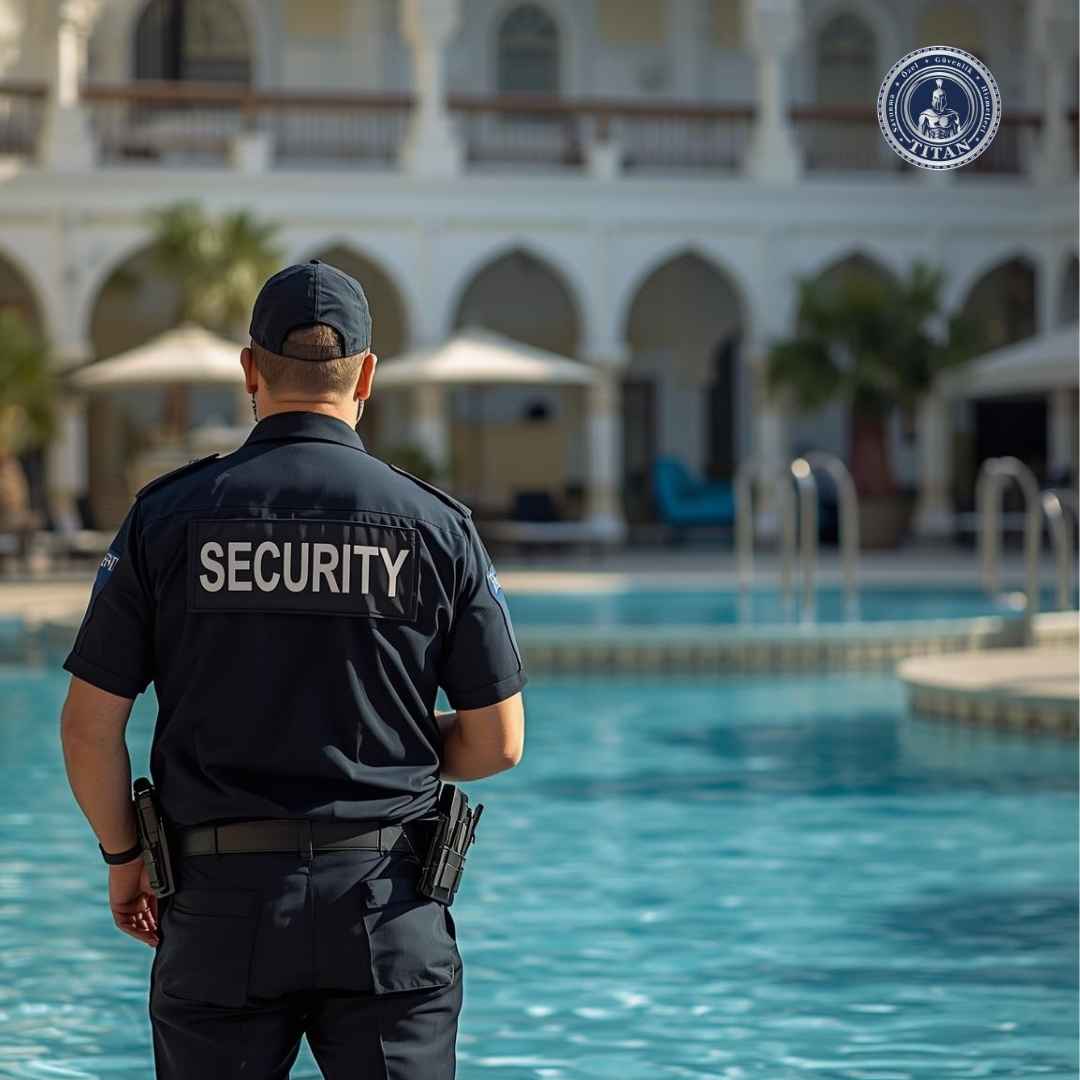
Security may help apply approved site rules and direct assistance teams. This does not replace lifeguard or healthcare qualifications. The Turkish Underwater Sports Federation's lifesaving framework represents a separate area of training and competence.
Identify who communicates a pool closure, technical fault or emergency arrangement to guests. Do not confuse hotel access rules with rights relating to public shores. Apply rules through conduct and authorisation, rather than arbitrary suspicion based on dress, nationality or appearance.
Run three tabletop scenarios before opening
Walk through a lost room key at night, a lost-property report during a busy period and an emergency assistance call at the pool. The exercise checks communication and responsibility; it is not medical response training. Correct missing contact details, unclear approvals and unnecessary data fields afterwards. Guest-focused service depends on requests being resolved safely and consistently, as well as courteously.