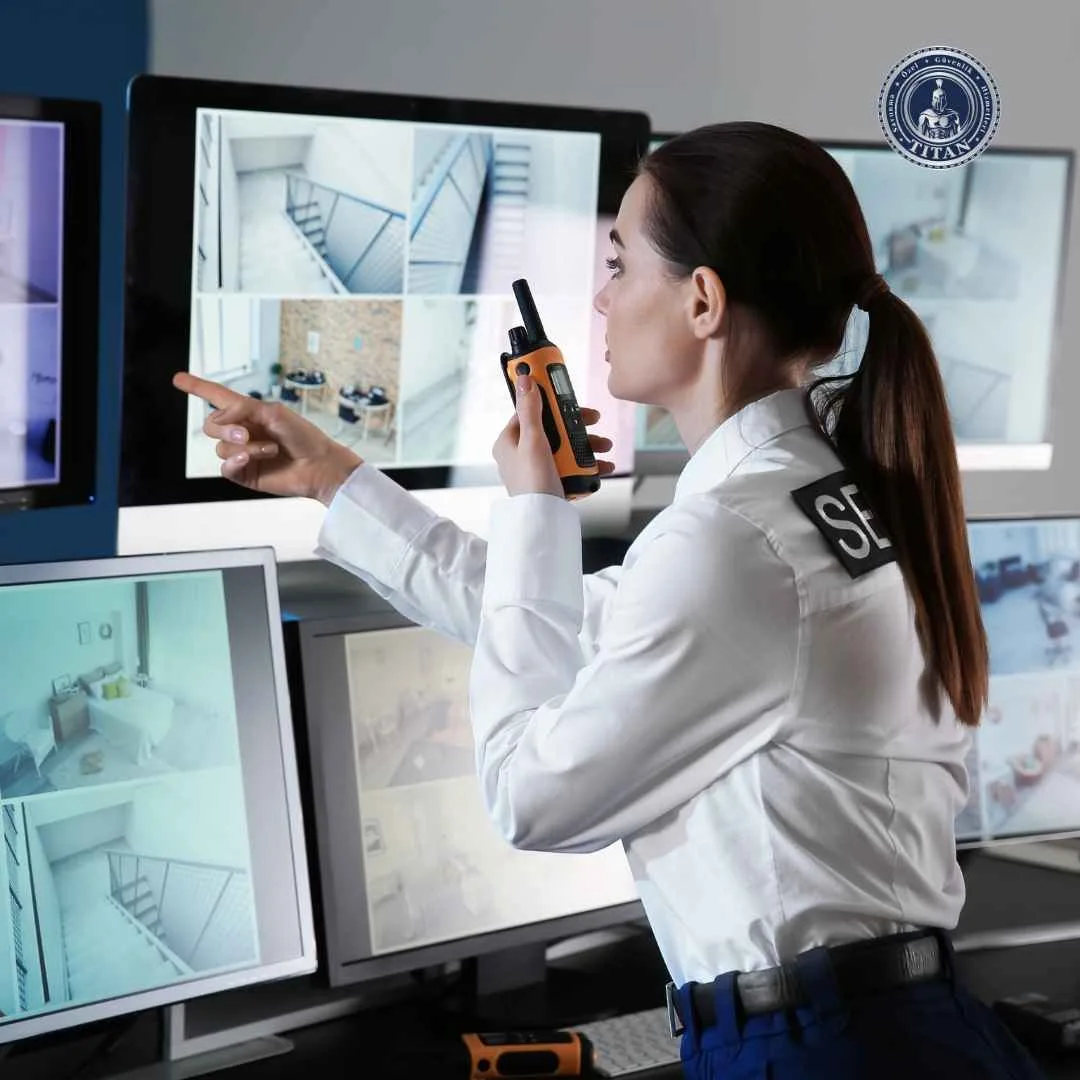
Short answer: A public building, a guesthouse or a small business in Gümüşhane can be guarded at night by a single security officer, but how safe a lone-officer post is depends less on the officer's alertness than on the routine built around them. That routine has four parts: every shift starts with a face-to-face, written handover; the duty log carries incidents and open items in full; the officer is called at agreed times, and what happens when they cannot be reached is written down; and the plan allows for fatigue, which builds in the second half of the night and over consecutive night shifts. Add a one-page list of who is called, and in what order, in an emergency.
This article is general information, not legal advice.
Why lone-officer posts are a common question in Gümüşhane
According to the Social Security Institution (SGK) Statistical Yearbook 2025, 15,425 compulsorily insured employees work at 2,470 workplaces in Gümüşhane. Of those workplaces, 2,190, or about 89%, employ one to nine people. The public sector weighs heavily here too. Public workplaces employ 34.6% of the province's Article 4/1-a insured workforce, whereas the figure for Türkiye as a whole is 12.5%; measured against the national average, the public administration and defence sector's slice of jobs in Gümüşhane is roughly three and a half times larger. (Shares are our own calculation from the yearbook's provincial and national totals.)
In practice, many of the places that need guarding in Gümüşhane are public service buildings that empty after office hours, or small businesses, stores and guesthouses where one officer at night is the natural arrangement. The winter lengthens the night: according to the Turkish State Meteorological Service's 1961–2025 statistics, the average January low in the city is −5.3 °C and the lowest temperature recorded is −25.7 °C. On a long winter night with no one else in the building, who the officer talks to, and how, needs to be settled in advance.
What does the research say?
1. Handover is the most fragile moment, and good handover has known methods
A study of shift handovers in space shuttle mission control, two nuclear power plants, a railroad dispatch centre and an ambulance dispatch centre, based on observation and interviews, looked for 21 handover strategies and found 19 of them in use in at least one setting, at least on an as-needed basis. Every handover observed was an interactive, verbal, face-to-face exchange between the outgoing and incoming person. The strategies include limiting interruptions during the update, letting the incoming person raise topics as well as the outgoing one, having the outgoing person write a summary beforehand, having the incoming person scan recent records first, making it unambiguous who is responsible, and delaying the handover when the situation is unstable. The authors note that they re-analysed observational data collected for other purposes, which can limit the validity of their findings (Patterson et al., International Journal for Quality in Health Care, 2004).
A security post is far simpler than a power plant, but the logic holds: the officer handing over in the morning does not just say "nothing to report"; they mention the open item, the fault and the expected delivery, and the incoming person reads the log and asks questions.
2. Risk rises on night shifts and over consecutive nights
A modelling study that pooled findings from published epidemiological studies estimated that, relative to the morning shift, the risk of incidents (injuries and accidents) was about 15.2% higher on the afternoon shift and about 27.9% higher on the night shift. Over consecutive night shifts, risk relative to the first night was about 6% higher on the second night, 17% on the third and 36% on the fourth. Shift length mattered too: compared with 8-hour shifts, risk was estimated to be 13.0% higher on 10-hour shifts and 27.5% higher on 12-hour shifts. The authors stress that, for the same number of weekly hours, risk varies substantially with how those hours are arranged (Folkard and Lombardi, American Journal of Industrial Medicine, 2006). The data come mostly from industrial workplaces, not security officers. Still, they give a manager planning night cover a direction: long runs of nights for the same officer, and long night shifts as a habit, are two separate ways to raise the chance of error.
3. Risk builds up between breaks
A field study reported in the same modelling paper examined injuries at an engineering plant where a break followed every two hours of continuous work. Risk rose roughly linearly between breaks and, in the last half-hour before the next break, had doubled compared with the first half-hour after the previous one; there was no evidence that the trend differed between day and night shifts (Tucker, Folkard and Macdonald, The Lancet, 2003, as reported by Folkard and Lombardi, 2006). For a lone officer a "break" cannot mean leaving the building. But when they sit and rest, when they eat, and how they alternate between rounds and camera monitoring can all be planned; avoiding long, unbroken monitoring blocks is the practical reading of this finding.
4. Night duty leaves a mark on the officer
A study of 90 male officers working for one security company in Sicily, Italy, compared officers working nights in a monitoring room, officers working nights on the street and officers working days. In both night groups, salivary cortisol, a stress-related hormone, was higher than in day workers at 22:00 and 06:30, while there was no significant difference between groups in the afternoon. The authors note that the small sample makes the findings hard to generalise (Cannizzaro et al., International Journal of Environmental Research and Public Health, 2020). The study does not measure performance, but it is a reminder that night duty is a real load on the officer and that an early-morning handover falls in exactly that tired hour.
5. Lone officers should be monitored and kept in regular contact
The UK Health and Safety Executive (HSE) lists security staff among its examples of lone workers and states that there will always be greater risks for lone workers without direct supervision or anyone to help them if things go wrong (HSE, Lone working). Its guidance says lone workers must be monitored and kept in touch with: knowing where they are, regular contact at pre-agreed intervals by phone or radio, and devices for raising the alarm, operated manually or automatically, are among the options. It asks employers to test these systems and all emergency procedures regularly, to set limits on what lone workers can do alone, and to make sure they recognise when they should get advice (HSE, Training, supervision and monitoring). HSE also notes that lone working does not always mean a higher risk of violence, but it does make workers more vulnerable because support is not close by, and that late evening and early morning work are among the risk factors (HSE, Violence).
Handover and the duty log: what to record
The duty log is the memory of a lone-officer post. It can be on paper or electronic; what matters is that the same headings are filled in, in the same order, on every shift.
- Start of duty: handover time, names and signatures of the outgoing and incoming officer, and the number of keys, cards and radios taken over.
- Building status: doors that should be locked, whether the alarm is set, and any faulty camera, door or lighting.
- Open items: expected deliveries, staff due to stay late, maintenance crews expected overnight, matters carried over from the previous night.
- Rounds and calls: the time and findings of every round, and the time and outcome of every check call.
- Incidents: time, place, what was seen, who was told and when.
- End of duty: open items, the incoming officer's questions and the answers given, handover time and both signatures.
During handover the officer should not start other tasks, and the handover should not be done by phone or by a note left in the log. If an alarm, fault or suspicious situation is still running, the handover should wait; the outgoing officer keeps responsibility until the situation is clear.
Check calls and the lone-officer checklist
| Area | What to do | Why |
|---|---|---|
| Call times | Check-call times are written at the start of duty; the officer is called or calls in, and the outcome goes in the log. | Regular contact at pre-agreed intervals is one of the ways HSE lists for monitoring a lone worker. |
| If a call is missed | A second call after a short wait; if there is still no answer, the person in charge or the security supervisor is sent to the building; 112 if needed. These steps are written down. | What gives the system value is what happens after silence. |
| Means of contact | Basements, boiler rooms or archive floors with no mobile signal are identified, and radio or another means is agreed for them. | Contact can fail exactly where the officer needs it most. |
| Alarm button | Any personal alarm or fixed panic button is tested regularly and each test is logged. | HSE asks for systems and emergency procedures to be tested regularly. |
| Not alone | Situations the officer will not tackle alone are written down, such as entering a building after a break-in or confronting a large group; the officer reports from a safe place instead. | Limits on what a lone worker does alone should be set in advance. |
| Second half of the night | Rounds, camera monitoring and seated rest are scheduled in turn, and long unbroken monitoring blocks are split up. | Risk builds up between breaks and is higher on night shifts. |
| Consecutive nights | The same officer is not given long runs of nights; the night–day rotation and rest periods are written into the plan. | Risk rises markedly over consecutive nights towards the fourth. |
| Morning handover | Face to face, from the log, with the incoming officer's questions, and no other tasks during the handover. | Every handover observed in the four high-risk settings studied was face to face and interactive. |
| Inspection | The security supervisor makes unannounced night visits and checks the log, the call records and the officer's condition. | A written routine only works when it is checked. |
Who is called in an emergency?
A lone officer's hardest moment is deciding whom to call first when something happens. That decision should not be made at midnight; it should be on paper before the shift starts. We recommend a one-page call list kept where the officer can see it easily:
- Danger to life, fire or crime: call 112 first. The officer moves to a safe place without putting themselves at risk.
- The organisation's or business's out-of-hours contact: name and hours of availability on the list; if the first person cannot be reached, the second.
- The security company's duty supervisor: takes over the incident, sends extra support to the building if needed and stays in touch with the client.
- Technical faults: the technical contact named by the client for flooding, power cuts, boiler or lift faults.
- Record: who was called, when and what was said, entered in the log.
In fires, evacuations or earthquakes, the security officer's role should be defined together with the emergency plan the employer prepares under Turkey's Occupational Health and Safety Law No. 6331. The list should be updated whenever something changes; a contact who has left should not stay on it.
Common mistakes
- Handing over by phone or with a two-line note in the log, with no chance for the incoming officer to ask questions.
- Writing only "nothing to report" in the log and leaving out open items and faults.
- Making check calls without ever writing down what to do when an officer cannot be reached.
- Not knowing where there is no mobile signal; never testing the alarm button since the day it was fitted.
- Giving the same officer long runs of nights and filling the second half of the night with unbroken camera monitoring.
- In a small business, giving the officer other jobs such as the till, cleaning or stock counts.
- Not updating the emergency call list, or keeping it only on the supervisor's phone.
A note for Turkey
Under Turkey's Labour Law No. 4857, "night" in working life is the period starting no later than 20:00 and ending no earlier than 06:00, lasting at most eleven hours, and employees' night work may not exceed seven and a half hours. The Law allows night work beyond seven and a half hours in private security work, provided the employee's written consent is obtained. The same article provides that, where day and night shifts rotate, an employee who works nights for one working week works days in the following week (a two-week rotation is also allowed), and that an employee changing shifts must have at least eleven hours' uninterrupted rest (Law No. 4857, Article 69). The research suggests planning the number of consecutive nights as well.
Article 16 of Law No. 5188 restricts private security staff to the protection and security duties the Law defines; assigning them to unrelated tasks is not permitted. This matters particularly in small businesses: giving the officer till, cleaning or dispatch work both sets up an arrangement contrary to the law and takes a lone officer's attention away from the job. Having security provided by a company requires the governor's permission on the decision of the provincial private security commission (Article 3). Check-call and handover records contain personal data, so their retention period should be set under the Personal Data Protection Law No. 6698.
You can find our approach for public buildings, guesthouses and small businesses on our private security in Gümüşhane page. When talking to a security provider, our security provider scorecard helps you ask about handover, check calls and night inspections.
Titan Savunma is an Ankara-based private security company licensed by the Ministry of Interior under Law No. 5188 and certified to ISO 9001, 14001, 45001, 22301 and 28000. We work with international companies in English and Turkish, and our Gümüşhane City Manager, supported by our Black Sea Regional Directorate and our General Directorate in Ankara, surveys your building on site, sets up the duty log, check calls and emergency call list with you, and carries out unannounced night inspections. To request a site survey, please use our contact page.
Sources and Further Reading
- Patterson, E. S., Roth, E. M., Woods, D. D., Chow, R. & Gomes, J. O. — Handoff strategies in settings with high consequences for failure: lessons for health care operations, International Journal for Quality in Health Care 16(2), 125–132 (2004)
- Folkard, S. & Lombardi, D. A. — Modeling the impact of the components of long work hours on injuries and "accidents", American Journal of Industrial Medicine 49(11), 953–963 (2006)
- Tucker, P., Folkard, S. & Macdonald, I. — Rest breaks and accident risk (araştırma mektubu), The Lancet 361(9358), 680 (2003)
- Cannizzaro, E., Cirrincione, L., Mazzucco, W., Scorciapino, A., Catalano, C., Ramaci, T., Ledda, C. & Plescia, F. — Night-Time Shift Work and Related Stress Responses: A Study on Security Guards, International Journal of Environmental Research and Public Health 17(2), 562 (2020)
- Health and Safety Executive (UK) — Lone working: Protect those working alone; Training, supervision and monitoring; Violence
- 4857 sayılı İş Kanunu (madde 69), Mevzuat Bilgi Sistemi
- SGK — İstatistik Yıllığı 2025 (Tablo 1.6, 1.11, 1.14, 1.17; Gümüşhane)
- Meteoroloji Genel Müdürlüğü — Resmi İstatistikler: Gümüşhane (1961–2025)