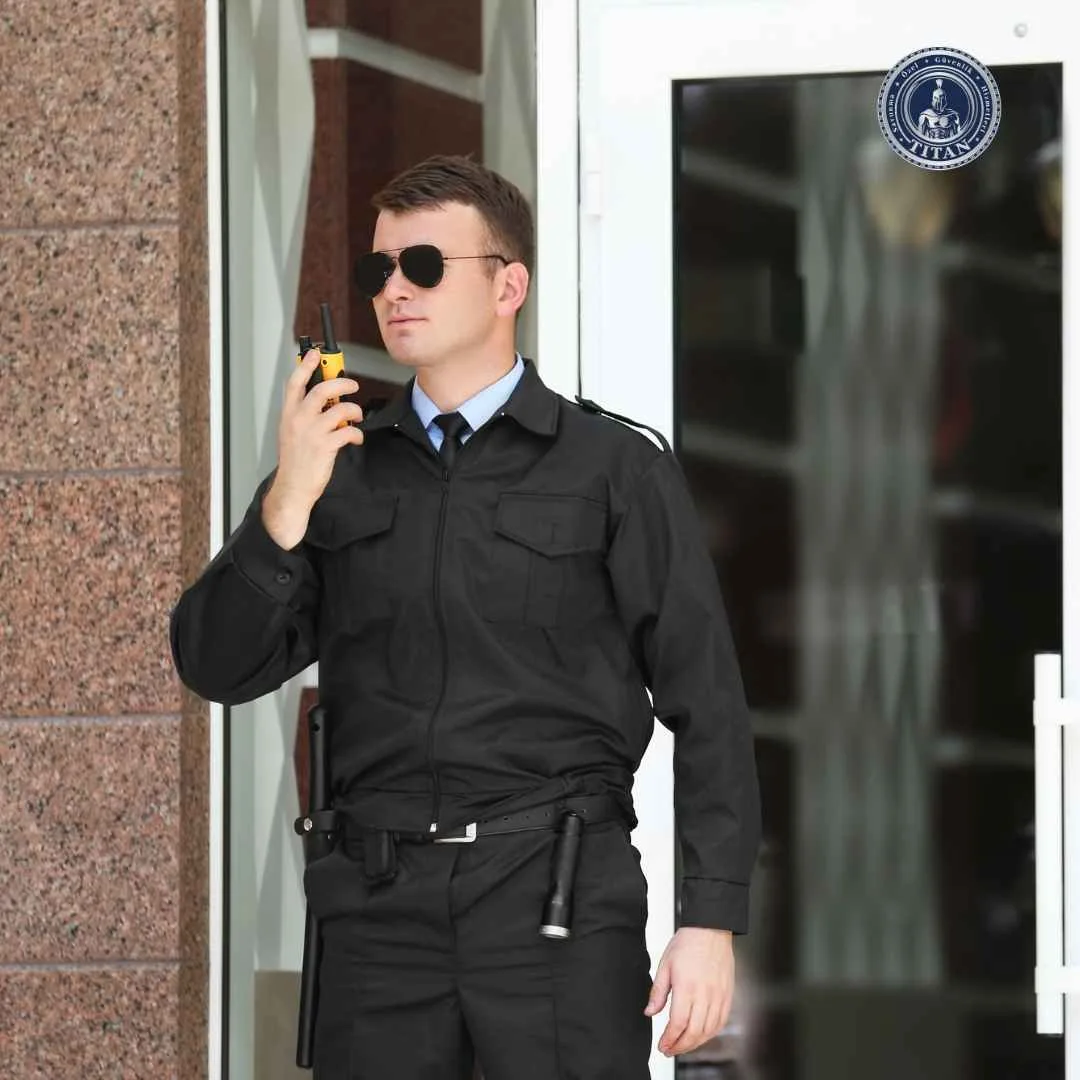
An honorary consulate in Turkey is usually run by a local businessperson from his or her own office, which is exactly what makes its security unusual. The premises are a working company and a consular post at the same time; the consul is a private citizen and a representative of a foreign state at the same time. Good security for an honorary consulate is therefore less about guards and barriers and more about separation: keeping consular archives apart from business papers, keeping consular visitors apart from the company's daily traffic, and knowing which protection the host state owes and which it does not.
In practice, most honorary consulates need a modest, well-documented set of measures: a defined consular room, a locked archive kept apart from company files, an appointment-based visitor routine, an agreed line to the sending state's embassy, and clear instructions for whoever already secures the building. This guide explains why.
This article is general information, not legal advice. The sending state's foreign ministry and its embassy in Ankara remain the authority on how their honorary posts must operate.
What the Vienna Convention says about honorary posts
The Vienna Convention on Consular Relations (VCCR) divides consular officers into two categories in Article 1(2): career and honorary. Chapter II governs posts headed by career officers; Chapter III, Articles 58 to 68, governs posts headed by honorary officers. Article 68 adds that each state is free to decide whether to appoint or receive honorary consular officers at all.
Several provisions matter directly for security planning:
- Article 58 lists which general provisions also apply to honorary posts. They include Article 29 on the flag and coat-of-arms and Article 35 on freedom of communication. Article 31, which makes career consular premises inviolable, is not on the list. Article 58(3) also states that the convention's privileges and immunities are not accorded to the family members of an honorary consular officer.
- Article 59 requires the receiving state to take such steps as may be necessary to protect the premises of an honorary post against intrusion or damage and to prevent disturbance of its peace or impairment of its dignity.
- Article 61 makes the archives and documents of an honorary post inviolable at all times and wherever they may be, provided that they are kept separate from other papers, in particular from the private correspondence of the consul and colleagues and from documents relating to their profession or trade.
- Article 64 obliges the receiving state to accord the honorary consular officer such protection as may be required by reason of his or her official position.
Academic writing confirms that this area is less settled than it looks. In a 2025 study in the Dokuz Eylül University law faculty journal, Çamyamaç and Kavak note that international law contains no precise definition of the honorary consul and that relatively little has been written on the institution. For a security planner, the safe conclusion is to rely on the treaty text, the sending state's instructions and legal advice, not on assumptions borrowed from embassies.
Shared premises: drawing the line between the business and the post
Article 1(1)(j) of the VCCR defines consular premises as the buildings or parts of buildings used exclusively for the purposes of the consular post. In a shared office, that word "exclusively" is the starting point for a physical plan. A room, or at least a clearly bounded area, should be set aside for consular work, with its own lockable storage.
The archive condition in Article 61 turns separation into a legal requirement rather than a preference. Practical steps include:
- A dedicated, lockable cabinet or safe for consular files, stamps and seals, never mixed with company contracts or invoices.
- A short key or code register showing who can open it; company staff who do not work on consular matters should not be on it.
- Separate digital storage: a separate mailbox and folder structure for consular correspondence, ideally on a separate device, so that a company IT contractor or an audit of the business does not sweep consular material along with company data.
- Separate incoming mail: consular post addressed and sorted apart from company post.
- Where visa or passport data is handled for a Schengen state, Article 44 of the EU Visa Code requires member states cooperating with honorary consuls to ensure such data is fully encrypted, whether transferred electronically or physically on an electronic storage medium; the sending state will set the procedure.
The business side also benefits. Company employees are protected from accidental access to material they should not see, and the company's own records stay outside any consular dispute.
Visitors on consular service days
Most honorary consulates do not have a constant stream of visitors. Instead, they see clusters: citizens needing documents, travellers in difficulty, local companies seeking contacts, and occasionally a person who wants to complain to the foreign state in person. A routine that works:
- Appointments by default. Publish service hours and an appointment channel. Walk-ins are received, but the routine assumes most visitors are expected.
- A waiting place outside the business floor. If the company reception is used, consular visitors should wait in a defined spot and be escorted directly to the consular room, not through open-plan workspaces.
- Visitor registration with a privacy notice. Turkey's Personal Data Protection Law, Law No. 6698 (KVKK), requires the data controller to inform people when collecting their data (Article 10) and to take technical and administrative measures to keep it secure (Article 12). The consulate's visitor log should not be part of the company's general visitor system.
- Calm handling of distressed visitors. Brief reception staff on what to do with an upset traveller, an urgent request outside hours, or a visitor who refuses to leave: who to call at the consulate, when to call the embassy, and when to call the police.
Flag, plaque and visibility
Through Article 58, the right in Article 29 to fly the national flag and display the coat-of-arms on the building and at its entrance applies to honorary posts, with regard to the laws, regulations and usages of the receiving state. Visibility is part of the consulate's purpose, but it changes the risk picture of the building. A plaque at street level brings walk-in visitors, occasional demonstrations or media attention connected with the sending state, and questions to the building's front desk.
Proportionate measures include agreeing with building management in advance how the lobby desk should respond to consular enquiries, keeping the consulate's floor and room number off public directories if the sending state allows, and having a written note on whom to contact if a gathering forms outside. None of this needs to be dramatic; it needs to be written down before it happens.
Working with the embassy and with the building's security
The sending state's embassy, often through a security officer, usually sets minimum standards for its honorary posts and should be the first call when something unusual happens. Agree on three things with the embassy: an incident-reporting channel with a named contact and a deputy, the documents and equipment that must be kept under the consulate's own control, and what support the embassy gives during a crisis that sends many citizens to the consulate at once.
Where the building or the consul's company already uses private security, the guards can support the consulate within their normal scope. In Turkey this is governed by Law No. 5188: private security officers act within the area they protect and with the powers listed in Article 7, such as passing visitors through detector gates and screening bags at the entrance. The consulate should give its instructions to the security company in writing, through the company's client contact, and should not expect guards to handle consular archives, assess visitors' requests or act on behalf of the foreign state. If the consul decides to engage private security specifically for the consulate, Article 3 makes this subject to the governor's permission, normally after a decision of the provincial private security commission, and Article 5 requires the security company to hold a Ministry of Interior operating permit.
A proportionate checklist
- Defined consular room or area, used only for consular work.
- Lockable archive storage for files, seals and stamps, with a key register.
- Separate consular mailbox, folders and, ideally, device.
- Appointment system and published service hours.
- Visitor log with a KVKK privacy notice, kept apart from company systems.
- Waiting and escort route that avoids company workspaces.
- Written briefing for reception and building security, in Turkish and the language the consul uses with the embassy.
- Embassy contact, deputy and incident-reporting template.
- Out-of-hours plan: who answers urgent calls, who holds keys.
- Annual review with the embassy, especially after a change of premises or staff.
Titan Savunma is an Ankara-based private security company licensed by the Ministry of Interior under Law No. 5188 and holding ISO 9001, 14001, 45001, 22301 and 28000 certificates. We work with international companies in English and Turkish, with a single point of contact, a written scope and regular reporting. See our embassy and consulate security page, and for shared commercial buildings our office and business centre security page.
Sources and Further Reading
- United Nations — Vienna Convention on Consular Relations (1963)
- Çamyamaç, A. & Kavak, M. H. — Uluslararası Hukuk Çerçevesinde Fahrî Konsolos, Dokuz Eylül Üniversitesi Hukuk Fakültesi Dergisi 27(1) (2025)
- Mevzuat Bilgi Sistemi — Law No. 5188 on Private Security Services (2004, as amended)
- Mevzuat Bilgi Sistemi — Law No. 6698 on the Protection of Personal Data (2016, as amended)
- EUR-Lex — Regulation (EC) No 810/2009 (EU Visa Code), consolidated text (2020)