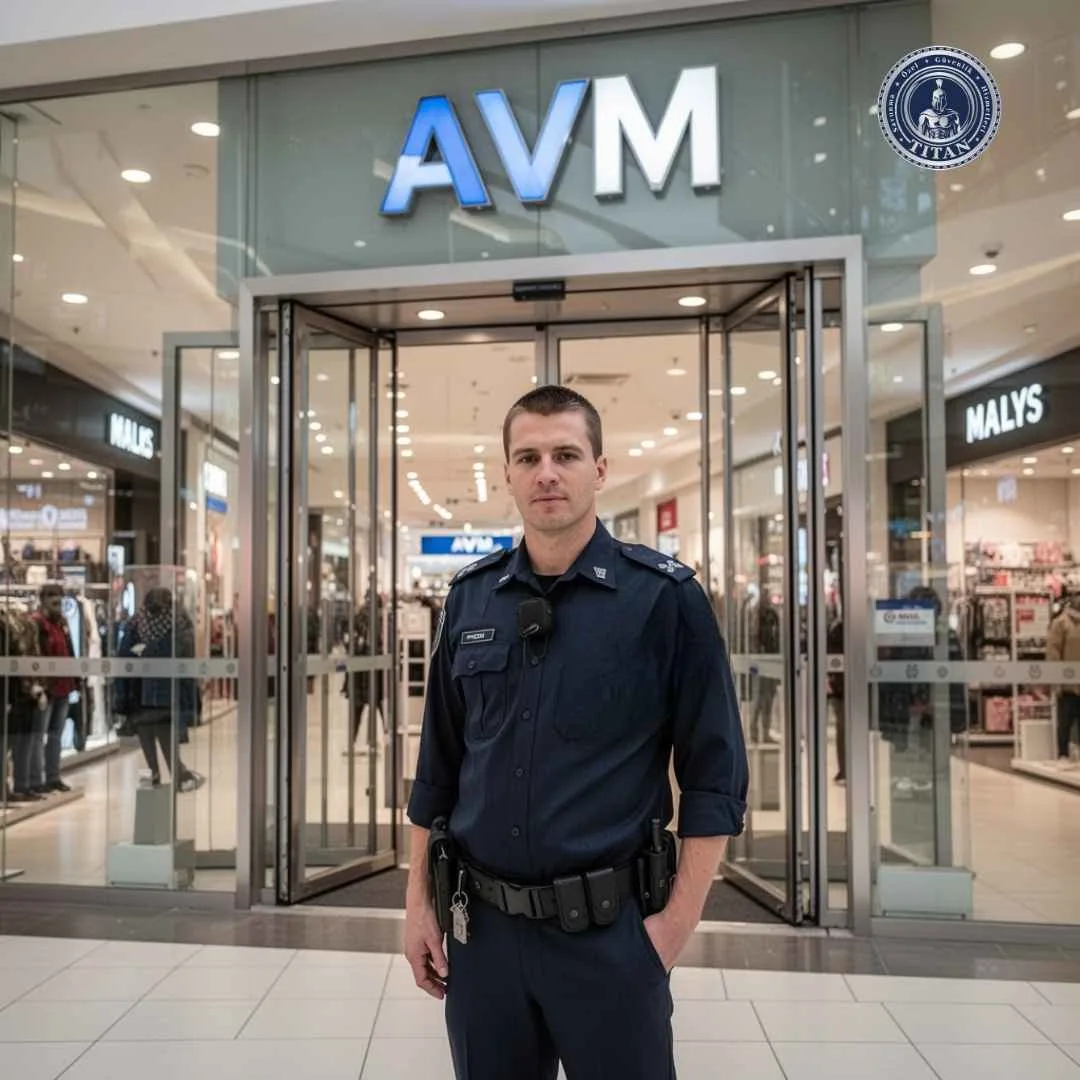
Short answer: Attackers and criminals rarely choose a target at random. They gather information first and weigh two things: the chance of being caught and the chance of success. This information-gathering phase is called hostile reconnaissance. Research suggests that visible, engaged and unpredictable security disrupts that calculation, and UK government protective security guidance adds that truthfully promoting your security capability, without giving away detail, can lead a hostile to discount a site at the very first stage of target selection.
This article brings together guidance from the UK's National Protective Security Authority (NPSA, formerly CPNI), criminological research on offender decision-making, terrorism research on attack planning, and game-theoretic work on randomised patrol scheduling. Its purpose is defensive: it explains how reconnaissance can be disrupted, not how it is carried out.
What is hostile reconnaissance and why does it matter?
CPNI's June 2016 guidance, Hostile Reconnaissance: Understanding and countering the threat, defines hostile reconnaissance as "purposeful observation with the intention of collecting information to inform the planning of a hostile act against a specific target." It notes that terrorists, activists, corporate or state-sponsored spies and criminals have different aims but share one trait: they want to succeed, and because they may not get a second chance, they typically plan carefully. They draw on online research, site visits and, where necessary, insider knowledge.
The key insight is what the information is used for: to assess the state of security and the likelihood of detection, to find vulnerabilities, and to judge the likelihood of success. In gathering it, hostiles expose themselves, both online and on site. That is the security manager's opportunity.
The UK counter-terrorism security office NaCTSO made the same point in its crowded places communication guidance: those planning an attack typically conduct hostile reconnaissance, some target selection may be carried out online, and a security-minded communications approach may result in a site being discounted as a potential target early on. (That page was withdrawn on 30 May 2022 and current versions sit on ProtectUK; we cite it to illustrate the principle.)
What does the research say?
1. Offenders decide rationally, and by habit
Cornish and Clarke's rational choice perspective treats offenders as weighing opportunities with bounded rationality. The situational crime prevention framework built on it is summarised in 25 techniques. Five fall under "increase the risks": extend guardianship, assist natural surveillance, reduce anonymity, utilise place managers, and strengthen formal surveillance, with burglar alarms and security guards listed as examples of the last.
Field evidence supports this. Nee and Meenaghan's 2006 study in the British Journal of Criminology interviewed 50 experienced burglars in prison, all of whom had committed at least 20 burglaries in the previous three years and half of whom had committed more than 100. They gave stereotyped accounts of checking relative wealth, occupancy, access and security when choosing a target, and 45 of the 50 described a predictable search pattern. The authors read this as evidence of expert, largely habit-driven decision-making and suggest prevention can work by confounding those expectations. The limitation: a small sample of offenders who were caught.
2. The mere presence of a guardian deters
More recent experimental evidence comes from virtual reality. In a 2021 study in the Journal of Experimental Criminology, van Sintemaartensdijk and colleagues asked 181 incarcerated burglars and 172 university students to appraise a virtual neighbourhood in search of a burglary target. The mere presence of a guardian deterred both groups, while higher levels of guardianship, up to an intervening guardian, added only negligible further effect. Among burglars, guardianship raised the perceived likelihood of being caught and lowered the perceived attractiveness of the neighbourhood. The study concerned informal guardians (residents), and how far virtual findings generalise to real streets remains an open question.
A follow-up by the same team in Psychology, Crime & Law (2024) found that neighbourhood watch and police signs produced only small deterrent effects on burglars. Police signs reduced the time participants spent scouting and the distance they travelled, but the authors see signs as a supplement to established measures. The practical lesson: a real, visible human presence carries more weight than a sign that merely describes one.
3. Visible, focused presence need not simply push crime next door
A common objection is that visible security just displaces crime to the neighbours. Braga and colleagues' 2019 Campbell systematic review examined 78 tests in 65 studies of hot spots policing; 62 of the 78 reported noteworthy reductions in crime and disorder. Where displacement was measured, diffusion of benefits to nearby areas was more likely than displacement. The mean effect was small but statistically significant, and smaller in randomised designs. This is policing evidence and does not transfer directly to private security, but it supports the logic of focused, visible presence.
4. Attack planning leaves observable traces
Terrorism research also challenges the image of the sudden, unplanned attack. Gill, Horgan and Deckert's study in the Journal of Forensic Sciences coded open-source data on 119 lone-actor terrorists. Lone-actor events were rarely sudden and impulsive; in 57.7% of cases other people had specific information about the actor's research, planning or preparation, and 29.4% of offenders engaged in dry runs of their intended activities. The authors caution that because the data rely largely on press reporting, "no" answers are probably undercounted.
Schuurman, Bakker, Gill and Bouhana's 2018 analysis applied a 198-variable codebook to 55 lone actors and found them generally poor at maintaining operational security, often leaking their motivations and capabilities months or even years before an attack. For corporate security the implication is that the preparation phase produces signals that alert staff and officers can notice, and that a reporting culture turns noticing into value.
5. Predictability is a vulnerability
Game theory formalised this intuition. Pita and colleagues' ARMOR paper at AAMAS 2008 stresses that limited resources make full coverage impossible and that adversaries can observe security arrangements over time and exploit predictable patterns. ARMOR was deployed at Los Angeles International Airport (LAX), initially on a trial basis, to randomise checkpoints on the roads into the airport from August 2007 and canine patrols in the terminals from November 2007. Crucially, the randomisation is weighted, with higher probability given to more critical targets, and users can adjust the schedule to local constraints.
Sinha, Fang, An, Kiekintveld and Tambe's IJCAI 2018 survey states the core assumption of these Stackelberg security games plainly: the attacker can observe and learn the defender's strategy and attacks after careful planning. The defence these models recommend is therefore randomness, weighted by risk, that yields no reliable pattern even when watched. Note that this work shows the method is workable at scale; on its own it does not prove how much crime fell at a given site.
The NPSA framework: Deny, Detect, Deter
Based on its research, CPNI identifies three principal ways to disrupt hostile reconnaissance:
- Deny: keep information out of reach when it does not need to be available (the guidance's example is an exact site plan on the corporate website), educate staff about what hostiles harvest from social media, and make security measures unpredictable where possible. The guidance specifically notes that unpredictable timing, type and location of patrols makes it hard to find a pattern that can be exploited with confidence.
- Detect: integrated detection focused where hostiles have to go to get information: well-sited CCTV, operators proactively looking for suspicious activity, vigilant and engaged officers, and a timely response. Because hostiles know they are behaving out of the norm, they tend to be more anxious, which makes them more susceptible to detection.
- Deter: CPNI defines deterrence as "the intelligent, co-ordinated promotion of protective security provision to the hostile" that results in a perception that the reconnaissance or the attack will fail. Deterrence relies on Deny and Detect capabilities actually existing.
Two caveats in the guidance matter most. First, messages should reassure, or at least be neutral to, ordinary staff and visitors, and must not give away detail useful to hostiles. Second, any capability you promote must be truthful; if deceit is uncovered, hostiles may disbelieve everything else and may even be motivated to continue. The guidance also notes that a strong staff vigilance and reporting culture is itself a deterrent: to a hostile it is not just cameras and officers, "everyone could be watching".
A practical checklist
| Area | What to do | Basis |
|---|---|---|
| Online information | Review your website, tender documents, job adverts and press content with the question "how could a hostile use this?" Remove unnecessary detail such as layouts, shift times or system makes. | CPNI 2016 (Deny) |
| Staff awareness | Explain what not to share about the workplace on social media and what social engineering approaches look like. | CPNI 2016 checklist |
| Reporting culture | Give staff one simple way to report unusual behaviour, close the loop with reporters and never penalise a report made in good faith. | CPNI 2016; Gill et al. 2014; Schuurman et al. 2018 |
| Patrol patterns | Vary the timing, route and type of patrols and checks, but weight the randomness by risk so critical areas are covered more often. | Pita et al. 2008; Sinha et al. 2018; CPNI 2016 |
| Engaged officers | Officers should show a professional presence and posture, engage courteously with people around them and be trained to resolve suspicion through polite questioning. | CPNI 2016; van Sintemaartensdijk et al. 2021 |
| Rehearsed response | Write down who does what when something suspicious is reported and test it in regular drills; a fast response increases the value of detection. | CPNI 2016 (Detect) |
| Deterrence communication | Promote real capability (for example a CCTV upgrade, a trained team, a strong reporting culture) truthfully and without technical detail, and keep the "drumbeat" going rather than making a one-off statement. | CPNI 2016 (Deter); NaCTSO |
| Signage | Use signs to support real presence, not to replace it. | van Sintemaartensdijk et al. 2024 |
To see where your own site is weakest, start with our security risk assessment tool, and use the security coverage planner to sketch where and when visible presence is needed.
Common mistakes
- Assuming measures deter by default. CPNI stresses that deterrence takes proactive effort.
- Clockwork patrols. The same route at the same time every day is an easy pattern for an observer to read.
- Uniform randomness. Covering critical and trivial points with equal probability wastes resources; the game-theory work weights by value.
- Oversharing. Publishing security system makes and locations, shift change times or detailed plans on the corporate website.
- Exaggerated or false security claims. Promoting a capability you do not have destroys the credibility of everything else once exposed.
- Relying on signs alone. Virtual reality experiments suggest signs have small effects while human presence deters more clearly.
- Passive officers. An officer absorbed in a phone may be visible but does little to raise the perceived risk of detection.
- Reports that disappear. Staff who never hear what happened to their report may not report next time.
A note on Türkiye
In Türkiye, as elsewhere, organisations can unwittingly show building interiors, control rooms or entry arrangements in tender notices, corporate videos and social media posts. Reviewing this content with the communications team, using the Deny logic above, is a quick and low-cost step for international companies operating here. Clients of private security providers should ask how patrol plans are varied, how officers are prepared to engage and spot suspicious behaviour, and how incident reporting works; our security provider scorecard turns those questions into a structured comparison.
Conclusion
Target selection is a process in which a hostile weighs the risk of being caught against the chance of success. The evidence converges on three points: visible, engaged human presence deters; predictability creates vulnerability; and attack preparation leaves signals that can be noticed. Good security therefore does more than exist: it withholds unnecessary information, gives away no pattern, pays attention, and communicates its capability truthfully without revealing detail.
Titan Savunma is an Ankara-based private security company licensed by the Ministry of Interior under Law No. 5188 and certified to ISO 9001, 14001, 45001, 22301 and 28000. We work with international companies in English and Turkish. To review how exposed your site is to hostile reconnaissance, start with our security risk assessment tool or contact us.
Sources and Further Reading
- CPNI (now NPSA) — Hostile Reconnaissance: Understanding and countering the threat, Centre for the Protection of National Infrastructure (June 2016; official copy hosted by PSNI)
- NaCTSO — Crowded Places Guidance: Communication, GOV.UK (withdrawn 30 May 2022; superseded by ProtectUK guidance)
- Gill, P., Horgan, J. & Deckert, P. — Bombing Alone: Tracing the Motivations and Antecedent Behaviors of Lone-Actor Terrorists, Journal of Forensic Sciences 59(2), 425–435 (2014)
- Schuurman, B., Bakker, E., Gill, P. & Bouhana, N. — Lone Actor Terrorist Attack Planning and Preparation: A Data-Driven Analysis, Journal of Forensic Sciences 63(4), 1191–1200 (2018)
- Nee, C. & Meenaghan, A. — Expert Decision Making in Burglars, British Journal of Criminology 46(5), 935–949 (2006)
- van Sintemaartensdijk, I., van Gelder, J.-L., van Prooijen, J.-W., Nee, C., Otte, M. & van Lange, P. — Mere presence of informal guardians deters burglars: a virtual reality study, Journal of Experimental Criminology 17(4), 657–676 (2021)
- van Sintemaartensdijk, I., van Gelder, J.-L., van Prooijen, J.-W., Nee, C., Otte, M. & van Lange, P. — Assessing the deterrent effect of symbolic guardianship through neighbourhood watch signs and police signs: a virtual reality study, Psychology, Crime & Law 30(1), 1–21 (2024)
- Pita, J., Jain, M., Marecki, J., Ordóñez, F., Portway, C., Tambe, M., Western, C., Paruchuri, P. & Kraus, S. — Deployed ARMOR Protection: The Application of a Game Theoretic Model for Security at the Los Angeles International Airport, AAMAS 2008 Industry Track (2008)
- Sinha, A., Fang, F., An, B., Kiekintveld, C. & Tambe, M. — Stackelberg Security Games: Looking Beyond a Decade of Success, Proceedings of IJCAI 2018, 5494–5501 (2018)
- Braga, A. A., Turchan, B., Papachristos, A. V. & Hureau, D. M. — Hot spots policing of small geographic areas effects on crime, Campbell Systematic Reviews 15(3), e1046 (2019)
- Cornish, D. B. & Clarke, R. V. — Twenty-Five Techniques of Situational Prevention (grid), ASU Center for Problem-Oriented Policing (based on Cornish & Clarke 2003)