
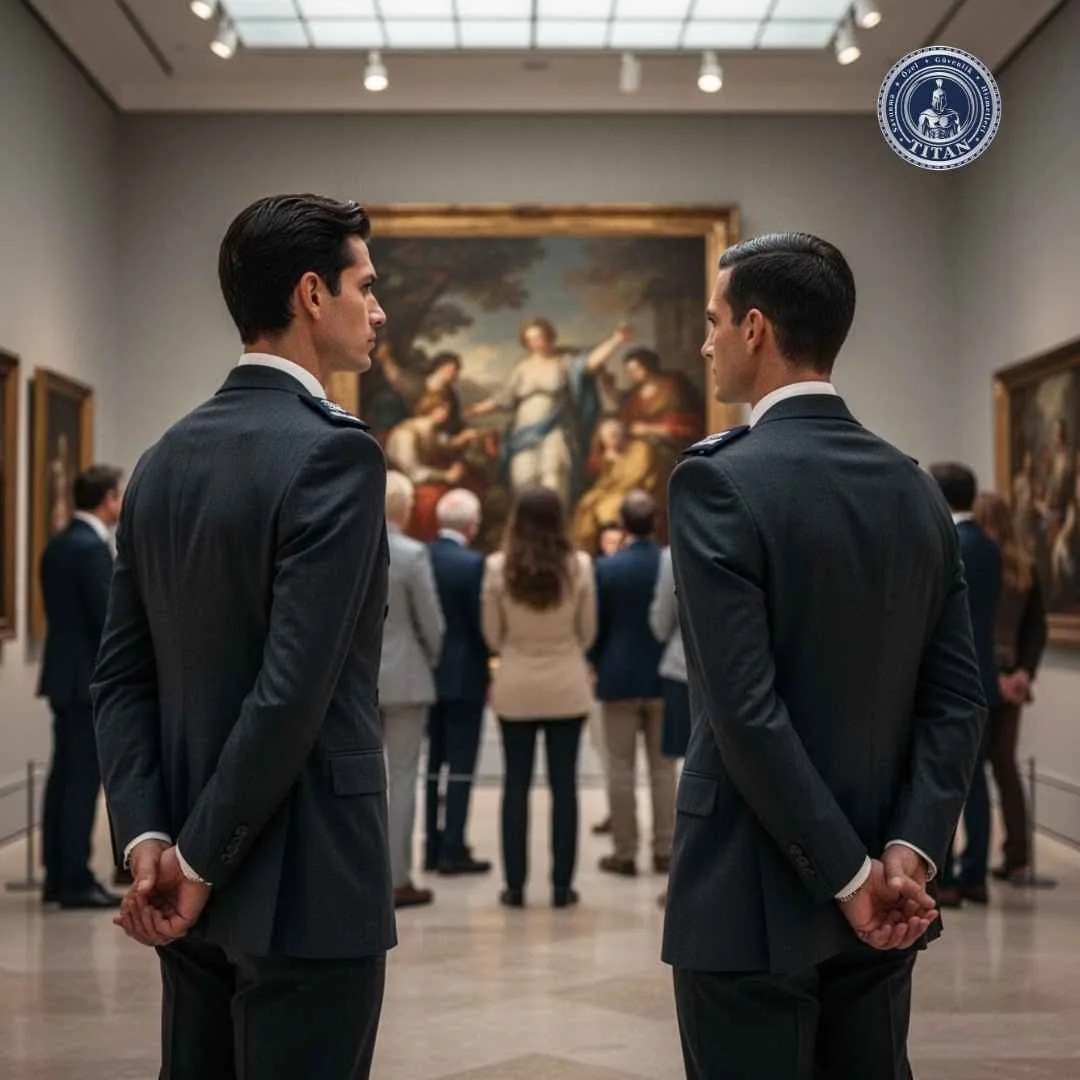
The most effective way to protect an art collection at home is to make every piece identifiable first: photographs, dimensions, signatures, labels and distinguishing marks, recorded in a consistent format. The second step is to bring order to the moments when a home is most exposed — renovation work, large parties and transport days. Alarms and safes matter, but a stolen or lost work can only be recognised and returned if it was properly documented.
This article is general information, not legal advice.
Why documentation comes before locks
Museums and galleries have kept systematic records for decades. Private collections at home often rely on an invoice, a few phone photos and the owner's memory. The gap only becomes visible after an incident. Telling the police or an insurer about “a blue-toned oil painting from the living room” does not make the work searchable in any database. Its exact size, technique, the label on the back and a small repair in one corner do.
For this reason an international documentation standard for identifying and recording cultural objects was created: Object ID. It came out of a project the Getty Information Institute started in 1993 together with museums, police and customs agencies, the art trade, valuers and insurers, was launched in 1997 and is now promoted by ICOM, the International Council of Museums. ICOM's Object ID page notes that, in case of theft, information recorded to the standard can be checked against databases such as INTERPOL's database of stolen works of art.
Building an inventory with Object ID
Object ID is a short checklist that a non-specialist can complete. It has nine categories:
- Type of object — painting, sculpture, rug, clock, book.
- Materials and techniques — oil on canvas, cast bronze, hand-knotted wool.
- Measurements — height, width, depth; framed and unframed separately.
- Inscriptions and markings — signature, date, gallery labels, stamps, inventory numbers.
- Distinguishing features — damage, repairs, cracks, retouching.
- Title, subject, date or period and maker.
ICOM summarises the process in four steps: photograph the object, identify the categories above, write a short description with any additional information, and keep the documentation in a secure place. In practice, take at least one photograph of the front, the back and each distinguishing detail, and always capture labels and frame stamps on the reverse. Attach invoices, appraisals and any ownership history to the same record.
Where you store that record is part of security too. If the only copy sits on a computer in the same house, a burglary or fire can take it with the art. Keep an encrypted backup and a second copy somewhere you trust outside the home. Treat the inventory as sensitive: a file that shows which piece hangs in which room can become a shopping list in the wrong hands. Share it only with people who genuinely need it.
INTERPOL's stolen art database and the ID-Art app
INTERPOL holds a database of stolen cultural property reported by police in its member countries. In 2021 it released ID-Art, a free app that opens access to these records for everyone. According to an interview with the coordinator of INTERPOL's works of art unit in the Journal of Cultural Heritage Crime, the app lets you:
- Search the stolen-items records by photo or by entering details manually; according to the interview, visual results depend on the quality of the photo, which is why manual search is recommended.
- Record your own works in a “My inventory” section using the Object ID standard. The interview states that data entered there is not accessible to INTERPOL.
- Save searches, which helps you show that you checked a work before buying it.
There is one important limit: the same interview says the app cannot be used to report the theft of a work from a private home. If something is stolen, report it to the police straight away and hand over your Object ID record. Entry into international records happens through police channels.
Buying safely: provenance and forgery
Collection security starts at the moment of purchase. Provenance — the ownership history of a work — is the first defence against both forgeries and works that changed hands illegally. Before buying:
- Ask the seller for documents covering previous owners, exhibitions and publications, and ask about any gaps.
- Search the work in ID-Art and save the search.
- For archaeological or ethnographic items, consult ICOM's Red Lists of categories of cultural objects at risk.
- For significant works, commission an independent expert opinion rather than relying on one suggested by the seller.
- A price that is hard to explain and pressure to decide quickly are classic warning signs.
A note on cultural property law in Turkey
If you live in Turkey and your collection includes antiquities or historic objects, the law matters. Under Article 26 of Law No. 2863 on the Protection of Cultural and Natural Property, forming a collection of movable cultural property that requires protection needs a permit from the Ministry of Culture and Tourism; collectors must record such items in an inventory register and notify the Ministry before selling or exchanging them. Article 32 generally prohibits taking such property out of the country. Whether a particular item falls within scope needs expert assessment, so speak to the relevant museum directorate and a lawyer if you are unsure.
Risks inside the home
In collectors' homes, risk does not come only from forced entry; legitimate visitors, crews and crowds inside the house create their own exposure.
Renovation and maintenance
- Remove works from rooms being worked on and lock them away before the job starts; dust, humidity and knocks are risks as real as theft.
- Ask the contractor for a list of names and note arrival and departure times.
- Never share alarm codes with crews; if access is unavoidable, set a temporary code and delete it when the job ends.
Household staff
Long-serving staff are often your best observers. Add clear rules to their duties, such as not handling artworks and how cleaning should be done around them. Not giving everyone the same access to safes and keys also protects honest staff from unnecessary suspicion. If you are considering a strongroom for valuable pieces, deciding who can enter it is as important as its construction.
Parties
At a busy party, small and portable works are the most vulnerable. Move them into a closed room for the evening, mark the areas that are off limits and make one person responsible for access to private parts of the house. Do a quick count before and after. If rooms are fitted with a PIR motion detector, closed areas can stay armed throughout the event.
Loans and transport: record every handover
When a work goes on loan, to a conservator or moves house, one of the most sensitive moments for loss and damage is the handover. Each time:
- Prepare a condition report with photographs, signed by both sides at handover.
- Record the name of the person collecting, the date, time and vehicle.
- Document unpacking the same way; damage and missing items are often spotted at that point.
- Share transport dates and routes only with those who need them, and never announce them on social media.
Quick checklist and common mistakes
- Does every work have an Object ID record and photographs?
- Is an encrypted backup of the inventory kept outside the home?
- Are provenance documents and an ID-Art search saved for new purchases?
- Is there a written routine for renovation, parties and transport?
- Are signed condition reports used for loans and conservation?
The most common mistake is treating the insurance schedule as the inventory; it rarely contains enough detail to identify a work. Another is showing the collection in social media posts, interviews or property listings, where a painting in the background tells everyone what the house contains. A third is installing an alarm without thinking about closed rooms and night routines. Our free security risk assessment tool is a good place to start a broader review.
Protecting a home that holds a collection means planning records, access, staff routines and technical systems together. Titan Savunma is an Ankara-based private security company operating under a Ministry of Interior licence issued under Law 5188, certified to ISO 9001, 14001, 45001, 22301 and 28000, and working with international companies in English and Turkish. If you would like a discreet security assessment with a written scope, a single point of contact and regular reporting, you can reach us through our VIP close protection page.


