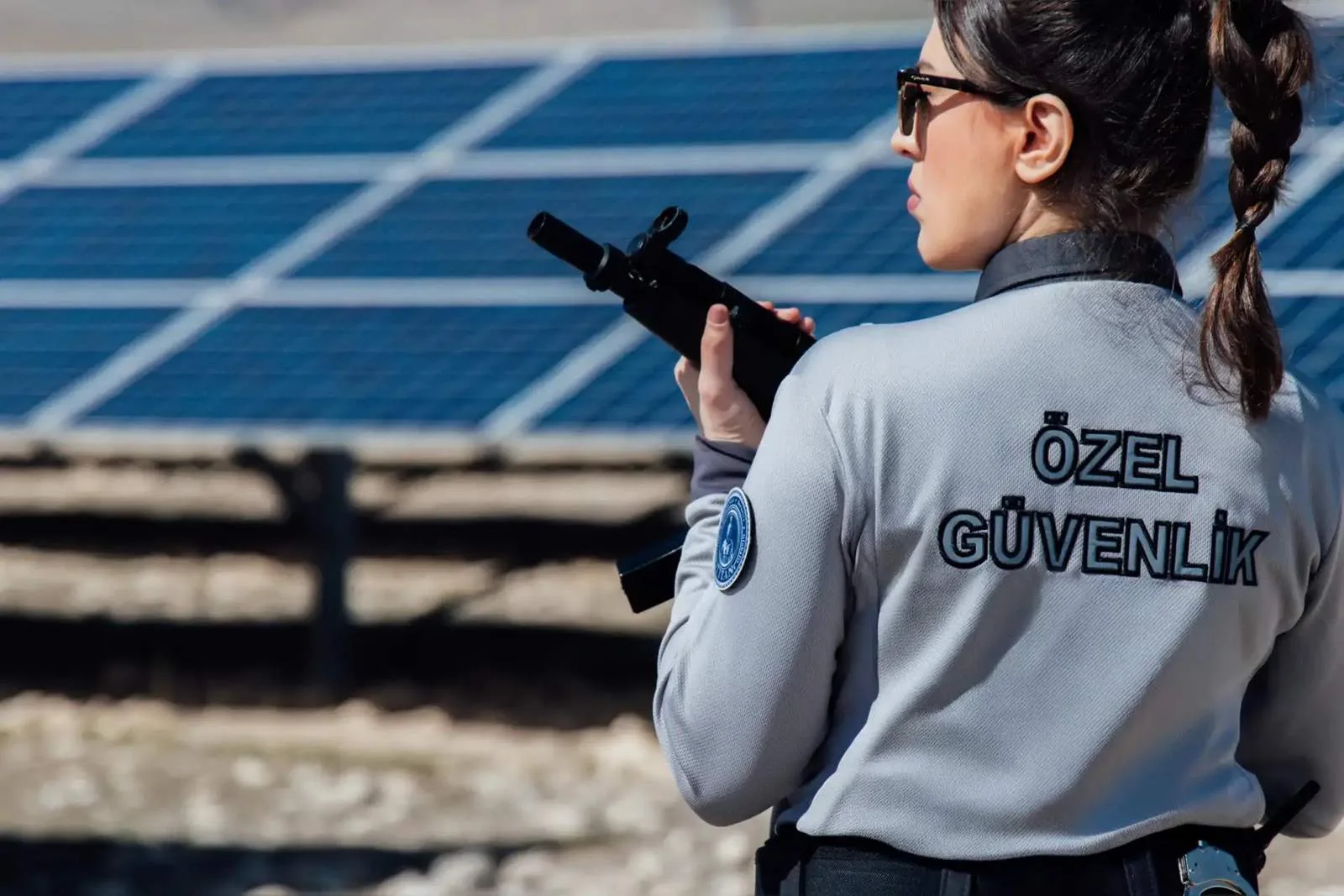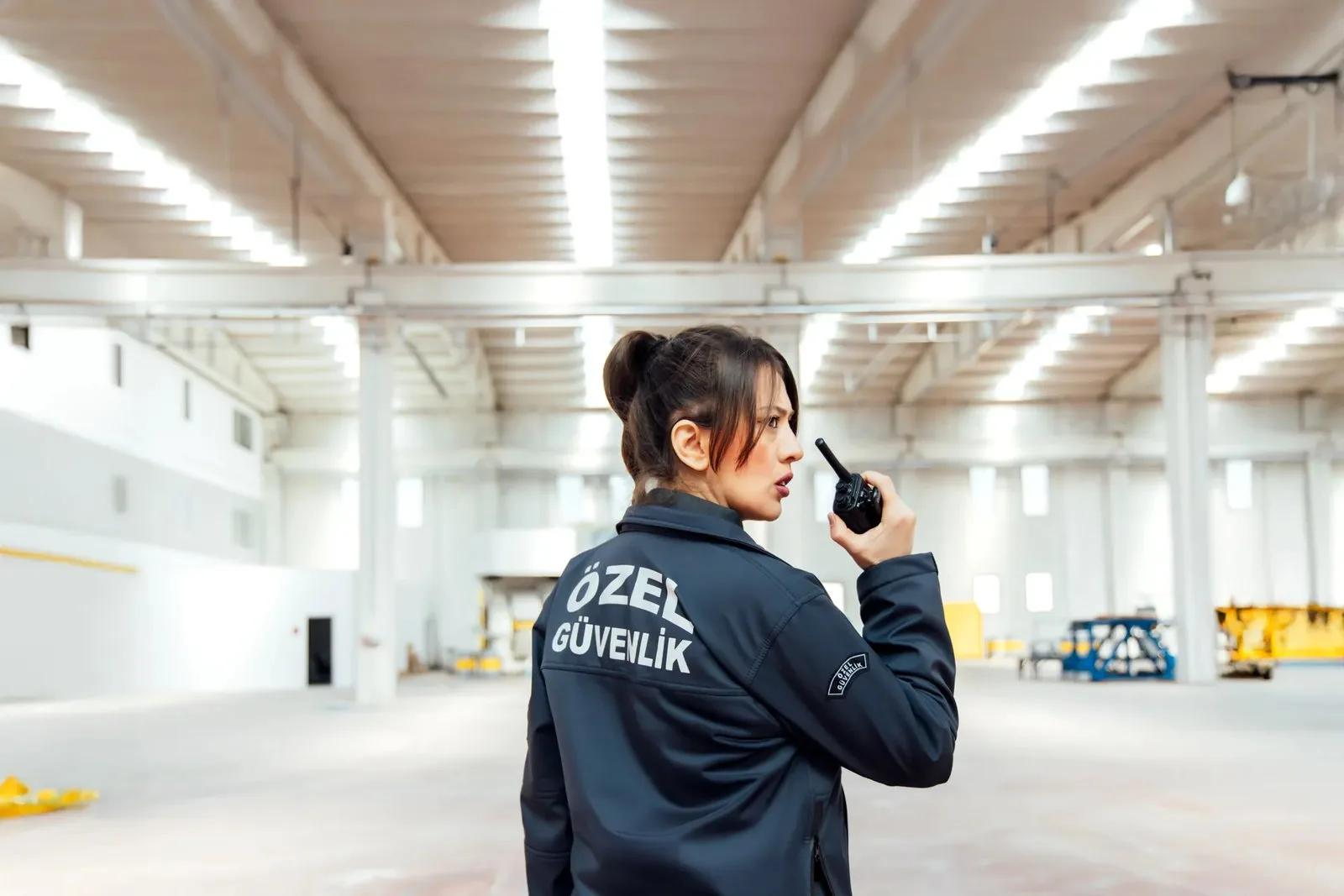
Short answer: Night-time security at a haulier's lorry park or depot yard in Iğdır comes from bringing three things into one plan: knowing where every loaded vehicle waiting overnight stands and whose it is, a parking layout that makes the fuel tank hard to reach, and a quiet, lit rest corner where drivers can actually sleep. Iğdır adds a fourth item of its own: on a plain that has recorded 42 °C in August, daytime duty in the open yard has to be organised around the heat.
This article is general information, not legal advice.
Why lorry parks matter so much in Iğdır
According to the Social Security Institution (SGK) Statistical Yearbook 2025, road transport is Iğdır's largest registered employer by sector, with 2,812 people insured under category 4/1-a at 401 workplaces. Measured against the province's 22,686 insured employees, a simple ratio we worked out puts the sector's share at roughly 3.2 times the Turkish average, while manufacturing accounts for only 8.4% of local jobs. A good part of the city's economic activity, in other words, waits on a trailer, in a haulier's yard or in front of a depot.
For security, this means that what stands in many Iğdır yards at night is not an empty fleet but vehicles already loaded and due to leave in the morning. Cargo, fuel and drivers spend the night in the same place, and the area to protect is a wide, often semi-open yard rather than a single factory gate.
Climate is part of the picture. Data from the Turkish State Meteorological Service for 1940–2025 show a July mean of 26.0 °C in central Iğdır and a highest recorded temperature of 42.0 °C (August). In winter the January mean falls to −3.2 °C and the lowest reading on record is −30.3 °C (December). The same yard needs shade and water in summer and warm-up breaks in winter.
What does the research say?
1. Cargo is most often lost while standing in an unprotected place
A study of cargo theft records in an industry incident database (TAPA EMEA) found that 97% of attacks on vehicles during a stop took place at non-secure parking locations. The authors describe theft at these sites as a high-frequency volume crime rather than a matter of a few large hauls, with intrusion on weekdays in winter the most common type (Ekwall and Lantz, International Journal of Retail & Distribution Management, 2015). The data come from incidents reported by the industry, so they do not capture every case and are not specific to Türkiye. Still, they show that making a lorry park secure targets the moment when cargo is most exposed.
The European Commission drew a similar picture in 2019: about 75% of cargo crime incidents happen while lorries are parked in unsecure places. The Commission also stressed that drivers, who have to stop once their working time is up, deserve a comfortable, safe and secure rest (European Commission, 2019).
2. Fuel theft is a quiet loss that can concentrate in certain places
A survey of members of the Swedish Association of Road Transport Companies (189 replies, an 18.9% response rate) found that respondents had lost around 150,225 litres of fuel in total. Only a minority of companies had been hit, which the author reads as a sign that attacks concentrate in areas of intense transport and logistics activity. The measures firms preferred most, because of their deterrent effect, were tank level gauging and radar-based detection (Urciuoli, Journal of Transportation Security, 2020). The study is Swedish and rests on a survey with a low response rate, and some incidents may never be recorded.
A 2024 briefing from the transport insurer TT Club looks at the same issue from the practical side: fuel is often stolen while a vehicle is parked during a statutory break, and the greatest exposure comes when lorries stand for long periods at the roadside or on industrial estates, and the insurer also advises using secure parking. Its recommendations include lockable fuel caps, anti-siphon devices, fuel tank alarms, a fuel management system that flags losses, and "defensive parking" that either blocks access to the tank or leaves the vehicle in full view (TT Club, 2024).
3. Driver rest is a safety matter too
A naturalistic driving study of commercial truck drivers (96 drivers, 1,397 shifts, 11,049 driving hours) grouped drivers by their off-duty sleep patterns. The group with shorter sleep had 21.8 safety-critical events per 100 driving hours, compared with 12.0 and 13.4 in two comparison groups; its event rate was about 1.6 to 1.8 times theirs (Chen et al., Accident Analysis & Prevention, 2016). This is an association, the sample is small and there were few actual crashes; most events were unintentional lane deviations and near-conflicts. For anyone running a lorry park, though, the lesson is plain: a driver who sleeps badly beside the load leaves more tired in the morning. A quiet, lit and supervised rest area protects both the cargo and the driver's next day on the road.
4. Heat in the open yard wears down an officer's alertness
One of the broadest reviews of occupational heat brought together data from 111 studies carried out in 30 countries. A single shift in hot conditions raised the odds of the body going into heat strain to 4.01 times those in cool, neutral conditions. Roughly a third of people working in the heat (35%) showed strain, and 30% said their output suffered. The review sets its "hot" threshold using wet-bulb globe temperature (WBGT): above 24.8 degrees for light work and above 22.0 for heavier work (Flouris et al., The Lancet Planetary Health, 2018). An officer patrolling a shadeless asphalt or concrete yard at midday fits that description exactly.
Yard layout for loaded vehicles waiting overnight
It helps to treat the lorry park not as one empty space but as a yard made up of zones with different jobs:
- Loaded vehicle lane: loaded vehicles staying overnight go in the brightest lane, close to the gate and the cameras. In the evening the registration, bay and responsible driver of each loaded vehicle go on a single night list, which is counted through at every shift handover.
- Fuel side: where possible, vehicles are parked with the filler neck facing a wall, another vehicle or a camera. On rounds the officer checks that fuel caps are locked and looks for diesel stains, hoses or similar traces under vehicles.
- Empty vehicles and trailers: kept in an inner part of the yard, apart from loaded vehicles, so that the night list stays clear about what is being protected.
- Driver rest corner: a separate area with toilets, water and seating, within sight of the gate officer, so drivers never have to cross a dark yard for a basic need.
None of this gives the officer power to make rules. The operator sets the yard rules; the officer applies and records them. The list and approval procedure for vehicles and people entering at night should be written down in advance by the operator.
Outdoor duty at 42 °C
NIOSH's guidance on working in hot conditions rests on a few plain rules. Water should be cool and kept right next to the post; at a moderate pace, a cup every quarter of an hour, or twenty minutes at most, is advised. Someone not used to the heat should spend no more than a fifth of their normal time outside on the first day, extending it by no more than a fifth per day after that. As temperature, humidity and sun climb, work blocks get shorter and rests get longer. Officers also work in pairs and keep an eye on each other's face, speech and sweating. In an Iğdır lorry park this looks like:
- Shade and ventilation for the gate hut, checked before summer starts.
- Short, frequent rounds around midday instead of one long sweep, with camera monitoring from the shade in between.
- Patrol routes kept to the shadow of vehicles and buildings wherever possible.
- A few days of acclimatisation for anyone joining the yard team in early summer or coming back after time off.
- More frequent calls from the shift supervisor to yard officers on hot days, and a clearly agreed rule for reporting dizziness or nausea.
Winter calls for the opposite preparation: in a yard that has seen −30 °C, night rounds are shortened, warm-up breaks are scheduled, and icy walkways or snow-covered camera views go into the morning report.
Checklist
| Item | What to do | Basis |
|---|---|---|
| Night list | Registration, bay and driver of each loaded vehicle written down in the evening and counted at handover. | Standing cargo is lost most often while parked without protection. |
| Loaded vehicle lane | Well-lit lane close to the gate and cameras. | Unsecure parking is the main setting for cargo crime. |
| Fuel tanks | Locked caps, filler necks facing a protected side; traces checked on rounds. | Lockable caps and defensive parking are among recommended measures. |
| Fuel monitoring | Night-time drops compared against the fleet system's tank level data. | Tank gauging was the deterrent firms preferred most. |
| Rest corner | Water, toilets and seating, within the officer's line of sight. | Short sleep is linked to more safety-critical driving events. |
| Summer duty | Shade, water, short rounds, buddy system, acclimatisation. | Heat stress raises strain and erodes alertness. |
| Winter duty | Shorter night rounds, warm-up breaks, checks on ice and camera views. | The January mean is below freezing. |
| Records | Incidents, faults and anything suspicious noted briefly; reviewed with the operator monthly. | A loss nobody writes down tends to happen again next month. |
Common mistakes
- Parking loaded and empty vehicles together, so nobody knows what is being protected at night.
- Writing off fuel losses as "high consumption" and never sharing tank level data with the security team.
- Treating it as normal for a driver to sleep alone in the cab in a dark corner of the yard.
- Installing cameras that feed a recorder nobody watches at night; leaving a failed light for weeks.
- Keeping an officer at a fixed, shadeless post for hours on an August afternoon.
- Running winter rounds on the summer schedule, with no allowance for frost and ice.
- Switching cameras on before writing down, in line with data protection law No. 6698, how long recordings are kept and who may view them.
A note on practice in Türkiye
Under Law No. 5188, the job of an officer in a lorry park is to observe, apply the operator's entry rules, keep records and, when something looks wrong, alert the general law enforcement (police or gendarmerie) without delay; Article 9 requires incidents calling for force or an arrest to be reported to the competent general law enforcement by the fastest available means. The officer does not open a vehicle's tank, load or cab on their own initiative. Summer heat and winter frost should each have their own line in the employer's health and safety risk assessment under Law No. 6331. Seeing the yard once at a summer midday and once in the middle of a winter night, before anything is written, tells you more than any sketch on paper.
The duties we cover at depots, loading bays and parking yards are listed under logistics and warehouse security, and the way we work with the province's logistics, farm and public sites is described under private security company in Iğdır.
Titan Savunma is an Ankara-based private security company licensed by the Ministry of Interior under Law No. 5188 and certified to ISO 9001, 14001, 45001, 22301 and 28000. We work with international companies in English and Turkish, and our Iğdır City Manager, supported by our Erzurum-based Eastern Anatolia Regional Directorate and our Ankara General Directorate, walks your lorry park, night list, fuel and rest arrangements with you and sets up a duty routine adjusted for both summer and winter. To arrange that walk-through, write to us via our contact page.
Sources and Further Reading
- Ekwall, D. & Lantz, B. — Cargo theft at non-secure parking locations, International Journal of Retail & Distribution Management 43(3), 204–220 (2015)
- Urciuoli, L. — Fuel theft in road freight transport: understanding magnitude and impacts of anti-theft devices, Journal of Transportation Security 13(1–2), 1–18 (2020)
- Chen, G. X., Fang, Y., Guo, F. & Hanowski, R. J. — The influence of daily sleep patterns of commercial truck drivers on driving performance, Accident Analysis & Prevention 91, 55–63 (2016)
- Flouris, A. D., Dinas, P. C., Ioannou, L. G., Nybo, L., Havenith, G., Kenny, G. P. & Kjellstrom, T. — Workers' health and productivity under occupational heat strain: a systematic review and meta-analysis, The Lancet Planetary Health 2(12):e521–e531 (2018)
- European Commission (DG MOVE) — Road safety: European Commission responds to need for safe and secure parking areas for trucks (11.03.2019)
- TT Club — TT Talk: Fuel theft (06.08.2024)
- NIOSH (ABD Ulusal İş Sağlığı ve Güvenliği Enstitüsü) — Heat Stress: Workplace Recommendations (NIOSH 2016-106 kriter belgesine dayanır)
- 5188 sayılı Özel Güvenlik Hizmetlerine Dair Kanun (md. 9), Mevzuat Bilgi Sistemi
- SGK — İstatistik Yıllığı 2025 (Sigortalı ve İşyeri İstatistikleri, Tablo 1.11)
- Meteoroloji Genel Müdürlüğü — Resmî İstatistikler: Iğdır (1940–2025)