
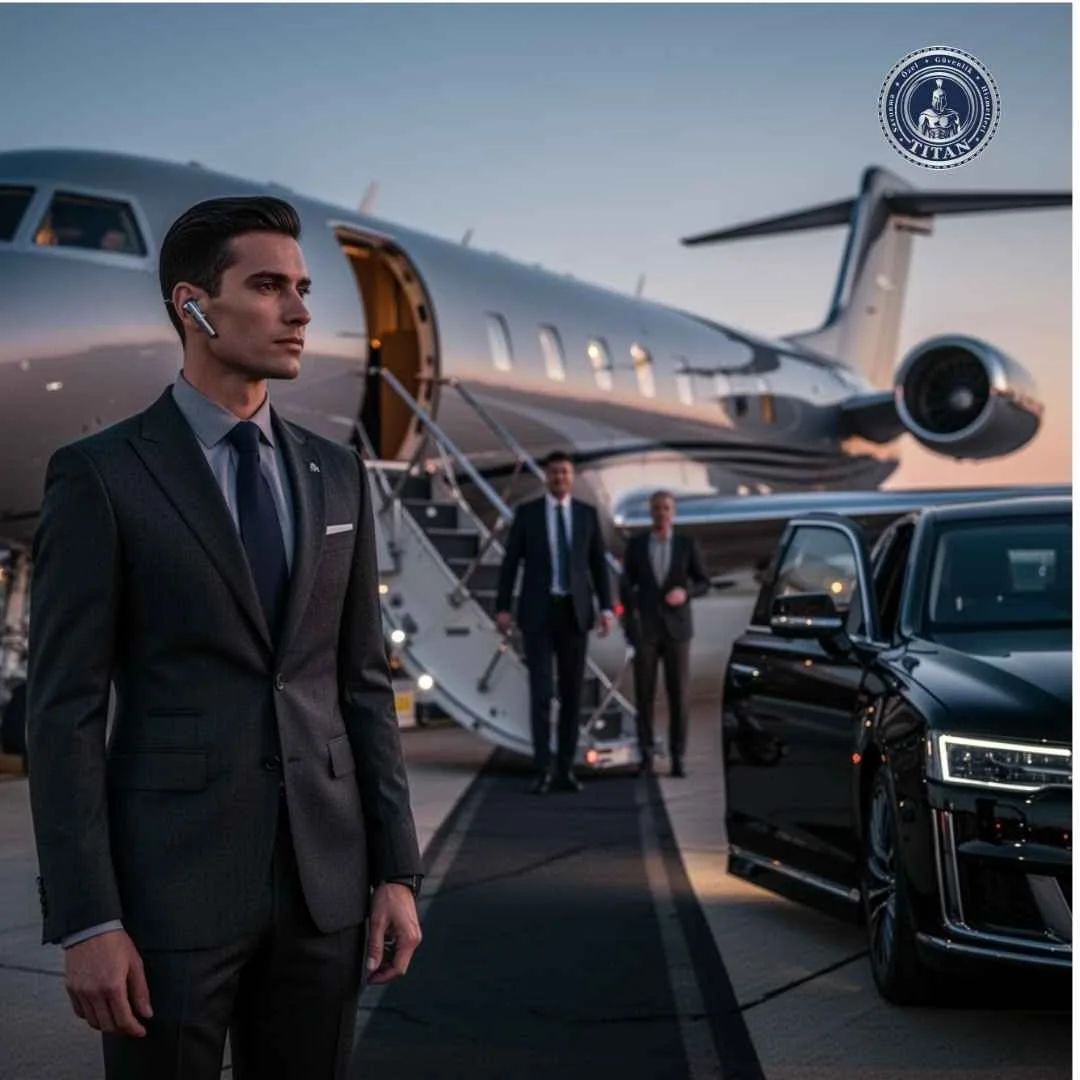
Istanbul is a busy, welcoming business city, and the vast majority of business trips there pass without any incident. For a travelling executive the realistic risks are the same as in other global cities: pickpocketing in crowded tourist areas, the occasional taxi or bar-bill problem, heavy traffic and, in the background, earthquake risk. A short plan for arrival, movement between meetings and the evening programme deals with almost all of it.
This article follows the trip itself, from the airport exit to the last meeting, and ends with what a company's travel or security manager can put in place.
Reading the official advice calmly
Government travel advice is written for the whole country and lists every risk the authorities know about, so it inevitably reads more seriously than an ordinary business day feels. The UK Foreign, Commonwealth and Development Office (FCDO) is a useful benchmark. Its safety and security page for Turkey covers terrorism (advising travellers to stay aware of their surroundings, follow local media and follow the advice of local authorities), protests in large cities, earthquakes and crime, and for Istanbul it gives one very practical message: street robbery and pickpocketing are common in the major tourist areas, so keep belongings secure.
Use the advice as a briefing checklist, not a forecast. Check the date it was last updated before every trip, note any new points, and share the relevant lines with travellers in plain words. The FCDO also notes that carrying photographic ID is a legal requirement in Turkey and that ID checks happen in some busy areas, especially Istanbul, so travellers should always carry their passport.
Arrival: airport exit and transfer
Istanbul has two main airports, Istanbul Airport on the European side and Sabiha Gökçen on the Asian side, and the drive into the city can take a long time. The arrival hall is where tired travellers are most likely to accept the first offer they hear, so decide the transfer before landing.
- Pre-arranged transfer: the simplest option for executives. Send the traveller the driver's name, vehicle plate and a photo in advance, and agree a meeting point and a code word. The driver should hold a sign with a first name or company name rather than the traveller's full name and title.
- Official taxi: the FCDO advises against accepting lifts from unofficial drivers. Use the official taxi rank or an app-based or pre-booked taxi, note the registration number and check the meter is running.
- First call: ask travellers to send a short message to a named contact when they are in the car and when they reach the hotel.
Our separate guide to taxis in Istanbul and Ankara looks at fare problems and complaint channels in more detail.
Moving between meetings
Most time on an Istanbul business trip is spent in traffic, and that is where planning pays off. Allow generous travel times, especially if a meeting means crossing the Bosphorus, and avoid stacking back-to-back meetings on opposite sides of the city. Ferries and the metro are often quicker than the road at peak hours, and travellers who use them should treat them like any crowded public space.
- Keep laptops and bags out of sight in vehicles, and never leave them on the seat during a short stop.
- Use the same trusted driver for the whole day where possible; it removes most taxi questions.
- Avoid demonstrations and large gatherings. If a route is closed or crowded, let the driver take another way.
- Share the day's schedule with one colleague and agree what happens if the traveller cannot be reached.
Crowded tourist areas and pickpocketing
Many visitors add a few hours of sightseeing to a business trip: historic squares, covered markets, busy shopping streets and ferry piers. These are exactly the places where the FCDO says pickpocketing is common. The prevention is simple and works everywhere:
- Carry only one card and a little cash; because you need to carry your passport, keep it in a zipped inside pocket.
- Use a zipped front pocket or a cross-body bag worn in front.
- Be alert to distraction techniques: a spilled drink, a dropped item, a sudden crowd at a tram door.
- Keep the phone in your hand only while you need it, especially near roads where it can be snatched.
The evening programme
Business dinners in Istanbul are usually a highlight of the trip. A few points keep them that way:
- Friendly approaches: the FCDO advises being wary of strangers who approach you to change money or to take you to a restaurant or nightclub, and warns that food and drink offered by strangers could be spiked. Choose venues yourself or with your hosts.
- Drinks: buy your own drinks and keep them in sight. The FCDO also warns that methanol in illegally produced spirits and counterfeit bottles of branded alcohol has caused deaths and serious illness in Turkey, including in Istanbul, and that methanol cannot be detected by taste or smell; stick to reputable venues. If someone becomes seriously unwell after drinking, call 112 immediately.
- Getting back: book the return transfer before the evening starts, and agree that nobody walks back alone late at night through unfamiliar streets.
Earthquakes and emergency numbers
Many parts of Turkey experience earthquakes. The FCDO notes that a magnitude 6.2 earthquake in the Sea of Marmara in April 2025 was strongly felt in Istanbul, reminds travellers that aftershocks are possible and points to AFAD, Turkey's disaster and emergency management authority, for current information. For a short trip the practical steps are: read the hotel's emergency information on arrival, know the nearest exit and stairs, and keep shoes, phone and a small torch near the bed.
In any emergency, call 112. The Ministry of Interior states that police, gendarmerie, coast guard, fire, ambulance, forest fire and AFAD calls are handled through this single number in all 81 provinces, and that calls can be answered in English, German, Arabic and Russian. The FCDO's getting help page lists 112 for ambulance, fire and police; every traveller should also save their own embassy's or consulate's details.
What travel and security managers can do
For organisations, these points belong in a travel risk management programme. ISO 31030:2021 gives organisations of any type and size guidance on managing the risks that travel creates for them and their travellers, built on the ISO 31000 risk management framework. It does not apply to leisure travel, but it is a useful structure for business trips. In practice, for an Istanbul visit:
- A short pre-trip briefing based on official advice, the agenda and the hotel location.
- A confirmed transfer with driver details sent in advance.
- Realistic travel times between meetings and a shared itinerary.
- Agreed check-in messages on arrival, after the last meeting and on return to the hotel.
- A wallet card with 112, the hotel address in Turkish and a 24-hour company contact.
- For senior or high-profile visitors, a documented assessment of whether a dedicated driver or close protection is proportionate.
How a security partner supports visiting executives
Titan Savunma is an Ankara-based private security company operating under a Ministry of Interior licence granted under Law 5188, with ISO 9001, 14001, 45001, 22301 and 28000 certificates. We work with international companies in English and Turkish and can plan arrival, transfers and meeting days for visiting executives with a single point of contact, a written scope and regular reporting. See our VIP close protection service, our page for international companies in Turkey, or contact us to discuss a visit.


