A foreign company's liaison office in Turkey is usually a handful of people on one floor of a shared office tower in Istanbul or Ankara. It does not sell, invoice or hold stock, so its security risks are quiet ones: the wrong person walking into an unattended reception, a draft contract left on a printer, a former employee whose access card still works, or a local hire who does not know whom to call when a visitor behaves oddly. In the first year, the security plan is mostly about choosing the right building, controlling access, protecting documents and briefing staff properly.
This checklist covers those four areas in the order a new office meets them. It also explains when a licensed private security service under Turkish Law No. 5188 makes sense, and when the building's own arrangements are enough. This article is general information, not legal advice.
Why the legal form of a liaison office shapes its security plan
Liaison offices are permitted under the Foreign Direct Investment Law No. 4875 and its implementing regulation. Under Article 6 of that regulation, as amended in the Official Gazette of 3 July 2012, the competent ministry may allow a company established under foreign law to open a liaison office in Turkey on condition that it does not engage in commercial activity. The regulation is now administered by the Ministry of Industry and Technology, which also amended it in March 2021. Three provisions of Article 8, as rewritten in 2012, matter for security planning:
- The first permit is granted for a maximum of three years, for the declared scope of activity.
- Within one month of receiving the permit, the office sends a copy of its tax office registration and its lease agreement to the ministry's General Directorate.
- Every year, by the end of May, the office reports its previous year's activities on the prescribed form; failing to do so can lead to the permit being cancelled.
The practical consequence is that the lease is a regulatory document, not just a property decision. Moving after a bad building choice means new paperwork, so it pays to check the building's security before signing. The non-commercial status also tells you what you are protecting: there is little cash or stock, but there is a great deal of information (market studies, partner negotiations, personal data of visiting executives) and a small team whose safety rests on routines rather than hardware. Always confirm the current consolidated text and procedure with the ministry or your counsel; the regulation has been amended several times.
Choosing the building: questions to ask before you sign
Most liaison offices rent space in a multi-tenant office building or "plaza", where security is provided by the building management (site or bina yönetimi). Your influence ends at your own door, so ask these questions while you still have leverage:
- Reception and lobby: Is the lobby staffed at all hours the building is open? Are visitors announced to the tenant before they reach the lifts, or simply waved through?
- Access cards: Who issues cards, how quickly can a lost card be cancelled, and can access be limited to your floor and your hours?
- After-hours: What happens between evening and morning? Who patrols, who answers alarms, and how are cleaners and maintenance contractors controlled?
- CCTV: Which areas are covered, how long are recordings kept, and who may view or release them? Ask how footage is shared with tenants after an incident.
- Security provider: If the building uses a private security company, ask whether the service runs under a governorship permit. Under Article 3 of Law No. 5188, having security provided by a company requires the governor's permission on the decision of the provincial private security commission.
- Earthquake and fire: When was the building constructed, and has its seismic performance been assessed? Since 1 January 2019, new and altered buildings fall under the Turkish Building Earthquake Regulation, which also sets rules for evaluating existing buildings. Ask for evacuation plans, assembly points and the date of the last drill.
- Neighbouring tenants: Who else is on your floor, and do you share a kitchen, meeting rooms or a corridor door?
Write the answers down. They become the baseline for your annual review and, if needed, for scoping additional services.
Access cards, visitors and the front door
In a small office, access control is a human process more than a technical one. Link card issuance to your HR steps: a card is issued on the first day and cancelled on the last, and someone is named to make that happen. Keep a short register of who holds a card or key to your own door, including the building's cleaning contractor if they enter your space.
For visitors, decide three things in advance: who may invite them, where they wait, and whether they are escorted. A meeting room close to the entrance keeps guests out of working areas without making them feel unwelcome. If you keep a visitor log, remember that names and ID details are personal data under Turkey's Personal Data Protection Law (KVKK, Law No. 6698), so collect only what you need and decide how long you keep it.
If your head office follows a recognised control framework, map these steps to it rather than inventing local rules. The US National Institute of Standards and Technology's SP 800-53 catalogue, for example, includes a Physical and Environmental Protection control family that many global IT and audit teams already use, which makes the office easier to audit from abroad.
Documents, devices and information
A liaison office's most valuable assets usually fit in a drawer or on a laptop. A short set of habits protects most of them:
- A lockable cabinet for contracts, passport copies and HR files, with keys held by named people.
- A clear-desk rule at the end of the day, and secure printing or immediate collection from shared printers.
- A cross-cut shredder or a documented destruction service, rather than paper in the general waste of a shared building.
- Screen locks, encrypted laptops and a rule against leaving devices in meeting rooms or cars.
- A simple rule on what may be discussed in shared lifts, cafés and the building lobby.
Shared towers make these habits more important: many people pass your door, and cleaners often work when your staff are not there.
Briefing local hires so it actually changes behaviour
Liaison offices often rely on one or two local employees who handle visitors, suppliers and building management. They are your most important security control, and they need more than a policy document. A review of awareness campaigns by Bada, Sasse and Nurse argues that giving people information about risks is not enough; they also need to understand the advice, be able to apply it, and be motivated to do so. For a small office, that points to a short, practical, role-specific briefing rather than a long slide deck:
- Who may enter the office, and what to say politely to someone who should not be there.
- How to handle unexpected deliveries, unscheduled "inspections" and calls asking for executives' travel plans.
- Whom to call for a medical emergency, fire or earthquake (Turkey's single emergency number is 112), and who in head office must be informed.
- How to report a lost card, a missing document or a suspicious email without fear of blame.
Repeat the briefing when someone new joins and after any incident. Ask staff what feels impractical; their answers usually show where the written policy does not fit the building.
When to add a licensed private security service
For most liaison offices in a well-managed plaza, the building's security plus good internal routines is proportionate. A dedicated service becomes worth considering when the situation changes:
- The office moves to a standalone building or villa with its own entrance and garden.
- You host receptions, delegations or launch events that bring many unknown visitors.
- Senior executives visit and need protected transport or escort.
- Incidents show that the building's arrangements do not cover your hours or your floor.
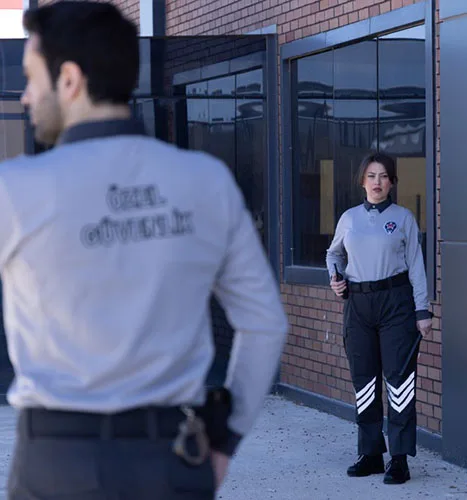
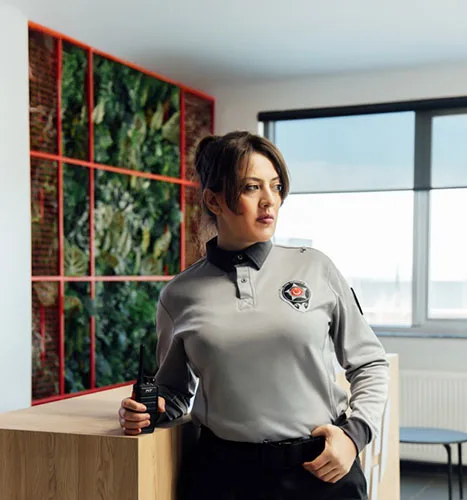
In Turkey, private guarding is licensed and supervised. Article 3 of Law No. 5188 makes the service subject to the governor's permission, and Article 5 requires the security company to notify the governorship in writing by the end of working hours on the day the service begins (there is no time requirement for urgent, temporary services). Under Article 9, guards may use their powers only while on duty and within their assigned area, and Article 10 sets their qualifications, including Turkish citizenship. Staffing depends on shift pattern, hours and legal limits, and is planned per site. A good provider should give you a written scope that states what the guards do and do not do, and how they hand over to building management and the police.
First-year checklist
| When | Action | Owner |
|---|---|---|
| Before signing the lease | Building questionnaire answered in writing; evacuation plan and assembly point seen | Country manager with head-office security |
| Month 1 | Card and key register; visitor rule; lockable storage installed; emergency numbers posted | Office administrator |
| Month 1 | Lease and tax registration copies sent to the ministry within the legal deadline | Legal or finance |
| Months 1–3 | Briefing for every local hire; contact list for building management and head office | Country manager |
| Months 3–6 | Short drill (fire or earthquake) with the building; review of who still holds cards | Office administrator |
| Annually, before end of May | Security review alongside the activity report; decide whether services need to change | Country manager and head office |
The annual review and the mistakes to avoid
Tie the security review to the activity report that is due by the end of May each year, so it happens on a fixed date. Check whether the building's answers are still true, whether card holders match the staff list, whether any incidents or near misses were recorded, and whether the office's profile has changed (new partners, more visitors, executive travel).
The most common mistakes are predictable: signing the lease before asking about after-hours security; assuming the building's guards will protect your office rather than the lobby; forgetting to cancel cards when staff leave; treating the visitor log as a formality; and writing a head-office policy in English that local staff never see in Turkish.
Titan Savunma is an Ankara-based private security company licensed by the Ministry of Interior under Law No. 5188, holding ISO 9001, 14001, 45001, 22301 and 28000 certificates. We work with international companies in English and Turkish, and plan services for sites in different provinces with a single point of contact, written scope and regular reporting. If your liaison office needs more than the building provides, see our page on security for international companies in Turkey, or our office and business centre security service.
Sources and Further Reading
- Resmî Gazete No. 28342 (3 July 2012) — Amendment to the Implementing Regulation of FDI Law No. 4875 (liaison offices, Articles 6 and 8)
- Resmî Gazete No. 31436 (27 March 2021) — Ministry of Industry and Technology amendment to the FDI Implementing Regulation
- Law No. 5188 on Private Security Services (mevzuat.gov.tr)
- Resmî Gazete No. 30364 (18 March 2018) — Turkish Building Earthquake Regulation
- NIST — SP 800-53 Rev. 5, Security and Privacy Controls for Information Systems and Organizations (2020)
- Bada, Sasse & Nurse — Cyber Security Awareness Campaigns: Why do they fail to change behaviour? (2015/2019)