
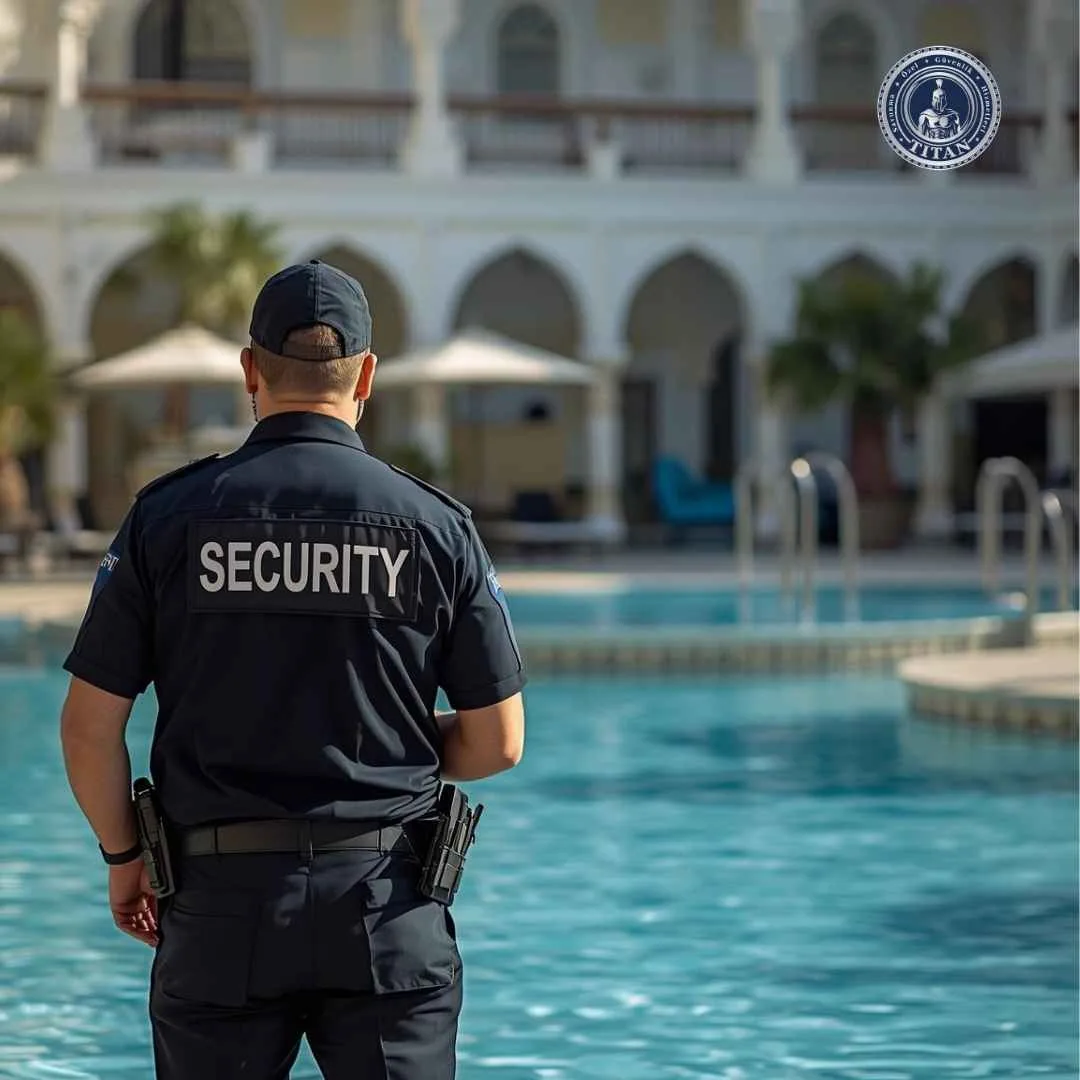
Residential pool safety rules have one purpose: to stop young children reaching the water unsupervised, and to make sure someone is always watching the water while the pool is open. The most effective tools are a fence that encloses the pool on all four sides with a self-closing, self-latching gate, clearly published opening hours and active adult supervision. Site security officers can help enforce this, but a security officer is not a lifeguard.
This article focuses on pools in residential compounds and villa developments: World Health Organization data, research on pool fencing, the scope of Turkey's swimming pool regulation and the rules site managers should put in writing. In an emergency, call 112 (Turkey's emergency number) without delay.
Why it matters
According to the World Health Organization's drowning fact sheet, around 300,000 people die from drowning every year worldwide. Children under five account for nearly a quarter of these deaths, and the highest drowning rates per population are among children aged 0–4. Drowning is listed as the fourth leading cause of death for children aged 1–4 and the third for those aged 5–14.
The same source stresses that the risk is preventable: barriers that control access to water, including fencing swimming pools, are among the measures that reduce exposure. A brief lapse of attention by an adult can be enough for a small child to reach the water, so pool rules on residential sites should rest on physical and organisational arrangements rather than on reminders to "be careful".
Physical barriers: fencing and self-closing gates
A systematic review by Thompson and Rivara (2000), prepared for Cochrane, pooled three case-control studies on pool fencing. Fenced pools were associated with a markedly lower likelihood of children drowning or nearly drowning than unfenced pools, and four-sided isolation fencing, which encloses the pool only, was more protective than perimeter fencing that encloses the whole property and still allows access to the pool through the house. The authors concluded that pool fences should isolate the pool from the house and have a secure, self-latching gate, and that this should be required for all public, semi-public and private pools. The review has not been updated since 2010, but its findings are consistent with current WHO advice.
For compound and villa pools this means:
- Enclose the pool on all four sides. A garden wall or the site's perimeter fence is not a pool fence; a child should not be able to walk from a home or play area straight to the water.
- Gates should close and latch by themselves, with the latch out of reach of small children.
- Remove climbing aids. Sun loungers, planters or storage boxes next to the fence can make it useless.
- Never prop the gate open. Write this into the instructions for security and maintenance staff.
- Lock the pool area outside opening hours and decide who holds the key.
Supervision: parents' responsibility and opening hours
A fence does not replace supervision; the two work together. Written site rules should be clear on:
- Published opening hours. The pool opens only during those hours and stays locked otherwise.
- Children below a set age swim only with an accompanying adult. Management sets the age according to pool depth and supervision arrangements.
- A "water watcher". When several families are together, one adult at a time is named to watch only the water, phone put away, rotating at agreed intervals.
- Rescue equipment and emergency contact details are visible at the poolside.
- Glass, alcohol and running on the poolside are explicitly banned.
Publish the rules on clear signs at the entrance and poolside, and send them to residents at the start of each season. New residents and guests often do not know them, and visiting children should follow the same rules.
Lifeguards and what Turkey's pool regulation says
The main rule set for pools in Turkey is the Ministry of Health's swimming pool regulation, first published in the Official Gazette of 6 March 2011 and renamed by an amendment of 15 December 2011 as the "Regulation on Health Principles for Swimming Pools". According to the current consolidated text on the official legislation database:
- It covers indoor and outdoor pools used for swimming, while pools not used for commercial purposes and health-purpose spa and mineral-water pools fall outside its scope (Article 2). The regulation defines a swimming pool as a facility open to public use.
- For pools within scope, the operator must employ a responsible manager, a pool water operator and a certified lifeguard (Article 8). The same article requires rescue equipment such as ropes, floats and rings, first-aid supplies, and clearly visible signs setting out the rules and possible hazards.
Whether a particular compound pool falls within scope depends on how it is used; a pool open only to residents may be assessed differently from one that sells paid memberships to outsiders. Site managers should check the current consolidated text on the official legislation database and ask the provincial health directorate about their own case. Even where the regulation does not apply, having a lifeguard on duty, especially at busy times for children, is a safety measure management should seriously consider.
The role and limits of the security team
Site security has a real part to play around the pool, but the role must be defined. Officers can:
- Open and close the pool area on time and check during patrols that gates close and latch by themselves.
- Notice and report entry to the pool area outside opening hours, and help keep the area visible from paths and buildings (the principle of natural surveillance).
- Politely remind people of the rules and log repeat breaches.
- In an emergency, call 112, clear the way for the ambulance and manage the scene.
Post orders should also state what officers are not expected to do. A security officer is not a lifeguard continuously watching the water, and that responsibility should not be placed on them unless water supervision is specifically assigned and staffed. When one officer is asked to watch both the site entrance and the pool at the same time, neither is done well.
Quick checklist for site managers
- Is the pool fenced on all four sides, and do gates close and latch by themselves?
- Are opening hours and rules posted at the entrance and poolside?
- Is the rule on children swimming with an adult in writing?
- Has it been checked whether the pool falls under the regulation and whether a lifeguard is required?
- Are rescue equipment and emergency information at the poolside?
- Are the security team's pool duties and limits written into their post orders?
Common mistakes
- "Everyone keeps an eye out." At a busy poolside everyone assumes someone else is watching; a named water watcher is needed.
- Relying on armbands and inflatables: they are not a substitute for supervision.
- Forgetting the pool off-season: a pool that is neither drained nor securely covered remains a hazard in winter.
Pool safety works best as part of a site's overall security arrangements. Titan Savunma is an Ankara-based private security company operating under a Ministry of Interior licence issued under Law 5188, certified to ISO 9001, 14001, 45001, 22301 and 28000, working with international clients in English and Turkish and managing sites with written scope and regular reporting. For post orders and patrol plans covering pool hours, see our residential security page.
Sources and Further Reading
- World Health Organization — Drowning fact sheet
- Cochrane Database of Systematic Reviews — Thompson DC, Rivara FP: Pool fencing for preventing drowning in children (2000)
- Mevzuat Bilgi Sistemi — Yüzme Havuzlarının Tabi Olacağı Sağlık Esasları Hakkında Yönetmelik (güncel metin, md. 2, 8)
- Resmî Gazete — Yüzme Havuzlarının Tabi Olacağı Sağlık Esasları ve Şartları Hakkında Yönetmelik (ilk yayım, 6 Mart 2011, Sayı 27866)


