
A safe room (often called a panic room) is a hardened room with a lockable door and a way to call for help, where a household can shelter briefly during a forced entry. Its purpose is not to confront an intruder or store valuables; it is to buy time until help arrives. That is why a safe room only works as part of a plan that covers alarms, communication and the question “who comes, and how fast?” For earthquakes, official guidance recommends something different altogether.
What a safe room is for, and its limits
Films show safe rooms as steel-doored bunkers with screens and weeks of supplies. A residential safe room has a much narrower job: a space the family can reach quickly when a threat is detected, lockable from inside, strong enough to delay someone trying to get in, and equipped to call for help. Our encyclopedia entry on safe rooms gives the definition; this article is about the decision.
Know the limits from the start:
- A safe room is not a vault. Keep valuables elsewhere, or the room becomes the very target an intruder works hardest to open.
- It only buys time. No door holds forever; what matters is how that time compares with the time help needs to arrive.
- A room you cannot reach is useless. If the route runs past the likely point of entry, or the room is far from the bedrooms at night, the plan is weak.
Who really needs one? The risk profile
Not every villa needs a safe room. The decision should come from a concrete risk assessment, not a general wish to feel safe. Useful questions:
- Visibility: are there publicly known family members, people in the media, or known wealth?
- Threat history: have there been threats, extortion, stalking or a targeted burglary attempt?
- Location: is the house isolated, and how long would police or a security team take to arrive?
- Existing layers: are the perimeter, alarm, lighting and doors and windows already adequate?
- Occupants: are there children, older people or anyone with limited mobility? Time to reach the room varies by person.
For most homes, strengthening the outer layers delivers more: a secure perimeter, access control, a monitored alarm and good doors and windows already make it hard for an attack to reach the interior. A safe room makes sense where the risk profile makes it realistic that those layers could be overcome.
Communication, response and who will come
The most overlooked part of a safe room is not the door but what happens after it closes. A plan must answer:
- How will you raise the alarm? Keep a charged phone in the room and a second channel that does not depend on the house’s power or internet. A panic button on the alarm should reach a monitoring centre or the security team.
- Who comes, and how fast? Call the emergency number (112 in Turkey). If the residence or compound has private security, write down in advance their role, how they will guide police and when anyone enters.
- When do you open the door? Only after a pre-agreed verification. A voice outside saying “it’s safe” is not enough.
- What is inside? Basic first aid, water, a torch, essential medication; ventilation and fire risk should be reviewed with the architect.
Above all, a plan is not real until it is rehearsed. Everyone, including children, should know how to reach the room in the dark and what to do inside. Confronting an intruder is never part of the plan.
The earthquake safe room myth
“Safe room” is sometimes used for earthquakes, which causes confusion. Widely cited safe room guidance comes from the US Federal Emergency Management Agency (FEMA), and it was written for extreme winds such as tornadoes and hurricanes, not for burglary or earthquakes. FEMA states that safe rooms built to its criteria provide “near-absolute protection” in extreme wind events (FEMA, Safe Rooms). Its homeowner guide P-320 and its criteria document P-361 are both wind-focused (FEMA safe room resources).
For earthquakes, official advice is not to run to a particular room during shaking. Ready.gov recommends Drop, Cover and Hold On where you are, staying inside rather than running out, and avoiding doorways (Ready.gov, Earthquakes); Turkey’s AFAD teaches the same behaviour as “Çök-Kapan-Tutun”. Earthquake safety depends first on the whole building being designed and built to resist earthquakes; one reinforced room inside a weak building is no substitute. Securing furniture and agreeing a family disaster plan matter far more.
Planning with the architect, in new builds and renovations
A safe room is easiest and least disruptive to plan in a new build or a major renovation. Adding one later usually strains walls, floors and door frames. Topics for the architect, structural engineer and security adviser together:
- Proximity to bedrooms and the night-time route.
- Wall, door and frame resistance. In Europe, burglar resistance classes for doors and windows are defined by the EN 1627 series; prefer certified, matched systems.
- Power, ventilation, communication lines and alarm integration.
- Fire safety and an emergency way out.
- Everyday use: combining the room with a dressing room or study keeps it familiar.
Keep the project itself discreet: limit how many people see the drawings and product details.
Short checklist
- Is the decision based on a written risk assessment?
- Were the outer layers (perimeter, alarm, doors and windows) addressed first?
- Is there an independent way to communicate from the room?
- Is it clear who comes and how fast?
- Does the family rehearse at least once a year?
- Is there a separate family disaster plan for earthquakes?
A note for organisations
Companies with a duty of care towards executives and their families meet the safe room question most often when assessing housing for staff posted to Turkey. The right order is the same: risk profile first, then outer layers, then a safe room if justified, all tied together by a response plan.
Where a professional security partner fits
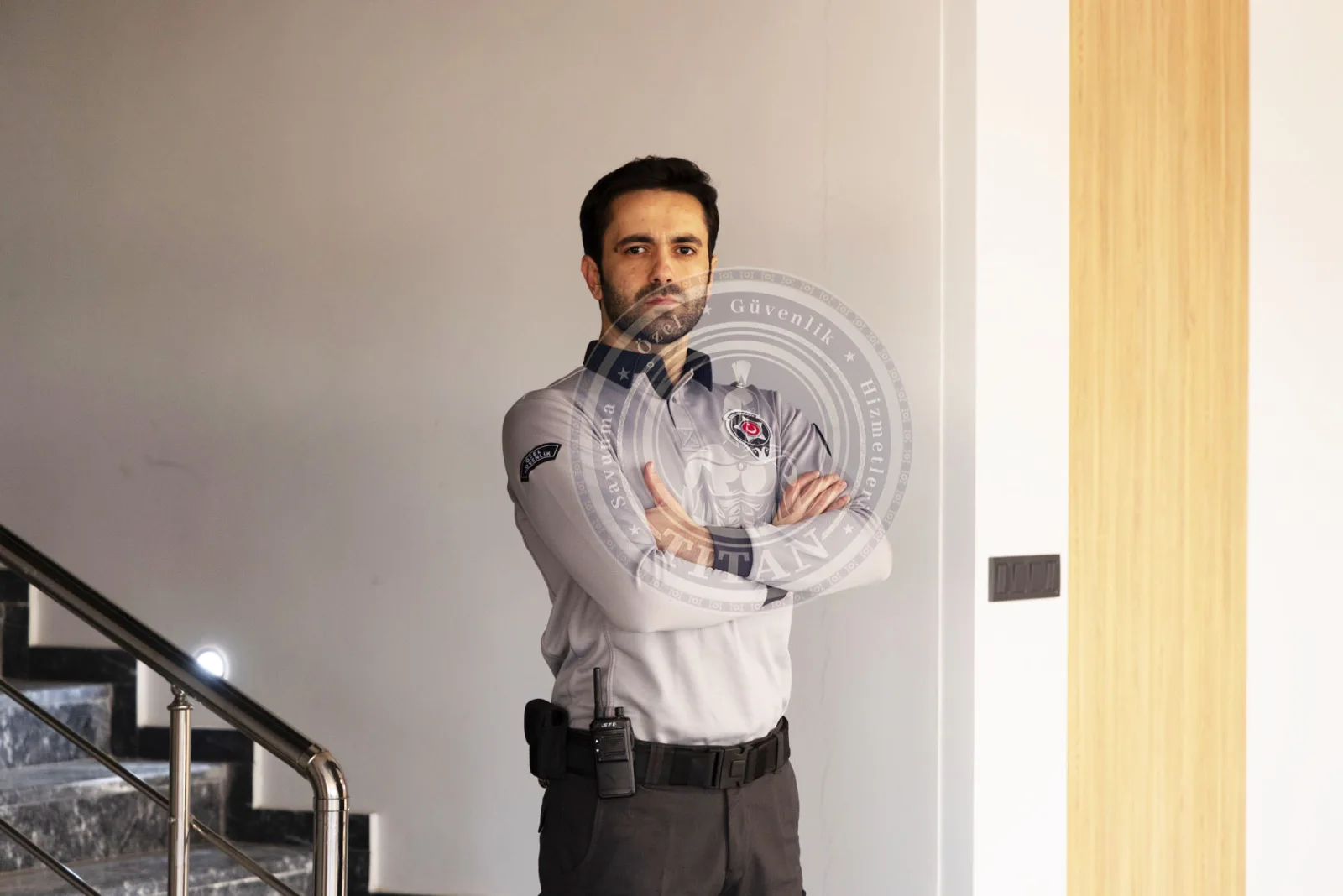
Titan Savunma is an Ankara-based private security company operating under a Ministry of Interior licence issued under Law 5188, certified to ISO 9001, 14001, 45001, 22301 and 28000, working with international companies in English and Turkish. It surveys villas and residences, prepares a layered security plan and response flow, and provides residential security and, where needed, close protection with a single point of contact, written scope and regular reporting.


