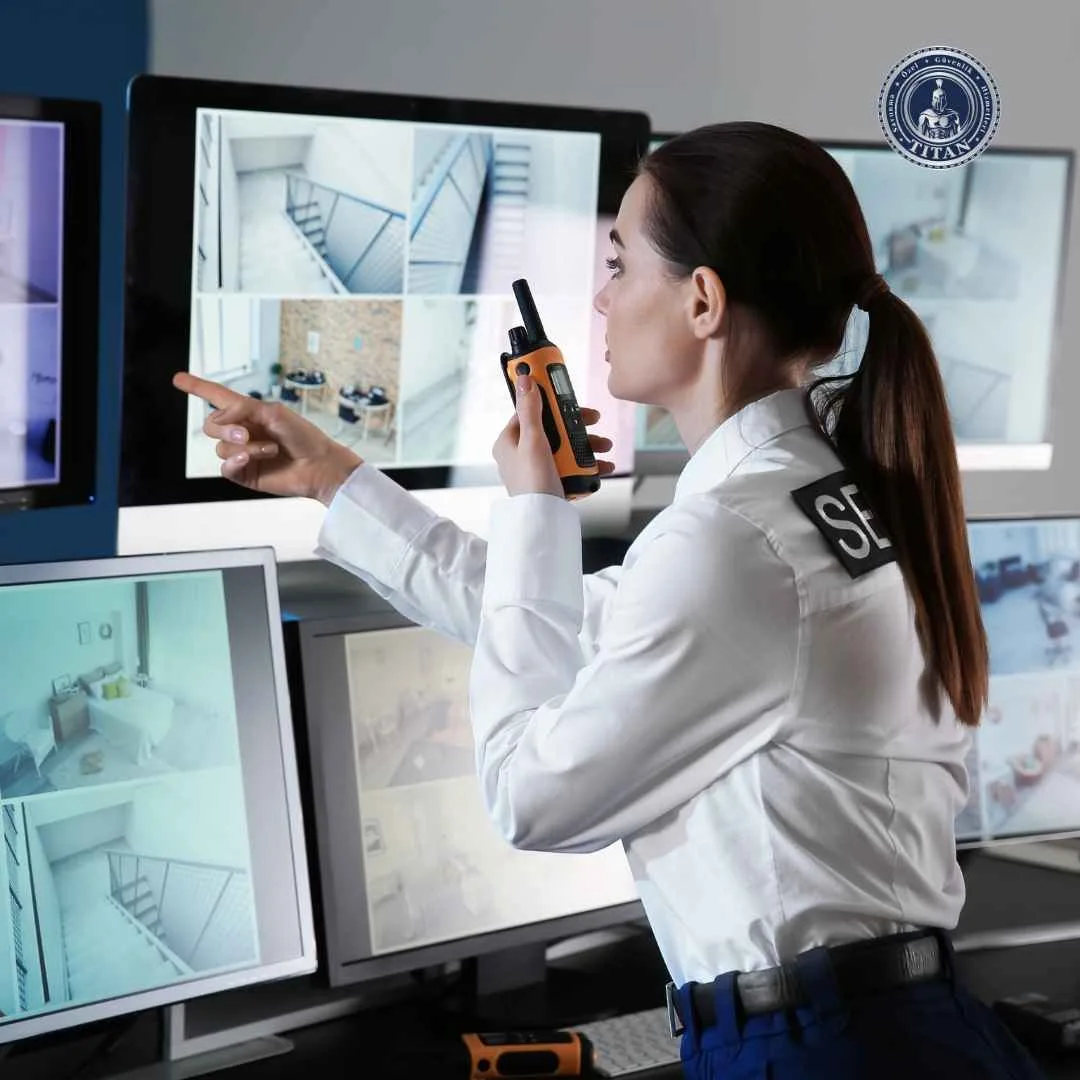
Security awareness training for employees works when it comes as short, repeated sessions tied to specific behaviour, not as one presentation a year. Research shows two things together: a well-designed briefing can markedly reduce how often employees hand over their office key to a stranger who asks for it, but the effect fades over time. Lasting results come from making training part of a security culture, where people understand why a rule exists, can report easily, and regularly practise recalling what they learned.
This article focuses on four physical-security behaviours: recognising social engineering, not letting people tailgate, responding correctly to a suspicious item, and reporting what you see. It then shows how to run a 45-minute team session with our free Security Encyclopedia and Security Crossword, in English or Turkish, and how to measure the result. It is written with offices, plants and campuses in Turkey in mind, many of which run mixed Turkish and international teams.
Awareness and security culture are not the same thing
The European Union Agency for Cybersecurity (ENISA), in its report Cyber Security Culture in organisations, defines culture as people's knowledge, beliefs, perceptions, attitudes, assumptions, norms and values regarding security, and how these show up in their behaviour. The report is written for information technology, but three of its points fit building, site and campus security directly. First, awareness-raising campaigns on their own do not give sufficient protection. Second, security rules must fit business processes, or employees are forced to choose between doing their job and complying with policy. Third, instead of seeing people as the weakest link, the aim is an environment in which employees become an active part of the defence.
In physical security the most familiar example is the turnstile. The rule is not to hold the door for the person behind you; but shutting it on a colleague carrying boxes feels rude. Training should not ignore that tension; it should resolve it with a behaviour people can actually use: not "never hold the door" but "hold it, then ask them to tap their card" or "point them to reception". For a short definition, see the security culture entry.
What the research says works
One of the most instructive experiments on physical social engineering was published by researchers at the University of Twente in the Journal of Experimental Criminology (Bullée et al., 2015). Thirty-one people acting as offenders visited the offices of 118 employees and asked them to hand over their office keys. Half the employees had received an awareness intervention beforehand. Of those who had, 37.0% handed over their keys, against 62.5% of those who had not. Whether the offender claimed authority made no significant difference. The 2017 PhD thesis that brings this research programme together adds an important caution: awareness campaigns reduced vulnerability only in the short term. The lesson is plain: briefing works, but without repetition it wears off.
The paper by Bada, Sasse and Nurse on why security awareness campaigns fail to change behaviour explains part of the reason. Telling people about risk is not enough; they must understand the advice, be able to apply it and be motivated to do so, which depends on changing attitudes and intentions. The authors also discuss the limits of fear-based messages. For training design, this means every session should end with one concrete behaviour each participant will use the next day.
How to repeat is answered by learning psychology. In Roediger and Karpicke's 2006 study, students either restudied a text or took recall tests on it. Restudying did better on a test five minutes later, but on tests two days and one week later the students who had been tested remembered much more, even though the restudy group felt more confident. Trying to recall information makes it last longer than hearing it again. That is why short questions, scenarios and puzzles that require recall are worth more than another slide deck.
Four behaviours worth training
Recognising social engineering
Social engineering means persuading someone to open a door, give out information or bend a rule. The aim of training is to recognise pressure such as urgency, authority and helpfulness, and to build a habit of verification: if a stranger says they are a technician, verify the job through reception or the department that booked it, not by looking at their badge. See social engineering.
Not letting people tailgate
Someone without a card following an employee through a controlled door is a familiar gap in access control, and one that the best card system cannot close on its own. Practise a polite sentence rather than the rule itself: "Could you tap your card? The system logs everyone separately." See tailgating.
Responding to a suspicious item
An employee's job is not to examine the item but to move away without touching it, keep others away and report it to the security team at once. Clarity matters more than detail here: whom to call, on which number, and what to say. See suspicious item.
Reporting what you see
The biggest barrier to reporting is the worry about raising a false alarm. Management should say openly that every report made in good faith is welcome, and reporting should go through one simple channel. Where private security officers work on site, showing how employee reports feed into the incident report proves that reporting makes a difference.
A 45-minute team session with the encyclopedia and crossword
- Opening, 5 minutes: a real but anonymised example from your own organisation, such as a "delivery driver" let in at reception without checks. Discuss what could have happened, without blaming anyone.
- Concept, 10 minutes: pick one of the four behaviours and read the matching encyclopedia entry together on screen. Entries are short and sourced, so a team leader who is not a security specialist can run the session.
- Scenario, 15 minutes: give small groups a situation from your own building: someone without a card is waiting at the turnstile; what do you say? Compare the groups' sentences and agree the most usable one.
- Recall, 10 minutes: solve one of the four puzzles in the Security Crossword as a team. The "Emergency and Awareness" puzzle covers terms such as tailgating, suspicious items, evacuation and assembly points. When a word is solved, a "Read" link to the matching encyclopedia entry appears next to its clue.
- Close, 5 minutes: everyone names one behaviour they will use tomorrow. Show the reporting channel and number again.
The crossword runs in the browser and sends no data; it has buttons to check answers, reveal a letter and show the solution, and it comes in English and Turkish versions, which makes the same session easy to run for a mixed team. Our other free tools are collected on the security tools page. Given the research on short-lived effects, it makes more sense to repeat this session every few months, each time on a different behaviour, than to run it once a year.
How to measure the result
The ENISA report draws the line between poor and good metrics with a clear example: counting how many employees attended training is measurable, but says nothing about what they know; a short knowledge test before and after the training shows the result directly. It also suggests behavioural metrics such as the share of employees who follow the reporting procedure after detecting a simulated phishing attack, and notes that monitoring can focus on team or department level, respecting privacy, rather than on individuals. Adapted to physical security:
- The same five-question test before and after each session.
- The monthly number and type of reports to the security team; a rise is often a good sign.
- Officers' observations of whether visitors are let in at reception without checks.
- Assessment at team level rather than targeting individuals; in Turkey, processing employee data also falls under the general principles of the Personal Data Protection Law (KVKK, Law No. 6698).
Common mistakes
- Treating training as done after one long annual presentation.
- Relying on frightening examples without saying, in one concrete sentence, what to do.
- Making reporting hard: several channels, mandatory forms, no feedback.
- Blaming employees when a rule clashes with their work, ignoring the "do my job or follow the rule" dilemma ENISA warns about.
- Leaving the on-site security team out of the training, although they are often the first people employees turn to.
- Measuring success by the attendance sheet.
Titan Savunma is an Ankara-based private security company operating under a Ministry of Interior licence granted under Law No. 5188, with ISO 9001, 14001, 45001, 22301 and 28000 certificates. We work in English and Turkish and plan services for sites in different provinces with a single point of contact, a written scope and regular reporting. More about us as a private security company in Turkey.
Sources and Further Reading
- ENISA — Cyber Security Culture in organisations (2017, published February 2018)
- Bullée, J.-W., Montoya, L., Pieters, W., Junger, M. & Hartel, P. — The persuasion and security awareness experiment: reducing the success of social engineering attacks, Journal of Experimental Criminology 11(1) (2015)
- Bullée, J.-W. — Experimental social engineering: investigation and prevention, PhD thesis, University of Twente (2017)
- Bada, M., Sasse, A.M. & Nurse, J.R.C. — Cyber Security Awareness Campaigns: Why do they fail to change behaviour? (2015, arXiv 2019)
- Roediger, H.L. & Karpicke, J.D. — Test-enhanced learning: taking memory tests improves long-term retention, Psychological Science 17(3) (2006)
- Titan Savunma — Güvenlik Bulmacası / Security Crossword and Güvenlik Ansiklopedisi / Security Encyclopedia (pages checked 2026-11-11)