
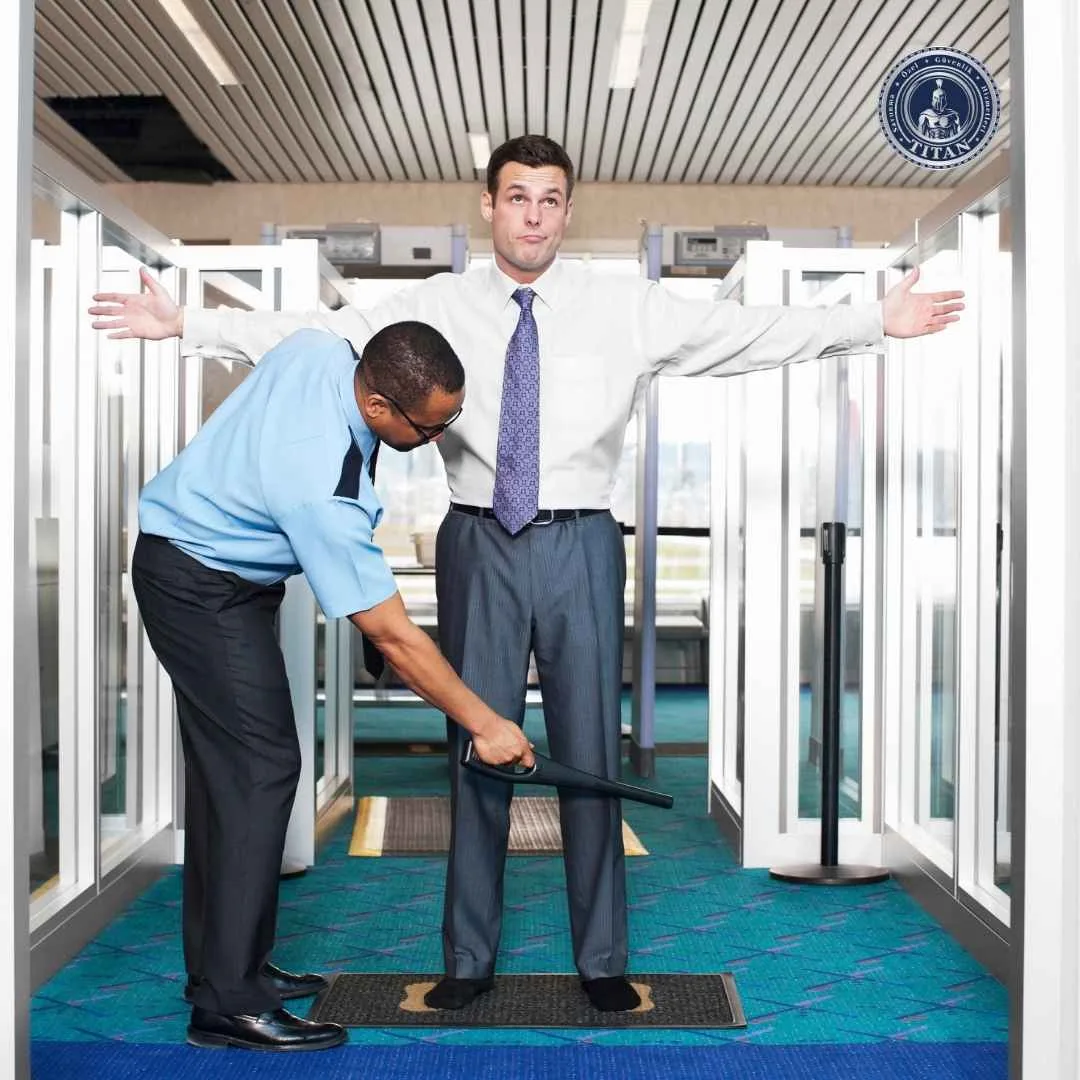
Security theatre means measures that make people feel safer without meaningfully improving actual security. Security technologist Bruce Schneier, who popularised the term, argues that security is both a feeling and a reality, and the two do not always match. Visible measures are not worthless: they reassure and can deter. But measures that are not tied to a defined risk, and whose effect is never measured, turn into wasted resources. This article uses research evidence to show how to tell the difference.
What is security theatre, and where does the idea come from?
Schneier used the term in books and essays from the 2000s, particularly to describe some measures introduced after 9/11. In his 2009 essay “Beyond Security Theater”, his examples include uniformed guards checking photo IDs, troops at airports carrying unloaded guns, and colour-coded threat levels. Such measures, he argues, tend to focus on the last attack or on vivid “movie-plot threats”, and only help if you correctly guess that the next attack will look the same.
His alternative is telling: much of the real effect usually comes from less visible work, such as intelligence, investigation, emergency response capacity and calm leadership.
The legitimate functions of visible measures: feeling and deterrence
Schneier does not use the concept only as a criticism. In “In Praise of Security Theater” (2007) he argues that theatre can sometimes be valuable. His example is the RFID ankle bracelets fitted to newborns in hospitals: infant abduction is extremely rare, but the tags bring anxious parents' feelings closer to the real level of risk when their babies are taken away for tests. Tamper-resistant packaging, introduced after the poisoning scares of the 1980s, played a similar role.
The balance that follows is:
- When felt security is below real security, a visible measure can help people make better decisions. Staff anxiety about walking to the car park after dark is a genuine productivity and retention issue.
- When felt security exceeds real security, people and organisations become complacent. That is Schneier's warning: too much theatre separates feeling and reality again.
- There is always a cost: money, time, convenience and privacy. Visible measures should be judged like any other investment.
What the evidence says: cameras and patrols
CCTV
Brandon Welsh and David Farrington's Campbell systematic review analysed 44 evaluations and found that CCTV has a modest effect on crime. The effect varied sharply by setting: it was most effective in car parks, particularly against vehicle crime, and less effective in city and town centres, public housing and public transport, with no significant effect on violent crime. In all of the car park studies, cameras were part of a package that also included measures such as extra security staff, better lighting and fencing.
Eric Piza and colleagues' 2019 update covering 40 years of research paints a similar picture: CCTV is associated with a significant but modest decrease in crime. Effects are largest and most consistent in car parks, with support for residential areas as well. Actively monitored systems outperform passive ones, and systems combined with other interventions outperform those used alone. The authors advise against installing CCTV as a stand-alone measure.
Hot spots patrols
Policing research also shows when visible presence works. Anthony Braga and colleagues' 2019 Campbell review examined 65 studies containing 78 tests of strategies focused on small, high-crime places. Sixty-two of the 78 tests reported noteworthy reductions in crime and disorder, and the meta-analysis found a small but significant effect. Importantly, where it was measured, crime tended not to simply move round the corner; benefits spread to surrounding areas instead. These studies concern police work and cannot be transferred one-to-one to private security, but the principle is instructive: visible presence pays off when it is targeted at the places and times where risk concentrates.
Risk-based planning and measurement
The way to tell theatre from protection is to tie each measure to a scenario and a metric:
- Scenario: which risk does this measure reduce? “General security” is not specific enough. Our free risk assessment tool helps rank scenarios.
- Mechanism: how does it reduce that risk: by deterring, detecting early or speeding up response?
- Metric: which key performance indicator will track it? For example incident counts, response times, the share of incidents for which usable footage exists, or the share of patrol checkpoints read on time.
- Coverage: is the amount and placement of the measure set by risk? The security coverage planner is a starting point for structuring that question.
- Review: at set intervals, discuss with data whether the measure delivers the expected effect.
A visible measure that can answer all of these is not theatre but a designed layer of security. If it cannot answer even the first question, the resources may be better spent elsewhere.
Consider a concrete example: officers greet visitors at an office tower's main entrance, while incident records show that most losses happen in the loading area in the evening. The entrance should not be left empty, because visitor registration and reassurance are real functions. But reorganising patrol routes, camera angles and lighting around the loading area could deliver far more protection with the same resources. Avoiding security theatre is often less about adding something new than about redistributing existing resources according to risk.
Five questions for managers
- Without this measure, which incident would be more likely or more severe?
- What data from the past year shows its effect?
- Is this camera's footage actually usable after an incident, and is anyone watching live?
- Are our officers where and when risk concentrates, or only at the most visible entrance?
- Does our staff's sense of safety match the real level of risk, or are they too anxious or too relaxed?
Common mistakes and myths
“Visible measures are just for show, let's cut them.” No; deterrence and reassurance are real functions, provided they are linked to a risk. “We installed cameras, job done.” Research shows CCTV alone has limited effect and works better with other measures and active monitoring. “More is always better.” Untargeted growth dilutes both budget and attention.
A professional security partner can tie visible and invisible measures to the same risk picture and help you measure results through regular reporting. Titan Savunma is an Ankara-based private security company operating under a Ministry of Interior licence granted under Law 5188, certified to ISO 9001, 14001, 45001, 22301 and 28000. We work with international companies in English and Turkish and plan sites in different provinces with a single point of contact, written scope and regular reporting. Learn more about our manned guarding services.
Sources and Further Reading
- Schneier on Security — Schneier, B.: In Praise of Security Theater, Wired (2007)
- Schneier on Security — Schneier, B.: Beyond Security Theater, New Internationalist (2009)
- Campbell Systematic Reviews — Welsh, B. C. & Farrington, D. P.: Effects of Closed Circuit Television Surveillance on Crime (2008)
- Criminology & Public Policy — Piza, E. L., Welsh, B. C., Farrington, D. P. & Thomas, A. L.: CCTV surveillance for crime prevention: A 40-year systematic review with meta-analysis (2019)
- Campbell Systematic Reviews — Braga, A. A. et al.: Hot spots policing of small geographic areas effects on crime (2019)


