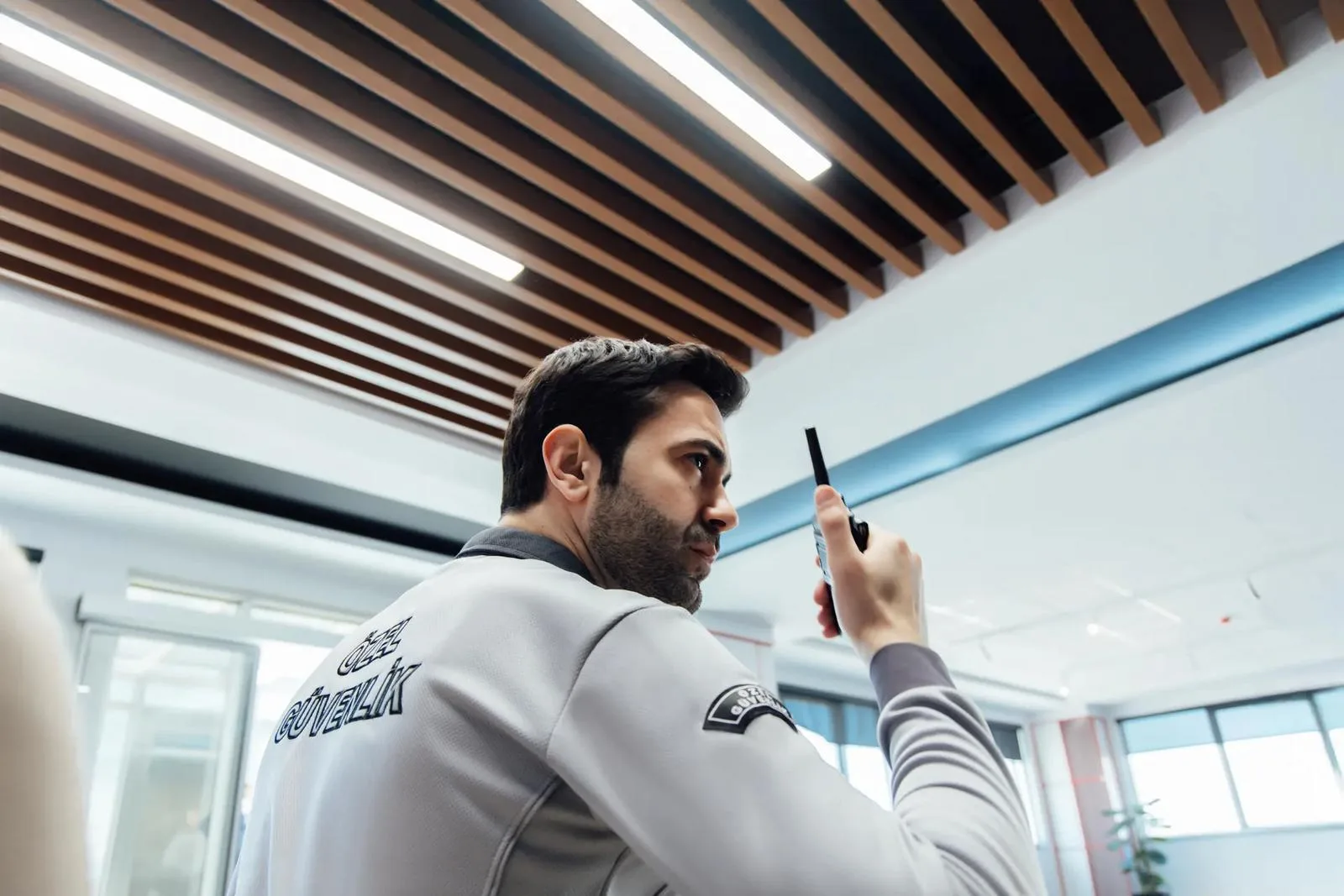
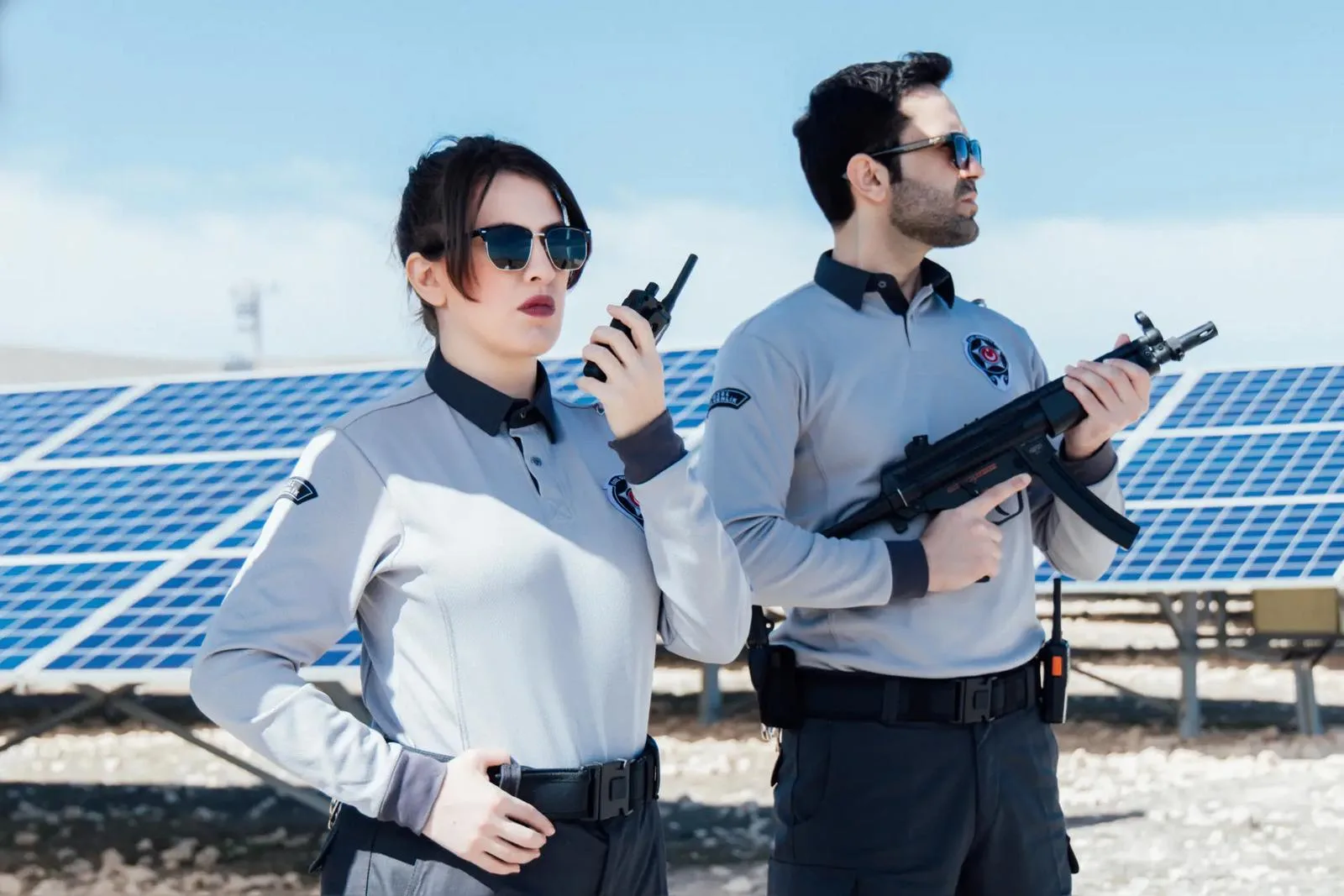
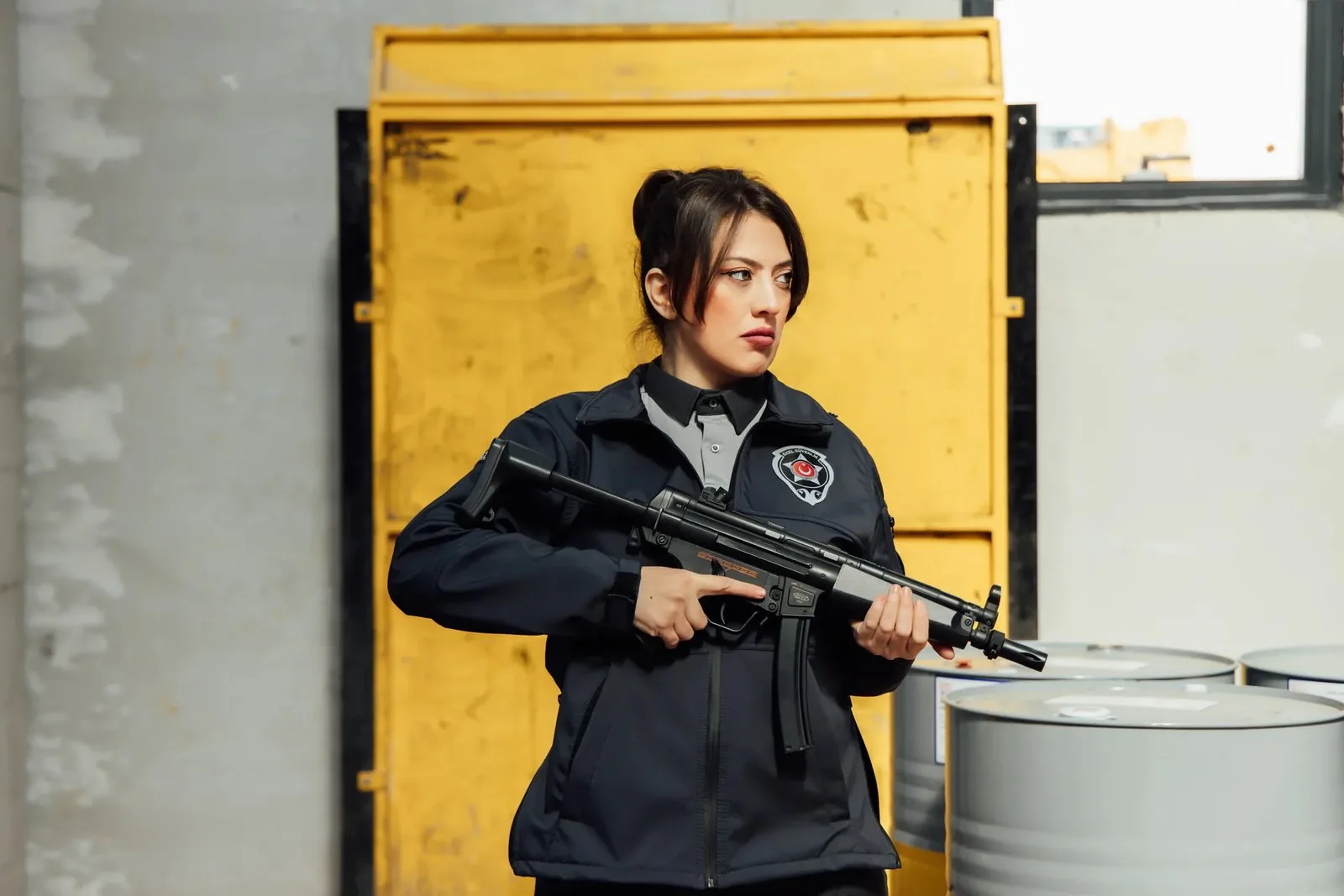
Short answer: At mining and energy sites in Sivas, security has three difficult points: the stores holding hazardous or valuable items such as explosives, fuel, cable and spare parts; site entrances that open onto large areas far from any settlement; and long winter nights in which an officer has to keep both themselves and the site safe. A routine that works manages the stores through stock counts and key control, the entrance through logging, and patrols through rounds shortened for the cold and a communication plan that also says what to do when contact is lost. Technical and health and safety decisions stay with the operator; the security team makes sure those rules are applied at the gate and on site, and records them.
This article is general information, not legal advice.
Why mine and energy sites in Sivas are a security subject of their own
According to the Social Security Institution (SGK) Statistical Yearbook 2025, 38 metal ore mining workplaces in Sivas employ 2,056 insured workers. This represents roughly 6.4% of the branch's insured workforce nationwide and ranks Sivas third among the 81 provinces for insured employment in this activity; relative to total provincial employment, the branch carries over 12 times the weight it has in Turkey overall. In electricity, gas, steam and air-conditioning supply the province has 135 workplaces with 2,097 insured workers, giving that branch roughly 3.3 times its national weight, while quarrying and other mining adds another 79 workplaces. (We worked out the shares and the ranking ourselves from the provincial and national totals given in the yearbook.) In short, mine and energy site security carries real weight in the Sivas economy.
The climate makes things harder. Figures from the Turkish State Meteorological Service for 1929–2025 put January in Sivas at −3.3 °C on average, with January lows averaging −7.2 °C. The coldest reading on record, −34.4 °C, was taken in a February, and snow cover has reached a depth of 110 cm. An officer posted at a pit entrance on open ground, at the edge of a stockyard or along the perimeter of an energy facility feels these conditions directly. The site is large, the stores are scattered and the winter is long, and the security plan has to deal with all three together.
What does the research say?
1. Store risk often comes from inside, and shows up first in the records
A December 2024 bulletin from Western Australia's workplace safety regulator reports on a police and regulator investigation into the theft of explosives from a mine site. According to the bulletin, the root cause was the illegal conduct of a trusted employee; site records showed discrepancies between recorded and actual quantities in storage, and the company had not investigated them. The bulletin asks businesses that hold or use explosives to have controls that keep explosives secure from sabotage, theft and unexplained loss and that prevent unauthorised access (WorkSafe WA, Bulletin No. 0417, 2024). This is a review of a single case written under Australian law, but its lesson travels easily: a count discrepancy is a warning sign and should be treated as a security question.
Academic work also points to insider risk. A paper describing a two-year crime prevention project by the Port St. Lucie police in Florida on theft from single-family home construction sites notes that people working for builders and contractors often know how a site works and have access to keys, tools and materials, and may also know at what stage appliances are delivered. It adds that decisions taken for efficiency can create openings, such as not putting up a lockable fence so that workers and delivery drivers can get in easily. The authors list many measures in use, including tool check-out systems, lockable portable storage units and alarms, but note that very few have been evaluated systematically; in their own project, responses tailored to the data were followed by a reduction in theft (Boba and Santos, International Journal of Construction Education and Research, 2007). The study concerns housing sites and cannot be transferred directly to a mine, but it explains why, on a dispersed, constantly changing site with many contractors, access to stores should be tied to named people and logged.
2. Cable theft may rise with metal prices
A time-series study of police-recorded thefts of live copper cable from the British railway network between 2006 and 2012, using 76 months of data, found that changes in the copper price were positively associated with changes in cable theft; the authors also tested rival explanations such as unemployment (Sidebottom, Ashby and Johnson, Journal of Research in Crime and Delinquency, 2014). The study is not specific to Turkey or to mines, and the association should not be read as proof of cause. Our practical reading: at mine and energy sites holding cable drums, copper scrap and spare parts, a period of rising metal prices is a good prompt to review patrol frequency and stock counts.
3. Cold can impair thinking, especially on complex tasks
A systematic review of the effect of cold exposure on cognitive performance in healthy adults covers 18 studies: eight on cold air and ten on cold water immersion. It finds that impairment mainly involves more complex cognitive tasks; drawing on earlier work, the authors note that impairment appears related to the fall in core body temperature in a dose-response pattern. Processing speed and executive function were impaired, while results for attention and memory were mixed: attention measured by simple reaction time was not affected, whereas one study measuring choice reaction time found an effect (a finding based on few studies) (Falla et al., Int. J. Environ. Res. Public Health, 2021). All the studies were carried out in laboratory or simulated settings and none concerns security officers. Even so, matching a number plate to a delivery note at the gate, spotting a count discrepancy or deciding what to do about an unexpected vehicle are exactly this kind of complex task, and the plan should allow for their quality dropping at the end of a very cold night.
4. Cold work is a health issue as well as a security one
A review of health problems in cold work summarises evidence that cold can reduce performance and productivity and increase the risk of accidents and injuries; that breathing cold air can cause respiratory symptoms; and that cardiovascular complaints can become more pronounced during physical work in cold weather, particularly in people with underlying disease. The authors argue that the first step in managing cold risk is to identify workplace and individual risks, and that susceptible groups need tailored advice on prevention and protection (Mäkinen and Hassi, Industrial Health, 2009). Winter duty is therefore more than a kit list: the length of rounds, warm-up breaks and the officer's health are all part of the plan.
5. For anyone on duty alone, communication is the plan
The UK Health and Safety Executive (HSE) warns that people working alone, with no direct supervision and nobody on hand to help if something goes wrong, will always face greater risk, and expects employers to provide training, supervision, monitoring and support for lone workers (HSE, Lone working; HSE, INDG73). An officer at a remote corner of a large mine site is often in exactly that position. In a valley with no mobile signal, at the end of a snowbound track or on a solitary night round, who the officer talks to, by what means and how often should be written down in advance.
A practical checklist for mine and energy sites
| Area | What to do | Why |
|---|---|---|
| Explosives store | Keys and access are tied to people authorised by the operator; every opening and closing is logged with the time; fence, lock and seal checks are a fixed stop on the patrol. | In the case reviewed, the root cause was a trusted employee's conduct. |
| Count discrepancies | Every discrepancy in the operator's stock count is also reported to security and tracked until closed. | Failing to investigate discrepancies was one of the weaknesses identified in the same case. |
| Fuel stores and tanks | Tanks, filling points and plant parking are on the night patrol; parking position and key handover are logged at the end of the day. | On a dispersed site, valuable items sit out of sight. |
| Cable and spares | Cable drums, copper scrap and spare parts are kept in a locked area; rounds and counts are reviewed when metal prices rise. | A positive association between copper price and cable theft has been reported. |
| Site entrance | Separate logs for staff, contractors, visitors and vehicles; outgoing vehicles and loads logged with the time, with delivery notes and weighing paperwork kept by the operator's staff. | On a large site, the entrance is a practical place to apply control. |
| Contractor access | Contractor staff are admitted against the operator's current list, and changes reach security the same day. | Those who know the site also know its gaps. |
| Winter patrols | Rounds in the open are shortened and the officer is brought into a heated booth at set intervals; on very cold nights critical checks go to a rested officer. | Cold can degrade performance, especially on complex tasks. |
| Communication | Points with no mobile signal are marked on the site map; radio or another agreed means, set call-in times and the steps to take if an officer goes out of contact are set out in writing. | Risk rises for lone workers with no one to help. |
| Winter kit | Heated, insulated booth, back-up heat source, winter clothing, torch and spare batteries, with the contract stating who supplies each. | Sivas has recorded −34.4 °C. |
| If the road closes | Settle beforehand how the next officer takes over and how the officer on duty will be looked after if unable to leave the post. | Snow can disrupt shift changes. |
| Reporting | Store checks, count discrepancies, winter findings and communication outages get their own headings in the monthly report. | A problem that cannot be seen cannot be managed. |
Where the security role ends
The question most often blurred at mine and energy sites is what the security officer actually does. Article 16 of Law No. 5188 bars the use of private security personnel for anything beyond the protection and security duties the Law defines. Moving explosives, booking them into the store, blasting, weighing, loading, technical work on electricity and plant, and snow clearing should therefore not be given to security officers, but carried out by operator staff authorised for that work. The officer makes sure the operator's rules on these matters are applied at the gate and on site, records any breach and reports it to the person in charge.
Permits and obligations for the storage, transport and use of explosives fall under separate legislation and are the operator's responsibility; the security plan does not replace them and should be written to fit them. Likewise, the employer owns the risk assessment and emergency plan prepared under Law No. 6331 on Occupational Health and Safety, and the security team's role in fires, evacuations or earthquakes should be defined alongside that plan. Entry logs and camera footage contain personal data, so the operator decides why they are kept and for how long, in line with Law No. 6698 on the Protection of Personal Data.
Common mistakes
- Keeping the store key somewhere "everyone knows", or not recording who takes it.
- Treating count discrepancies as an accounting matter only and never passing them to security.
- Relying on mobile phones to stay in touch with remote posts, without knowing in advance where there is no signal.
- Planning winter rounds to the same length as summer rounds, and leaving warm-up breaks and booth heating out of the contract.
- Not updating the contractor list, and not closing the pass or record of contractor staff who have left.
- Expecting security officers to clear snow, weigh loads or do the loading.
- Using cameras only for after-the-event footage, with no one watching the stores and filling points.
A note for Turkey
Under Law No. 5188, having security provided by a private security company requires the governor's permission, given on the decision of the private security commission (Article 3); the implementing regulation directs the application to the governorship, so for a site in any district of Sivas the authority is the Governorship of Sivas. The implementing regulation also requires the security company to prepare a protection and security plan for the site it serves within thirty days of the start of service. At mine and energy sites it makes sense to give store access, entry logging, winter patrols and communication their own sections in that plan and, if service starts in summer, to update the plan on site during the first winter.
You can find our service approach for sites in the province on our private security in Sivas page, our approach to mining operations on our mining facility security page, and our approach to energy facilities on our critical infrastructure security page. For a first view of your site's risks, try our security risk assessment tool.
Titan Savunma is an Ankara-based private security company licensed by the Ministry of Interior under Law No. 5188 and certified to ISO 9001, 14001, 45001, 22301 and 28000. We work with international companies in English and Turkish, and our Sivas City Manager, supported by our Central Anatolia Regional Directorate, surveys your site on the ground with winter conditions in mind and builds the store, entrance and patrol routine with you in line with your health and safety rules. To request a site survey, please use our contact page.
Sources and Further Reading
- Falla, M., Micarelli, A., Hüfner, K. & Strapazzon, G. — The Effect of Cold Exposure on Cognitive Performance in Healthy Adults: A Systematic Review, International Journal of Environmental Research and Public Health 18(18), 9725 (2021)
- Mäkinen, T. M. & Hassi, J. — Health Problems in Cold Work, Industrial Health 47(3), 207–220 (2009)
- Sidebottom, A., Ashby, M. & Johnson, S. D. — Copper Cable Theft: Revisiting the Price–Theft Hypothesis, Journal of Research in Crime and Delinquency 51(5), 684–700 (2014)
- Boba, R. & Santos, R. — Single-Family Home Construction Site Theft: A Crime Prevention Case Study, International Journal of Construction Education and Research 3(3), 217–236 (2007)
- WorkSafe Western Australia — Dangerous Goods Safety Bulletin No. 0417: Security of explosives (19.12.2024)
- Health and Safety Executive (UK) — Lone working: Protect those working alone; Protecting lone workers (INDG73 rev4, 2020)
- SGK — İstatistik Yıllığı 2025 (Tablo 1.11)
- Meteoroloji Genel Müdürlüğü — Sivas il istatistikleri (1929–2025)