
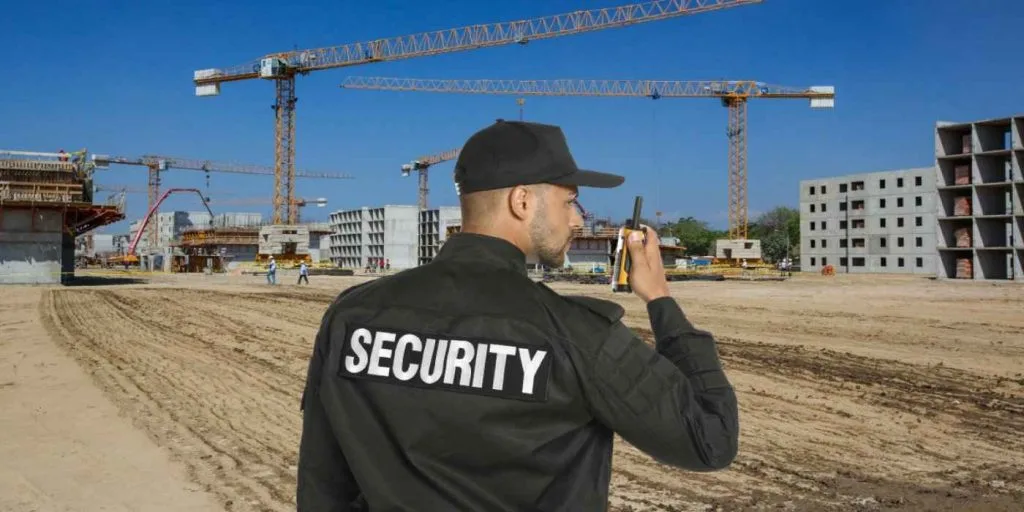
A security team's backup communications plan is not a single device but a set of layers: radio on site, cellular between sites, an independent path such as satellite where justified, and pre-agreed physical meeting points for when everything goes quiet. The most important part is not technology but decisions written in advance: "if there is no contact, do this." When networks fail, nobody can send the team new instructions.
This article is for security and business continuity managers at facilities, campuses and multi-site companies. It is about how a security team keeps working when communication breaks down. The choice between radio and push-to-talk over cellular is covered in a separate article; the focus here is the plan for the outage itself.
This article is general information, not legal advice.
Name the outage scenarios
Turkey's disaster authority AFAD states on its emergency app page that one of the biggest problems in disasters, especially earthquakes, is the loss of communication, and that the app aims to reduce congestion on GSM lines by allowing emergency calls over the internet. At site level, break that general risk into concrete scenarios:
- Local power cut: handhelds run on batteries, but repeaters, network equipment and control room screens need backup power.
- Mobile network congestion: after a major event everyone calls at once; voice calls may fail and data slows down.
- Infrastructure damage: base stations, fibre or the building network are damaged; some systems may be down for hours or days.
- On-site failure: a repeater, switchboard or control room software fails on its own; the outside world is fine but the team cannot reach each other.
- Evacuation: the control room has to be abandoned and coordination moves elsewhere.
For each scenario answer two questions: which path still works, and what does the team do if it does not?
Layered communication options
Redundancy means paths that do not share the same weakness. A general framework:
- On-site radio: in direct mode it does not depend on the operator network. Licensed systems follow BTK's rules on installing and using radio systems: anyone installing and operating a radio system must have frequency allocation and registration carried out by the Authority and, where required, obtain an installation and use permit and a licence.
- Cellular voice, messaging and push-to-talk: the main path between sites and to management, and often the first layer to struggle under congestion. AFAD's disaster awareness training recommends reporting your status by text message after a disaster; short, pre-written status messages work well for teams too.
- Independent path: options that do not rely on terrestrial networks, such as satellite phones or satellite data links, may be justified at critical sites. Confirm the regulatory and permit position with the competent authority before acquiring or using them.
- Out-of-area contact point: the same AFAD training advises families to choose an out-of-region contact person living outside the capital and large cities. The corporate equivalent is a coordination point outside the affected area: an office in another province or your security provider's control centre.
- Physical layer: pre-agreed meeting points, runners and face-to-face check-ins at set times. The oldest method, and dependent on no network.
Blocking or disrupting communications is never a task for a security team; any such intervention is a matter for the competent authorities only.
Pre-agreed actions when nobody answers
This is the heart of the plan. Write down the decisions the team will take on its own when it cannot reach anyone, and align them with your workplace emergency plan. Examples:
- "After an earthquake with no contact: the officer first ensures their own safety, then directs people at the post to the designated assembly area and keeps the main entrance clear for rescue teams."
- "If the control room cannot be reached for 15 minutes: the shift supervisor goes to meeting point A; each post lead reports there every hour."
- "If the relief shift cannot arrive: the current team holds critical posts until the supervisor decides otherwise; non-critical posts close in a pre-agreed order."
- "If the control room is evacuated: coordination moves to the backup location, taking keys and the emergency file."
These actions belong in the post orders and must be short enough to remember. Who decides when the usual decision-maker is unreachable (delegation of authority) should also be written down.
AFAD's training also suggests that when calling an emergency number you state who you are and which number you are calling from, the exact address, what happened, and the condition and number of people affected. That structure makes a good template for the team's standard status message.
Power and charging
Batteries are where communication plans most often fail silently.
- Record on the handover form that radios and phones were handed over fully charged.
- Keep spare batteries and portable chargers charged, labelled and in a known place, and check them regularly.
- Confirm with facilities which loads the backup power supplies (repeaters, control room, network, lighting) and for how long.
- Make sure charging does not depend on a single socket.
- Torches and paper copies: the key contact list, floor plans and assembly areas must be at hand when screens go dark.
Standards and drills
ISO 22301:2019 is the international standard that sets requirements for business continuity management systems. Treat the communications plan as part of that system, give it an owner and test it regularly. See the encyclopedia entry on business continuity.
Drill ideas:
- Tabletop: read through the scenarios; each person answers "what do I do in the first 30 minutes?"
- Silent drill: work for a set period without phones, using only radio and meeting points.
- Night shift: run the drill at the time of lowest staffing, so the plan is not written only for the day team.
- Lessons learned: after each drill, record what did not work, flat batteries and unclear decisions, and update the plan.
Checklist
- Are outage scenarios written, with a working path identified for each?
- Are there at least two independent layers and a physical meeting point?
- Are the "no contact" actions in the post orders, and do officers know them?
- Is there a coordination point outside the area?
- Are batteries, backup power and paper copies checked?
- When was the last drill, and were the findings fed back into the plan?
To rank your site's risks, start with our free security risk assessment.
How a professional security partner helps
Titan Savunma is an Ankara-based private security company operating under a Ministry of Interior licence under Law 5188, certified to ISO 9001, 14001, 45001, 22301 and 28000. We work with international companies in English and Turkish and plan sites in different provinces with a single point of contact, written scope and regular reporting. We plan guarding together with your technology and can add to your continuity plan what the team on site does when communication fails. See critical infrastructure security.
Sources and Further Reading
- AFAD — AFAD Acil Mobil Uygulaması, Afet ve Acil Durumlarda, Daima Yanında!
- AFAD Samsun İl Müdürlüğü — Afet Farkındalık Eğitimi sunumu
- ISO — ISO 22301:2019 Security and resilience — Business continuity management systems — Requirements
- BTK — Telsiz Kurulum ve Kullanımlarında Dikkat Edilecek Hususlar (2021)


