
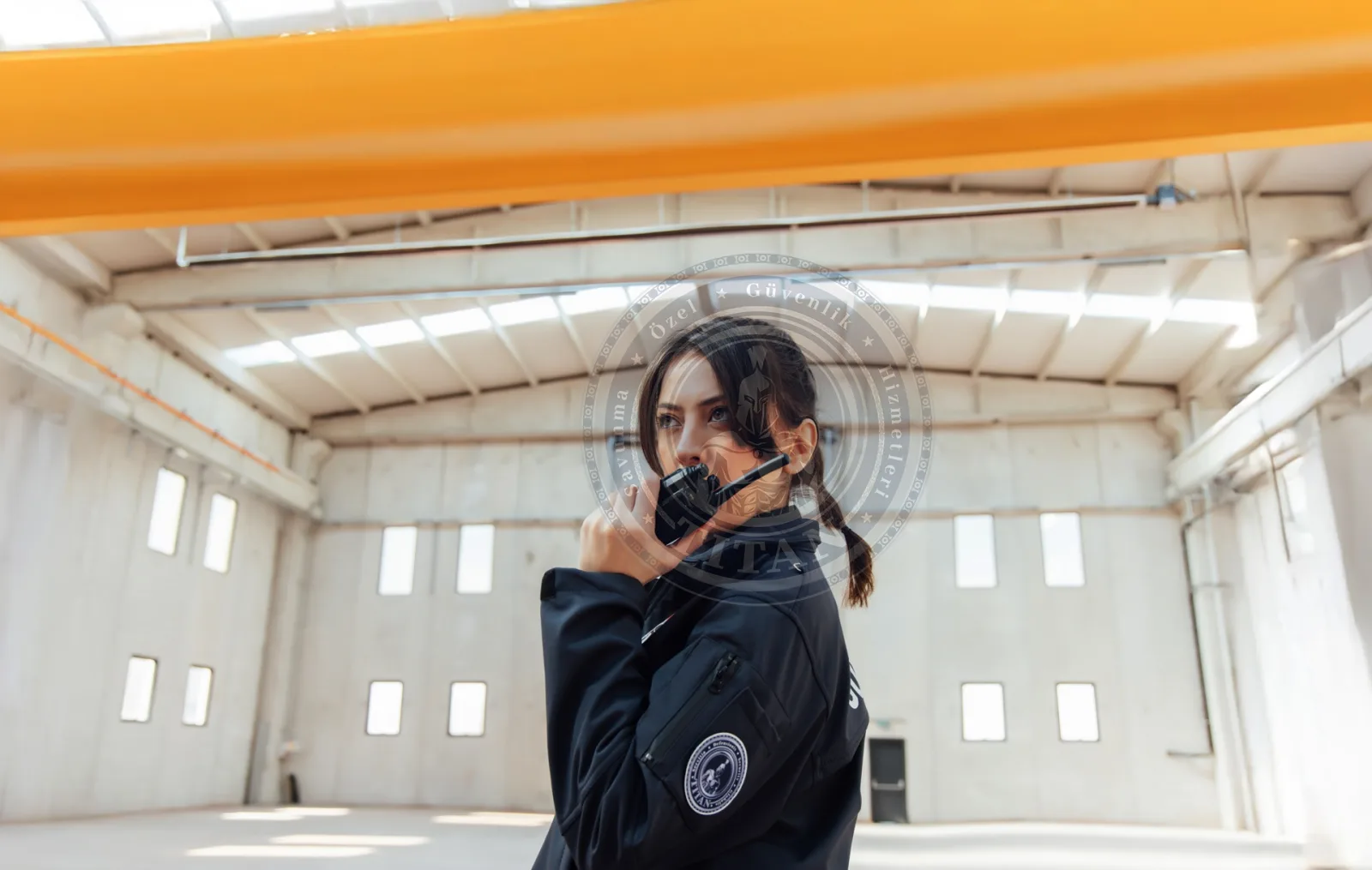
Security officers can wear body-worn cameras, but the evidence does not show that cameras on their own reduce violence. Most research comes from policing and the results are mixed: complaints tend to fall, while use of force and assaults on officers show no consistent improvement. The decision should weigh the limits of that evidence, personal data protection and the officer's communication skills together.
This article is general information, not legal advice.
After a violent incident in a hospital or a confrontation in a shopping centre, managers often ask whether cameras on officers would help. This article covers what the studies found, what is clear and unclear under Turkish data protection rules, and how to run a sensible pilot. For background, see the encyclopedia entry on workplace violence in healthcare.
What the research found
One of the most comprehensive reviews is the 2020 Campbell systematic review by Lum and colleagues, which pooled 30 independent studies:
- Complaints: cameras were associated with fewer complaints against police, but the authors stress it is unclear whether this reflects better encounters or a change in how complaints are reported.
- Use of force: the evidence was not sufficient to conclude that cameras reduce it. The authors note effects may be larger where officer discretion over when to record is tightly limited.
- Assaults on officers and arrests: no significant, consistent effect.
The multi-site experiment by Ariel and colleagues (European Journal of Criminology, 2016) combined ten randomised trials in eight police forces in the UK and US. According to the University of Cambridge summary, assaults against officers were on average 15% higher on camera shifts; the researchers suggest some of this may be because recorded incidents are reported more often. Overall use of force did not change, but the picture split by practice: where officers recorded every encounter from the start, use of force fell by 37%, and where officers chose when to record, it rose by 71%. The researchers describe these findings as preliminary.
The practical lesson is that how the camera is used matters more than the device. A second caution: these studies are about police. Private security officers have different powers, situations and workplaces, so the results should not be transferred directly.
The legal picture in Turkey: what is clear, what is not
The text of the Private Security Services Law No. 5188 contains no provision on officers wearing cameras or on video recording. When this article was prepared, we also found no guidance or decision summary on kvkk.gov.tr specific to body-worn cameras. So instead of a firm yes or no, the starting point is the data protection authority's general approach to camera recording.
The KVKK public announcement of 8 June 2026 on security cameras in workplaces is written for fixed cameras, but it is a useful guide:
- Processing images through cameras is personal data processing and needs a legal basis under Law No. 6698.
- The purpose must be defined in advance, specifically and clearly. Using cameras to check productivity, increase discipline or exercise general control is not treated as a legitimate purpose.
- Audio recording is described as highly intrusive into private life.
- Cameras must not be placed in private areas such as toilets, changing rooms, prayer rooms and rest areas.
- Footage should be kept for the shortest possible time with automatic deletion, and only authorised people should have access.
Audio deserves special attention because many body-worn devices can record sound as well as video. In decision summary 2023/2007 of 30 November 2023, the Personal Data Protection Board examined video and audio recording in a workplace security booth. It found video sufficient for the security purpose, found no legitimate interest for the audio recording, and ordered the audio data destroyed. The case was not about body-worn cameras, but it shows that "shall we record sound too?" is not a minor setting. See also CCTV recordings and KVKK.
Body-worn cameras also capture patients, visitors, customers and children, not only staff. The announcement asks controllers to assess carefully the effect on third parties and vulnerable people in public-facing areas. In a hospital emergency department, footage may reveal health information, so such a project should start with the organisation's legal team or data protection adviser.
When does recording start, who is told, how long is it kept?
Answer three operational questions in writing before any pilot:
- Activation rule: will cameras record continuously or only for defined incident types? The research suggests unrestricted officer discretion can backfire. Whatever the rule, it must be written, trained and auditable. Switching on in the middle of an argument can raise tension; Ariel and colleagues point to the value of announcing recording early and clearly.
- Notice: how will people know recording has started? Consider visible signs at entrances, a recording indicator on the device and a short, calm verbal statement. Employees need their own privacy notice.
- Retention and access: decide when footage without incidents is deleted, who flags incident footage and on what grounds, who may view it and how it is exported. Officers should not be able to delete their own recordings, and every access should be logged; this also protects evidential value.
A camera does not replace communication
Technology records; trained people calm situations down. A significant part of any body-worn camera budget and timeline should go to officer training:
- De-escalation: calm tone, distance, short clear sentences, offering the other person options.
- How to introduce the camera: a non-threatening sentence such as "I am recording for your safety and mine."
- When to step back: a camera is no reason to attempt a risky intervention; the officer should call for support and inform the control room.
- After the incident: tagging the footage, a written incident report and a short debrief with the supervisor.
Post orders should make roles explicit: the camera records, the officer communicates and de-escalates, the control room sends support, the supervisor reviews footage and report, and the police are informed where necessary. For high-risk sites such as hospitals, walk through this flow with the hospital security planner.
Decision questions for a pilot
Run a limited pilot before any wider roll-out, and answer these questions in writing:
- Which problem are we solving: complaints, assaults, or lack of evidence after incidents? Do we have baseline data?
- At which posts and shifts will cameras be used, and where will they never be used?
- Is audio necessary, or is video alone enough for the purpose?
- Have legal basis, privacy notice and retention period been settled with the legal team?
- Who will access footage, and how will access be logged?
- Have officers been trained in de-escalation and camera use?
- What will we measure at the end, and what result means continue or stop?
Common mistakes
- Presenting cameras as the single answer to violence.
- Leaving activation entirely to officer discretion without oversight.
- Leaving audio recording switched on without asking whether it is needed.
- Copying footage to personal phones or shared folders.
- Reviewing body-worn footage to monitor staff performance.
How a professional security partner helps
Titan Savunma is an Ankara-based private security company operating under a Ministry of Interior licence under Law 5188, certified to ISO 9001, 14001, 45001, 22301 and 28000, and working with international companies in English and Turkish. We plan guarding together with your technology, putting officer training and your monitoring, verification and response plan at the centre rather than the device. See our manned guarding services.
Sources and Further Reading
- Campbell Systematic Reviews — Lum, Koper, Wilson vd., Body-worn cameras' effects on police officers and citizen behavior: A systematic review (2020)
- European Journal of Criminology — Ariel, Sutherland, Henstock vd., Wearing body cameras increases assaults against officers and does not reduce police use of force (2016)
- University of Cambridge — Research news on the multi-site body-worn camera trials (2016)
- KVKK — İş Yerlerinde Güvenlik Kamerası Sistemi Kullanımında Dikkat Edilecek Hususlara Dair Kamuoyu Duyurusu (2026)
- KVKK — İşveren tarafından işyerinde kamera vasıtasıyla görüntü ve ses kaydı alınması, Karar Özeti 2023/2007
- mevzuat.gov.tr — 5188 sayılı Özel Güvenlik Hizmetlerine Dair Kanun


