
Short answer: cameras do not detect "suspicious behaviour" as such. What they can do is flag a predefined event (entry into a restricted zone, an unattended object, movement against the flow) or a deviation from a pattern the software has learned as "normal". Whether a flag actually means something suspicious is decided by a trained person who looks at the footage and the scene. Independent evaluations give good reasons to be cautious about any claim that software can read intent from behaviour.
This article is general information, not legal advice.
It is written for security managers at shopping centres, transport hubs and event venues. Human observers reading body language is a separate subject; the focus here is automated systems sold with the promise that "AI finds the suspect". For the basics, see the encyclopedia entry on video analytics; this article concentrates on the evidence.
Anomaly is not the same as suspicion
Products on the market work in roughly two ways:
- Rule-based analytics: an operator defines a rule, such as "alert if anyone passes this door at night" or "alert if an object stays unattended in this zone". The system catches a defined event, and it is clear what it is looking for.
- Learning (anomaly) systems: the software learns the usual movement pattern of a space statistically and flags what departs from it. "Abnormal" here is a statistical idea: it simply means rare.
Suspicion, by contrast, needs context and judgement. Someone running may be catching a bus; someone waiting in one spot may be meeting a friend; an unusual gait may come from a disability. Rare is not the same as harmful, and harmful acts can look perfectly ordinary. It is both more accurate and fairer to call the output "a moment the operator should look at", not "a suspicious person".
What independent evaluations found
One of the most thorough independent reviews of behaviour-based detection is the U.S. Government Accountability Office report on the behaviour detection programme in aviation security, GAO-14-159 (November 2013). That programme relied on trained human observers rather than software, but its findings matter for automated systems too. As summarised on GAO's product page:
- GAO reviewed four meta-analyses covering more than 400 studies, which found that human accuracy in identifying deception from behavioural indicators was the same as or only slightly better than chance.
- A 2011 validation study did not demonstrate the programme's effectiveness, partly because of the study's own limitations; GAO judged the results inconclusive.
- Of 25 behaviour detection officers interviewed, 21 said some indicators were subjective.
- Referral rates varied significantly across airports, raising questions about whether indicators were applied consistently.
GAO recommended limiting future funding for these activities until scientifically validated evidence was provided. According to later updates on the same page, the standalone programme ended in fiscal year 2017, and GAO's 2017 review found that 175 of the 178 sources provided did not offer valid evidence for the indicators.
Our takeaway: if the link between a behavioural indicator and intent has not been shown, teaching that indicator to software does not solve the problem. It moves the problem into the training data and repeats it faster. When a product claims to detect "suspicious behaviour", ask which behaviour, and on what evidence.
Bias and discrimination risk
The NIST AI Risk Management Framework (AI RMF 1.0), published for voluntary use, lists "fair, with harmful bias managed" among the characteristics of trustworthy AI. It distinguishes three major categories of bias: systemic bias in datasets and organisational practice, computational and statistical bias that often stems from non-representative samples, and human-cognitive bias in how people perceive AI output. The framework notes that all three can occur without any prejudice or discriminatory intent.
In behaviour analytics this can look like the following: while learning what is "usual" in a venue, a system may flag minority clothing styles, ways of walking or habits of moving in groups as deviations more often. If the operator also tends to accept on-screen alerts without question, the two biases reinforce each other. The result is the same people being stopped again and again, and a loss of trust and reputation.
The EU Artificial Intelligence Act (Regulation (EU) 2024/1689) draws clear lines here. Article 5 prohibits AI systems that assess or predict the risk of a person committing a criminal offence based solely on profiling or on assessing personality traits; systems that support a human assessment already based on objective and verifiable facts directly linked to criminal activity are outside that ban. The same article prohibits systems that infer the emotions of people in workplaces and education institutions, except for medical or safety reasons. Under Article 113, these provisions have applied since 2 February 2025. How this affects a site in Turkey depends on the activity; companies that also operate in the EU should review it with their legal team.
Human observation and training: where the system helps
None of this means analytics is useless. Narrow, clearly defined rules can draw an operator's attention to the right screen in a busy control room: movement in a closed area after hours, an emergency exit opening, an item left unattended for a long time. What these have in common is that they focus on an observable action, not on who someone is or how they look.
A sound chain works like this:
- Alert: the system flags an event.
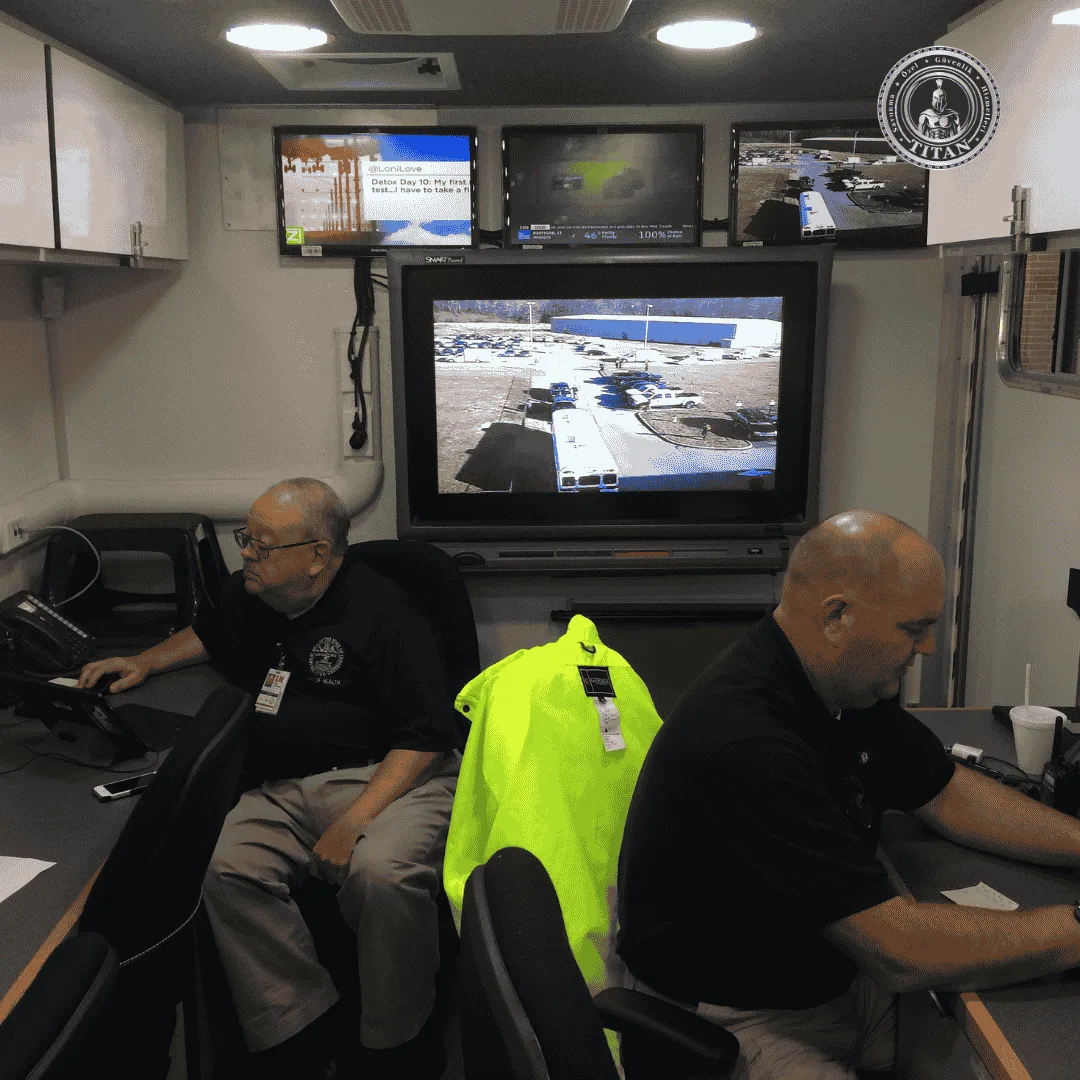
- Verification: the control room operator checks live and recorded footage and weighs the context.
- Decision: if nothing is needed, the alert is closed with a reason; if something is, the nearest officer is dispatched.
- Response: the officer on the ground speaks to the person respectfully and without discrimination and assesses the situation in person.
- Record: alert, decision and outcome go into the incident log; false alarms are reviewed to improve the rules.
Every link belongs in the post orders: who looks at which alert, how quickly, and when the supervisor or police are informed. The orders should also state plainly that an alert on its own is never grounds for action against a person. Training for operators and officers should centre on action-based observation, bias awareness and situational awareness.
Questions to ask before you buy
- What exactly does the system detect: a defined event, a statistical deviation, or an inference such as "intent" or "emotion"? If the last, ask for the scientific evidence and the legal assessment.
- On what data, under what conditions and by whom was the accuracy claim independently tested?
- Will the false alarm level be measured in a pilot at your venue, by day and night, at busy and quiet times?
- Has performance been tested across different groups of people, and are the results shared?
- Can the operator see why an alert was raised, or only a score?
- Which personal data is processed and for how long is it kept? You can review the camera side with our CCTV privacy self-check.
- Who can change the rules or switch the system off, and are changes logged?
Common mistakes
- Counting alerts as success: more alerts do not mean more detections; usually they mean a more distracted operator.
- Piloting only at quiet times: systems struggle most when it is busy, so the evaluation must cover those hours.
- Buying software before setting up monitoring: without someone to check alerts, decide and dispatch, analytics only produces a log.
- Telling the officer "the system flagged them": pass on what was observed, not a label.
To see how cameras, posts and the control room work together in a shopping centre, try the shopping centre security digital twin.
How a professional security partner helps
Judging behaviour is the job of a trained officer; technology only draws attention. Titan Savunma is an Ankara-based private security company operating under a Ministry of Interior licence under Law 5188, certified to ISO 9001, 14001, 45001, 22301 and 28000, and working with international companies in English and Turkish. We plan guarding together with your technology and set out in a written scope who checks an alert, who goes to the scene and what is recorded. See shopping centre security.
Sources and Further Reading
- U.S. GAO — Aviation Security: TSA Should Limit Future Funding for Behavior Detection Activities, GAO-14-159 (2013)
- NIST AI Resource Center — AI RMF 1.0, Section 3: AI Risks and Trustworthiness (2023)
- European Commission AI Act Service Desk — Regulation (EU) 2024/1689, Article 5: Prohibited AI practices
- European Commission AI Act Service Desk — Regulation (EU) 2024/1689, Article 113: Entry into force and application


