
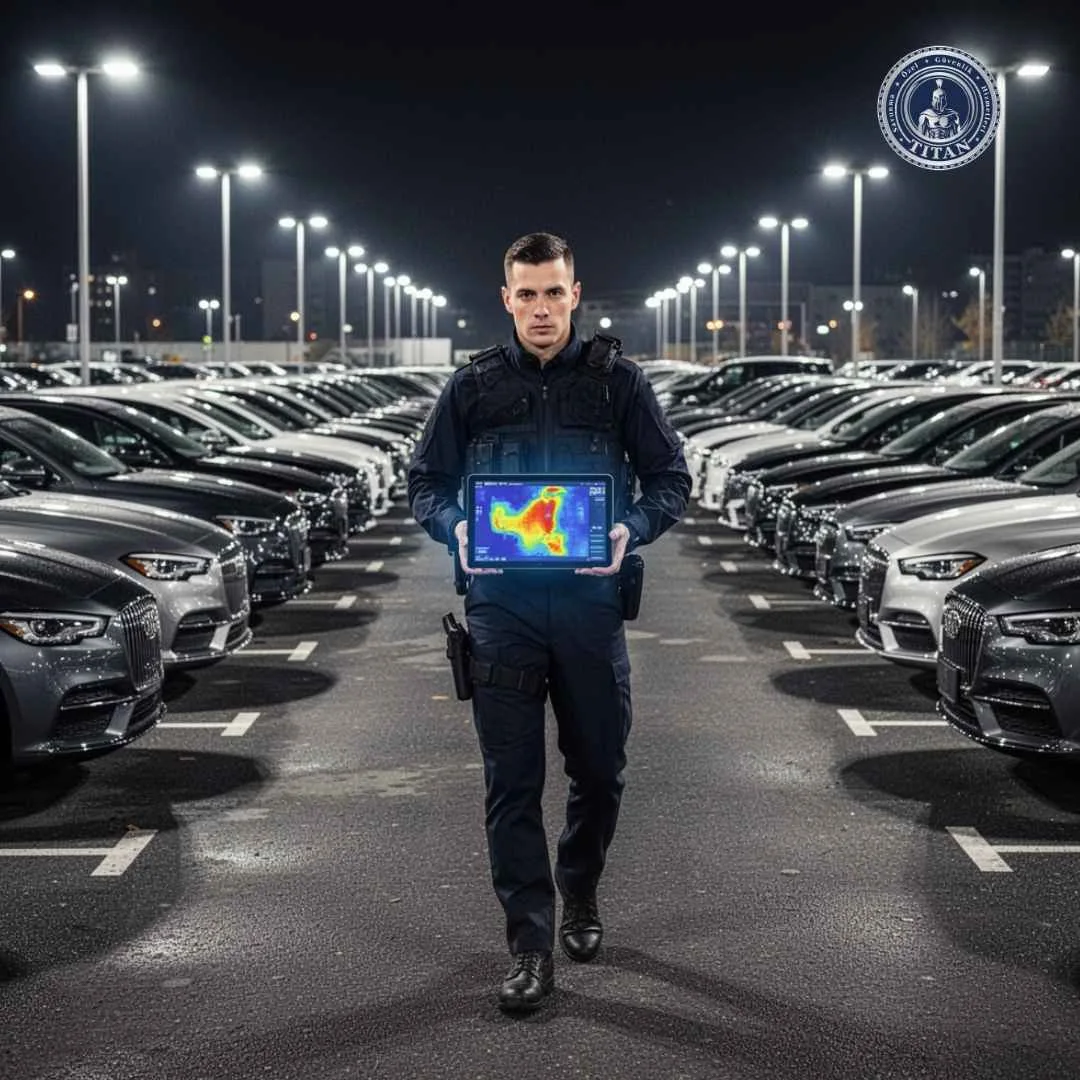
Car park security comes from several measures working together: cameras, good lighting, clear sightlines, help points and regular patrols. Research finds that CCTV has its largest and most consistent effects in car parks, but the same research shows it works better when actively monitored and combined with other measures. Cameras matter in a car park, but without someone watching and someone going to the scene, they are only half the answer.
This article is general information, not legal advice.
What the research says about car parks
One of the most comprehensive studies of CCTV and crime is the meta-analysis by Piza, Welsh, Farrington and Thomas, published in Criminology & Public Policy in 2019. Drawing on 40 years of evaluation research, its abstract highlights three findings:
- The largest and most consistent effects of CCTV were observed in car parks.
- Schemes with active monitoring produced larger effects than passive systems.
- Schemes combining CCTV with several other measures did better than those using CCTV alone or with one other measure.
The authors recommend targeting CCTV at vehicle and property crime and not deploying it as a stand-alone measure. We discuss the overall evidence in a separate article; here we turn the car park finding into practice.
Lighting: not only for the cameras
Cameras need light to produce useful images, but lighting does more than that. Welsh and Farrington’s 2008 Campbell systematic review concluded that improved street lighting significantly reduces crime. Notably, night-time crime did not fall more than daytime crime. The authors read this as support for the idea that lighting works partly by signalling investment in an area, strengthening community pride and informal social control, and not only by making people more visible.
For a car park, lighting both helps the cameras and tells users the place is looked after. In practice:
- Light aisles, footpaths, stair and lift lobbies, pay stations and gates evenly, leaving no dark pockets.
- Report failed lamps on patrol and replace them quickly; a dead light signals neglect.
- Design lighting and cameras together; light shining straight into a lens spoils the image. See our security lighting entry for more.
Sightlines, colour and wayfinding
A good car park lets users and guards see a long way. Thick columns, closed corners, storerooms and shrubs block both cameras and people. What helps:
- Clear sightlines: keep planting along footpaths low and mark blind corners specifically in the camera and patrol plan.
- Light-coloured surfaces: pale ceilings and walls spread light and make the space feel brighter and more open.
- Clear wayfinding: show exits, lifts, pay stations and help points with large, legible signs; people who find their way quickly feel safer.
- Named levels and zones: colour or letter codes help users find their car and help operators send a guard to the right spot during an incident.
Patrols and help points
Cameras record, but what reassures someone walking alone to their car at night is a visible guard and a help button that someone answers. ProtectUK’s tactical note on active monitoring notes that unmonitored systems mainly provide evidence after the event and that CCTV should support security staff on the ground. In a car park this means:
- Patrol: guards cover blind corners, stairwells and pay stations at irregular intervals and report failed lights, doors left open and abandoned vehicles.
- Help points: at lift lobbies and along footpaths, connected to the control room and covered by a camera. Post orders state who answers and who goes.
- Escort: offering to walk users to their car, especially at night, can be part of the service. It is a simple step that makes the space safer for women and anyone on their own.
- Pay stations: cashiers and pay machines should be well lit, clearly in view of a camera and on the patrol route.
ANPR and data protection in Turkey
Many car parks use automatic number plate recognition (ANPR) at entry and exit. These systems involve personal data and make the operator a data controller. The Turkish Personal Data Protection Board’s decision summary 2023/924 of 1 June 2023 concerns a car park operator. The Board found that the operator had not fulfilled its duty to inform car park users, instructed it to prepare a privacy notice compliant with the Law and the Communiqué on the duty to inform, and noted that the burden of proving that people were informed lies with the data controller. It also found that an online screen where debt information could be retrieved simply by entering a plate number and an on-screen code was inadequate for data security, and required two-step verification or, if that was not possible, an end to that processing.
The practical lesson: display the privacy notice at the entrance, write down who may access plate and camera records and for what purpose, and add protection to any screen where a plate number leads to other personal information. We cover ANPR itself in a separate article.
Car park security checklist
- Do cameras cover entries and exits, pay stations, footpaths, stairs and lift lobbies?
- When are cameras actively watched, and is the operator in radio contact with the guard on site?
- Are there dark pockets, how fast are faults fixed, and who reports them?
- Are blind corners, store doors and shrubs on the patrol route?
- Do help points work, are they tested, and who answers?
- How are night-time escort requests handled?
- Is the ANPR and CCTV privacy notice visible at the entrance, and are access rights written down?
- Are incident logs reviewed and recurring issues shared with management?
To see cameras and patrol posts together for a shopping centre car park, try our Security Digital Twin for shopping centres.
Common mistakes
“We have cameras, so no patrols.” The evidence says cameras work better alongside other measures. Treating lighting as just an energy line: a dark level weakens both the cameras and users’ confidence. Installing help points and forgetting them: an unanswered button is a worse experience than none.
How a professional security partner helps
In a car park, cameras and lighting set the stage; the team that watches, patrols and answers calls provides the safety. As an Ankara-based private security company operating under a Ministry of Interior licence under Law 5188, certified to ISO 9001, 14001, 45001, 22301 and 28000, we plan guarding together with your technology: patrol routes, help-point response and your monitoring, verification and response plan, in a written scope with regular reporting in English and Turkish. See our shopping centre security page.
Sources and Further Reading
- Piza, Welsh, Farrington & Thomas — CCTV surveillance for crime prevention: A 40-year systematic review with meta-analysis, Criminology & Public Policy (2019)
- Welsh & Farrington — Effects of improved street lighting on crime, Campbell Systematic Reviews (2008)
- Kişisel Verileri Koruma Kurulu — 01/06/2023 tarihli ve 2023/924 sayılı Karar Özeti (otopark işletmecisi)
- ProtectUK (NaCTSO) — Tactic IB5: Actively monitor CCTV/VSS and review out-of-hours footage (2023)


