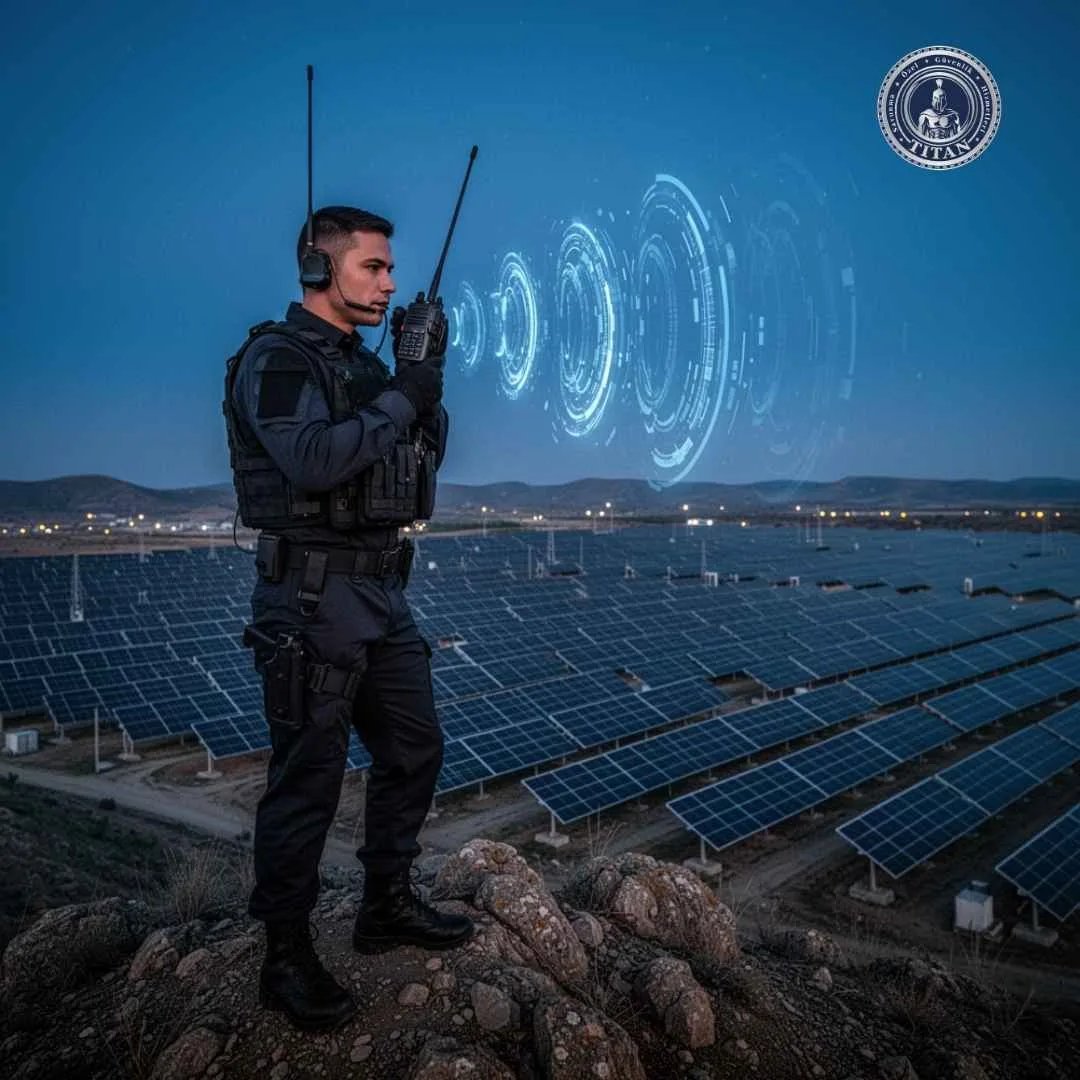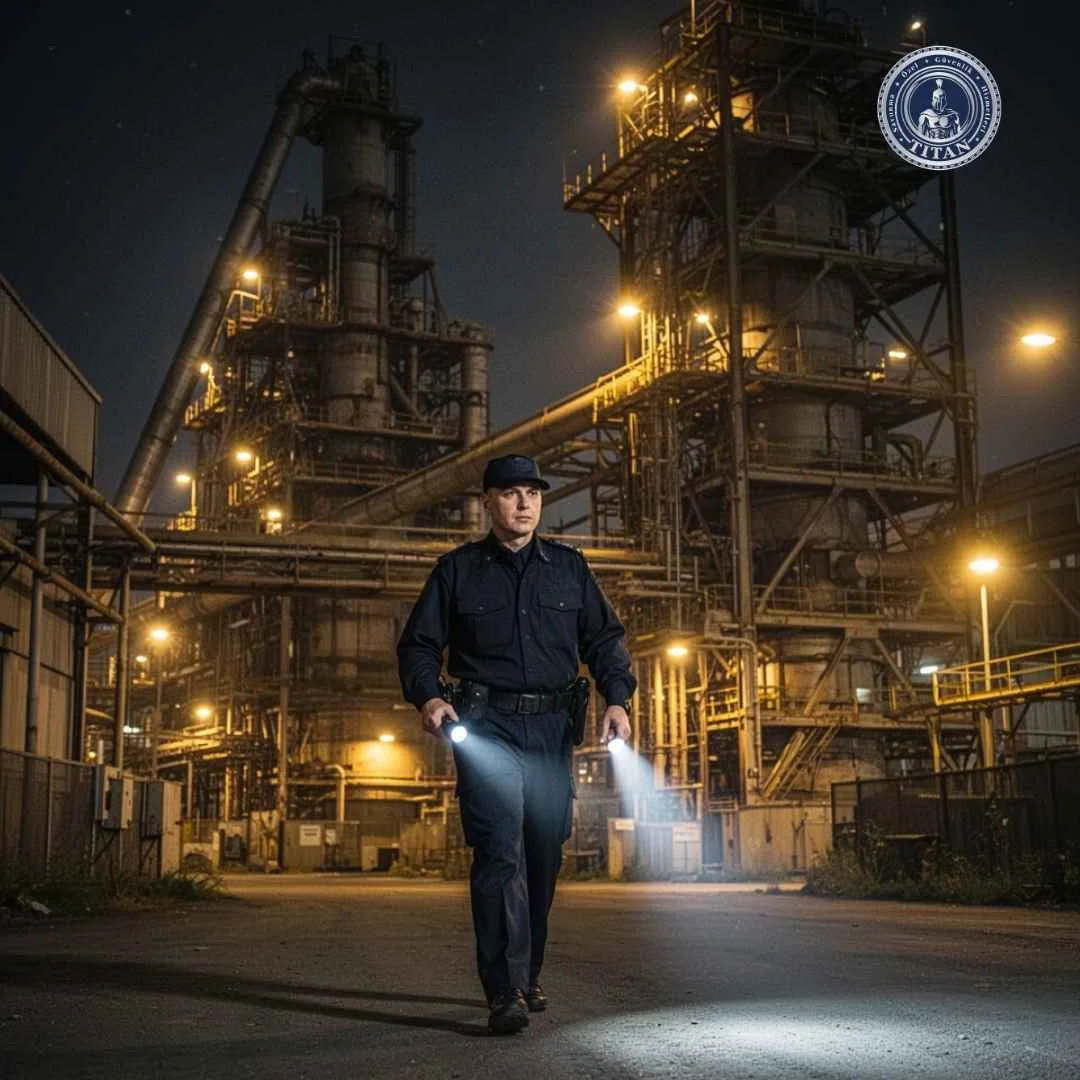
Short answer: In an Erzurum winter, the health and the alertness of an officer at an outdoor post, such as a gate, a barrier, a car park or a perimeter patrol, depend on how the duty is divided up. Instead of one long, unbroken spell outside, the post needs short outdoor stints split by warm-up breaks, layered clothing that stays dry, non-slip footwear, a patrol route redrawn for ice, and a pre-written fallback for cameras and barriers that freeze. All of this belongs in the written post orders before November arrives.
This article is general information, not legal or medical advice. Cold-related health complaints should be taken to the workplace physician or a healthcare provider.
What does Erzurum's winter mean for a duty plan?
Statistics from the Turkish State Meteorological Service for Erzurum, covering 1929–2025, make clear why outdoor posts need a winter plan of their own. The January mean is −9.1 °C, with a mean minimum of −13.9 °C; in February the mean minimum is −12.6 °C. Every month from November to March has a mean minimum below zero. The lowest readings show that winter is not confined to January: −37.2 °C in December, −37.0 °C in February, −34.3 °C in November and −33.2 °C in March. The deepest snow cover on record is 110 cm (23 February 2004) and the strongest wind 30.9 m/s (9 April 2025).
Daylight matters too. The same statistics give a mean of 3.2 hours of sunshine a day in December and 3.4 in January. Sunshine duration measures direct sunlight, so these figures show that short winter days are often overcast. Much of a winter patrol schedule therefore runs in darkness or low light, which raises the importance of lighting, camera images and the state of walking routes.
Security officers are not the only people working outdoors in this climate, but they are often the ones who stand longest in one place. According to the Social Security Institution (SGK) Statistical Yearbook 2025, the investigation and security sector in Erzurum employs 1,591 insured staff at 109 workplaces, while accommodation employs 2,682 at 125 workplaces; by a simple ratio we worked out, accommodation's share of local jobs is about 1.5 times the national figure. The outdoor posts of winter resorts, hotel car parks and entrances that stay busy all season are where a cold-weather plan is tested hardest.
What does the research say?
1. Cold can blunt attention before hypothermia sets in
A systematic review of cold exposure and cognitive performance in healthy adults brought together 18 experimental studies, eight on cold air and ten on cold water. In 15 of them, cold impaired cognitive performance, and the effect appeared even before accidental hypothermia developed. Attention and processing speed, executive function and memory were the most studied and most affected domains. The authors note large differences in temperature, duration and testing between studies, and that sex differences and repeated exposure are still poorly understood (Falla et al., International Journal of Environmental Research and Public Health, 2021). Noticing things is the core of a security officer's job, and a long static post in the cold can weaken exactly that.
2. Hands and feet are the first tools to go
A review of how the hands and feet respond to cold describes a strong vasoconstriction as the first reaction, which impairs tactile sensitivity, manual dexterity and muscle contractile characteristics. It reports modelling of how long finger skin takes to reach pain (15 °C), numbness (7 °C) and frostbite risk (0 °C) on contact with cold materials, and stresses that cold injuries are at least as prevalent in the feet as in the hands (Cheung, Temperature, 2015). Pressing a radio button, turning a barrier's manual release, writing down a number plate or holding a torch all need dexterity. Bare-handed contact with metal handles and door knobs deserves its own line in the winter plan.
3. The body adapts, but adaptation does not replace a routine
A review of human physiological responses to cold lists cutaneous vasoconstriction (which reduces heat loss) and shivering (which raises heat production) as the main acute responses, and explains that body build, sex, fitness and fatigue shape them. For prolonged exposure it describes three patterns of acclimatisation: habituation, metabolic adjustment and insulative adjustment (Castellani and Young, Autonomic Neuroscience, 2016). Our reading is simple: an officer who knows Erzurum winters may be more used to the cold, but that does not mean clothing, breaks or shorter spells can be dropped from the plan.
4. Anti-slip devices can make winter walking safer
An intervention study with healthy adults in northern Sweden, run from February to April 2008, found that people using suitable anti-slip devices walked a statistically significantly longer distance each day; the results, based on participants' own diaries, indicate that this increase could happen without raising the risk of slips and falls. The authors point to the importance of choosing a device by its design and knowing when and where to use it (Berggård and Johansson, Accident Analysis & Prevention, 2010). The study involved everyday pedestrians, not security officers, but it suggests that for a patrol walking icy car parks and ramps for hours, non-slip footwear should be part of the kit list rather than a personal choice.
How to set outdoor spells and warm-up breaks
The Canadian Centre for Occupational Health and Safety's guidance on working in the cold recommends a work-warming regimen for continuous work when the wind chill is at or below −7 °C, and at or below −12 °C calls for constant observation by a supervisor or a buddy system. It also lists heated warming shelters nearby, used at regular intervals, arrangements to minimise long periods of sitting or standing, and an extended break in a warm location at the end of a four-hour period. The University of Toronto's cold stress guidelines name campus safety officers among the groups exposed to cold, and recommend a buddy system because people are not likely to notice their own symptoms.
Applied to a site in Erzurum, these principles become the following routine:
- Outdoor duty alternates with a warm space: rather than spending the whole day at one barrier or car park entrance, the officer rotates between the outdoor post and a heated booth or an indoor point. The shift supervisor shortens the interval according to that day's wind chill.
- No outdoor post left alone: single-officer outdoor posts get regular radio or phone check calls from the supervisor, and the orders state who goes to look, and how quickly, if there is no answer.
- Breaks somewhere genuinely warm: a warm-up break is taken in a heated space with a seat, not a booth with the door open; the officer knocks snow off before going in and swaps wet socks and gloves for spares.
- Time to adjust after leave: new starters and officers back from long leave spend less time outside on the first cold days.
- Separate orders for warning days: on days when the meteorological service warns of strong wind, heavy snow or ice, it is agreed in advance which outdoor posts will be watched from inside by camera for a while.
Clothing and kit: staying dry comes before staying warm
The University of Toronto guidelines state that protective clothing may be needed for work at or below 4 °C and recommend layers: an inner layer that wicks sweat away and an outer layer against wind and wet. As examples, they give gloves below 4 °C for light work and below −7 °C for moderate work, mittens below −17 °C, spare socks, and eye protection kept separate from the nose and mouth so that breath does not fog it. For an outdoor post in Erzurum, the kit list can be summed up as:
- Three layers: a thin wicking base layer, an insulating mid layer and a wind- and snow-proof outer jacket with reflective strips.
- A hat or hood that covers the ears and a neck gaiter, with spare gloves and socks on long shifts.
- Waterproof, lined boots with non-slip soles, plus removable anti-slip devices for icy days.
- Spare radio and torch batteries charged in the booth, since cold can drain them faster.
- A heater, a thermometer and hot drinks in the booth, and insulating covers on barrier and door handles.
How the patrol route changes in icy weather
A patrol route drawn up for summer can lead an officer in winter over the slipperiest ramp, along the darkest back road and across a speed bump or drain cover hidden by snow. The winter route should be walked and redrawn before the first snow:
- Ramps, outside steps and shaded footpaths are marked on the route, with a written alternative for when they ice over.
- Where possible, patrols avoid sections that get no sun and freeze overnight, and use lit, gritted paths instead.
- Clearing snow and gritting are the site's job; the officer records icy spots and obstacles under snow and reports them to the facilities team.
- Fences bending under snow, gates that will not close and perimeter walls that can be climbed via snowdrifts become separate checkpoints on the winter route.
- Patrol times shift with the short winter daylight, and the longest walk is placed in the mildest part of the day where possible.
What happens when cameras and barriers freeze?
Cold strains electronic and mechanical systems as well as people. Frost or snow on a camera lens, a barrier arm weighed down by ice and a card reader or powered gate that stops responding are ordinary faults in an Erzurum winter. The routine for them is simple, but it has to be written in advance:
- The operating temperature range in each outdoor camera's manufacturer data sheet is compared with Erzurum's lowest recorded temperatures, and the need for heated housings is settled before winter.
- At the start of every shift, the control room officer checks each outdoor camera image; a view blocked by snow or frost is reported to the technical team in the same shift and the area gets a temporary patrol.
- The manual opening procedure for barriers and powered gates, where the key is kept and who may use it are written into the orders, and the officer practises it once before winter.
- Everyone knows how long cameras and access control will run on back-up power during a long power cut, and which gates switch to manual control when that time runs out.
Checklist: preparing outdoor posts in Erzurum before winter
| Area | What to do | Why |
|---|---|---|
| Duty pattern | Rotation between outdoor duty and a warm space; interval shortened as wind chill rises. | Cold can impair attention and processing speed. |
| Supervision | Regular radio check calls and a buddy system for single-officer outdoor posts. | People rarely notice their own cold symptoms. |
| Warm-up space | A heated rest point with a seat nearby; an extended break at the end of each period. | Institutional guidance treats heated shelters as a basic control. |
| Clothing | Layers, spare gloves and socks, wet items changed at once. | Wet clothing loses its insulation. |
| Feet | Waterproof non-slip boots and removable anti-slip devices. | In a Swedish study, anti-slip devices were linked to longer winter walks without higher fall risk. |
| Patrol route | Winter route walked and redrawn; icy spots reported to the site. | A summer route can run over the slipperiest ground in winter. |
| Cameras | Image check at the start of each shift; operating temperature range reviewed before winter. | Frost and snow can blank a view unnoticed. |
| Barriers and gates | Manual opening written down and rehearsed; handles insulated. | A frozen powered gate can block passage in an emergency. |
| Emergencies | Security team duties written down for fire, heavy snow and long power cuts. | Winter magnifies ordinary disruptions. |
Common mistakes
- Running summer post orders unchanged through the winter.
- Keeping an officer all night in an unheated booth with its door open to the wind.
- Leaving warm-up breaks to the officer's own judgement, or treating a break as abandoning the post.
- Choosing clothing by thickness alone, and leaving wet gloves and socks on until the end of the shift.
- Answering an icy ramp with "walk carefully" instead of reporting it to the site.
- Leaving a snow-covered camera view until morning, and learning how to open a barrier by hand only at the first fault.
- Keeping cold risk out of the occupational health and safety risk assessment.
A note on practice in Türkiye
Occupational Health and Safety Law No. 6331 requires employers to carry out, or have carried out, a risk assessment (Article 10). In a province like Erzurum, cold, ice and short daylight at outdoor posts are natural headings in that assessment, and writing the winter routine into it and into the post orders also settles who provides what. On a site that buys in security, the split of duties should be agreed from the start: heating the booth, lighting, snow clearing and gritting usually fall to the site, while clothing, kit, the duty pattern and training fall to the security company.
The duties we cover at winter resorts, hotels and entrances that stay busy all season are set out under hotel and tourism security, and the way we work with Erzurum's hospitals, campuses, public buildings and construction sites is described under private security company in Erzurum.
Titan Savunma is an Ankara-based private security company licensed by the Ministry of Interior under Law No. 5188 and certified to ISO 9001, 14001, 45001, 22301 and 28000. We work with international companies in English and Turkish, and our Erzurum City Manager, together with our Eastern Anatolia Regional Directorate, which is also based in Erzurum, and our Ankara General Directorate, inspects your outdoor posts, patrol routes, cameras and barriers in winter conditions and writes the winter routine with you. To arrange a site visit, write to us via our contact page.
Sources and Further Reading
- Falla, M., Micarelli, A., Hüfner, K. & Strapazzon, G. — The Effect of Cold Exposure on Cognitive Performance in Healthy Adults: A Systematic Review, International Journal of Environmental Research and Public Health 18(18):9725 (2021)
- Cheung, S. S. — Responses of the hands and feet to cold exposure, Temperature 2(1):105–120 (2015)
- Castellani, J. W. & Young, A. J. — Human physiological responses to cold exposure: Acute responses and acclimatization to prolonged exposure, Autonomic Neuroscience 196:63–74 (2016)
- Berggård, G. & Johansson, C. — Pedestrians in wintertime: effects of using anti-slip devices, Accident Analysis & Prevention 42(4):1199–1204 (2010)
- CCOHS (Kanada İş Sağlığı ve Güvenliği Merkezi) — Cold Environments: Working in the Cold
- University of Toronto Environmental Health and Safety — Guidelines on Cold Stress: Working in Cold Environments (Ocak 2025)
- Meteoroloji Genel Müdürlüğü — Resmî İstatistikler: Erzurum (1929–2025)
- SGK — İstatistik Yıllığı 2025 (Sigortalı ve İşyeri İstatistikleri, Tablo 1.11)
- 6331 sayılı İş Sağlığı ve Güvenliği Kanunu (md. 10), Mevzuat Bilgi Sistemi