
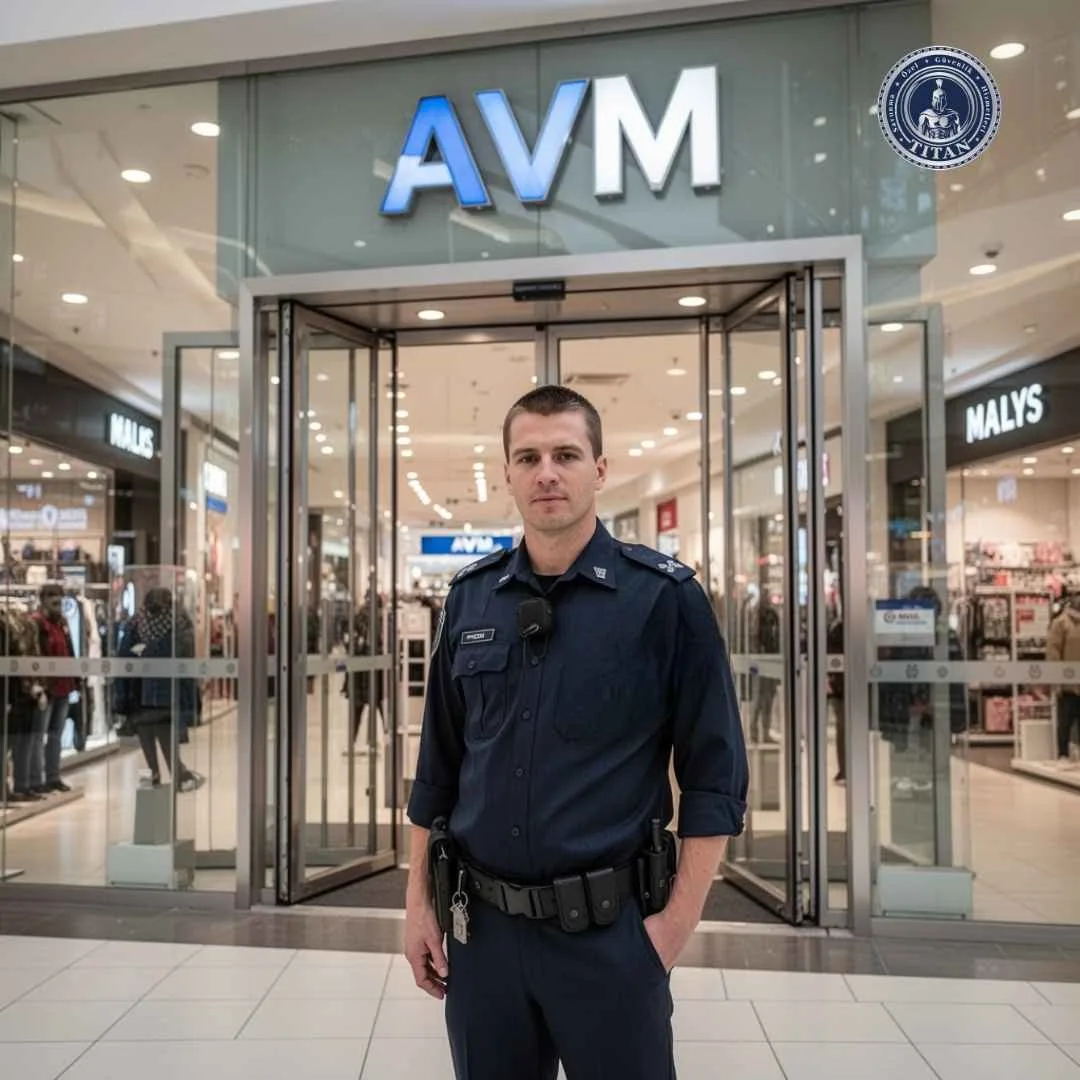
Can an office in Turkey use facial recognition at its entrance? Only in narrow cases, and only if the company can show that a less intrusive method would not do the job. Facial templates are biometric data, a special category under Turkey's data protection law (KVKK), and the Authority's guidance applies a strict suitability, necessity and proportionality test. For a typical office, cards, PINs and a staffed reception usually meet the security aim; biometrics are more defensible for genuinely high-risk areas, limited to the people and doors that need them.
This article is general information, not legal advice. Legal statements below come only from the law text and from the Personal Data Protection Authority's own guide, decisions and announcements.
What the law says: Article 6 of Law No. 6698
Article 6(1) of Law No. 6698 lists biometric data among special categories of personal data. Article 6(3), in the wording introduced by Law No. 7499 in 2024, says processing special categories is prohibited, but allows it where one of the listed conditions applies: (a) explicit consent; (b) express provision in law; (c) protection of life or physical integrity where a person cannot consent; (ç) data made public by the person; (d) necessity for establishing, exercising or protecting a right; (e) health-related purposes by persons under confidentiality or authorised bodies; (f) legal obligations in employment, occupational health and safety, social security, social services and social assistance; and (g) certain non-profit bodies and their members. Article 6(4) adds that adequate measures determined by the Board must be taken. Article 4 applies on top of all this: data must be processed for specific, explicit and legitimate purposes, and be relevant, limited and proportionate.
The definitions are covered in our encyclopedia entries on facial recognition and biometric authentication. Here we focus on how the Authority reasons.
The Authority's three-step proportionality test
The Authority's Guide on Matters to Consider in Processing Biometric Data (KVKK Publications No. 55, March 2025) sets out principles that every controller must apply:
- Suitability: the method must actually help achieve the purpose.
- Necessity: where several means achieve the same aim, the least intrusive must be chosen. The guide states that if an alternative to biometric processing exists, processing biometric data is not necessary and the data cannot be processed.
- Proportionality in the strict sense: the weight of the intrusion must be balanced against the reasons for it.
The guide illustrates the spectrum. A gym can control entry with other tools, while a nuclear power plant requiring a high security level may justify biometrics as the more suitable and necessary method; a laboratory working with dangerous viruses, opened only after fingerprint and iris checks for trained and trusted staff, is offered as a case where the company's legitimate interest can outweigh the individual's wish not to be processed. Between those poles, the controller must state clearly why it processes biometric data and prove that it has to. The guide also says the controller must record and document compliance with all principles, and give reasons for choosing a particular biometric type over others.
What earlier Board decisions show
Two published decision summaries deal directly with biometric entry. Both were made before the 2024 amendment of Article 6, so they should be read for their reasoning on proportionality rather than as a full statement of today's legal grounds.
- Decision 2022/797 (4 August 2022): a factory used facial recognition at entry and exit, arguing that production areas were limited to trained staff. The Board found that less intrusive methods, such as magnetic cards, RFID tags or SMS-based entry, could achieve the same aim, so the processing was excessive. The controller was ordered to stop, delete the data and offer alternative entry methods.
- Decision 2022/662 (7 July 2022): a business controlled subscribers' entry to its service area with a PIN followed by a hand-geometry scan, arguing that hand geometry was ordinary personal data. The Board held that hand geometry used for automated verification is biometric data, pointing to the device's very low stated mismatch probability as evidence, and ordered the controller to stop processing biometric data for entry.
In 2026 the Authority went further for one purpose: its announcement of 27 August 2026 on principle decision 2026/921 confirms that biometric attendance tracking is not lawful even with consent. The same announcement notes that in some security-sensitive sites, such as critical infrastructure, biometrics can be part of multi-layered security, but only for the critical areas and people where needed, where alternatives are insufficient and in proportion to a concrete security need. Other uses, including security access control, are assessed case by case.
Why a face match still needs a person
Even where facial recognition is lawful, it is a probability engine, not a witness. The US National Institute of Standards and Technology tested 189 mostly commercial algorithms in NISTIR 8280 (2019) and found demographic differences in accuracy, with false positive differentials much larger than false negative ones and wide variation between algorithms. Two error types matter at a door: a false reject (the right person is refused) and a false accept (the wrong person is let in). Both need a human answer. The Authority's guide asks for the same: an action plan for when biometric verification fails, and an alternative system, without restriction or extra cost, for people who cannot use the biometric solution or do not consent where consent is the basis.
A layered entry model that usually works better
- Outer layer, reception and visitors: staffed reception, pre-registered visitors, temporary badges and escorts.
- Staff entry: encrypted cards or card plus PIN at turnstiles, with an officer positioned to see the gates and handle exceptions.
- Restricted rooms: stronger authentication for a small group, considered only after documenting why cards and PINs are insufficient; any biometric element limited to those rooms and people, with templates encrypted and not reversible to the original trait, as the guide requires.
- Monitoring and response: alarms from all layers land with a named operator who verifies on camera or by phone and sends an officer.
The technology controls doors and records events. People decide what to do with a rejected employee, an unknown face or a door held open.
When global policy meets Turkish rules
Multinationals often roll out a single entry standard worldwide. If that standard specifies facial recognition, the Turkish office has to reconcile it with local law. A workable approach:
- Ask global security what risk the biometric control actually addresses at this site.
- Run and document the suitability-necessity-proportionality assessment locally, with Turkish counsel.
- Agree a recorded local variation: cards or card plus PIN for general areas, biometrics only where justified.
- Treat any cross-border transfer of templates or logs as a separate legal question for counsel.
- Update privacy notices and train the officers who run the entrance.
Our CCTV privacy self-check helps review the camera side of the same entrance.
Checklist before you sign a purchase order
- Written purpose and risk statement for each door.
- Documented reasons why cards, PINs or staffed checks are insufficient.
- Legal ground under Article 6(3) confirmed by counsel.
- Retention period and destruction method in your retention policy.
- Encryption, access restrictions and testing with synthetic rather than real data, as the guide recommends.
- Fallback procedure and named officer for every failure scenario.
How a professional security partner helps
Titan Savunma is an Ankara-based private security company operating under a Ministry of Interior licence granted under Law 5188, holding ISO 9001, 14001, 45001, 22301 and 28000 certificates, and working with international companies in English and Turkish. We do not sell or install biometric systems. We plan guarding together with your technology: an entrance model where officers verify identity alongside or instead of biometrics, with a single point of contact, written scope and regular reporting. See security for international companies in Turkey.
Sources and Further Reading
- KVKK — Biyometrik Verilerin İşlenmesinde Dikkat Edilmesi Gereken Hususlara İlişkin Rehber (2025)
- Mevzuat Bilgi Sistemi — 6698 sayılı Kişisel Verilerin Korunması Kanunu (güncel metin)
- KVKK — Kurul Karar Özeti 2022/797 (2022)
- KVKK — Kurul Karar Özeti 2022/662 (2022)
- KVKK — 2026/921 sayılı İlke Kararına ilişkin görüş talepleri hakkında kamuoyu duyurusu (2026)
- NIST — NISTIR 8280, Face Recognition Vendor Test Part 3: Demographic Effects (2019)


