
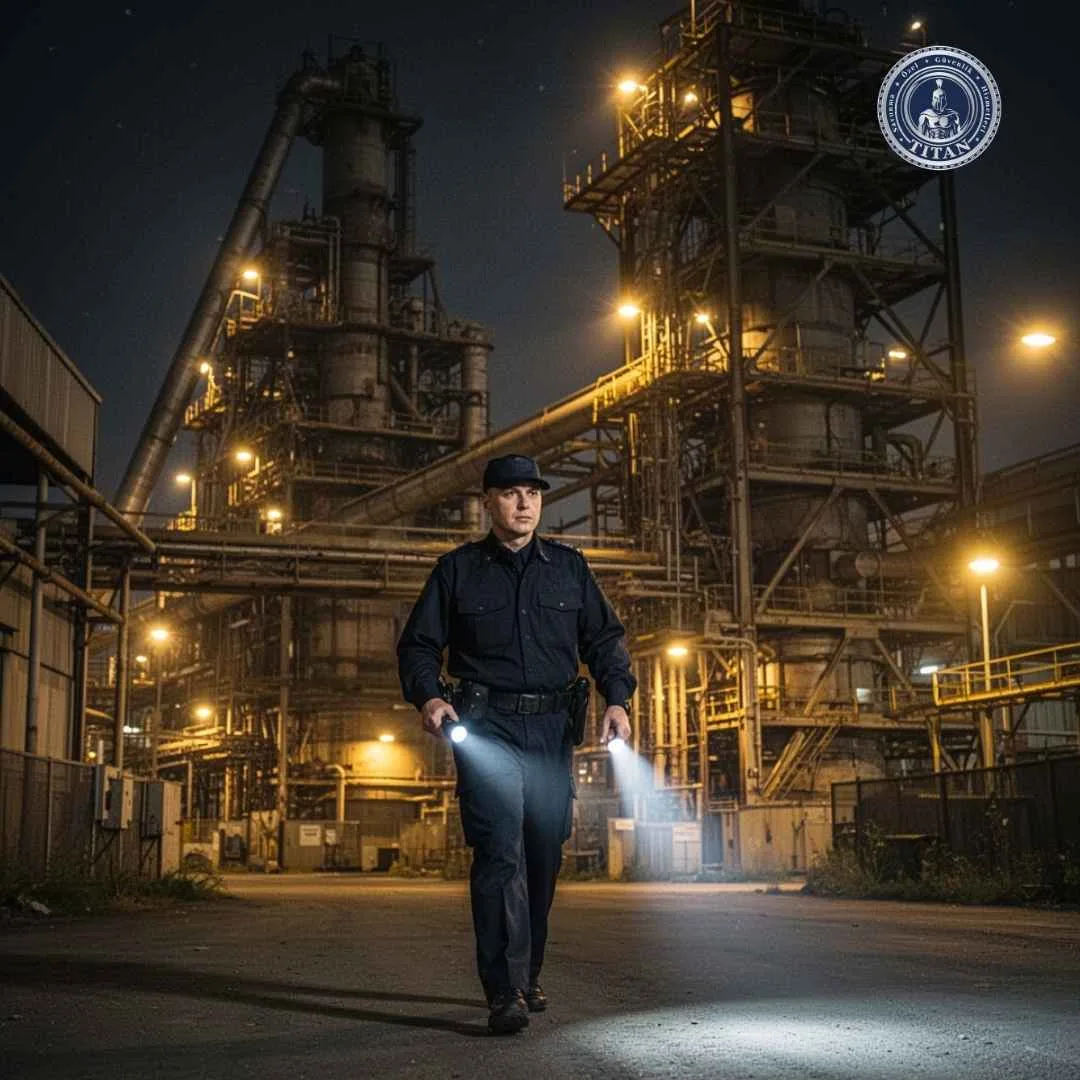
A guard tour system records when a security officer reached each checkpoint on a patrol. Checkpoints carry a touch button, an NFC tag or a QR code, or the system uses location (GPS); when the officer reads the point, its ID and the time are stored on a device or sent to a central server. The record proves that a patrol happened. It does not prove that the patrol was good: reaching a checkpoint is not the same as looking carefully.
This article covers the main system types, what the record shows and what it cannot show, how to design checkpoints and routes, and what to keep in mind about location data. This article is general information, not legal advice. For a short definition, see our encyclopedia entry on guard tour systems.
How a guard tour system works
The old "watchman's clock" mechanically marked that a patrol had passed certain stations. Today's systems apply the same idea electronically and have three parts: checkpoints fixed on site, a reader carried by the officer (a dedicated handheld or a smartphone app), and software that collects the records. Each read stores the checkpoint ID, date and time, and usually the officer's ID. Records are either downloaded at the end of a shift or sent in real time over mobile data.
Main system types
- Touch memory buttons: a small metal button is mounted at the checkpoint and the officer touches it with the reader. Robust, needs no power on site; data is usually uploaded when the reader is docked.
- NFC/RFID tags: the reader or a compatible phone is held near the tag. Easy to install and well suited to apps that add photos and notes.
- QR codes: printed codes read with a phone camera. Quick and easy to deploy, but as printed codes their evidential value on their own is limited, so they need supervisor checks and written findings behind them.
- GPS and location-based patrols: location replaces tags; the system records that the officer entered a defined area. Useful for large open sites, fence lines and vehicle patrols; indoor accuracy can be limited.
| Type | What it records | Strength | Limit |
|---|---|---|---|
| Touch button | The moment the reader touches the point | Durable, simple | Often no real-time view |
| NFC/RFID | The moment the reader is near the tag | Photos and notes can be attached | Depends on phone battery and upkeep |
| QR code | The moment the code is scanned | Fast, easy set-up | Weak evidence on its own |
| GPS/location | Presence in an area and the route | Open areas, vehicle patrols | Limited indoors; location data is sensitive |
What the record proves and what it does not
A tour record shows that a reader was used at a given checkpoint at a given time, in what order the points were read and how long passed between them. That matters: if patrols are skipped or routinely shortened, the data will show it.
What the record does not show matters just as much:
- It does not show that the officer tried the door, noticed damage to the fence or saw the open window.
- It says nothing about the corridor, store room or car park between two checkpoints; the system only knows the points.
- It does not show whether a problem was reported, to whom, and whether it was closed.
- It does not show that the officer was alert and trained.
Good patrol management therefore never reads tour data alone. It reads it alongside supervisor spot checks, the occurrence log and the officer's own findings. Ask your provider for the quality of incident reports, not just a tour compliance figure: "all checkpoints read" is no substitute for "Gate B found open, secured, supervisor informed".
Designing checkpoints and routes
Checkpoints belong where the risks are, not on the most convenient wall. Start with a risk assessment: which door, store, plant room or fence section would cause the most harm if it were compromised? Typical candidates are emergency exits, loading bays, stores of valuable goods, technical rooms, roof access and remote parts of the perimeter.
- Give every checkpoint a task. A checkpoint exists to check something: is the door closed and locked, are the lights working, is the fire cabinet clear? Many systems can prompt a short question or a photo at the read; those prompts should match the post orders.
- Place the tag next to what must be checked. If the tag is far from the door, it can be read without seeing the door.
- Do not overdo the number of points. Too many turn a patrol into tag collecting, and attention shifts from looking to scanning.
- Separate day and night routes. The risks of an occupied building differ from those of an empty one.
- Review the points regularly. A new store, a closed door or a recent incident should change the route.
The random patrol principle: what research says
The best-known evidence on when patrols deter comes from policing research. In Sherman and Weisburd's Minneapolis experiment, published in 1995, 110 small crime hot spots were randomly split into two groups; the experimental group received about twice as much observed patrol presence as the control group. According to the published abstract, total crime calls fell by between 6 and 13 percent and observed disorder in the experimental spots was half that of the control spots. The U.S. National Institute of Justice's CrimeSolutions summary also notes that police presence was intermittent rather than constant.
These findings come from public policing and cannot be transferred one to one to a private site. Two lessons still carry over. First, patrols make most sense when they focus on where risk concentrates. Second, presence does not have to be constant; what matters is that it cannot be predicted. A tour run at the same time and in the same order every night becomes a timetable for anyone watching the site. The random patrol principle does not mean wandering at will: every critical point is still covered each shift, while start times, order and repetitions vary. The software should not force a fixed route and fixed times, and supervisors should be able to plan that variation and see it in the data.
Who watches, who verifies, who goes?
The system shows that a point was missed or a tour is late; people decide what that means. Post orders should answer:
- If there is live monitoring, who watches it: an on-site control room, the provider's operations centre or the shift supervisor?
- If a point is not read on time, what is the first step: radio the officer, or send a second officer?
- If the officer cannot be reached, who goes, who is informed and when are the police called?
- How is a problem found on patrol recorded, and who closes it?
Technology records and alerts; trained people verify, decide and go to the scene. The real value of tour data is that it shows whether this chain works.
A note on location data in Turkey
GPS-based systems and phone apps record the officer's location. Turkey's Personal Data Protection Law No. 6698 defines personal data as any information relating to an identified or identifiable natural person, which covers the location history of a named officer. Article 4 requires processing for specified, explicit and legitimate purposes and in a way that is relevant, limited and proportionate to those purposes; Article 10 requires informing the people concerned about, among other things, the identity of the data controller, the purpose and the legal basis. In practice this means keeping location records tied to the patrol purpose and to working time, explaining them to officers in writing and limiting access to authorised staff. Employee location tracking deserves its own article; for the basics see our KVKK encyclopedia entry.
Checklist and common mistakes
- Were checkpoints chosen from a risk assessment, and does each one have a task?
- Do routes and times vary while every critical point is covered each shift?
- Is there a written escalation step for a missed checkpoint?
- Is tour data reviewed together with the occurrence log and supervisor checks?
- Who is responsible for tags, readers, phones and charging?
- Is location data limited to its purpose, and have officers been informed?
The most common mistake is to treat 100 percent tour compliance as patrol success. Others: tags placed away from what should be checked, the same order at the same time every night, nobody following up a missed point, and reports that are nothing more than read counts. You can put these questions to providers systematically with our security provider scorecard.
Planning patrols together
Titan Savunma is an Ankara-based private security company operating under a Ministry of Interior licence issued under Law 5188, certified to ISO 9001, 14001, 45001, 22301 and 28000, and working with international companies in English and Turkish. We plan guarding together with your technology: a monitoring, verification and response plan that sets checkpoints by risk, keeps routes unpredictable and writes down who does what when a point is missed. See our manned guarding page for details.
Sources and Further Reading
- Justice Quarterly — Sherman & Weisburd, General Deterrent Effects of Police Patrol in Crime "Hot Spots": A Randomized, Controlled Trial (1995)
- NCJRS / U.S. Office of Justice Programs — Abstract of Sherman & Weisburd (1995), NCJ 167663
- CrimeSolutions (U.S. National Institute of Justice) — Minneapolis (MN) Hot Spots Experiment
- mevzuat.gov.tr — 6698 sayılı Kişisel Verilerin Korunması Kanunu


