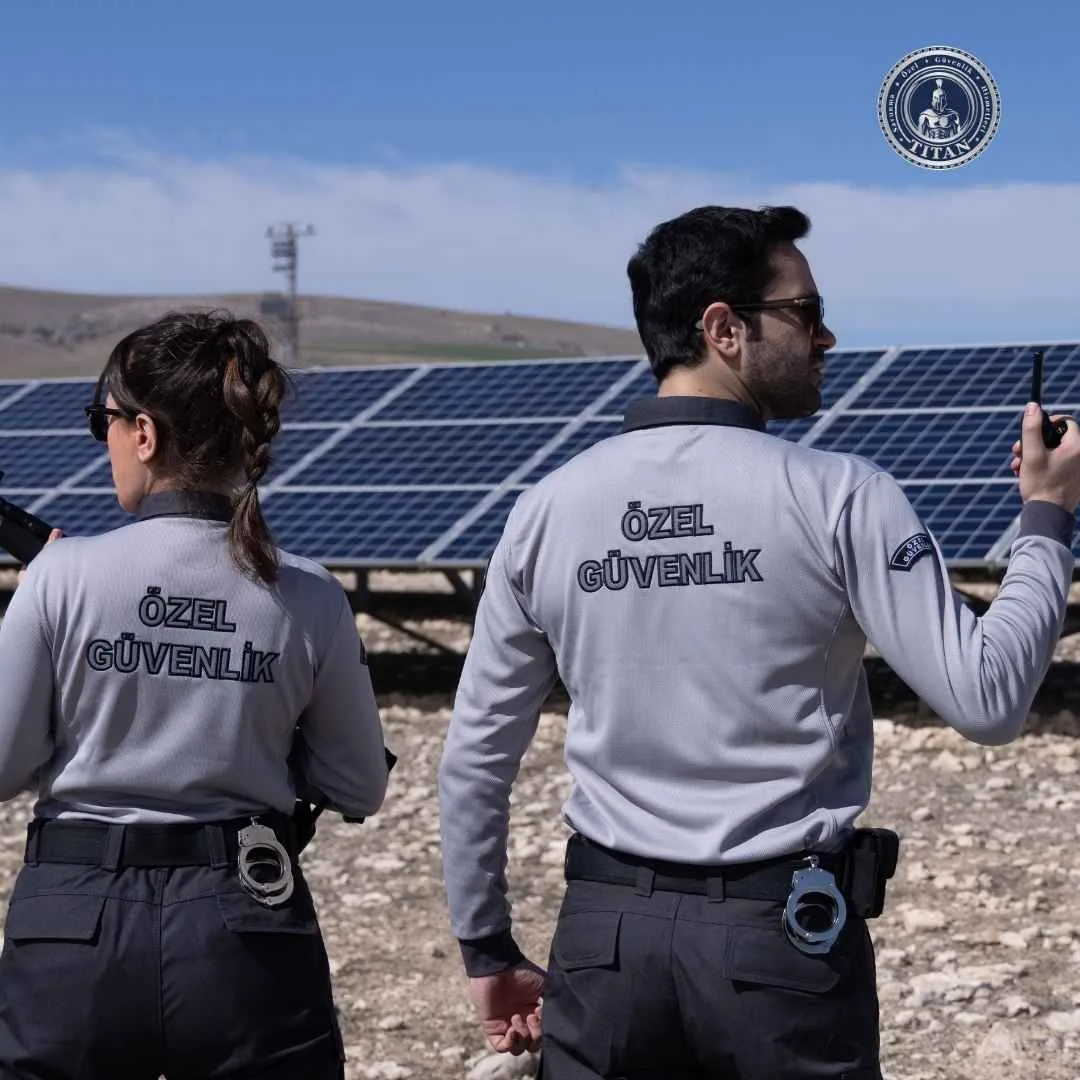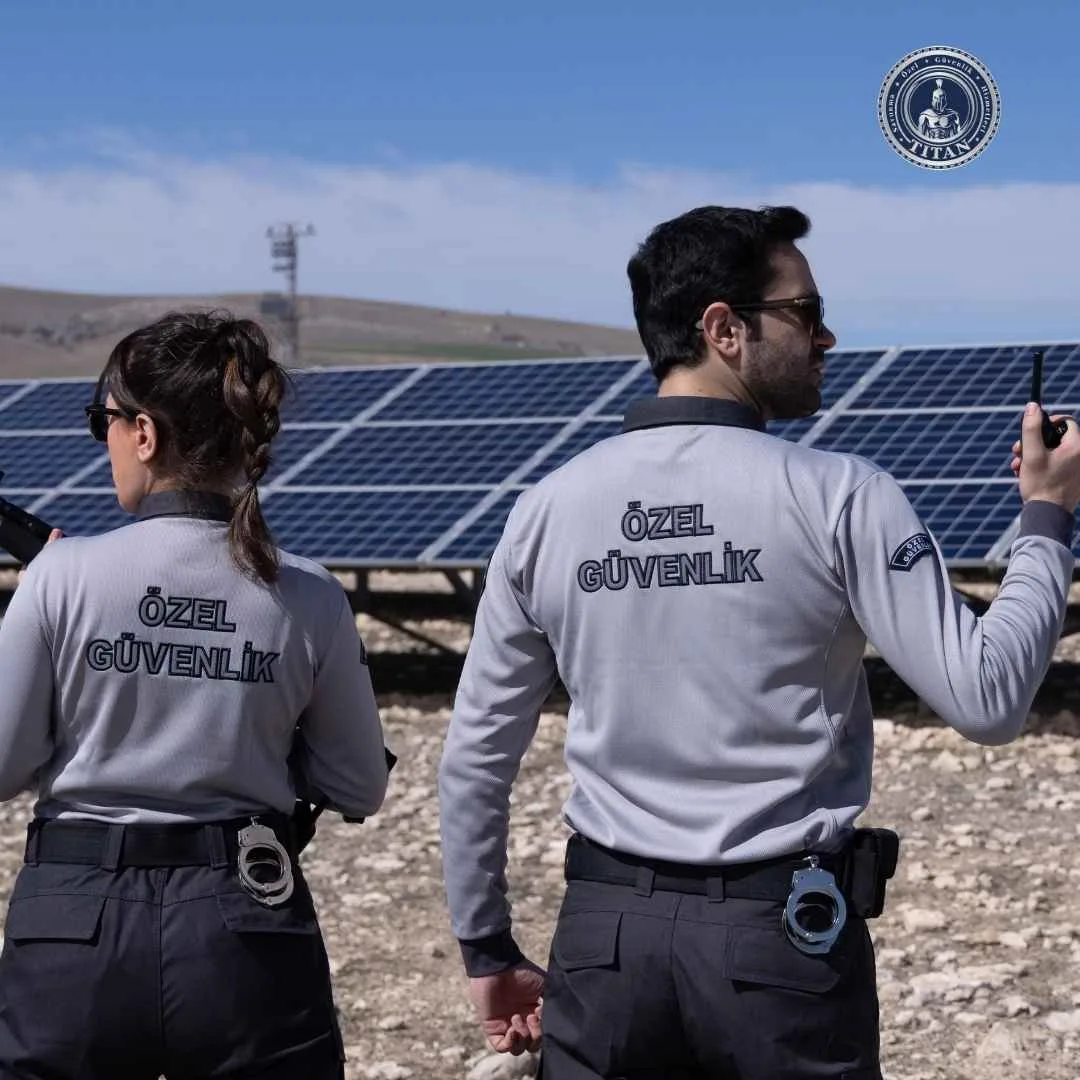
If a solar or wind project in Turkey is financed by a development bank, or by a group of lenders that uses development bank standards, its security arrangements have to satisfy two sets of rules at once: Turkish private security law (Law No. 5188) and the environmental and social conditions written into the loan agreement. Lenders' technical and social advisers tend to ask the same questions on site visits. Has the security risk been assessed in writing? How were the guards selected and vetted? What are the rules on use of force? Where can local residents take a complaint about security, and how are incidents investigated?
The short answer is that most of these requirements can be met within the framework of Law No. 5188, provided the security contract, post orders and record keeping are written with them in mind from the start. This article sets IFC Performance Standard 4, the EBRD's health, safety and security requirement and the Voluntary Principles side by side with the Turkish rules that actually govern guards on site.
This article is general information, not legal advice.
What IFC Performance Standard 4 says about security personnel
The 2012 IFC Performance Standard 4 (Community Health, Safety and Security) deals with security personnel in paragraphs 12 to 14. Under paragraph 12, when a client uses direct or contracted workers to protect its people and property, it is expected to:
- assess the risks its security arrangements pose to people inside and outside the site;
- be guided by proportionality, good international practice and applicable law in hiring, rules of conduct, training, equipping and monitoring;
- make reasonable inquiries to ensure the people providing security have not been implicated in past abuses;
- train them adequately in the use of force (and firearms, where relevant) and in appropriate conduct towards workers and communities, and require them to act within the applicable law;
- sanction force only for preventive and defensive purposes, in proportion to the nature and extent of the threat;
- provide a grievance mechanism through which communities can raise concerns about security arrangements and the conduct of security staff.
Paragraph 13 covers government security forces deployed to a project, and paragraph 14 requires the client to consider and, where appropriate, investigate allegations of unlawful or abusive acts, act to prevent recurrence and report unlawful and abusive acts to public authorities. The footnote points to the UN Code of Conduct for Law Enforcement Officials and the UN Basic Principles on the Use of Force and Firearms. For implementation, IFC's 2017 Good Practice Handbook on the Use of Security Forces includes annexes such as a template contract with a private security provider, an incident report summary template and guidance on drafting a security management plan.
EBRD: from PR4 to ESR 4
In its October 2024 Environmental and Social Policy, the EBRD renamed its "Performance Requirements" as "Environmental and Social Requirements" (ESRs). Older loans refer to PR4; newer projects refer to ESR 4. Paragraphs 49 to 54 of ESR 4 follow the IFC approach and spell out several points explicitly:
- the risk assessment of security arrangements covers gender-based discrimination, violence and harassment, and child sexual abuse and exploitation;
- the client makes clear that retaliation against people by security contractors will not be tolerated;
- security services are not used to restrict freedom of association, and force is not sanctioned to intervene in labour disputes, including work stoppages;
- an effective grievance mechanism for communities and workers is established and publicised;
- allegations of unlawful or abusive acts are investigated and, where necessary, reported to public authorities and to the EBRD.
What the Voluntary Principles add to the contract
The Voluntary Principles on Security and Human Rights, launched in 2000 by governments, companies and NGOs, are not binding, but many lenders' advisers use them as a good-practice benchmark. Their section on private security is particularly useful for contract drafting. Where appropriate, companies should write the principles into agreements with security providers, record all allegations of abuse, keep the right to terminate where there is credible evidence of unlawful or abusive behaviour, review a provider's background with regard to excessive force, and make sure medical aid is provided to anyone injured where force has been used.
What lenders' advisers typically ask to see
The depth of review depends on the project's risk; the IFC handbook itself says effort should be commensurate with the level of security risk. For a solar or wind farm in Turkey, a typical evidence pack looks like this:
- Security risk assessment: theft, sabotage, trespass and community relations, plus the effect of the security arrangements on neighbours.
- Security management plan: roles, access control and patrol arrangements, incident management, liaison with the gendarmerie or police.
- Contractor selection and vetting: the provider's operating licence, guards' work permits and ID cards, and any additional screening.
- Code of conduct and use-of-force policy: in Turkish, short enough to be used on post, and signed by each guard.
- Training records: the statutory basic and refresher training, plus human rights, community interaction and how to route complaints.
- Incident records: reports, notifications to law enforcement and corrective actions.
- Grievance records: evidence that security-related complaints are logged and answered.
How the requirements map to a Law 5188 contract
In Turkey, a site may use private security only with a permit from the governor (vali), issued on the decision of the provincial private security commission (özel güvenlik komisyonu). Guards need a work permit and ID card issued by the governorship (valilik). The table maps lender requirements to Law No. 5188 and its Implementing Regulation (Uygulama Yönetmeliği); where Turkish law is silent, the contract fills the gap.
| Lender requirement | Turkish legal counterpart | What the contract should say |
|---|---|---|
| Vetting | Conditions in Article 10; under Article 11 the governorship runs a security investigation and archive check before issuing a work permit | Only guards with a valid work permit and ID card are deployed; the guard list is shared with the client |
| Use of force | Article 7(k) ties use of force to specific provisions of the Civil, Obligations and Criminal Codes; Article 9 requires incidents involving force or apprehension to be reported to the police or gendarmerie by the fastest means | Defensive, proportionate force only; a written report and a law enforcement notification for every such incident |
| Equipment and weapons | Article 8: the commission decides the number and type of firearms; weapons and equipment are supplied by the client | A record showing that the armed or unarmed decision follows the risk assessment |
| Area of duty | Article 9: guards' powers apply only while on duty and within their area of duty | The area of duty shown on a map; outside it, guards observe and report only |
| Permit and scope | Article 3: governor's permit on the commission's decision; Regulation Article 10: a written contract stating scope, number of personnel and duration, with a copy filed with the governorship on the day service starts | An annex referring to the loan's security conditions; who updates the permit when scope changes |
| Security plan | Regulation Article 12: a protection and security plan prepared within thirty days of the start of service | One plan that also meets the lender's security management plan requirements |
| Grievances and allegations | No specific provision | The provider's duty to cooperate with the project grievance mechanism, supply records and apply discipline |
Practical clauses to add
- Attach the security-related part of the loan's environmental and social conditions as a contract annex.
- State that the code of conduct and use-of-force instruction are limited to the powers in Law No. 5188.
- Define the content, deadline and language of incident reports, including an English summary for the lender's adviser.
- Oblige the provider to supply information when a complaint is received, and prohibit retaliation against complainants.
- Give the client the right to remove personnel or terminate where there is credible evidence of abuse.
- Set out what the lender's adviser may see on site visits, within Turkish personal data protection rules (KVKK).
Common mistakes
The most frequent mistake is translating a head-office security policy into Turkish and issuing it on site unchanged. A word such as "detain" may not match the limits of the apprehension powers Turkish law gives private guards. A second is extending patrols onto village roads or pasture beyond the site boundary; Article 9 limits guards' powers to their area of duty. A third is making the guard at the gate the only route for complaints, when many complaints will be about security itself. The last is missing records: without training, incident and grievance records, an adviser cannot verify even good practice.
Our pages on solar power plant security and security for international companies in Turkey may help when you define scope.
About Titan Savunma
Titan Savunma is an Ankara-based private security company holding an operating licence from the Ministry of Interior under Law No. 5188. It holds ISO 9001, 14001, 45001, 22301 and 28000 certificates, works with international companies in English and Turkish, and plans services for sites in different provinces of Turkey with a single point of contact, written scope and regular reporting. See our private security services in Turkey page for more.
Sources and Further Reading
- Performance Standard 4: Community Health, Safety and Security (2012), IFC
- Good Practice Handbook: Use of Security Forces (2017), IFC
- Environmental and Social Policy 2024, ESR 4 Health, safety and security, EBRD
- Voluntary Principles on Security and Human Rights, Voluntary Principles Initiative
- 5188 sayılı Özel Güvenlik Hizmetlerine Dair Kanun, Mevzuat Bilgi Sistemi