In a crisis, a contracted security team's job is not to manage the crisis. It is to give the crisis team three things it needs in order to decide: verified first information, a controlled site, and steady liaison with the police and emergency services. ISO 22361:2022 frames crisis management as a strategic capability of top management. Within that frame, the security team is the crisis team's eyes and ears, not its spokesperson, decision-maker or investigator.
This framework explains the structure of ISO 22361, shows how a crisis team is put together, and sets out what a security team contributes and where its limits lie under Turkish law. How business continuity plans under ISO 22301 should be reflected in guarding contracts is a separate topic and is not repeated here.
Incident, emergency, crisis: why the difference matters
The three terms are often confused, and the confusion leads the wrong people to take the wrong decisions:
- Incident: a limited event managed with routine procedures, such as an attempted unauthorised entry or a minor theft.
- Emergency: an event that immediately threatens life or property and is handled with prepared plans, such as a fire, a gas leak or an evacuation after an earthquake. In Turkey the employer's duties to prepare emergency plans and arrange evacuation are set out in Articles 11 and 12 of the Occupational Health and Safety Law No. 6331.
- Crisis: a situation that threatens the company's reputation, operations or existence, with high uncertainty, where prepared procedures are not enough and top management must take strategic decisions. An emergency can become a crisis; a crisis can also begin with no physical emergency at all.
The security team's task is to run the planned response at incident and emergency level, and to notice early, and report, when a situation is approaching the crisis threshold.
What ISO 22361 recommends
ISO 22361:2022, Security and resilience: Crisis management: Guidelines, was published in 2022. According to the ISO's own summary of the standard, it gives guidance to help organisations plan, establish, maintain, review and continually improve a strategic crisis management capability and is aimed at top management with strategic responsibility. Its main topics are:
- Context, core concepts, principles and challenges
- Developing an organisation's crisis management capability
- Crisis leadership
- Decision-making in a crisis team
- Crisis communication
- Training, validation and learning from crises
The standard acknowledges its relationship and interdependencies with other disciplines while remaining distinct from them. That distinction matters for the security team: emergency response and site security are inputs to crisis management, not substitutes for it.
The academic literature makes the same point. In The Politics of Crisis Management (Cambridge University Press), Boin, 't Hart, Stern and Sundelius identify the tasks of crisis leadership as sense making, decision making and coordinating, meaning making, ending the crisis, and learning. The security team's biggest contribution is to the first task: helping the crisis team understand quickly and accurately what is happening.
Putting the crisis team together
A crisis team should be small, empowered and designated in advance. A typical structure:
- Crisis team lead: the general manager or a delegated senior executive, with final decision authority.
- Operations: keeping the affected activity running or restarting it.
- Legal and compliance: notification duties, correspondence with authorities, contractual consequences.
- Communications: one voice for staff, customers, media and the public.
- Human resources: matters concerning employees and their families.
- IT: status of systems and data.
- Security lead: the company's own security manager; the contracted security company's project manager joins as an adviser and information source reporting to that person.
- Log keeper: records decisions, reasons and times in a single log.
The right model is for the contracted security company to attend as an invited adviser rather than a member. Decision authority stays with the company, while the security provider gives the team direct access to site information. For an international group, it also helps to agree in advance which decisions the Turkish entity takes locally and which need regional or global sign-off, so that the security team is never waiting for an approval nobody has the authority to give.
What the security team contributes, and its limits
The security team's contribution in a crisis falls under four headings:
- First information: what happened, where, when, who is affected, what has been verified and what has not. Separating verified from unverified information matters as much as speed.
- Site control: controlling entry and exit, cordoning the affected area, protecting areas that may hold evidence, guiding emergency services.
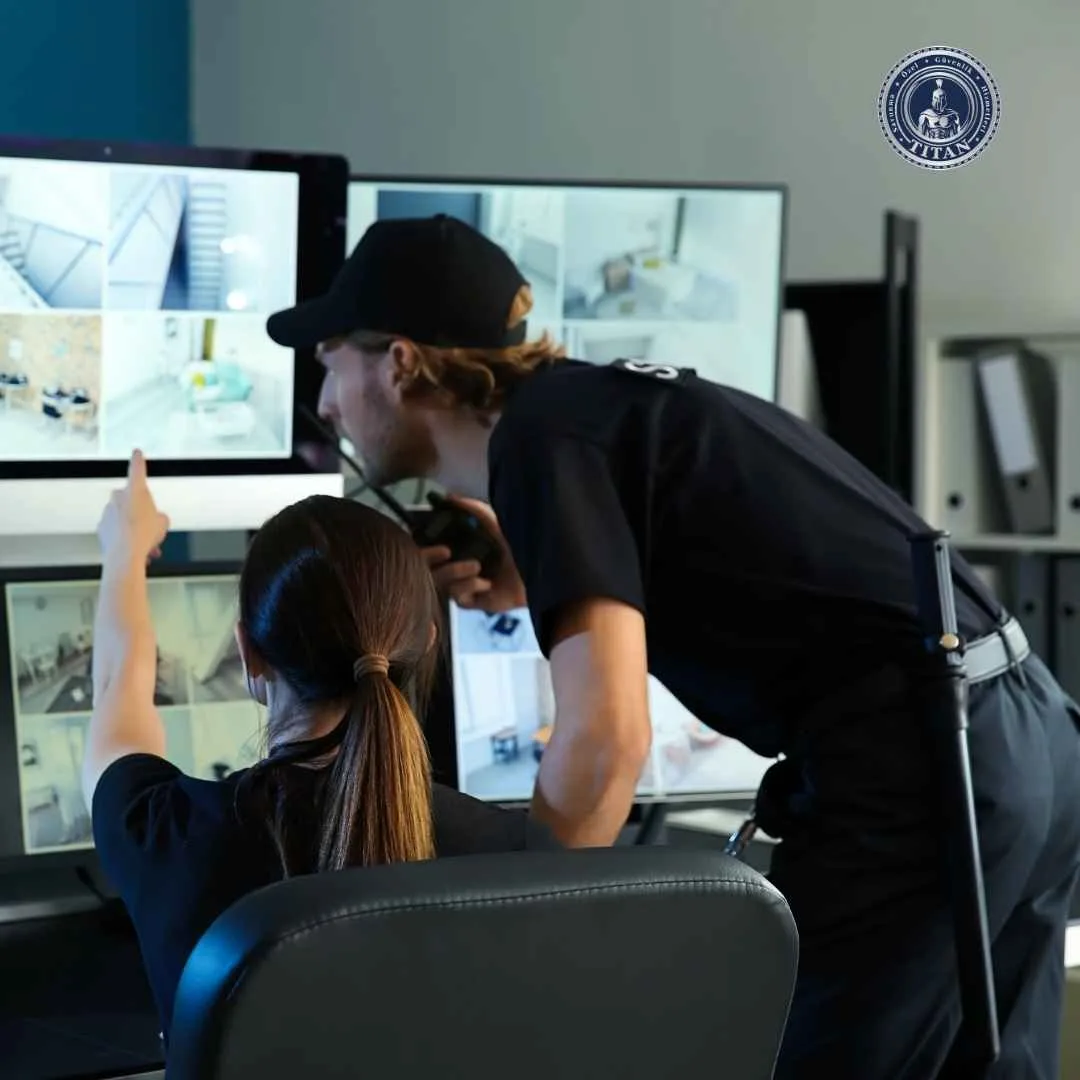
- Liaison: on-site coordination with the 112 emergency call centre, police or gendarmerie (jandarma), fire brigade and, where relevant, AFAD, Turkey's Disaster and Emergency Management Presidency. The company's formal correspondence stays with the legal function.
- Records: the occurrence log, entry and exit records and lawful preservation of footage.
The limits must be just as clear. The Private Security Services Law No. 5188 defines private security as complementary to public security (Art. 1). Where provincial authorities use their powers for public security, the private security unit and staff must follow the orders of the civil administrator and the general law enforcement chief (Art. 6). Guards' powers are listed in Article 7; they include, for example, entering workplaces and homes within their area of duty in fires, earthquakes and similar disasters or when help is called for. A crisis plan should therefore not assign the security team investigations that belong to the police or powers the law does not list. The security team does not brief the media, does not comment on the crisis to staff and does not make official statements for the company.
Information management and communication
The most common problem in a crisis is not missing information but contradictory information. A security team can reduce it with three simple rules:
- One channel: information flows from site to crisis team through one person; guards do not call managers or crisis team members directly.
- Fixed format: every situation report uses the same headings: time, location, status, people affected, measures taken, unverified information, time of next report.
- Set rhythm: in the first hours, situation reports go out at pre-agreed intervals, including "no change" reports.
External communication belongs entirely to the communications function. The security team's role is to make sure the information it uses is correct. For bilingual organisations, agree in advance which language situation reports are written in, so that nothing is lost in translation between the site and a foreign head office.
Exercises and learning
ISO 22361 treats training, validation and learning as a topic of its own. In practice that means at least one tabletop exercise a year and a site exercise that includes the security team. The exercise should test whether the contracted team can answer these questions: how quickly did the first report arrive? Did it separate verified from unverified information? Was the handover to the police smooth? For the questions to ask afterwards, see our article on questions after a security tabletop exercise.
Checklist: is the security team crisis-ready?
- Are crisis thresholds and the notification chain written down, and do security supervisors know them?
- Is it clear through whom the contracted security company connects to the crisis team?
- Is the situation report format ready and has it been used in an exercise?
- Does the plan include handover steps to the police and emergency services?
- Is it written down what the security team does when approached by media or on social media?
- Is someone responsible for preserving the occurrence log and footage?
- Have the findings of the last exercise been closed?
Titan Savunma is an Ankara-based private security company with an operating licence from the Ministry of Interior under Law No. 5188 and ISO 22301 business continuity certification. We plan services for sites in different provinces with a single point of contact, written scope and regular reporting, in English and Turkish. See our critical infrastructure security, office and business centre security and private security services in Turkey pages.
Sources and Further Reading
- ISO — ISO 22361:2022 Security and resilience — Crisis management — Guidelines, standard page and abstract (2022)
- Boin, 't Hart, Stern & Sundelius — The Politics of Crisis Management: Public Leadership under Pressure, 2nd ed., Cambridge University Press (2016)
- T.C. Mevzuat Bilgi Sistemi — 5188 sayılı Özel Güvenlik Hizmetlerine Dair Kanun (m. 1, 6, 7)
- T.C. Mevzuat Bilgi Sistemi — 6331 sayılı İş Sağlığı ve Güvenliği Kanunu (m. 11, 12)