This article is general information, not legal advice.
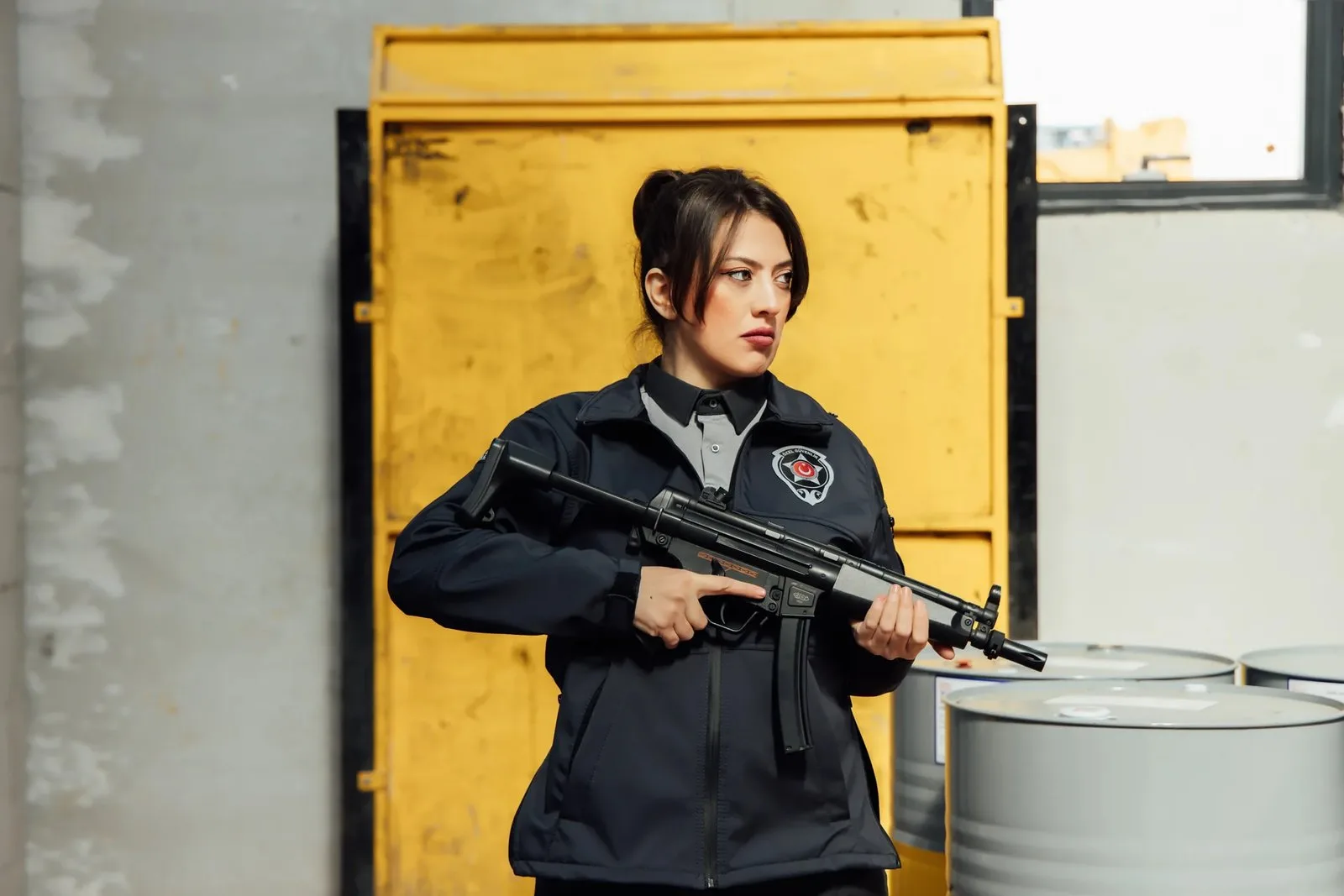
Short answer: In a porcelain or tile showroom in Kütahya, loss rarely comes from one large theft. It builds up from small leaks: a small bowl slipped into a pocket while a tour group fills the floor, a vase knocked off a shelf and never recorded, a set paid for at the till but never packed, a carton sent from the stockroom that never reached the shelf. The way to manage it is to treat three places as one system: the sales floor, the till and packing desk, and the stockroom behind the shop. A security officer does not sell, count stock or carry boxes; the officer stays visible on the floor, helps manage peaks, watches the stockroom door and the hand-over point, and records and reports anything unusual to the store manager.
Why the point of sale is a separate question in Kütahya
Kütahya's industry grows out of its clay. According to the Turkish Social Security Institution (SGK) Statistical Yearbook 2025, the province has 10,847 compulsorily insured employees in 337 workplaces in the manufacture of other non-metallic mineral products, a class that also covers porcelain, tiles and ceramics. By our calculation from the same data, this class's share of local employment is about 8.6 times the Turkish average, and Kütahya ranks third in the country by headcount in it. Factory security is a different subject; this article looks at where production meets the customer: factory outlets, showrooms and tile shops in the town centre.
Retail in the province is made up of small units. The same table lists 8,204 insured employees in 2,554 retail workplaces, a little over three people per workplace on average (our calculation). A porcelain shop often looks like this: two or three sales staff, one till and a narrow stockroom at the back. There is no separate loss prevention team; the person selling also explains the product, packs it, takes payment and keeps an eye on the door.
The product shapes the risk. Porcelain and hand-painted tiles are fragile and valuable, small pieces fit easily into a bag, and an unbranded piece can be resold elsewhere without difficulty. So loss here is not only theft: breakage, wrong packing, missing or wrong entries at the till, and stock that loses its trail between the stockroom and the floor all land on the same line.
Where loss comes from: four sources
- Customer theft on the floor: small, valuable items on open display, such as cups from tea sets, small bowls, miniature tile pieces and hand-painted objects.
- Breakage and damage: narrow aisles, rucksacks, crowds and overfilled shelves, plus damaged pieces left in a corner without being recorded.
- Till and packing routines: paid items handed over unpacked or short-packed, returns and exchanges not recorded, discounts and hand-overs done by hand at busy moments.
- Flow between stockroom and floor: deliveries from the factory or central store accepted without a count, a back door left open all day, courier orders waiting on the sales floor.
Each source needs its own control. A camera alone will not solve all four; door and floor layout, a till rule and a stockroom record have to be set up together.
What does the research say?
Some of the strongest evidence on in-store loss prevention comes from field experiments in US retail chains. None of these studies was run in a porcelain shop, but they speak directly to the problem of small, valuable, easily carried goods.
- Visible measures affect theft opportunities. A randomised controlled trial by Hayes and Downs in Security Journal (2011) tested three situational measures across 47 stores: in-aisle CCTV domes, in-aisle public view monitors and clear protective containers. The authors report positive evidence that all three affected existing theft opportunities and worked in real store conditions. The abstract gives no effect sizes, so we do not quote any here.
- A handling routine can work as well as a fixture. A trial by Hayes, Downs and Blackwood in the Journal of Experimental Criminology (2012) followed a high-loss product line in stores of a pharmacy chain in the north-eastern United States. According to the US Department of Justice's CrimeSolutions profile, stores using a "special protective handling" routine (a named leader, secure totes for delivery, moving stock to the shelf rather than holding it in the back room, keeping on-shelf quantities in line with the sales rate, and a weekly shelf count) cut loss of the tracked product (premium razor blade packs) by 58 per cent compared with control stores; in the same trial, protective display fixtures cut loss by 56 per cent. The article's abstract notes that the small sample came from a single retailer, which limits generalisation; according to the profile, the post-test lasted eight weeks. The practical lesson: few items on the shelf, a clean stockroom record and a named owner can do as much as expensive hardware.
- CCTV works better alongside other measures. The 40-year systematic review by Piza, Welsh, Farrington and Thomas in Criminology & Public Policy (2019) associates CCTV with a significant but modest fall in crime, with larger effects for actively monitored systems and for schemes that combine cameras with multiple other interventions rather than one or none. The authors advise against using CCTV as a stand-alone measure.
- Store design deters novices more. Carmel-Gilfilen's study in Security Journal (2013) used verbal protocols with 42 expert and novice shoplifters. According to its abstract, the physical environment has the potential to deter shoplifting, especially among novices, but the two groups differed markedly in how they perceived security techniques and design practices. There is no single "right" layout; it should be tuned to the shop's own loss records.
- Peak hours and disengaged staff create openings. In interviews reported by University of Florida News (2016), offenders said they favour times when a shop is too busy for staff to notice theft, and that an employee who makes eye contact and starts a conversation often spoils their plan. This is a news report, not a peer-reviewed finding, but it points the same way as the trials.
When the tour coach arrives: managing the peak
In sales points that host tour groups, visitors often arrive in waves. A coachload of people enters within minutes, wants to finish shopping quickly and heads for the till at the same time. Staff are pulled between explaining, packing and taking payment, and some corners of the floor drop out of anyone's line of sight. That is exactly the opening the research above describes. We suggest treating each peak as a planned event:
- Advance notice: where possible, get the group's arrival time and approximate size ahead of time, and decide on extra staff and the officer's position on the floor for that slot.
- Welcome and bags: offer a short welcome at the entrance and a place to leave large rucksacks and shopping bags. This cuts both theft opportunities and breakage.
- Zones: split the floor into zones, each within one staff member's view. Move small, valuable pieces into clear-sighted cabinets near the till, with one named person holding the cabinet key.
- Visible, friendly presence: the officer does not stand frozen at the door; the officer walks the floor, gives directions and makes eye contact. The aim is not to treat anyone as a suspect but to keep the space orderly for everyone.
- Till queue: open a second packing point at peak times, and complete payment and hand-over at the same desk, in front of the same employee.
- Departure: once the group has left, do a quick visual sweep of the floor and note any empty spaces, moved items or breakages straight away.
Tracking the product between till and stockroom
The loss people talk about least in showrooms is stock that disappears while moving inside the shop. Selling a piece on the floor, taking it out of the stockroom, packing it and handing it to the customer or courier are separate moments, and each is a change of hands.
- Goods in: cartons from the factory or central store are counted against the delivery note on receipt; missing or broken items are reported in writing the same day. The officer does not do the count but watches the receiving area and the door.
- Stockroom door: the back door is not left open all day, and entries and exits are recorded. Suppliers and couriers come to a set hand-over point, not into the stockroom.
- Little on the shelf, all of it on record: for high-value sets, only the display piece stays on the floor; when a sale is made, the boxed set is brought from the stockroom and booked out. This is the "low on-shelf quantity" idea from the trial above, adapted to porcelain.
- Payment and hand-over: packed goods are checked against the items on the receipt before hand-over. Parcels waiting to be carried to the coach or a car wait at a set point, not in the middle of the floor.
- Courier and later delivery: orders to be shipped wait in a separate, locked area labelled with the order number.
- Damage log: a broken piece is recorded before it is thrown away: who, when, which item. Unrecorded breakage cannot be told apart from theft.
- Closing round: at the end of the day the cabinets, stockroom door and till area are checked, and the alarm is set outside opening hours.
Checklist for the store manager
| Area | Check | Owner |
|---|---|---|
| Sales floor | Small, valuable pieces in clear-sighted cabinets; one person holds the key | Store manager |
| Peaks | Group arrival time known in advance; zones and a second packing point ready | Store manager and security |
| Entrance | Bag drop for large bags; visible welcome | Security |
| Till | Payment and hand-over at the same desk; returns and exchanges recorded | Till lead |
| Stockroom | Door closed and logged; goods counted against the delivery note | Stockroom lead; door routine with security |
| Damage | Breakage recorded before disposal | Sales staff |
| CCTV | Till, entrance and stockroom door in view; privacy notice displayed | Employer (data controller) |
| Emergencies | Tall shelving fixed to walls; escape routes not narrowed by shelves or cartons | Store manager |
| Closing | Cabinet, stockroom and till round; alarm set | Last manager out and security |
To test your own shop quickly, try our retail loss prevention self-check.
Common mistakes
- Blaming all loss on customer theft and not measuring breakage, till errors and stockroom loss separately.
- Putting the whole collection on open, crowded shelves.
- Receiving tour groups without notice, then pulling every member of staff to the till and leaving the floor empty.
- Leaving the stockroom door open all day for convenience.
- Giving the security officer parcels to carry, stock to count or the till to run, or leaving the officer standing still by the door.
- Treating CCTV as the whole answer, with no one watching and no known blind spots.
- Throwing away broken pieces without recording them.
Notes for Turkey
If a shop or showroom has its security provided by a private security company, Law No. 5188 on Private Security Services requires the governor's permission for this, which follows a decision by the province's private security commission. The Law prohibits employing a private security officer in any work other than protection and security, so tasks such as selling, counting, loading or carrying are not given to the officer. The officer's place on the floor, role during group peaks and who to call when something unusual happens should be set out in advance in the post instructions. CCTV footage identifies people, so it falls under Law No. 6698 on the Protection of Personal Data: a privacy notice should be displayed at the entrance, recordings kept only for their purpose and erased, destroyed or anonymised once that purpose ends. For small tile shops, out-of-hours alarm monitoring and patrols often fit better than a full-time post; busy showrooms can use a flexible arrangement built around tour times. For the wider picture, see our retail store security page.
Titan Savunma is an Ankara-based private security company licensed by the Ministry of Interior under Law No. 5188 and certified to ISO 9001, 14001, 45001, 22301 and 28000. We work with international companies in English and Turkish, and our Kütahya City Manager, supported by our Aegean Regional Directorate (based in İzmir) and our Istanbul General Directorate, sets up the routine for your sales floor, tour peaks and stockroom door together with your store team; see our page on private security in Kütahya. To discuss your showroom, please use our contact page.
Sources and Further Reading
- Hayes, R. & Downs, D. M. — Controlling retail theft with CCTV domes, CCTV public view monitors, and protective containers: A randomized controlled trial, Security Journal 24(3):237–250 (2011)
- Hayes, R., Downs, D. M. & Blackwood, R. — Anti-theft procedures and fixtures: A randomized controlled trial of two situational crime prevention measures, Journal of Experimental Criminology 8(1):1–15 (2012)
- U.S. Department of Justice, CrimeSolutions — Special Protective Handling Procedures for High-Loss Products in Retail Stores (program profile)
- Piza, E. L., Welsh, B. C., Farrington, D. P. & Thomas, A. L. — CCTV surveillance for crime prevention: A 40-year systematic review with meta-analysis, Criminology & Public Policy 18(1):134–159 (2019)
- Carmel-Gilfilen, C. — Bridging security and good design: Understanding perceptions of expert and novice shoplifters, Security Journal 26(1):80–105 (2013)
- University of Florida News (A. Clark) — The science of stealing (16.02.2016)
- SGK — İstatistik Yıllığı 2025, Bölüm 1 (4/1-a, Tablo 1.11)
- 5188 sayılı Özel Güvenlik Hizmetlerine Dair Kanun — Mevzuat Bilgi Sistemi
- 6698 sayılı Kişisel Verilerin Korunması Kanunu — Mevzuat Bilgi Sistemi