Short answer: In the Kilis bazaar and on its shopping streets, most retail losses happen not in the middle of the day but at its two ends: the minutes when the shutters go up and come down, and the moment the till is counted and cash leaves the shop. Pre-holiday evenings and the start of each season add more hours in which the shop floor goes unwatched. What works comes before expensive equipment: a written closing sequence, little cash in the till and a two-person count, valuable stock spending the night out of the window, rules explained openly to staff, and a duty plan written in advance for the busy days.
This article is general information, not legal advice.
Why retail security in Kilis turns on closing time
According to the Social Security Institution (SGK) Statistical Yearbook 2025, Kilis has 430 retail workplaces employing 1,402 people insured under category 4/1-a. A simple division gives an average of three to four employees per workplace, and shopkeepers who run their own business are registered under 4/1-b and do not even appear in that figure. The typical shop in Kilis, then, is a small business where the same two or three people handle the till, the stockroom and the shutters. At this scale there is no separate loss prevention team; security has to live inside the opening and closing routine.
The second local feature is the rhythm of shopping. Our own calculation from the same yearbook shows that roughly half of all dependent employees in the province, civil servants included, work in the public sector, against less than a third across Türkiye. In an economy weighted towards public employment, the bazaar's busy days are largely predictable: the days after salaries are paid, the eves of religious holidays and the weeks before schools reopen. Predictable peaks can be planned for; the real risk is meeting them unprepared year after year.
Where losses come from: four doors
- Customer theft: goods taken from the shelf at a busy moment and carried out unpaid. Small, valuable items such as cosmetics, phone accessories, watches, jewellery and some food products are the most exposed.
- Employee-related loss: cash missing from the till, discounts or refunds that never reach the records, a barcode “forgotten” for a friend, a carton leaving the stockroom. In small teams everyone can reach everything, so this door is often the last to be noticed.
- After-hours incidents: a forced shutter, a broken window, or a shop known to keep cash inside overnight.
- Process error: miscounts, deliveries never booked in, wrong labels. These are not theft, but in a stock count they look like theft and hide the real problem.
Closing time is when three of these four doors are open at once: staff are tired, the till is full, the last customers are still inside, and anyone watching from outside can easily learn on which days, and with how many people, the shop closes.
What does the research say?
1. Store layout, cash control and training do more than equipment
A systematic review of crime prevention through environmental design (CPTED) programmes and robbery looked at 16 primary studies with a comparison period and 12 secondary studies. Multiple-component programmes were followed by changes in robbery ranging from a fall of about 84% to a fall of about 30%, while single-component programmes ranged from an 83% fall to a 91% rise. Basic store design, cash control and staff training were associated with larger reductions than equipment systems, and adding more components did not in itself bring better results (Casteel and Peek-Asa, American Journal of Preventive Medicine, 2000). The authors state plainly that most interventions were not evaluated separately from other factors that affect robbery risk, and call for more research across different business settings. The lesson for a street shop in Kilis is simple: first the layout and the cash in the till, then the gadgets.
2. Cash handling policy goes hand in hand with robbery risk
A matched case-control study of 400 convenience store robberies in three metropolitan areas of Virginia found that most crime prevention measures, taken one at a time, were associated with a lower risk of robbery. The final multivariate model kept a cash handling policy and bullet-resistant shielding at the counter, along with several features of the surrounding area and population that were also significantly linked to risk (Hendricks et al., Journal of Occupational and Environmental Medicine, 1999). This is an association study, not an experiment, but it suggests that how much cash sits in the till, and how it is managed, may play a part in whether a shop becomes a target.
3. Employee-related loss is also about fairness
In a classic field study, employee theft was measured at manufacturing plants during a period when pay was temporarily cut by 15%. Groups whose pay was reduced showed significantly higher theft rates than in the periods before and after the cut, and than control groups whose pay was unchanged. Where the reasons for the cut were explained thoroughly and sensitively, both the sense of unfairness and the theft rate went down (Greenberg, Journal of Applied Psychology, 1990). The study took place in factories, not shops, but it carries a clear message for small retail teams: a two-signature count and a refund rule last only when they are part of a routine that staff have had explained to them and consider fair.
4. Cameras earn their keep when someone watches and other measures support them
Pooling four decades of evaluation research, a systematic review with meta-analysis concluded that CCTV is linked to a significant but modest drop in crime. Systems watched in real time outperformed record-only set-ups, and cameras used alongside other measures did better than cameras on their own (Piza et al., Criminology & Public Policy, 2019). The most consistent effects were seen in car parks, and most of the evaluations come from city centres, residential areas and car parks rather than shop interiors. For a bazaar shopkeeper, the meaning is clear: one camera covering the till and the door, with footage reviewed regularly, is worth more than six cameras nobody looks at.
The last half hour before closing
Writing closing time down as a sequence rather than leaving it to habit is the cheapest and most effective step a shop can take. For a small shop in Kilis we suggest the following order:
- Reduce cash before closing: part of the takings is lifted from the till at regular intervals during the day and moved to a locked safe or the bank, rather than left until closing. At the end of the day the drawer holds only the next morning's float.
- Final walk-round: before the shutter comes down, one member of staff walks the aisles, fitting rooms and toilet. This round confirms that nobody is left inside.
- Two-person count: the person who counts the till and the person who signs the sheet are different. Refund, discount and void slips go on the same sheet, so every exception of the day is visible that evening.
- Empty the window: watches, jewellery, phones and other valuable items are taken out of the window and locked away for the night. Anyone looking in sees only low-value display stock.
- Shutter and lock check: the shutter is lowered fully and locked, and the back door and stockroom door are tried separately. If there is an alarm, its setting is confirmed on the panel and the time is logged.
- Moving cash: takings are not carried at the same time, by the same person, along the same route every evening. Where possible two people make the trip and finish it in daylight.
- Key register: a written list shows who holds the shutter and safe keys; a departing employee hands keys back on their last day, and locks are changed if needed.
Shutters, till and window: the overnight routine
Overnight, a shop's security rests largely on its physical set-up. Shutter locking points and hinges should be serviced at least once a year, and every member of staff should know how to open and close an electric shutter by hand during a power cut. Outside lighting that covers the window and the shutter makes a closed shop look cared for and watched. Inside, the till area should stay visible from the street, so that even with the lights off it is plain that the till is empty.
Neighbouring shops in the bazaar can also agree a shared routine: letting each other know when they close, reporting anything suspicious to the shop next door and to the police, and considering a shared alarm monitoring service. None of this needs a formal structure; it is a handful of rules a group of shopkeepers writes for itself.
Holiday and pre-season peaks
The eves of Ramadan Bayram (Eid al-Fitr) and Kurban Bayram (Eid al-Adha), the weeks before schools reopen and the days after salaries are paid are the busiest trading periods in the Kilis bazaar. Two risks rise together on these days: the shop floor slips out of sight in the crowd, and more cash than usual builds up in the till. For busy days we suggest:
- Draw up a calendar of peak days several weeks ahead and plan extra staff or longer hours around it.
- Give each member of staff an area of the shop; the person on the till is not also expected to watch the aisles.
- Move small, valuable items into view of the till or into locked display cases; do not leave them on open shelves on busy days.
- Lift cash from the till more often and add a mid-day count.
- Explain till and refund rules in writing to seasonal staff on their first day, and never leave a temporary worker to close alone.
- Check pre-holiday deliveries in by carton count and record them the same day.
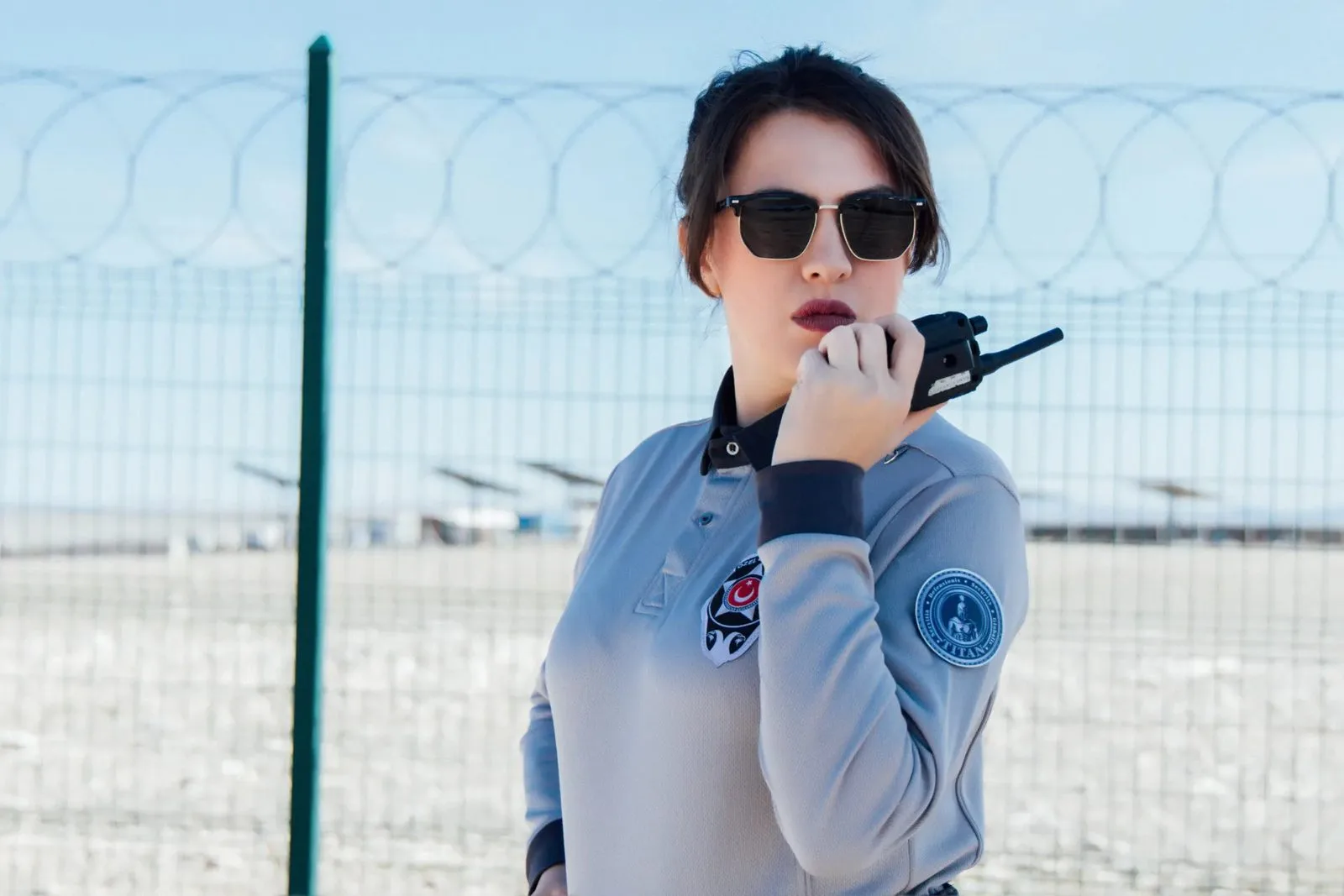
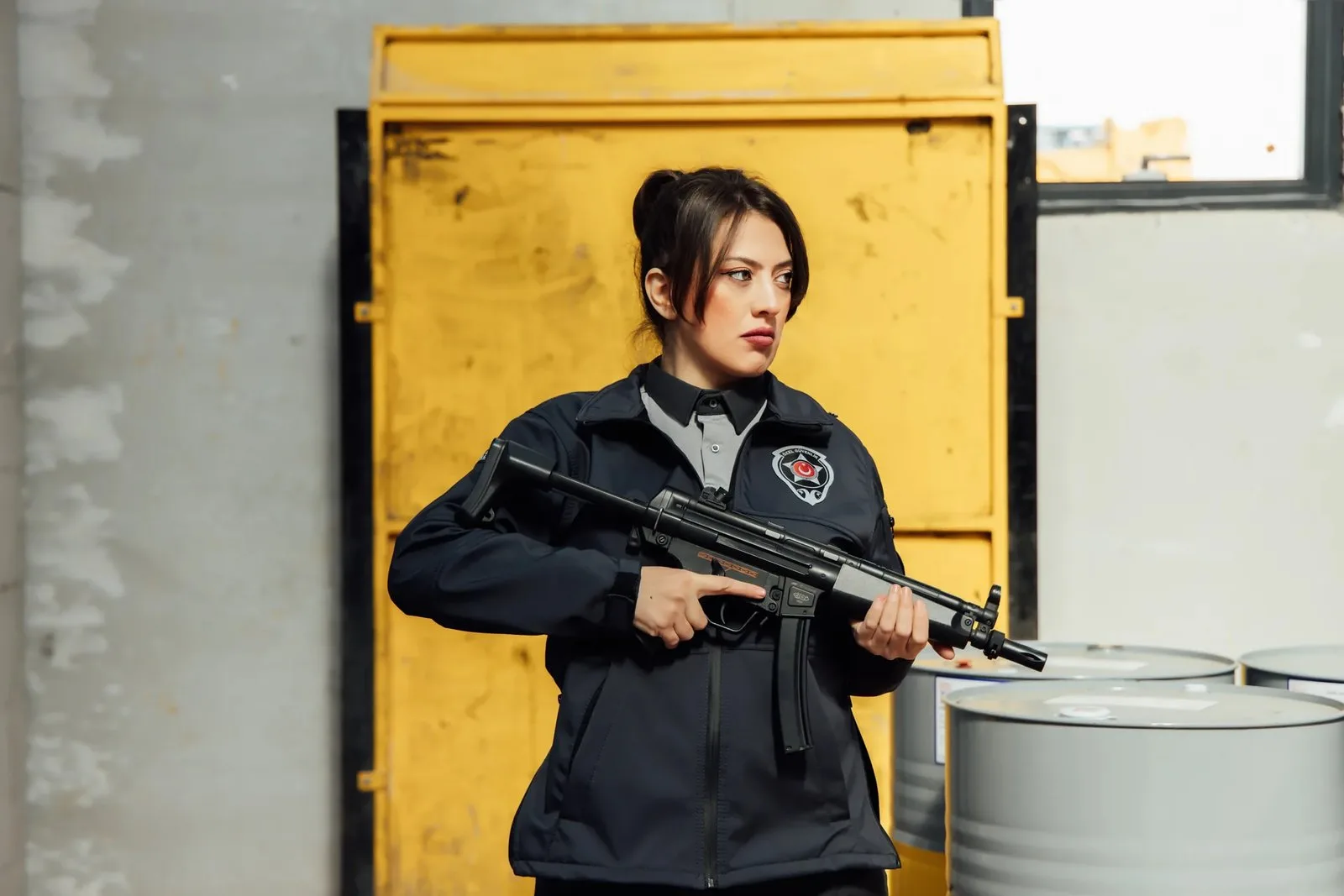
Larger stores and shopping areas may also consider a temporary private security officer at the entrance and till area during these periods. The officer's job is to observe, guide people, make eye contact with customers to show the space is looked after, and call the store manager and the police if something happens; selling, counting stock or carrying goods are not part of the role.
Checklist for the store manager
| Area | What to do | Why |
|---|---|---|
| Cash in the till | Lift cash at regular intervals; only the float remains at closing. | Cash control is among the measures most often linked to fewer robberies. |
| Till count | Two people; refund, discount and void slips on the same sheet. | Employee-related loss hides mostly in exceptions. |
| Final round | Aisles, fitting rooms and toilet checked before the shutter comes down. | Someone left inside is the easiest incident to prevent. |
| Window | Valuable stock locked away overnight. | The window tells passers-by what the shop holds. |
| Shutter and alarm | Lock servicing, manual operation in a power cut, alarm setting logged. | Overnight security rests on the physical set-up. |
| Moving cash | Varying times and routes, two people where possible. | A repeated habit is easy to read from outside. |
| Keys | Written key list; keys returned by departing staff the same day. | An unrecorded key empties a lock of meaning. |
| Cameras | A camera covering the till and door; footage reviewed regularly. | Cameras work when watched and combined with other measures. |
| Busy days | Calendar, extra staff, floor areas, mid-day count. | Holiday eves are a predictable peak that returns every year. |
| Emergencies | Exit route, fire extinguisher and manual shutter release for fire and long power cuts. | A locked shop can also trap the people inside. |
Common mistakes
- Keeping the whole day's takings in the till until closing.
- Having the same person count the till alone every evening.
- Leaving valuable stock in a lit window overnight.
- Carrying cash at the same time, along the same route, in the same bag every evening.
- Not changing keys and safe codes when an employee leaves.
- Applying rules without writing them down or explaining them to staff, or remembering a rule only once suspicion arises.
- Installing cameras and never reviewing the footage, or never deciding who keeps recordings and for how long.
- Treating a holiday eve like any other Saturday.
A note on practice in Türkiye
If a shop is to employ a private security officer, under Law No. 5188 the permit is obtained from the governorship in the name of the business receiving the service; working with a licensed security company does not create that permit on its own. Officers should not be given work outside protection and security, such as selling, running the till, counting stock or loading. Incidents that call for force or an arrest are reported by the fastest means to the police or gendarmerie; the officer's role is to observe, record and raise the alarm. Shop camera footage is personal data: under Türkiye's Personal Data Protection Law No. 6698, people must be informed at the entrance, recordings used only for security, and deleted, destroyed or anonymised once that purpose no longer applies. Till and refund rules for staff should be written alongside employment contracts and workplace rules, and should target the process, not the person.
To see where your shop stands in a few minutes, try our retail loss prevention self-check. The duties we take on in retail are described under retail store security and loss prevention security, and our other work in the province under private security company in Kilis.
Titan Savunma is an Ankara-based private security company licensed by the Ministry of Interior under Law No. 5188 and certified to ISO 9001, 14001, 45001, 22301 and 28000. We work with international companies in English and Turkish, and our Kilis City Manager, supported by our Southeast Anatolia Regional Directorate in Gaziantep and our Ankara General Directorate, will review your closing sequence, till routine and pre-holiday plan with you on site. To arrange that visit, write to us via our contact page.
Sources and Further Reading
- Casteel, C. & Peek-Asa, C. — Effectiveness of crime prevention through environmental design (CPTED) in reducing robberies, American Journal of Preventive Medicine 18(4 Suppl):99–115 (2000)
- Hendricks, S. A., Landsittel, D. P., Amandus, H. E., Malcan, J. & Bell, J. — A matched case-control study of convenience store robbery risk factors, Journal of Occupational and Environmental Medicine 41(11):995–1004 (1999)
- Greenberg, J. — Employee theft as a reaction to underpayment inequity: The hidden cost of pay cuts, Journal of Applied Psychology 75(5):561–568 (1990)
- Piza, E. L., Welsh, B. C., Farrington, D. P. & Thomas, A. L. — CCTV surveillance for crime prevention: A 40-year systematic review with meta-analysis, Criminology & Public Policy 18(1):135–159 (2019)
- SGK — İstatistik Yıllığı 2025, Bölüm 1 (4/1-a; Tablo 1.7, 1.11, 1.17)
- 5188 sayılı Özel Güvenlik Hizmetlerine Dair Kanun — Mevzuat Bilgi Sistemi
- 6698 sayılı Kişisel Verilerin Korunması Kanunu — Mevzuat Bilgi Sistemi