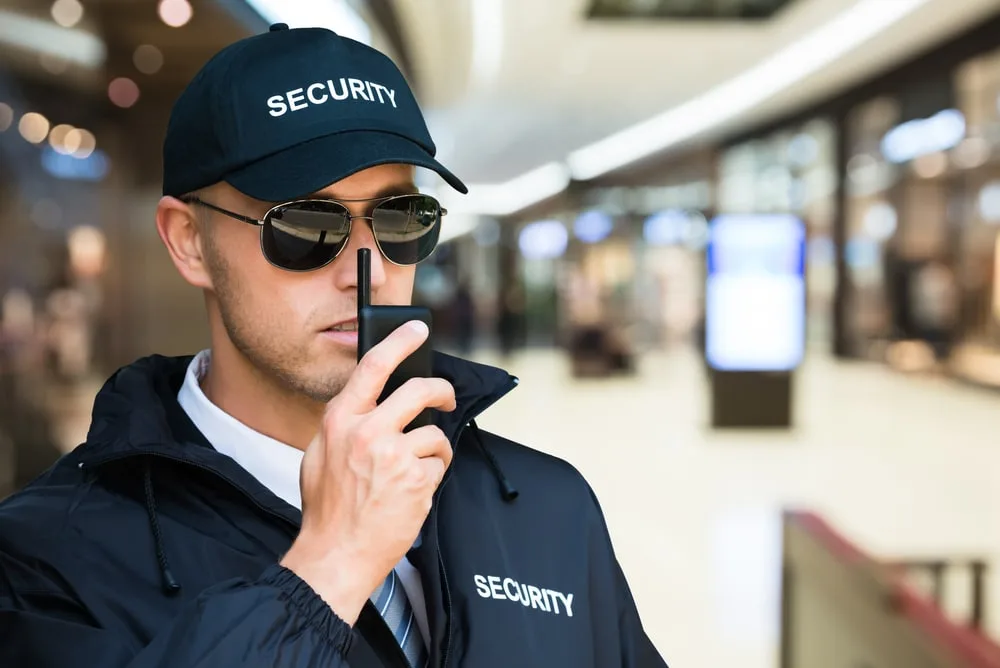
Security for a luxury brand launch or pop-up store in Turkey has three jobs. It must keep the product safe from the moment it leaves storage until every piece is counted back in; it must control who enters without making invited guests feel processed, while handling the guest list as personal data; and it must manage the arrival of celebrities and influencers and the attention they attract outside. Done well, guests notice good hospitality and very little security.
Two Turkish specifics surprise international brand teams. Officers must come from a company licensed under Law No. 5188, they wear uniform by default, and civilian dress needs prior permission. And they may not double as hosts, cloakroom staff or gift-bag handlers. This article is general information, not legal advice; it covers planning for launches, press previews and pop-ups in Istanbul shopping districts, malls and resort towns.
Thinking about the risks: situational crime prevention
Launch events concentrate desirable, portable, often unreleased goods in a room full of strangers for a few hours. Criminology's most practical tool for this kind of setting is situational crime prevention. The twenty-five techniques compiled by Cornish and Clarke group controls under five aims: increase the effort, increase the risks, reduce the rewards, reduce provocations and remove excuses. Applied to a launch, they translate into concrete design choices:
- Increase the effort: lockable display cases or tethered pieces, a controlled back-of-house door, product handled only by named staff.
- Increase the risks: extend guardianship with an officer who has a clear view of each display; use place managers (brand staff who know every piece); reduce anonymity with name badges for staff and suppliers.
- Reduce the rewards: conceal or remove targets by showing display samples or dummies where the real piece is not needed, and keep spare stock out of the event space.
- Reduce provocations: efficient queues and polite service lower frustration at the door, which matters when a waiting list is longer than the room.
- Remove excuses: set and post clear rules, for example on photography of embargoed items or on access to staff-only areas.
The grid is a planning checklist, not a promise that any single measure prevents loss. Its value is that it makes you consider effort, risk, reward, provocation and excuse for each target instead of adding more guards by default.
Product custody from storage to display and back
Treat the product as a chain of custody with signatures, not as stock that happens to be in the room.
- Inventory list: every piece with reference or serial number, photo and value class, agreed between the brand and the event team before transit.
- Transit: sealed packaging, a named courier or escort and a recorded handover at each stage. Moving high-value goods between cities or from a warehouse is its own discipline; see our note on cash and valuables transport contracts. Law No. 5188 recognises the transport of money and valuables as a situation where the governorship may grant temporary permission (Article 3) and where the route counts as the officers' duty area (Article 9).
- On site: a secure store room with limited key holders, a key and seal log, display opening and closing times, and a rule that pieces leave a case only in the presence of a brand representative.
- Overnight: for multi-day pop-ups, decide whether product stays on site. If it does, agree static or patrol coverage, alarm response and who is called at night.
- Embargoed products: agree in writing who may photograph what and when, and brief suppliers (catering, florists, AV) on the rule before they arrive.
Guest lists and RSVP data under KVKK
A launch guest list contains names, phone numbers, sometimes ID details for VIP lists, plus-ones, preferences and social media handles. In Turkey this is personal data under Law No. 6698 on the Protection of Personal Data (KVKK). The law's general principles in Article 4 require processing to be linked to a specific purpose, limited and proportionate. Article 10 requires data subjects to be informed when data is collected, Article 12 requires the data controller to take technical and organisational security measures, and Article 7 covers deletion when the purpose ends. Transfers abroad, for example to a global CRM or an agency outside Turkey, fall under Article 9, which was substantially amended in 2024.
In practice:
- Give the door team only what it needs to admit people: name, guest category and perhaps a company. Not phone numbers, not addresses.
- Do not photocopy or photograph guests' identity documents at the door. If identity checks are needed for a high-value private sale, check visually and record only that a check was made.
- Use one controlled list with a named owner instead of versions circulating by e-mail among agencies.
- Agree a deletion date for the door list and the RSVP export, and confirm it after the event.
- Decide in advance how to handle uninvited guests who claim to be on the list: a quiet holding area and a brand representative to decide, not an argument at the door.
Celebrity and influencer arrivals
A well-known guest changes the risk profile more than any product. Plan at the level of timing and space rather than tactics:
- Agree an arrival window and entrance with the venue or landlord, and keep it out of public posts until the guest has arrived.
- Ask talent management whether the guest travels with personal protection, and agree in writing where their team works and where yours does.
- Expect fans and photographers on the street. Private security powers apply only on duty and within the duty area (Law No. 5188, Article 9); the public street is the police's domain, so tell the local police about expected crowds rather than trying to manage the pavement yourself.
- Plan the departure as carefully as the arrival. Departures are often less controlled because the event is "over".
- Agree a moment for the guest's own posts, ideally after they leave, so that the location does not draw a crowd while they are still inside.
Brand-appropriate presentation and language
Luxury brands often want security that looks like part of the hospitality team. Turkish law allows some flexibility, with limits that should be in your plan from the start:
- Uniform or civilian dress. Under Article 13 of Law No. 5188, private security officers wear uniform within their duty area and time. Civilian clothing may be permitted by the provincial private security commission where the nature of the duty requires it. If the brand wants suits rather than uniforms, raise it early with the security company so that permission can be sought in time.
- Identity card. Article 12 requires the officer's identity card to be worn on the collar where everyone can see it during duty; without it, the officer cannot use the powers in Article 7. A discreet lanyard design is fine; hiding the card is not.
- One job only. Article 16 prohibits employing private security personnel in work other than protection and security. Officers should not pour champagne, run the cloakroom or hand out gift bags. Use brand hosts for that, and position officers so that the two roles work side by side.
- Language and manner. Ask for officers who can speak English (or the brand's working language), brief them on the guest categories and the brand's tone, and give them short scripts for refusing entry or asking someone to stop filming without embarrassing anyone.
Pop-ups in shopping malls: the landlord interface
A pop-up inside a mall sits within someone else's security system. Before signing the licence agreement, settle these points with the mall management:
- Who provides security inside the unit, and how your provider coordinates with the mall's security team and control room.
- Access outside trading hours for set-up, deliveries and overnight checks, and which loading dock and time slots you can use.
- Camera coverage of the unit front and common areas, and how footage is requested if there is an incident.
- Queue space in the mall's common areas for product drops or celebrity appearances, so that queues do not block fire exits or neighbouring tenants.
- Incident reporting: whom you call first, and how the mall expects to be informed.
- House rules on photography, music volume, fragrance sampling and promotional staff in the corridors.
Street pop-ups in districts such as Nişantaşı or seaside resort towns need the same conversation with the building owner and, where pavement use is involved, with the municipality.
Close-down and stock reconciliation
Most losses at launches are discovered at the count, not during the event. Build the close-down into the plan:
- A count at the end of each day by two people, one from the brand and one independent, against the inventory list.
- A discrepancy log with time, piece, last known location and who was informed.
- Packing and handover for return transit with the same signature chain as on arrival.
- Deletion of the door list and any temporary access credentials, and recovery of keys and staff passes.
- A short debrief: what nearly went wrong, what guests or the landlord commented on, and what to change for the next city.
Working with Titan Savunma
Titan Savunma is an Ankara-based private security company licensed by the Ministry of Interior under Law No. 5188 and holding ISO 9001, 14001, 45001, 22301 and 28000 certificates. We work with international companies in English and Turkish and plan services for sites in different provinces with a single point of contact, a written scope and regular reporting. For related services see retail store security and shopping centre security.
Sources and Further Reading
- Center for Problem-Oriented Policing, Arizona State University — Twenty-Five Techniques of Situational Prevention (after Cornish & Clarke, 2003)
- Mevzuat Bilgi Sistemi — Law No. 5188 on Private Security Services (consolidated text)
- Mevzuat Bilgi Sistemi — Law No. 6698 on the Protection of Personal Data (consolidated text)