
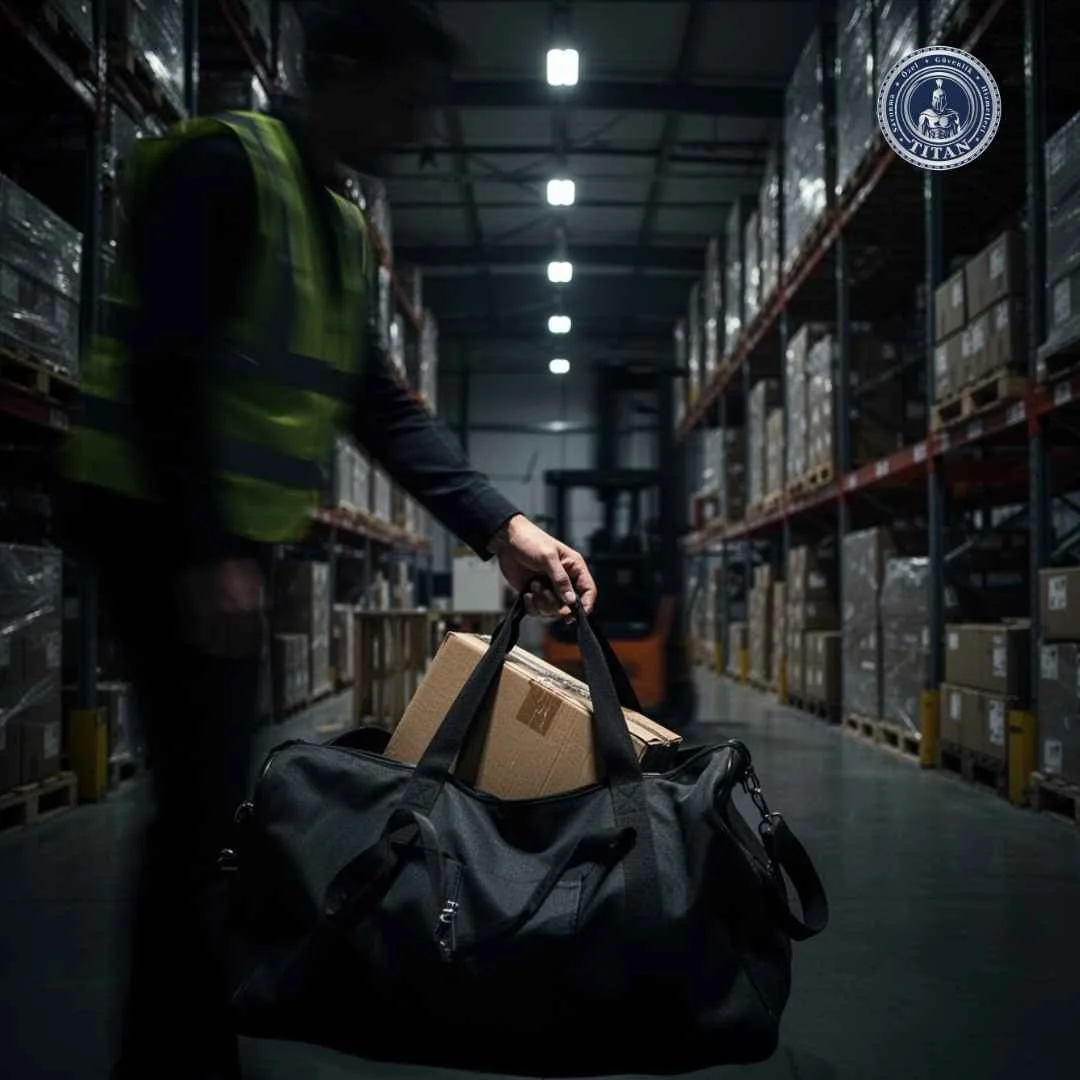
Mailroom security means receiving every letter, courier delivery and parcel at one controlled point, logging it, screening it to a level that matches your risk, and making sure everyone reacts the same way when something looks wrong. In a well-run mailroom, items are checked before they spread through the building; if an item is suspicious, nobody touches it, the area is cleared and the emergency services are called. Equipment helps, but the real safeguard is trained reception staff and a written decision chain.
For the general definition and warning signs of a suspicious item, see our encyclopedia entry on suspicious items. This article goes further: it explains how a head office, public building, diplomatic mission or media organisation that receives regular deliveries should design its intake point, build a chain of custody and prepare its people.
Why mail needs its own process
As courier traffic grows, parcels in many buildings travel straight from reception to office floors, sometimes all the way to an executive's desk. That combines two risks: a harmful or disruptive item entering the building unchecked, and a valuable or confidential item going missing. The UK specification PAS 97:2021 addresses both aims together: reducing the impact of threatening or disruptive mail and the risk of loss or theft of valuable or sensitive items.
According to BSI's description, PAS 97 does not impose a single security level. It asks organisations to assess their own risk and choose suitable measures, defining screening levels 1 to 5 and physical protection classes A to D for mailrooms and personnel. Its scope is letters and small parcels arriving from external sources; email and IT systems are excluded. So the first question is not "which machine should we buy?" but "what do we receive, from whom, in what volume, and what risk does that pose to us?"
Designing the intake point
Public guidance from the UK counter-terrorism policing network, ProtectUK on mail handling, recommends processing all incoming mail and deliveries at one point only. Ideally that point is off-site or in a separate building; if not, it should be an area that can easily be isolated and that deliveries can reach without passing through other parts of the building. The guidance also advises designing physical measures for the highest level of screening you may need in future, because walls, doors and ventilation are hard to change later.
In practice, ask:
- Location: Can couriers deliver without entering the main lobby?
- Isolation: Can the room be closed and cleared quickly, and how would adjacent rooms and the floors above and below be affected?
- Ventilation: Can the room's air handling be shut down or isolated? ProtectUK suggests agreeing this with the building services manager in advance and rehearsing it.
- Evacuation: Can staff leave without passing the suspect area?
Logging and chain of custody
Once the intake point exists, logging is the most neglected part. You should be able to trace who brought each item, when it was accepted, what check it passed and who received it. This record helps with loss and theft claims and lets you give the police accurate information after an incident.
- Acceptance: record courier name, company, vehicle and time; report unexpected courier visits to the security supervisor.
- Initial check: look at the item; confirm the addressee exists and whether the sender is known.
- Screening: apply the level set by your risk assessment and log the result.
- Internal delivery: hand over against signature; define a separate route for personal and confidential items.
- Retention: keep records in line with your retention policy.
A simple ProtectUK tip: ask regular correspondents to put a return address on every item. It makes "expected" and "unexpected" much easier to tell apart.
Screening options in general
The right level differs by organisation. In a lower-risk office, trained staff carrying out visual checks plus good logging may be enough; a higher-risk organisation may plan X-ray screening in a separate room and arrangements for specialist support. For how X-ray screening works in principle, see the X-ray screening entry.
Two points matter. First, as ProtectUK notes, not every mail stream needs the same screening; internal mail and external parcels can be treated differently. Second, X-ray does not reveal every hazard: the same guidance says mail X-ray scanners may detect devices for spreading chemical, biological or radiological materials (such as explosive devices) but not the materials themselves. Equipment therefore never replaces staff awareness and the suspicious-item procedure. Who reads the screen, who decides and who is told must be clear.
What to do with a suspicious item
ProtectUK sets out clear steps. Your own procedure in Turkey should be written with your security supervisor and the local police; the list below summarises the logic of that official guidance:
- Do not touch, move or open it. The guidance says not to move it even to put it through X-ray.
- Clear the area immediately, including adjacent rooms and the spaces above and below.
- Keep others away and control access to the cleared area.
- Mind phones and radios. ProtectUK advises not using mobile phones or two-way radios in the cleared area or within fifteen metres of the item; call from a safe distance.
- Call emergency services. In Turkey, emergency numbers including the police line 155 have been combined into the 112 emergency call centres (Kaşlı, 2022). Give the exact location, the building and the steps already taken.
- Brief the police. Tell them if the item was opened or partly opened, keep witnesses together and ask them to write down what they saw.
Unless the order of these steps is written with named roles, it will not happen under pressure. Post orders should define the receptionist who notices the item, the guard who clears the area, the control room operator who calls 112 and the supervisor who meets and briefs the police.
Training and exercises
ProtectUK recommends that all staff who handle mail, including reception, are briefed and trained to recognise and respond to the threats your organisation faces. That covers assistants, floor staff, facilities teams and every guard shift, not just the mailroom. Training should focus on behaviour, not on hazardous materials: notice an unexpected item, stop, report, clear the area.
Plan at least one tabletop exercise and one evacuation rehearsal a year. Test whether staff know who calls 112, whether the ventilation shut-down plan actually works, whether access to the cleared area is held, and whether the logbook can be handed to police quickly.
Quick checklist
- Does every delivery pass through one intake point?
- Can that point be isolated, with a separate escape route?
- Has each mail stream been risk-assessed separately?
- Are acceptance, screening and delivery logged?
- Is the suspicious-item instruction written, role-based and posted?
- Have reception and all relevant staff been trained and rehearsed?
Common mistakes
- "We bought a scanner, job done": if nobody knows what it cannot show, it creates false confidence.
- Letting couriers go up to the floors: it defeats the purpose of an intake point.
- Carrying a suspect item "somewhere safe": official guidance says the opposite.
- Briefing only the security team: the first person to see the item is often an assistant or office administrator.
Working with a security partner
Titan Savunma is an Ankara-based private security company operating under a Ministry of Interior licence issued under Law 5188, certified to ISO 9001, 14001, 45001, 22301 and 28000, and working with international companies in English and Turkish. We plan guarding together with your technology and connect mail intake to your monitoring, verification and response plan through written duties, logging and regular reporting. You can add mail handling to our free security risk assessment or read more on office and business centre security.


