
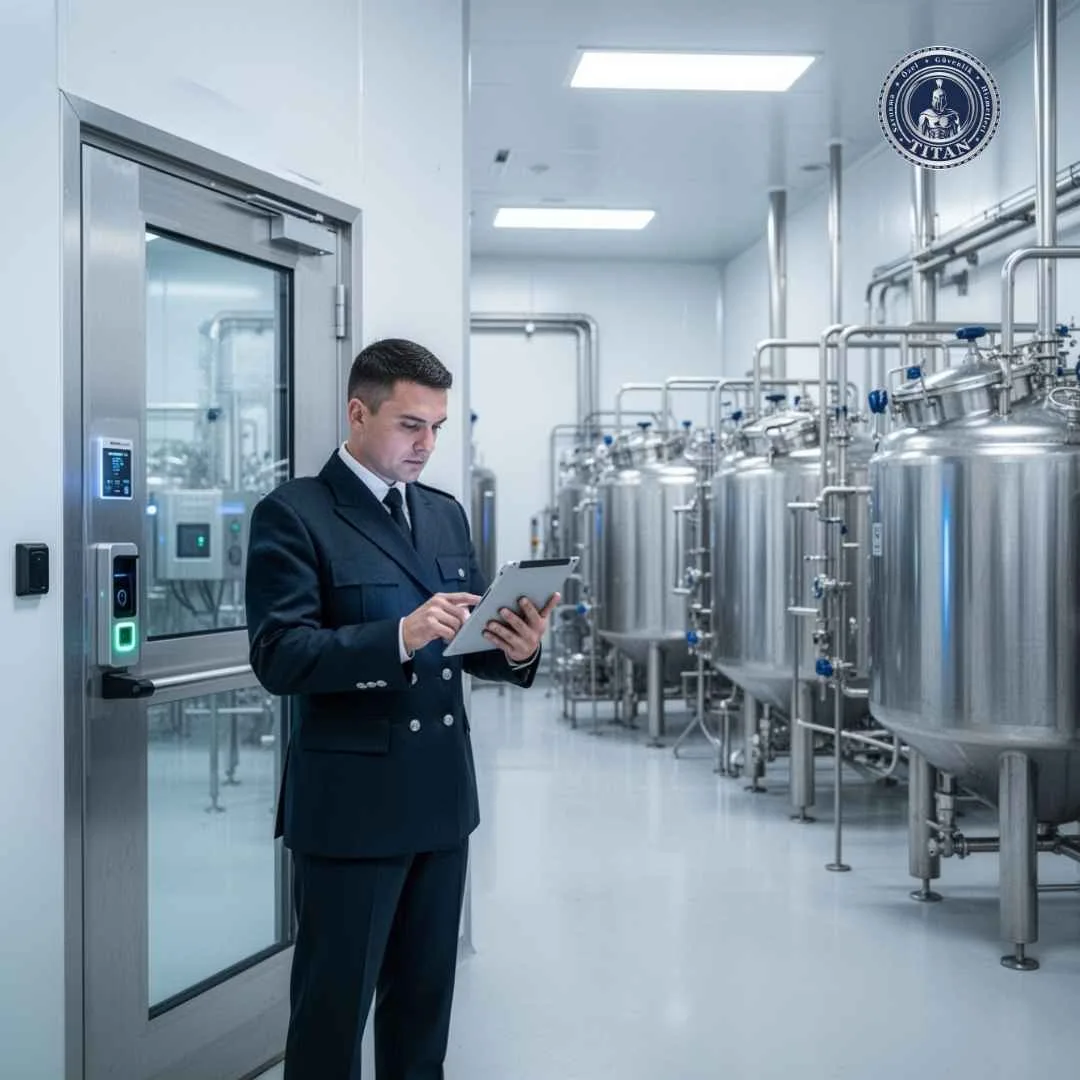
A mantrap, also called an interlocked vestibule or security portal, is a controlled entrance with two doors and a small space between them, where one door cannot open until the other has closed. Its purpose is to stop an unauthorised person following an authorised one, and to hold a person briefly in a controlled space while their identity is verified. It makes sense for data centres, banks, jewellers, laboratories and archives; at a busy general office entrance it is usually overkill. Even when it is the right choice, it needs a trained person to handle a visitor stuck inside, a fault or an emergency.
This article is general information, not legal advice.
For a short definition, see our encyclopedia entry on mantraps. This article focuses on the decision and on operation: when you need one, when you do not, how to reconcile it with fire safety and accessibility, and who does what day to day.
How an interlocked vestibule works
NIST's control catalogue SP 800-53 Rev. 5 describes this arrangement under physical access control (PE-3) as an "access control vestibule": a space, typically between two sets of interlocking doors, designed to prevent unauthorised people from following authorised people in, an activity it calls piggybacking or tailgating. According to the same text, interlocking door controllers can limit the number of people entering a controlled point and provide a containment area while authorisation is verified. They can be fully automated, or partially automated with security guards controlling how many people enter.
The main types you will meet:
- Two-door room: a small lobby built with standard doors. Suitable for moving equipment, but needs space.
- Single-person cylindrical portal: a compact booth with sliding doors on each side, designed for one person at a time; usually unsuitable for large items or wheelchairs.
- Guard-controlled interlock: the inner door is released by an officer or a remote operator in addition to the badge, which is what NIST calls partially automated.
- Interlock with a second factor: a PIN or biometric check inside the vestibule. If biometrics are used, the data protection side needs its own assessment.
Which risks justify one, and when it is too much
A mantrap is less an expensive device than a deliberate decision to slow the flow. These questions clarify it:
- What is behind the door? Server rooms, cash and valuables, hazardous materials and confidential archives, where a single unauthorised entry has serious consequences, are candidates.
- How many people pass, and when? It suits areas entered by a small number of authorised people. In a lobby with hundreds of people at the morning peak it creates queues and frustration; turnstiles plus an officer are usually more balanced there.
- Have lighter measures been tried? Anti-passback, door-held-open alarms and good post orders handle most office tailgating. An interlock is justified when those layers are not enough and the risk warrants it.
- Is there an audit or client requirement? Some data centre and financial clients ask for this control in contracts. Clarify what the requirement is for: single-person passage, a verification space, or both.
To see where an interlock would sit among your layers, try our data centre digital twin.
Fire exits and accessibility
The most common design mistake is treating the mantrap as part of the escape route. In Turkey, the Regulation on the Fire Protection of Buildings states that locks, bolts and similar components that block free escape may not be fitted to exits and doors on escape routes (Article 30), and that escape-route doors must be openable by hand and not kept locked (Article 47). The same article says revolving doors and turnstiles cannot be used as exit doors. The vestibule should therefore be left out of the escape calculation, and the protected area needs its own suitable emergency exit in the fire design. Work with the project designer and a fire consultant from the start.
The NPSA user guide on automatic access control systems sets the same principle: all buildings must comply with fire and emergency exit requirements, and means of escape should not rely on the operation of the access control system. It also recommends choosing fail-safe (release on failure) or fail-secure (remain locked) behaviour according to the operational requirement, and providing back-up power so the system keeps working until support arrives.
Accessibility is the second tension. Single-person booths are often unsuitable for wheelchair users, visitors with prams or engineers carrying equipment. The NPSA guide requires UK equality legislation to be met; in Turkey, address accessibility requirements at the design stage too. The usual answer is a second, accessible controlled entrance that an officer or remote operator verifies and logs. Write down who opens it and how it is recorded, so it never becomes a permanently open back door.
Operations: jams, faults and remote approval
A mantrap is tested not on the day it is installed but at the first fault and the first moment of panic. Post orders should cover:
- Someone stuck inside: the vestibule needs intercom and camera contact with the control room; the operator calms the person and releases them inwards or outwards if needed. Define an alternative entrance in advance for people uncomfortable in confined spaces.
- Refused verification: when the badge or second factor fails, the person exits through the outer door; the operator reviews the event and, if needed, an officer checks ID face to face.
- Faults: if a door stays open or a controller stops responding, the area moves to officer control, with a written note on who calls maintenance and the temporary arrangement. NPSA advises that operators know who has authority to call out maintenance and the expected response time, and that the system is retested after any maintenance or adjustment.
- Fire alarm and evacuation: the vestibule's behaviour on alarm must match the fire design, and officers include it on their evacuation checklist.
- Remote approval: the operator checks the image and the access record before releasing the inner door. Approval is logged with a reason; a familiar face alone is not enough.
During commissioning, as the NPSA guide stresses, keep good communication with the control room and test that every alarm actually reaches the screen. Keep the maintenance log and test results up to date.
Checklist before you decide
- Does the risk of the protected area justify an interlock, and have lighter layers been tried?
- Do daily passages and peak times fit the vestibule's capacity?
- Is the vestibule outside the escape calculation, with a separate suitable emergency exit?
- Is behaviour on power loss and fire alarm defined?
- Is there an accessible alternative entrance, and who manages it?
- Is there intercom, camera and remote release for someone stuck inside?
- Are fault handling, maintenance call-out and retesting written down?
Common mistakes
"We installed a booth, so we no longer need an officer." A booth cannot talk to a stuck visitor or fix itself. "In an emergency we will open the booth." Escape must not depend on a device working. "We will leave the side door open for disabled visitors." An uncontrolled side door defeats the purpose; the side entrance must be verified and logged as well.
Titan Savunma is an Ankara-based private security company holding a Ministry of Interior operating licence under Law 5188, with ISO 9001, 14001, 45001, 22301 and 28000 certificates, and works with international companies in English and Turkish. An interlock provides the verification space; someone still has to plan who looks after the stuck visitor, the fault and the emergency. We plan guarding together with your technology and put your monitoring, verification and response plan in writing. See our data centre physical security page.


