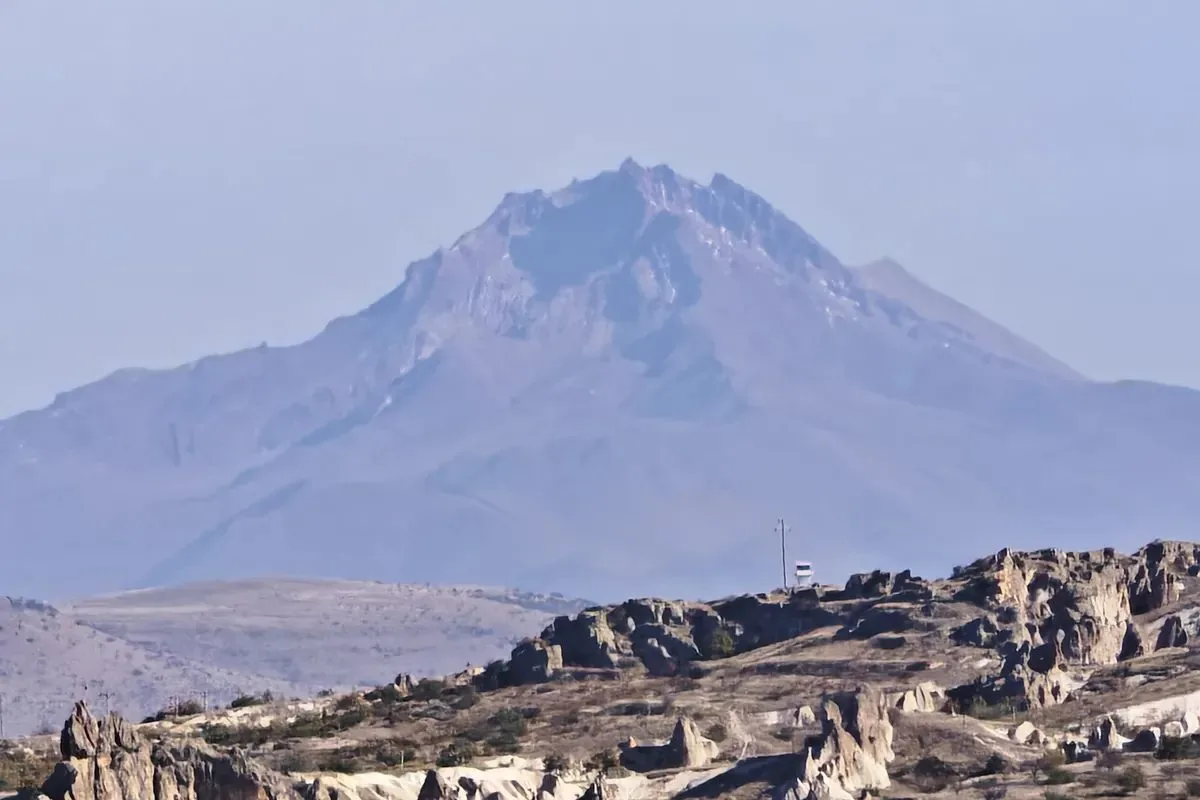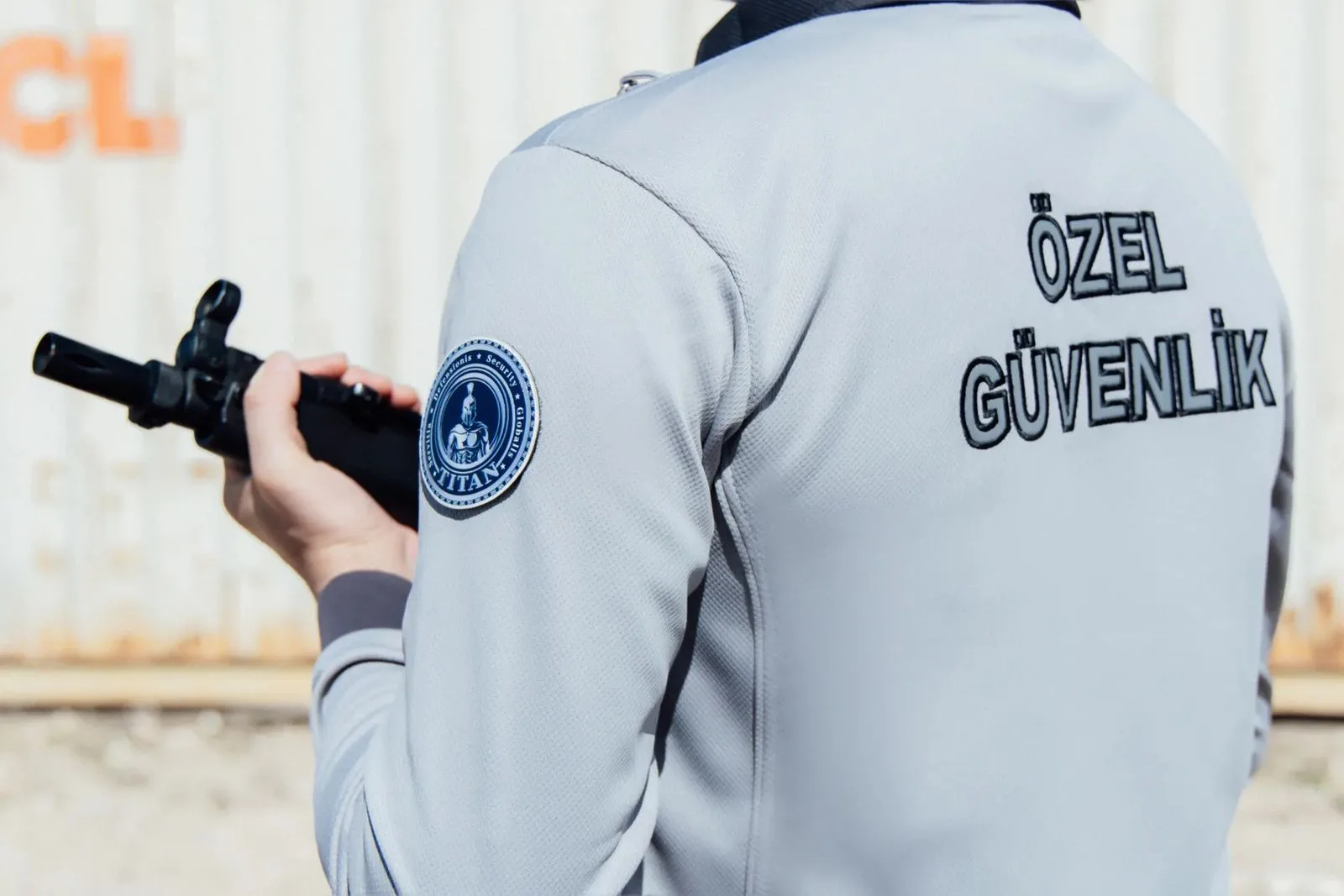
Short answer: At a garment factory in Muş, the hardest twenty minutes for security come at the end of a winter shift, in the dark. Hundreds of people head for one gate, shuttle buses queue outside, the fabric and carton store is often still open, and the outside temperature is below freezing. The way to manage those minutes is to move the waiting queue into a closed, heated space, lock the stores before the shift ends, light the shuttle bay within sight of the gatehouse, and run the exit check on goods as the employer's own written rule, without handing security staff a power to search people that the law does not give them.
This article is general information, not legal advice.
Why garment factories in Muş need their own security plan
According to the Social Security Institution (SGK) Statistical Yearbook 2025, garment manufacturing in Muş employs 4,944 compulsorily insured workers (category 4/1-a) at 80 workplaces. That is about 15% of the province's 33,252 insured employees and the largest registered sector of activity. By our own calculation from the same data, garment manufacturing's share of local employment is roughly five times the national level. Manufacturing as a whole accounts for 21.1% of employment, close to the national average; the 125 workplaces with 50 or more insured staff employ more than half (51.3%) of all insured workers. Insured employment in the province grew by about 73% between 2016 and 2025.
For security, this means that many sewing plants in Muş are fast-growing, crowded, shift-based operations. As lines and headcount grow, the gate layout often stays as it was on day one: one turnstile, one gatehouse and shuttle buses stopping right outside.
The second factor is climate and daylight. Turkish State Meteorological Service data for Muş (1964–2025) show a January mean of −6.8 °C and an average January minimum of −10.3 °C; the lowest temperature recorded is −34.4 °C and the deepest snow on record is 163 cm. Türkiye uses a single time zone all year, and because Muş lies in the east of the country the sun sets noticeably earlier than in western provinces. By our own astronomical calculation, in December the sun sets in Muş before 17:00 and rises close to 07:30. From November to February, then, both the evening shift exit and the morning arrival largely take place in darkness.
What does the research say?
1. Darkness moves the risky hour with the calendar
A US study that used daylight saving time as a natural experiment found a fall of about 7% in robberies after an hour of daylight was added to the evening, with the largest effect in the hours where light changed directly (Doleac and Sanders, The Review of Economics and Statistics, 2015). The study looks at robberies in general, not at factories. The lesson we draw is that the risky hour is not fixed but shifts with the season: an exit that ends in daylight in June ends in full darkness at the same time in December, so lighting and guard plans should follow the daylight calendar rather than the clock.
2. A check that runs the same way every day may matter more than a harsh one
A classic US study funded by the National Institute of Justice, based on self-reports from randomly selected employees in three different sectors, found that perceptions of both the certainty and the severity of organisational sanctions were related to employee theft (Hollinger and Clark, Social Forces, 1983). The study is old, self-reported and does not prove causation. Still, it points the way at the factory gate: a calm routine that runs the same way on every shift, and that staff know in advance, makes more sense than an occasional harsh and showy check.
3. Monitoring seems fairer when it is job-related and people have a say
In a study where temporary workers carried out computer and web-based tasks under different levels of monitoring, monitoring only job-relevant activities and giving the people monitored a voice in the process reduced the sense that privacy had been invaded and strengthened perceptions of procedural fairness; perceived invasion of privacy fully explained the effect of job relevance on fairness and partly explained the effect of participation (Alge, Journal of Applied Psychology, 2001). The finding concerns computer monitoring, not factory gates. Our reading: an exit check limited to work-related items (fabric, trims, finished goods), and a rule written after hearing from staff, is both easier to accept and less likely to cause friction at the gate.
4. Cold lowers the quality of a guard post too
A review of the health effects of cold work lists problems such as musculoskeletal pain, respiratory symptoms from breathing cold air and cardiovascular complaints during physical work, and stresses that these problems reduce performance and productivity and increase accidents and injuries. According to the authors, the first step is to recognise and identify the cold risks linked to the workplace and to the individual (Mäkinen and Hassi, Industrial Health, 2009). The review is not specific to security staff, but it is a reminder that a guard standing for hours at an open gate on a January evening will also lose alertness to the cold.
Run the shift exit as a twenty-minute operation
- Keep the queue indoors: the waiting area in front of the turnstiles and the check desk is moved into a closed corridor or the changing-room exit. A crowd waiting outside at minus ten is both a health problem and a reason for rushed checks.
- Split the exit into waves: instead of every line walking to the gate in the same minute, departments leave a few minutes apart, and shuttle departure times are written around those waves.
- Stores close first: fabric and finished-goods stores are locked before the exit begins, and the gate log records who holds the key. Nobody should be inside a store once the exit starts.
- Shuttle bay in sight of the gate: the point where buses pull in is visible from the gatehouse, lit and cleared of snow; the lights stay on until the last bus leaves. Who grits the ground when it ices up is settled in advance.
- If the power goes: in heavy snow or a long power cut, card readers and turnstiles may stop working. A printed copy of the shift list, torches and a paper entry-exit form are kept at the gate.
The fabric and finished-goods store
In garment making, most of the value sits in two places: incoming rolls of fabric and trims, and cartons waiting for dispatch. At the gate, the delivery note and the number of rolls or cartons are logged for incoming goods; for outgoing vehicles, the carton count, the number plate and any seal number. In winter it is normal for a loaded lorry to stay on site overnight because of road conditions; such a vehicle should wait where the gate and the cameras can see it, locked and sealed.
Winter brings one more risk to the store: heating. Post orders should state that portable heaters are not used in areas holding fabric and cardboard, that the night round checks heat sources, sockets and fire hose cabinets in the store, and that escape routes are not blocked by snow, cartons or pallets. A good moment for that round is the minutes just after the last shift has left.
Exit checks on goods: the employer's rule, a limited role for security
Article 7 of Law No. 5188 gives private security staff, in its point (a), the power to pass people who wish to enter a protected area through a detector gate, search them with a detector and pass their belongings through X-ray or similar systems. These powers are written for entry; the law does not give security staff a routine power to search employees leaving work. The exit check on goods is therefore not a security power but an internal rule of the employer's work organisation. Its scope and method should be given to staff in writing, its personal data aspects considered together with Türkiye's Personal Data Protection Law No. 6698, and the final text reviewed by your legal adviser.
The job of security staff is not to make that rule but to help it run calmly, consistently and on the record. On site, the routine that works looks like this:
- Personal bags and coats stay out of the production area; lockers in the changing room reduce the need for checks from the start.
- The check is limited to the bag or carrier that the employee opens and shows; the guard does not touch the employee or their belongings.
- The scope stays with work-related items: fabric, trims and products. Private belongings are neither examined nor noted down.
- If there is a dispute, the guard does not argue at the gate; the guard calls the employer's representative and records the incident in a written report, and the police or gendarmerie are informed when necessary.
Checklist: a winter evening shift exit
| Area | What to do | Why |
|---|---|---|
| Waiting area | The queue forms in a closed, heated space. | Cold affects both health and the care taken over checks. |
| Exit waves | Staggered exits by department; shuttle times to match. | One gate cannot comfortably take hundreds of people at once. |
| Store doors | Locked before the exit; key handover logged. | The most valuable stock is not left unattended during the rush. |
| Lighting calendar | Outdoor lights follow sunset rather than a fixed clock; November–February set separately. | The hour of darkness shifts with the season. |
| Shuttle bay | Visible from the gatehouse, lit, cleared of snow and ice. | The last link of the exit should not sit outside the gate's view. |
| Gate guard | Heated gatehouse, winter clothing, rotating outdoor posts. | Cold lowers alertness and performance. |
| Exit check | Written internal rule; work-related items only; no body search. | The law gives no such power; a predictable routine deters more. |
| Power cut | Printed shift list, torch, paper form. | The gate does not go blind when card access fails. |
| Night round | After the last exit: store, heat sources and escape routes. | Heating raises the fire risk in winter. |
Common mistakes
- Keeping a lighting and guard plan written in summer unchanged all winter.
- Leaving the exit queue outside the gate, in the wind and snow.
- Keeping store doors open until the exit crowd has passed.
- Expecting security staff to search employees, or running exit checks without a written rule.
- Checking strictly on some days and not at all on others.
- Tolerating shuttle buses stopping at the roadside, out of the gate's sight.
- Not knowing who is on site when the card system is down.
A note for sites in Muş
In Muş, a gate plan has to be written for two seasons: long, dark winter evenings and hot summer days when the sun sets late. Before anything is written, seeing the site on a December evening during the shift exit tells you more than any layout drawing. Our duties at industrial sites are set out under factory security, and the way we work in the province is described under private security company in Muş.
Titan Savunma is an Ankara-based private security company licensed by the Ministry of Interior under Law No. 5188 and certified to ISO 9001, 14001, 45001, 22301 and 28000. We work with international companies in English and Turkish, and our Muş City Manager, supported by our Eastern Anatolia Regional Directorate and our Ankara General Directorate, walks your gate, stores and shuttle bay during a winter shift exit before agreeing the exit routine with you. To arrange that visit, write to us via our contact page.
Sources and Further Reading
- Doleac, J. L. & Sanders, N. J. — Under the Cover of Darkness: How Ambient Light Influences Criminal Activity, The Review of Economics and Statistics 97(5):1093–1103 (2015)
- Hollinger, R. C. & Clark, J. P. — Deterrence in the Workplace: Perceived Certainty, Perceived Severity, and Employee Theft, Social Forces 62(2):398–418 (1983)
- Alge, B. J. — Effects of Computer Surveillance on Perceptions of Privacy and Procedural Justice, Journal of Applied Psychology 86(4):797–804 (2001)
- Mäkinen, T. M. & Hassi, J. — Health Problems in Cold Work, Industrial Health 47(3):207–220 (2009)
- SGK — İstatistik Yıllığı 2025, Bölüm 1: Sigortalı ve İş Yeri İstatistikleri (4/1-a; Tablo 1.10, 1.11, 1.14, 1.15)
- Meteoroloji Genel Müdürlüğü — Resmî İstatistikler: Muş (1964–2025)
- 5188 sayılı Özel Güvenlik Hizmetlerine Dair Kanun (md. 7), Mevzuat Bilgi Sistemi
- 6698 sayılı Kişisel Verilerin Korunması Kanunu, Mevzuat Bilgi Sistemi