
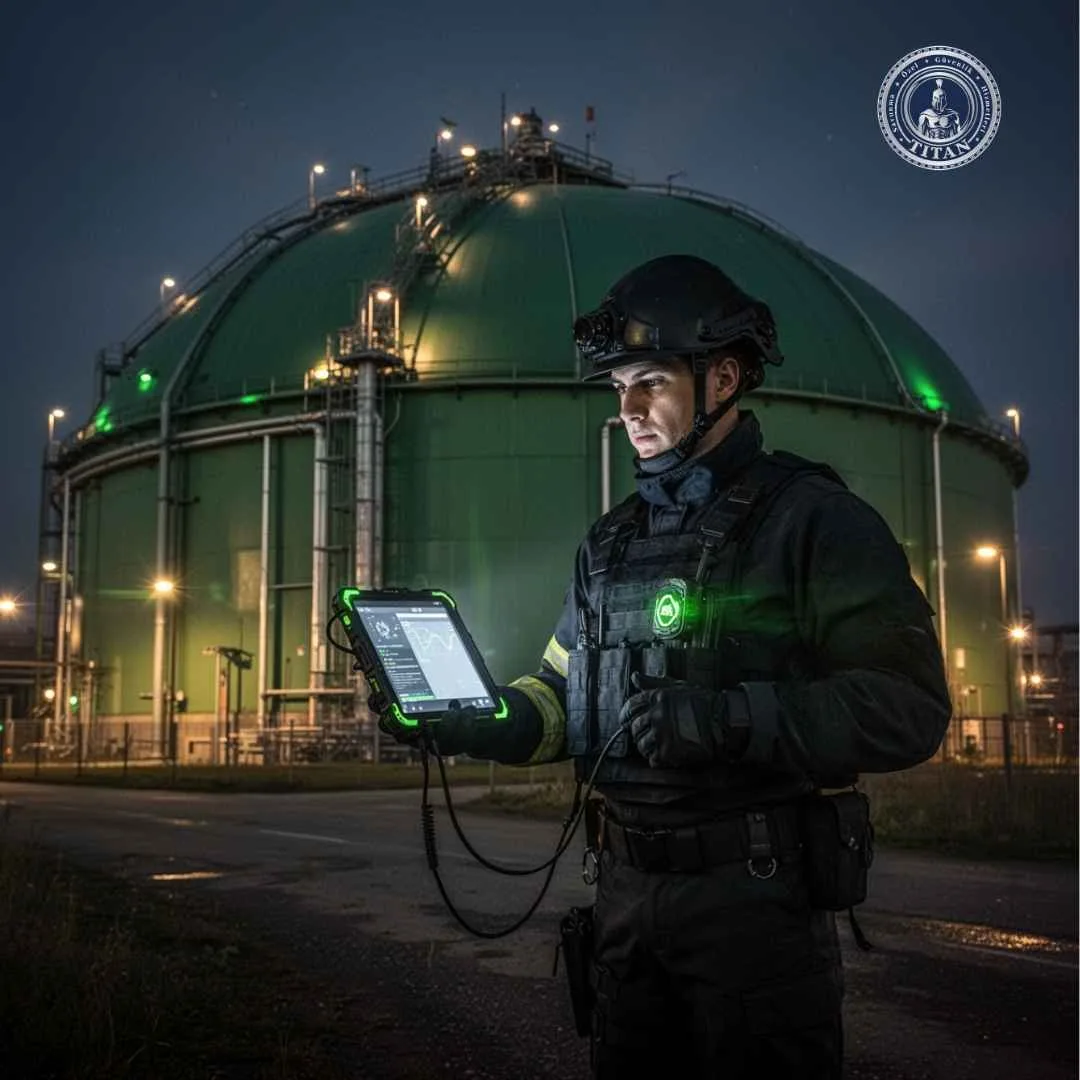
A patrol report should never be read only for its completion rate. The real questions are: were all critical checkpoints covered every shift, do patrol times vary or are they the same every night, is the reason for each missed checkpoint known, and does the patrol data match the occurrence log? A tour that is 100 percent complete but runs at the same time every night can be weaker than one that is 90 percent complete, with every gap explained and timing that follows risk.
This article suggests a way for facility and administration managers who buy security services to interpret monthly patrol data. This article is general information, not legal advice. System types and checkpoint design are covered separately; here we focus on what to do once the data is in front of you.
Useful and misleading indicators
Most guard tour software produces the same raw data: which checkpoint was read, by which officer, at what time. Every performance indicator derived from it has a use and a way to mislead.
| Indicator | What it tells you | How it can mislead |
|---|---|---|
| Tour completion rate | How many planned tours were done | A careless but complete tour still looks perfect |
| Critical checkpoint coverage | Whether high-risk points were visited each shift | Meaningless if points were chosen for convenience, not risk |
| Time between checkpoints | The pace of the patrol | Very short may mean rushing, very long may mean responding to an incident; neither is a verdict on its own |
| Spread of start times | How predictable patrols are | Variety is worthless if critical points are not covered |
| Findings and incident notes | Whether patrols notice and record things | A low count may mean a quiet month or inattention |
The rule is simple: no indicator is a conclusion on its own. Completion shows that the patrol happened; findings show that the patrol looked at something. Read them together.
The predictability risk: consistency is not always good
A familiar picture in monthly reports is a set of flawless tours that start at the same time every night and follow the same order. That looks tidy to management but is a weakness in security terms, because to someone watching the site the patrol becomes a timetable. Look at the spread of tour start times: if they cluster in a narrow window, the random patrol principle is not being applied.
Policing research also warns against assuming that more tours are always better. In the Kansas City Preventive Patrol Experiment, reported in 1974, routine patrol was applied at three different levels; according to the NCJRS abstract, the three areas showed no significant differences in crime, in citizens' attitudes toward police services, in fear of crime or in police response time. The report recommended building deployment around specific prevention and service goals. Koper's 1995 study looked at a different question in crime hot spots, the difference between driving through and staying for a while; according to its abstract, stops needed to last roughly 10 minutes before they significantly delayed the return of disorder, and beyond a certain length, staying longer brought diminishing returns.
These findings come from public policing and should not be used as rules for a private site. The lesson for a manager reading a report is that adding tours does not create security by itself; where, when and for how long patrols concentrate, how that relates to risk, and how predictable it is are the more useful questions.
Missed checkpoints: causes and conversations
A missed checkpoint is a symptom, not a diagnosis. Causes vary widely:
- Responding to an incident: the officer may have been dealing with an alarm, a visitor or a fault. That is success, not failure, but it should appear in the occurrence log.
- No access: a door was locked, an area under works or closed by a tenant.
- Technical cause: a tag removed or damaged, a reader or phone out of battery, data not uploaded.
- Planning problem: the route cannot realistically be completed alongside the shift's other duties.
- Discipline problem: and finally, the task may simply have been neglected.
Conversations should follow that order: question first, judgement second. The shift supervisor asks the officer why, checks the answer against the occurrence log and technical records, and writes the cause in the report. Recurring causes usually point to the route, the equipment or the workload. Using the report as a punishment tool teaches officers to hide problems; using it as an improvement tool keeps the records honest.
Matching patrol data with incident records
Patrol data is most valuable when read next to other records. Three cross-checks we recommend:
- Missed checkpoints and the occurrence log: if there is a response entry for the same time window, the deviation is explained. If not, a conversation is needed.
- Incident locations and the route: compare where incidents happened during the month with the checkpoints. If incidents repeat where there is no checkpoint, or where patrols never pass at those hours, the route needs updating.
- Other system logs: alarm, access control and video event logs show whether patrols actually respond to things, for example who went to a door-held-open alarm, how quickly and what they found.
People, not software, make these comparisons. Technology produces the record; the shift supervisor and the provider's manager interpret it and update the route and post orders with you.
What to ask for in a monthly report
- Coverage of critical checkpoints by shift.
- The spread of tour start times and a short note on route variation.
- For every missed checkpoint, the cause and the action taken.
- Problems found on patrol, who they were reported to and whether they were closed.
- A comparison of incident locations with the route, and proposed route changes.
- Equipment faults, tag replacements and maintenance notes.
To compare providers on these points, use our security provider scorecard.
Proportionality and Turkish data protection law
Patrol records show where and when named officers were, so they contain personal data. Article 4 of Turkey's Personal Data Protection Law No. 6698 requires processing for specified, explicit and legitimate purposes, in a way that is relevant, limited and proportionate to those purposes, and retention only for the period set by law or needed for the purpose. Article 10 requires informing the people concerned, and Article 12 requires the data controller to take the technical and administrative measures needed to prevent unlawful access.
In practice, for a manager reading reports: use patrol data to improve patrol quality, and if you are considering using the same data for another purpose, assess beforehand whether that is relevant and proportionate and how it has been explained to officers. Put only the necessary detail in reports, do not send raw location dumps to wide distribution lists, and set the retention period in the contract or data policy. The data protection roles of the client and the security provider should also be clarified.
Turning the report into an improvement tool
Titan Savunma is an Ankara-based private security company operating under a Ministry of Interior licence issued under Law 5188, certified to ISO 9001, 14001, 45001, 22301 and 28000. We work with international companies in English and Turkish and plan sites in different provinces with a single point of contact, written scope and regular reporting. We plan guarding together with your technology, including a monitoring, verification and response plan and patrol reports built for improvement rather than blame. Learn more about our private security services across Turkey.
Sources and Further Reading
- Justice Quarterly — Koper, Just Enough Police Presence: Reducing Crime and Disorderly Behavior by Optimizing Patrol Time in Crime Hot Spots (1995)
- NCJRS / U.S. Office of Justice Programs — Abstract of Koper (1995), NCJ 167664
- NCJRS / U.S. Office of Justice Programs — Kelling et al., Kansas City Preventive Patrol Experiment: A Summary Report (1974), NCJ 42537
- mevzuat.gov.tr — 6698 sayılı Kişisel Verilerin Korunması Kanunu


