
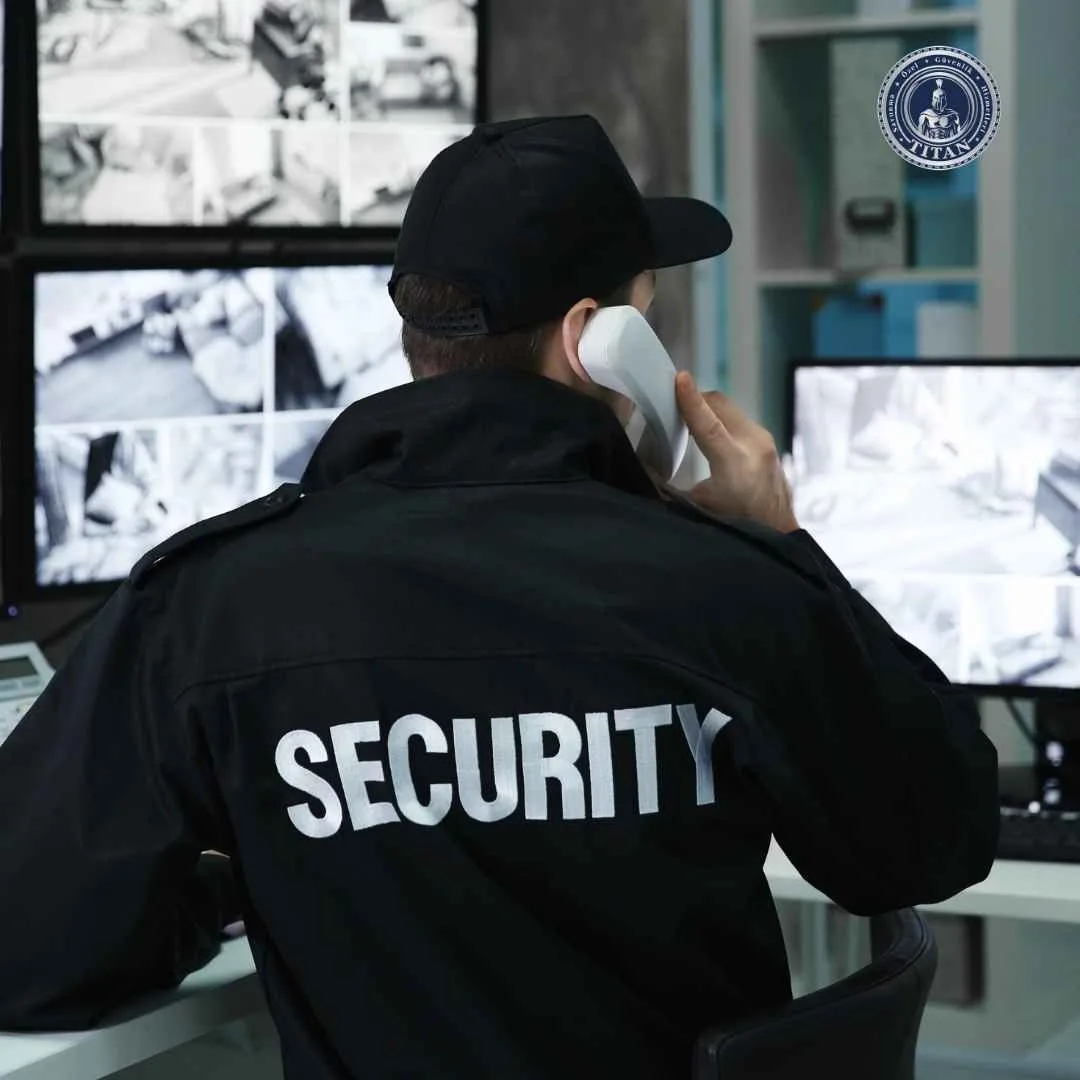
Choosing between AI-assisted cameras and on-site guards at a remote solar plant is usually the wrong question. A camera can tell you someone is approaching the fence. It cannot stop them, protect a scene or meet the fire service at the gate. A guard, meanwhile, cannot see every part of a large site at once. Good planning puts in writing when each one comes into play and how the time between them is covered.
Break the chain down: detect, verify, decide, reach
Guidance from the UK’s National Protective Security Authority says control rooms support the principles of deter, detect and delay, and that perimeter intrusion detection systems are designed to give advance warning of an intruder gaining access. For a solar plant, the same logic can be split into four steps:
| Step | Question | How to test it |
|---|---|---|
| Detection | On which section of fence, and in what conditions, does it raise an alarm? | Controlled crossings at night, in rain and in fog |
| Verification | Who assesses the alarm, and how many seconds does it take? | Unannounced test alarm |
| Decision | Who calls whom? Who holds the authority? | Tabletop scenario |
| Reaching the site | How long do a patrol or law enforcement take to arrive? | Real timings at different hours |
If those four times together exceed the delay offered by the fence and other barriers, the thief may already have finished. A 2025 Thames Valley Police response sets this logic out plainly: remote detection may tell a monitoring station that an attack is under way, but a response still has to travel, so the attack should be delayed for as long as possible. For its own rural area, the force expects, in the most favourable case, a response of up to 15 to 20 minutes, and recommends a fence class rated to resist attack for up to 10 minutes. Do not transfer those values to your site in Turkey; measure your own.
What does AI solve, and what does it not?
The aim of analytics is to give the operator fewer, more meaningful alarms. Site conditions make that hard. An IPVM review says changing weather significantly raises the risk of false alarms for outdoor analytics, that large perimeter protection is challenging, and that many operators are not staffed or willing to handle large volumes of false alarms. The same organisation’s verification guide considers simple motion detection generally too prone to false activations and treats analytics as a separate option. It also notes that authorised people entering an area can trigger alarms, so the plan should say how the system is managed during maintenance.
Before buying, look at a trial on your site instead of a manufacturer’s figure. A trial could work as follows:
- Choose the hardest stretches of fence: vegetation, slopes, reflections and long distances.
- Plan controlled crossings by people and vehicles. Do not tell the operator who is crossing or when.
- Record missed crossings, false alarms and verification times separately.
- Repeat in different weather and seasons. Include panel cleaning and grass cutting periods.
Who will verify alarms?
Video verification means an operator reviews footage to assess whether an alarm is real before anyone is sent. Three models are worth considering: the operator’s own monitoring room, the security company’s control centre, or an alarm monitoring centre.
In Turkey, Article 5 of Law No. 5188 requires a competence certificate from the governorship to set up and run an alarm monitoring centre. Article 23 of the Implementing Regulation says such centres assess incoming reports and pass those technically verified to the general law enforcement agency for their area as soon as possible. If you buy monitoring from outside, ask to see the certificate. How the operator’s own room or a security company’s control centre would be treated is a matter to raise with the governorship and your legal adviser; this article does not settle that point.
Whichever model you choose, put the following in writing:
- How many sites does an operator watch at once? Who steps in during an alarm surge?
- What are the classes for a verified alarm: keep watching, send a patrol, call general law enforcement?
- Who is called when footage suggests an electrical or fire risk?
- If the video link drops, is that logged as an alarm or as a fault? After how many minutes does someone go to site?
Plan response times realistically
Response can mean three different things, and a proposal should separate them: a guard checking a finding close up, general law enforcement reaching the site, and the technical team assessing electrical risk.
When a guard goes to verify, apprehension should not be written down as the goal. Articles 7 and 9 of the Law limit powers and the area of duty, and incidents requiring apprehension or force are reported to the general law enforcement agencies by the fastest available means. Instructions should put distant observation first, then reporting and protecting the scene.
The risk of an unattended site
The moment most often missed in guarding plans is when the only guard or vehicle moves away. Energy Global, citing DeterTech, reports that organised groups survey sites in advance and use distraction tactics; in Derbyshire, patrols were drawn to another location before cable was stolen from the main site. The data is from the UK and comes from one source. It still prompts a planning question: what happens if the first alarm is raised to cover a second one?
| Gap | Question to ask | Possible measure |
|---|---|---|
| During an alarm | Who watches the gate and other sections while the guard is away? | The operator tracks the remaining area on camera; a second-alarm rule is written |
| Multi-site patrol | How long is one site alone once the patrol leaves? | Route intervals and camera coverage are planned together |
| Link or power loss | Who is responsible for the site while cameras are down? | Fault alarm, backup link and a patrol rule for outages |
| Maintenance period | If alarms are turned off, who turns them back on? | Time-limited disabling, with a log |
Zero gaps is not realistic for most plants. What matters is that plant management knows which gap it has accepted.
Facial recognition and the limits on personal data
An AI feature does not make a camera legally simpler. The Turkish data protection authority’s notice of 8 June 2026 asks workplaces for a specific purpose, proportionality, informing people, the shortest possible retention, automatic deletion and an access matrix, and says recording should not focus on faces. Article 6 of Law No. 6698 treats biometric data as a special category. In the summary of Board Decision 2022/797, a workplace facial recognition system was found disproportionate on the facts of that case.
Classifying people and vehicles along a fence is different from identifying a person. When seeking proposals, ask which features are switched on, where footage and metadata are processed, and whether anything is transferred abroad. In Board Decision 2023/2007, video recording for security was accepted, but no legitimate interest was found for audio. If a provider runs the system, Article 12 of Law No. 6698 makes the data controller and processor jointly responsible for the security measures.
What to ask in the proposal and contract
- Are there detection, false alarm and verification figures measured on site? In what conditions?
- Is it written as a flow who does what when an alarm occurs?
- Do guard numbers and patrol intervals match the measured travel time?
- Who is responsible for camera faults, software updates and loss of connection?
- How often will exercises and unannounced tests run, and who keeps the results?
The sector sources and police response used here come from outside Turkey and do not set a standard for it. We can assess your site with you through our solar power plant security page, and a wider portfolio through energy generation and distribution security and critical infrastructure security.
Sources and Further Reading
- NPSA: Unauthorised entry guidance (UK Government Web Archive kopyası)
- Thames Valley Police: Designing Out Crime görüşü, güneş santrali başvurusu (28 Mart 2025)
- IPVM: SightLogix Video Analytics Examined
- IPVM: Video Alarm Verification Guide
- 5188 sayılı Özel Güvenlik Hizmetlerine Dair Kanun (Mevzuat Bilgi Sistemi)
- Özel Güvenlik Hizmetlerine Dair Kanunun Uygulanmasına İlişkin Yönetmelik (Sakarya Üniversitesi metni)
- Energy Global: DeterTech announces significant rise in UK solar farm thefts (30 Nisan 2025)
- KVKK: İş Yerlerinde Güvenlik Kamerası Sistemi Kullanımında Dikkat Edilecek Hususlara Dair Kamuoyu Duyurusu (8 Haziran 2026)
- 6698 sayılı Kişisel Verilerin Korunması Kanunu (Mevzuat Bilgi Sistemi)
- KVKK Kurul Karar Özeti 2022/797: Güvenlik kamerası ve yüz tanıma
- KVKK Kurul Karar Özeti 2023/2007: Kamera ile görüntü ve ses kaydı


