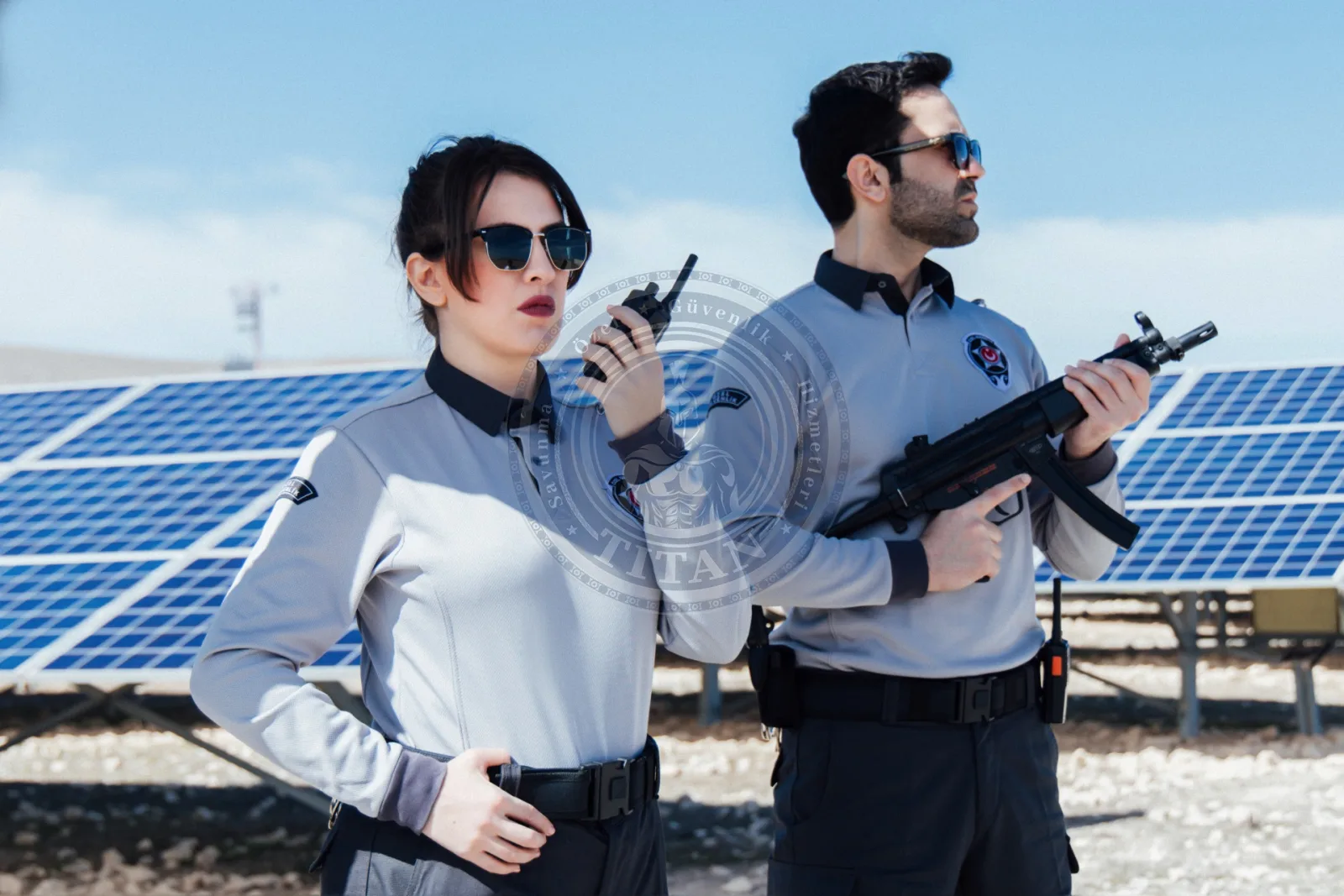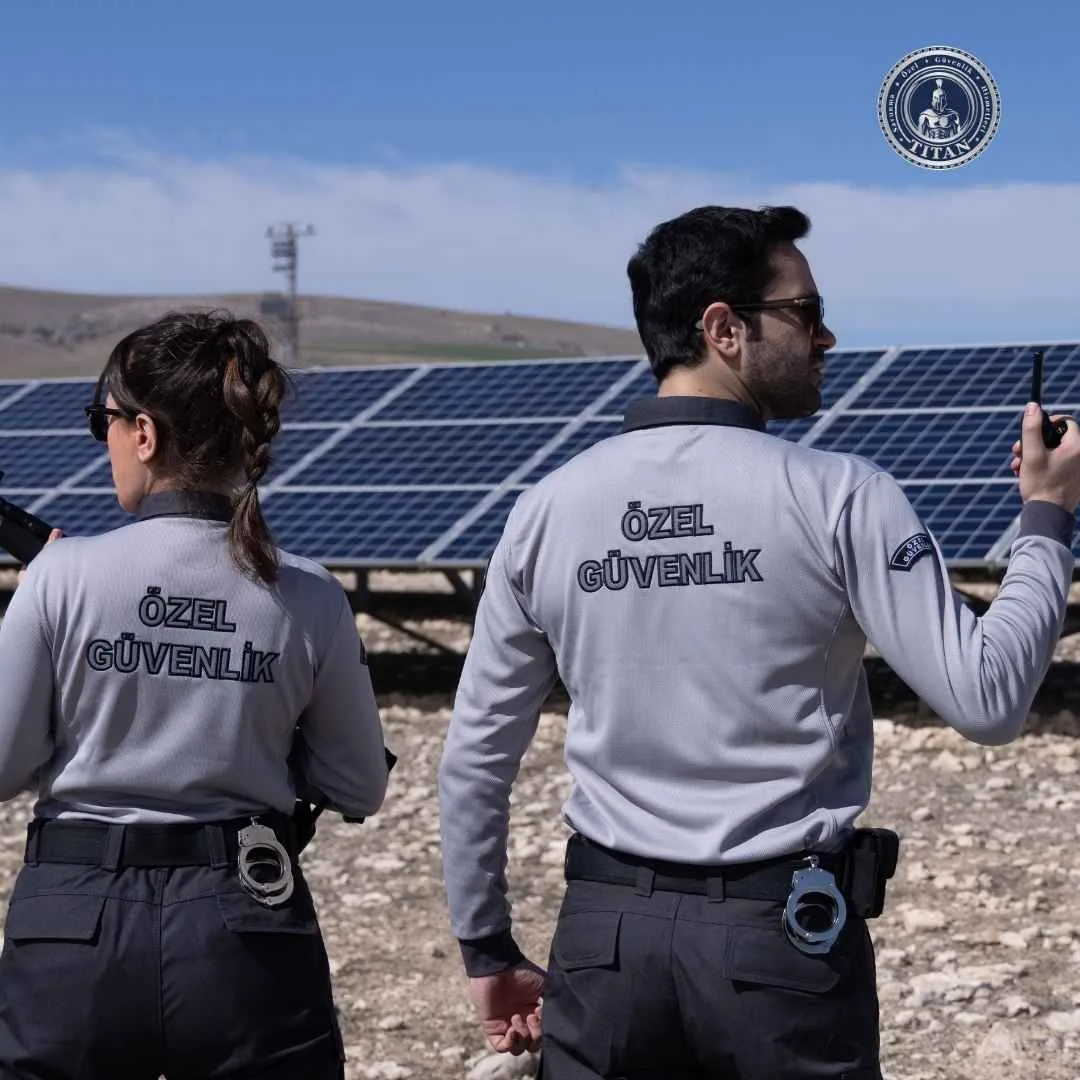
When a factory or warehouse in Turkey installs a rooftop solar plant (çatı GES), its security arrangements change too. The roof, once visited a few times a year, becomes an area with valuable equipment, regular maintenance visits and a particular role in fire scenarios. New cable routes, inverter rooms and new contractor teams arrive in the building.
So the useful question is not "does the roof need its own security?" but "have the existing site security arrangements been updated to cover the rooftop plant?" This article looks at roof access, contractor maintenance visits, fire brigade access, cable runs and theft, and how they fit with the security already on site. Unlike a remote ground-mounted solar farm, the guards are already there; the task is getting the post orders and coordination right.
This article is general information, not legal advice.
What a rooftop plant changes
- New assets: panels, inverters, DC and AC cabling and monitoring equipment.
- New access points: roof hatches, external ladders, temporary scaffolding, goods lifts.
- New people: installation and maintenance contractors, cleaning crews and energy company staff. The plant may belong to a different company from the building occupier, for example under a lease or power purchase arrangement.
- A new fire scenario: PV systems generate voltage whenever light reaches the panels, which changes how the fire brigade works and what security staff should do.
- New conflicts: maintenance hours overlapping with loading bays, forklift traffic and shift changes.
Controlling access to the roof
Roof access is both a security and an occupational safety issue; because of the fall risk, nobody should be on the roof without authorisation. Zurich's guidance on roof-mounted solar panel systems advises planning safe roof access for inspection and maintenance at the design stage. From a security point of view, the basics are:
- List every roof access point (internal stairs, hatches, external ladders) and keep them locked.
- Issue keys from the security post against a signature, and keep spare keys counted.
- Start roof work only with a valid permit to work and the site's approval.
- Record how many people go up, and when they go up and come down.
- Require advance notice to security for any out-of-hours roof work.
Routine roof patrols by guards are usually the wrong answer: they create a fall risk and add little. Cameras covering roof edges, access points and cable drops, combined with checks from ground level, are normally safer.
Contractor maintenance visits
The most frequent movements on a rooftop plant are maintenance and cleaning visits. Where several employers share a workplace, Article 23 of Turkey's Occupational Health and Safety Law No. 6331 requires them to cooperate on health and safety measures, coordinate risk prevention and inform each other of the risks. If the plant's owner or operator is a different company, put this coordination in writing. Practical rules for the security team:
- Admit visitors from a list notified in advance; for anyone not on the list, call the site contact.
- Record ID and company details, vehicle plate and escort details.
- Check equipment coming in and going out (panels, inverters, cable drums) against material movement documents. A faulty panel leaving for replacement should never look like an undocumented removal.
- Roof access only with a key and permit issued at the security post; the key is returned and the access point closed when work ends.
Fire brigade access and the fire scenario
A risk engineering note by Allianz Turkey states that electrical faults are the main cause of PV fires, that the inverter keeps producing power as long as there is sunlight, and that firefighters need to isolate the system before intervening. It also recommends leaving enough free space on the roof for firefighters and using DC isolators and fire switches. Zurich's guidance likewise notes that PV systems are considered constantly live and lists isolation options such as a dedicated remote isolation switch or isolation via the fire alarm system.
In Turkey, the application guide published by the Turkish Fire Protection and Training Foundation (TÜYAK) for the Regulation on Fire Protection of Buildings (Binaların Yangından Korunması Hakkında Yönetmelik) includes a commission opinion and a worked example on rooftop solar installations. The guide is not binding regulation; the local fire brigade (itfaiye) and your fire safety consultant should be consulted for your building.
The security team's role is guidance and information, not electrical work:
- Know where fire switches and isolators are, but do not operate them unless trained and authorised.
- Meet the fire brigade at the right gate and show them roof access points and inverter rooms.
- Keep an up-to-date roof layout and cable route drawing at the security post.
- Make sure nobody goes onto the roof during a fire, and support evacuation.
Cable runs and theft
On rooftop plants, cables often run down the facade in cable trays to an inverter or transformer room. These drop points are the most exposed spots for both damage and theft. Inside the building, the concerns are forklift impact, penetrations through fire compartments and tampering.
- Keep facade cable drops within camera view and well lit.
- Keep inverter and switch rooms locked, with the key list held by security.
- Check for containers, pallet stacks or adjoining structures that could give access to the roof.
- Close off temporary scaffolding at the end of each working day during maintenance.
Coordinating with existing site security
If the site already uses private security under Law No. 5188, the rooftop plant should be added to the existing protection and security plan. Update post orders, alarm routing and contact lists: does a fault alert from the solar monitoring system concern security, and if so, who receives it? If the plant has a separate owner, incident reports go to both parties. If the installation changes the site boundary or the guards' area of duty, check that the private security permit issued by the governorship (valilik) still matches.
A worked example
On a Saturday morning a maintenance crew arrives at a logistics warehouse to replace an inverter. At the security post the crew is checked against the notified list, the permit to work and roof key are issued, and a material exit document is prepared for the removed inverter. In the afternoon the solar monitoring system raises a fault alert; it goes to the site's technical contact, while security is simply informed and checks the area on camera. When the crew leaves, the key is returned and the locked roof hatch is logged. This simple flow also produces the record that shows who was where and when, should a loss or damage query arise later.
These points are part of wider factory security and warehouse security planning.
Common mistakes and a checklist
- Forgetting one roof access point, often an external ladder.
- Giving a maintenance contractor a permanent roof key.
- Not telling the security team the plant exists, so nobody knows where the isolators are when the fire brigade arrives.
- Removing faulty equipment without paperwork.
- Not updating the camera plan after installation.
About Titan Savunma
Titan Savunma is an Ankara-based private security company holding an operating licence from the Ministry of Interior under Law No. 5188. It holds ISO 9001, 14001, 45001, 22301 and 28000 certificates, works with international companies in English and Turkish, and plans services for sites in different provinces of Turkey with a single point of contact, written scope and regular reporting. See our private security services in Turkey page for more.
Sources and Further Reading
- Managing the risks of roof-mounted solar panel systems, Zurich Insurance UK
- Solar Panel (PV) Sistemlerinde Yangın Riskleri, Allianz Türkiye Risk Mühendisliği
- Binaların Yangından Korunması Hakkında Yönetmeliğin Uygulama Kılavuzu (TÜYAK) yayımlandı, Şantiye Dergisi
- 6331 sayılı İş Sağlığı ve Güvenliği Kanunu, Mevzuat Bilgi Sistemi
- 5188 sayılı Özel Güvenlik Hizmetlerine Dair Kanun, Mevzuat Bilgi Sistemi