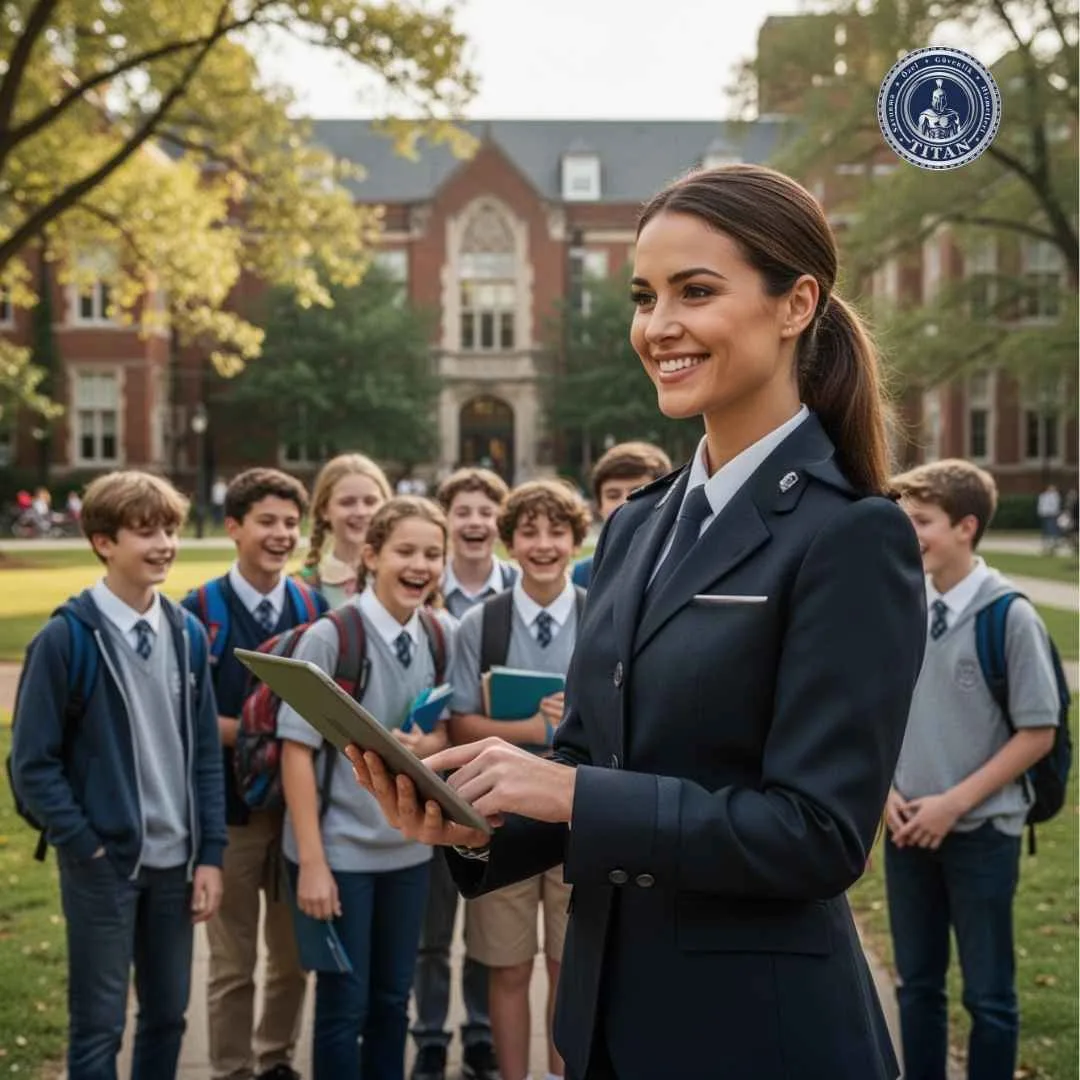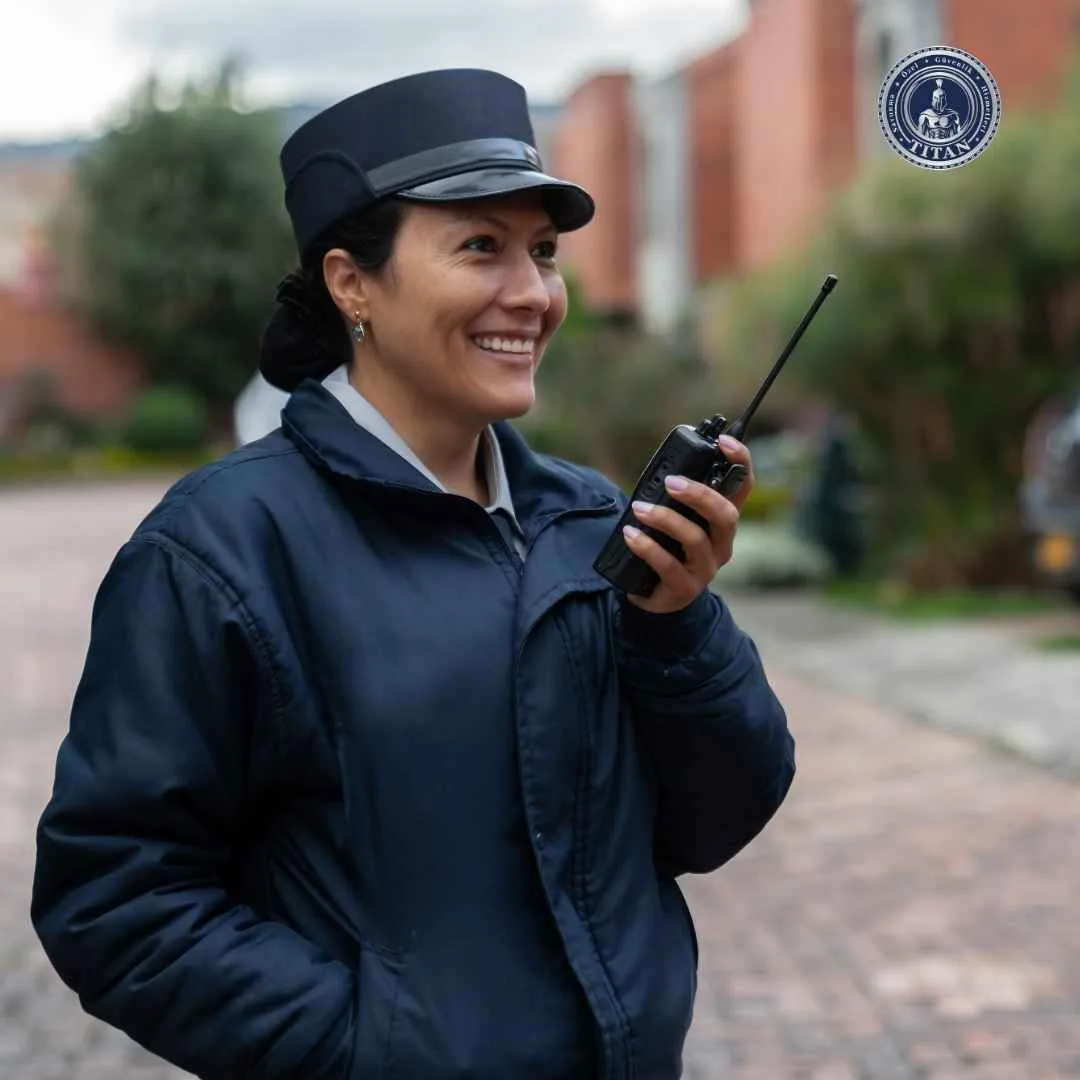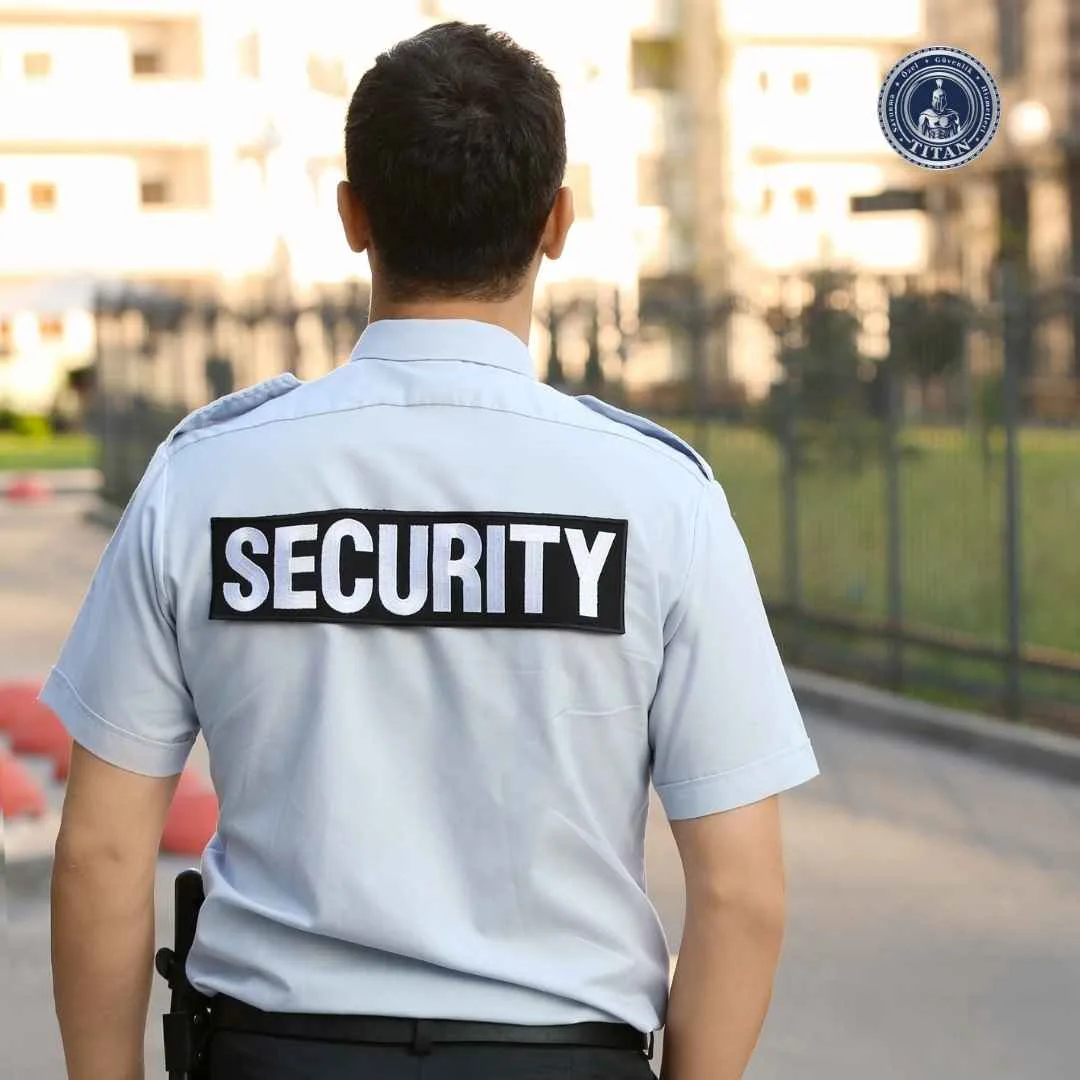
The two busiest and riskiest moments of a school day are morning arrival and afternoon dismissal. School buses, parents' cars, pupils on foot, nannies and visitors all gather at the same gate in the same short window. International and private schools in Turkey add communication in several languages, families who send a driver or nanny, and occasionally custody disputes. This article explains how to plan bus and pick-up arrangements from a security point of view.
The short answer: for school transport, the core rules are in Turkey's School Service Vehicles Regulation, which makes the school administration responsible for setting drop-off and pick-up points and keeping records. Who a pupil may be released to, early pick-up and visitor rules should be set out in the school's own written policy, with the security officer at the gate applying that policy.
This article is general information, not legal advice.
Which regulation applies?
People still refer to the "School Service Vehicles Service Regulation" (Okul Servis Araçları Hizmet Yönetmeliği), but that 2007 regulation was repealed. The current text is the School Service Vehicles Regulation (Okul Servis Araçları Yönetmeliği), issued by the Ministry of Interior and published in the Official Gazette No. 30221 on 25 October 2017. It is implemented jointly by the ministries of Interior, National Education (MEB), Family and Social Services, and Transport. It has been amended several times; according to MEB, an amendment announced on 19 August 2025 clarified that "school" covers both public and private schools. Always check the current consolidated text.
Provisions that matter for security planning:
- School administration (Art. 6): plans transport, keeps records on vehicles, transport operators and staff, sets the drop-off and pick-up points on school grounds, regulates how operators and their staff use the grounds, and takes all necessary measures for pupils with disabilities at every stage.
- Transport operator (Art. 5): employs a bus escort (rehber personel), notifies the school each year of escorts, main and reserve drivers and plate numbers, reports changes the same day, and shares vehicle tracking data with the school, police and parents on request.
- Bus escort (Art. 9): ensures pupils board and leave safely and cross the road when needed, checks seat belts, and checks the inside of the vehicle before and after each trip.
The 2017 text also requires vehicle tracking, seat occupancy sensors and recording cameras in vehicles (Art. 4). MEB's announcement at the time summarised the age, education and certificate requirements for bus escorts.
Bus arrangements at the school gate
The regulation leaves the choice of drop-off point to the school, and that choice does more than anything else to reduce congestion at the gate.
- Separate areas, or at least separate time slots, for buses and parents' cars.
- A written entry order and waiting time for buses, avoiding long queues of idling vehicles.
- A walking route from the bus to the building that is separated from vehicle traffic.
- The operator's list of plates, drivers and escorts kept up to date at the security desk; if an unlisted vehicle or person arrives, the school administration is informed.
- More time and a suitable spot for pupils with disabilities to get on and off.
Prepare a separate routine for exceptional days such as heavy rain or snow, parents' evenings, graduations and performances, when parents' cars multiply, waiting times grow and the gate team is easily distracted. The school can agree stopping and pedestrian crossing arrangements in front of the gate in advance with the municipality and, where needed, traffic police, and the security team can plan additional posts for those days.
Who may collect a pupil? The authorised collector list
Outside nurseries and similar institutions, the regulation does not set detailed rules on handing pupils to parents. The school's own policy has to fill that gap. Good practice, especially for younger pupils:
- A list of "persons authorised to collect", signed by the parent and with photos, for each pupil.
- Regular collectors such as a family driver, nanny or relative named on the list; if someone not on the list arrives, the school office calls the parent.
- Where a court order on custody or contact exists, the school administration keeps a copy, and the officer at the gate calls the administration, and the police if needed, instead of deciding alone.
- These lists are personal data under Turkey's data protection law (Law No. 6698, KVKK): keep only what is needed and never leave the list where anyone at the security desk can read it.
Early pick-up and collections during the day
Early pick-ups are a weaker link than the morning and afternoon routines, because the gate team is smaller and the process is often rushed. A sound routine: the parent informs the school office in advance, the office records the permission and notifies the gate, a staff member brings the pupil from class, and the hand-over is made after an identity check and logged with the time. The security officer neither calls pupils out of class nor grants permission; they only verify the permission from the office and the person collecting.
Visitor rules and the limits of the gate team
Visitor registration, badges and escort rules are internal school rules. Article 8 of the Private Security Services Law No. 5188 does not allow armed private security officers in educational institutions, and officers' powers are limited to those listed in Article 7. The gate team's strength therefore comes from clear rules, good communication and fast contact with the school office. In international schools, a gate team that can communicate in basic English and rules published in more than one language noticeably reduce disputes.
On the bus and beyond the school grounds
A security officer's area of duty is the school site; the inside of the bus and the route are the responsibility of the operator and the bus escort. The school can still support risk management by checking what the operator reports: whether driver or escort changes are notified the same day, whether vehicles are checked after the last trip, and what happens when a pupil misses the bus or boards the wrong one. These scenarios should be written down and shared with parents.
Checklist and common mistakes
- Does the school administration follow the current text of the regulation?
- Are the drop-off point and bus entry order written down?
- Is the operator's list of plates, drivers and escorts current at the gate?
- Does every pupil have an authorised collector list, protected as personal data?
- Does early pick-up permission come only from the school office?
- Is it clear what the office and the gate do for pupils subject to a custody order?
- Are the rules shared with parents in more than one language?
Common mistakes: buses and parents' cars mixing at the gate, releasing a pupil to a "familiar face" without checking, acting on an unverified phone request for early pick-up, and reserve driver changes never reported to the school.
Our approach to schools is described on the education security page.
Titan Savunma is an Ankara-based private security company licensed by the Ministry of Interior under Law No. 5188, holding ISO 9001, 14001, 45001, 22301 and 28000 certificates. We work with international organisations in English and Turkish and plan services for sites in different provinces of Turkey with a single point of contact, written scope and regular reporting. Read more on our private security in Turkey page.
Sources and Further Reading
- Okul Servis Araçları Yönetmeliği (RG 25.10.2017, 30221), Resmî Gazete
- Okul Servis Araçları Yönetmeliğinde Değişiklik Yapılmasına Dair Yönetmelik Resmî Gazete'de yayımlandı, Millî Eğitim Bakanlığı
- Okul Servis Araçları Yönetmeliği Resmî Gazete'de yayımlandı, Millî Eğitim Bakanlığı
- 5188 sayılı Özel Güvenlik Hizmetlerine Dair Kanun, Mevzuat Bilgi Sistemi
- 6698 sayılı Kişisel Verilerin Korunması Kanunu, Mevzuat Bilgi Sistemi