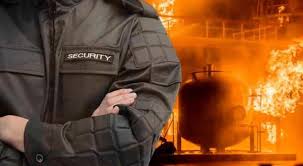
Security duties during a fire or other emergency should not be improvised once an incident begins. The organisation's emergency plan should establish who raises the alarm, who supports evacuation and who receives external responders. A security officer's presence on site does not mean that person is authorised and trained to perform every rescue or firefighting task.
This distinction matters when procuring a service. A general security contract does not replace the employer's emergency preparation or technical fire-safety work. Duties need to reflect the person's training, assignment, equipment and the conditions of the incident.
Define Security Duties in the Emergency Plan
The Turkish Ministry of Labour and Social Security's guidance considers emergency identification, appointed personnel, response and evacuation methods, documentation and exercises together. Security personnel should be considered within that wider preparation. Occupational safety guidance for employers and their representatives.
In the responsibility table we recommend, each duty has an owner and a substitute where needed. Relaying an alarm, assisting with directions and helping responders reach the site can be defined separately for the security team. Entry into a hazardous area and technical intervention should not be expected without suitable competence and safe conditions.
Report the Location Clearly and Distinguish Facts from Assumptions
In Türkiye, 112 is the common emergency number, including for fires. Official 112 guidance emphasises calling where possible and clearly explaining the location and nature of the incident. 112 Emergency Call Centre. Waiting to contact an internal manager should not become a procedure that delays a necessary emergency call.
Facility management should make the correct address, access point and responsible contact readily available to personnel. Reports should distinguish observations from assumptions. Seeing smoke, for example, is different from asserting that a particular chemical is burning when the source is unknown. Updated information should be provided in accordance with responders' instructions.
Make Evacuation Support Accessible
Visitors and temporary contractors, as well as employees, may be unfamiliar with the building. The organisation's responsible teams should plan how people needing assistance will be supported. Security personnel communicate clearly and assist with directions within the approved plan and their instructions.
Access-card or turnstile records can provide information about people who may be inside, but do not alone prove that everyone reached safety. Incomplete records, visitor movements and different exit routes must be considered. Identify the person responsible for combining headcounts and missing-person information. Re-entry should not be authorised without assessment by the responsible responders.
Use Exercises for More Than Attendance Records
- Assess whether the reporting chain works across different shifts.
- Check that visitors and people needing assistance are included.
- Record confused responsibilities and unclear announcements.
- Assign an owner and follow-up date to corrective actions, then review the outcome.
Promising the same response time or a loss-free outcome at every site is unrealistic. A stronger measure is whether personnel understand their duties and can work with the organisation's relevant teams. To discuss security duties aligned with your emergency arrangements, explore our Manned Security Services.